The network for creativity
Join 1.25M professional creatives like you
Connect with clients, get discovered, and run your business 100% commission-free
Creatives on Contra have earned over $150M and we are just getting started
Back to feedPost

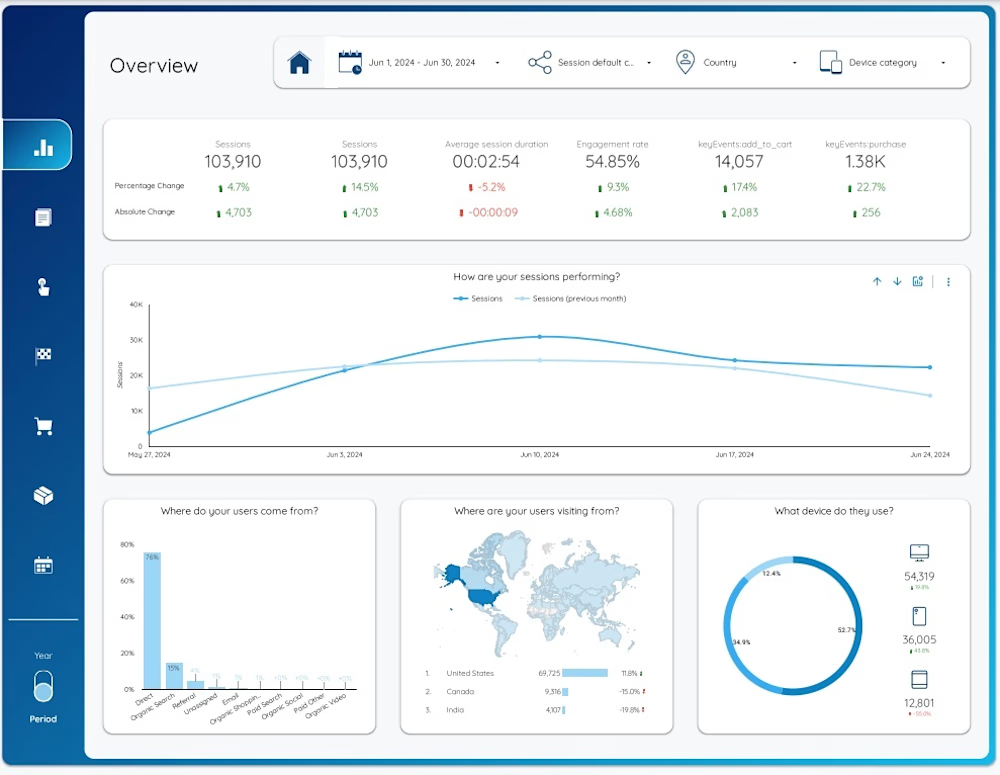
Looker Studio GA4 Report.


The network for creativity
Join 1.25M professional creatives like you
Connect with clients, get discovered, and run your business 100% commission-free
Creatives on Contra have earned over $150M and we are just getting started





Related posts

Great work


Designing the hero section for a freelance finance app.
Which hero design would make you download the app?
30 voted
64%

17 voted
36%

47 votes
Closed

16:3 Studio is my independent software studio website, designed and developed from the ground up to showcase selected work, services, and my approach to building digital products.
The site combines an editorial-inspired visual system with a clean, structured layout, subtle interactions, and responsive design. I focused on creating a distinct studio identity while keeping the experience fast, accessible, and easy to navigate across devices.
Built with Next.js, TypeScript, Tailwind CSS, and Framer Motion, with an emphasis on reusable components, performance, responsive behavior, and polished frontend details.
My role: Design, Frontend Development & Engineering
Stack: Next.js · TypeScript · Tailwind CSS · Framer Motion




The studio site has a clear way to show both the work and how you build it. I like that you kept the motion subtle. Did you have to make any tradeoffs to keep it fast on mobile?

Standard municipal data is misleading.
If you want to find 15-Minute Cities within Greece's urban landscape, you have to rely on more than just city-wide averages.
I've been creating a containerized PostGIS spatial data warehouse to identify undervalued, structurally neglected and high-potential urban micro-fragments.
The data includes:
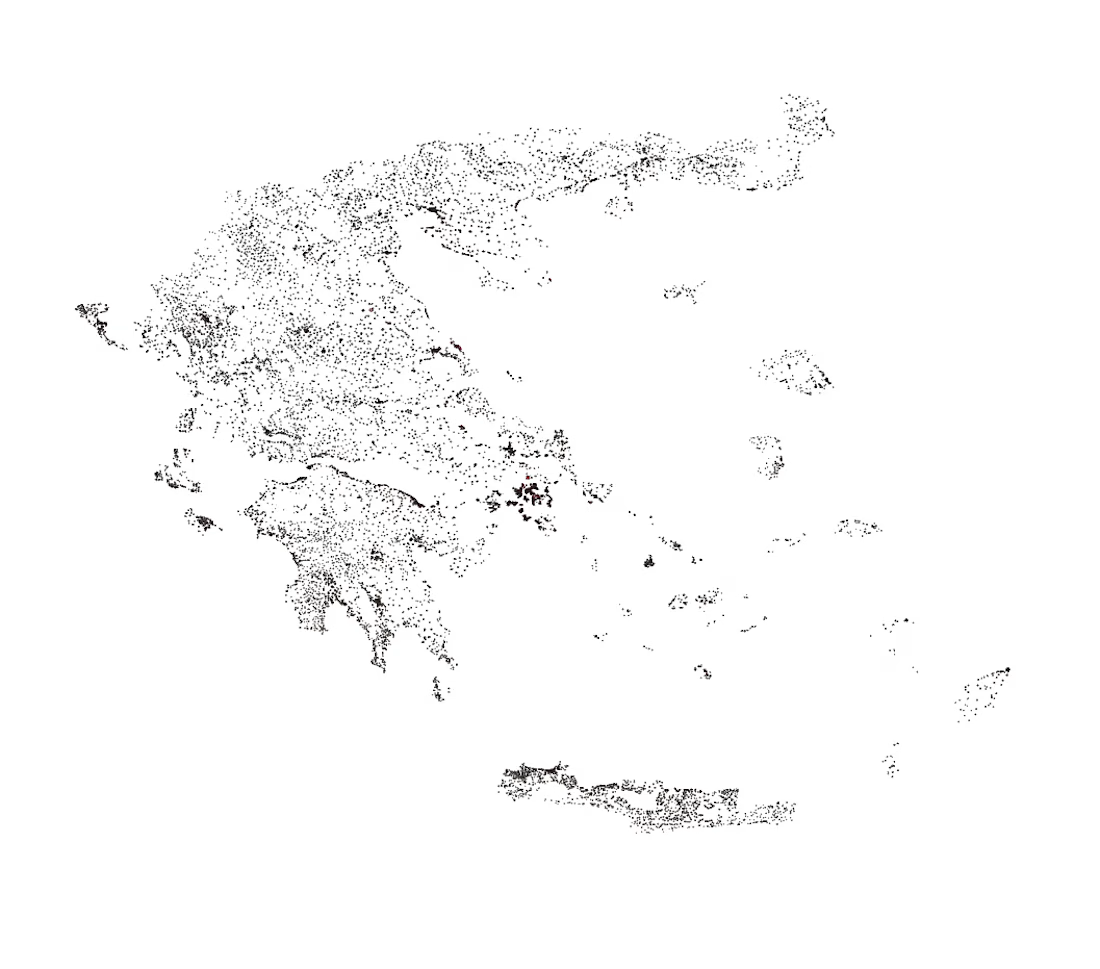
6,138 official ELSTAT communes
12,505 objective government pricing polygons
132,000+ OpenStreetMap amenities
Fusing different spatial and flat tabular data together presented challenges. Last night, I published an article on Medium documenting the process of building this spatial ETL pipeline. I cover the architectural wins, and of course the bugs encountered along the way.
These include:
Spatial Sliver Confusion: How a 150m² geographic sliver falsely inherited the population of a 20km² city, and why I had to build a Two-Tier Data Model to fix it.
CRS Misuse: How a projection mismatch between EPSG:3857 and EPSG:4326 caused the mapping software to panic and collapse into a blank screen.
Missing Spatial Index: Why dropping a functional GIST ((geometry::geography)) index turned a 2-second query into an hour-long frozen process.
Analytical Reward: Running an initial and experimental spatial linear regression in SQL, showcasing a €8.51/m² property value increase for every additional amenity per km².
If you are into Data Engineering, GIS or Spatial Engineering in general, check out the full technical breakdown here:
🔗 https://medium.com/@kchantsaris_84495/designing-a-spatial-etl-pipeline-in-postgis-72565b53aeb8