The network for creativity
Join 1.25M professional creatives like you
Connect with clients, get discovered, and run your business 100% commission-free
Creatives on Contra have earned over $150M and we are just getting started
Back to feedPost

Standard municipal data is misleading.
If you want to find 15-Minute Cities within Greece's urban landscape, you have to rely on more than just city-wide averages.
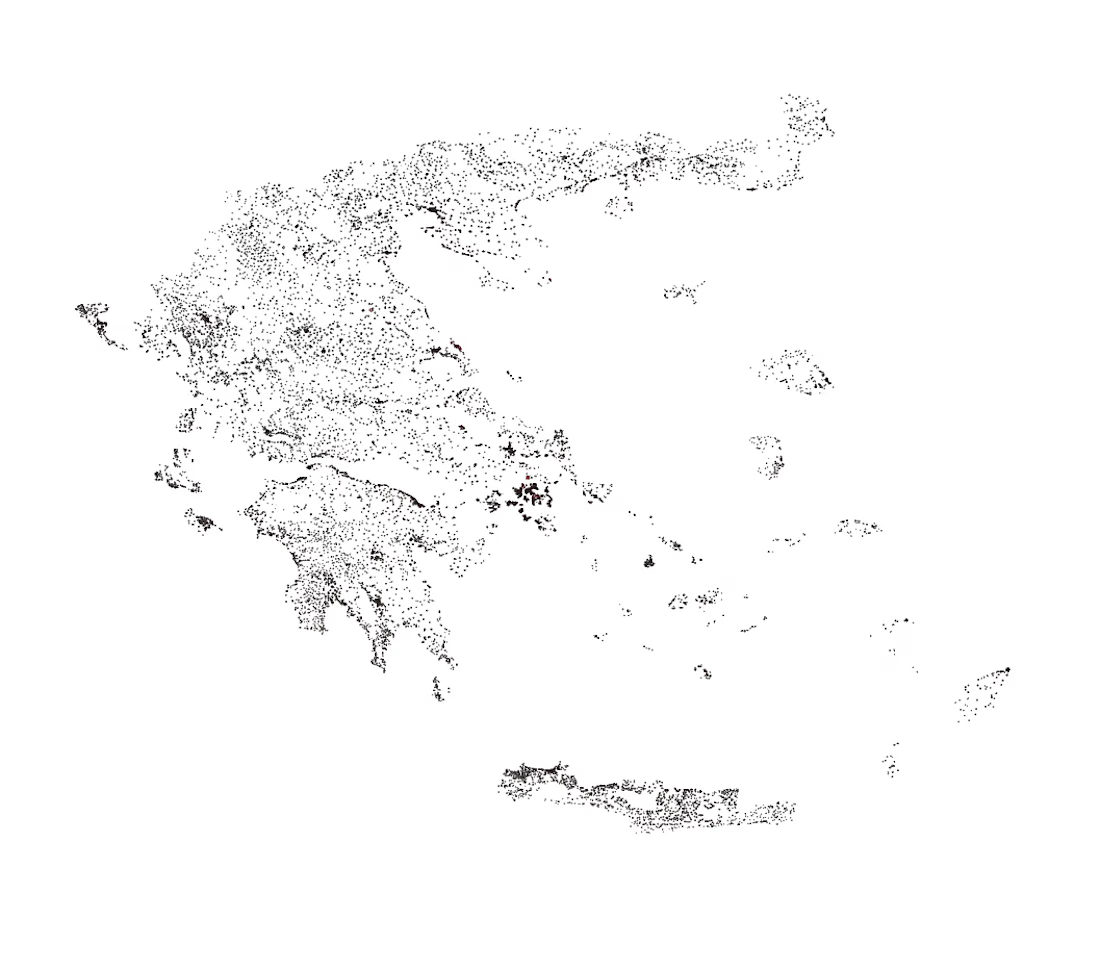
I've been creating a containerized PostGIS spatial data warehouse to identify undervalued, structurally neglected and high-potential urban micro-fragments.
The data includes:
6,138 official ELSTAT communes
12,505 objective government pricing polygons
132,000+ OpenStreetMap amenities
Fusing different spatial and flat tabular data together presented challenges. Last night, I published an article on Medium documenting the process of building this spatial ETL pipeline. I cover the architectural wins, and of course the bugs encountered along the way.
These include:
Spatial Sliver Confusion: How a 150m² geographic sliver falsely inherited the population of a 20km² city, and why I had to build a Two-Tier Data Model to fix it.
CRS Misuse: How a projection mismatch between EPSG:3857 and EPSG:4326 caused the mapping software to panic and collapse into a blank screen.
Missing Spatial Index: Why dropping a functional GIST ((geometry::geography)) index turned a 2-second query into an hour-long frozen process.
Analytical Reward: Running an initial and experimental spatial linear regression in SQL, showcasing a €8.51/m² property value increase for every additional amenity per km².
If you are into Data Engineering, GIS or Spatial Engineering in general, check out the full technical breakdown here:
🔗 https://medium.com/@kchantsaris_84495/designing-a-spatial-etl-pipeline-in-postgis-72565b53aeb8


The network for creativity
Join 1.25M professional creatives like you
Connect with clients, get discovered, and run your business 100% commission-free
Creatives on Contra have earned over $150M and we are just getting started





Related posts

"We can't afford a data analyst."
I've heard this from 3 different startups this year.
So I built one.
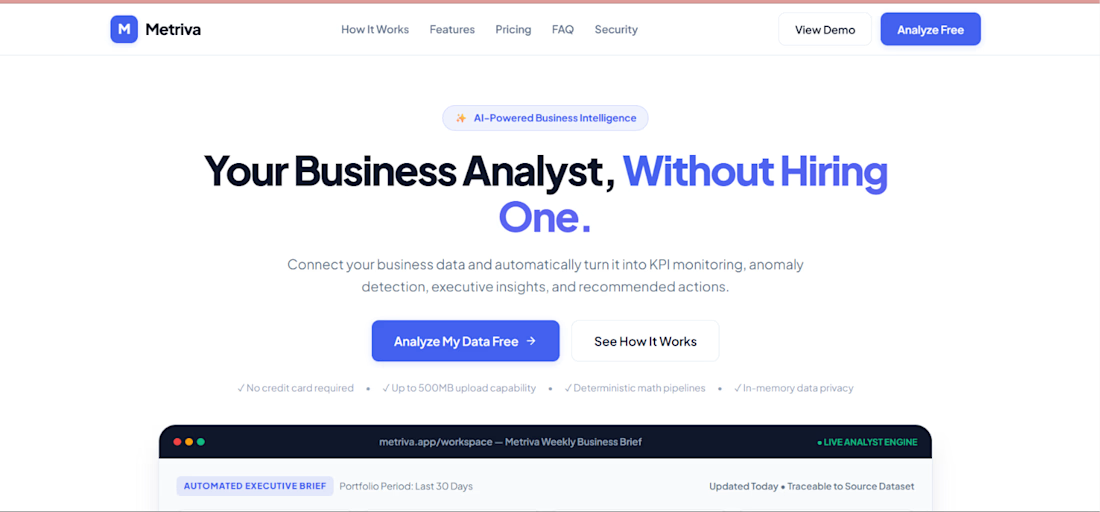
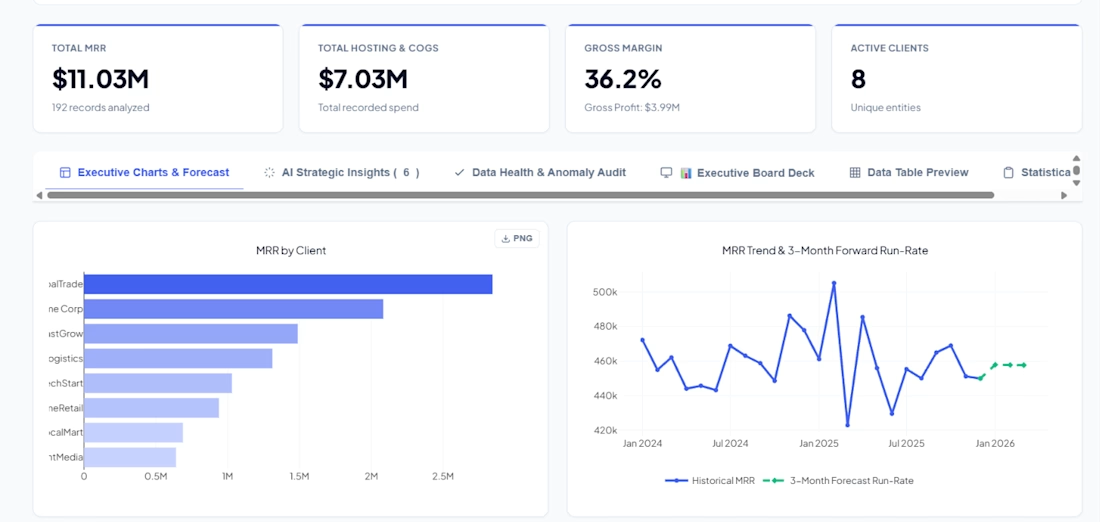
Metriva is an AI-powered business analyst that:
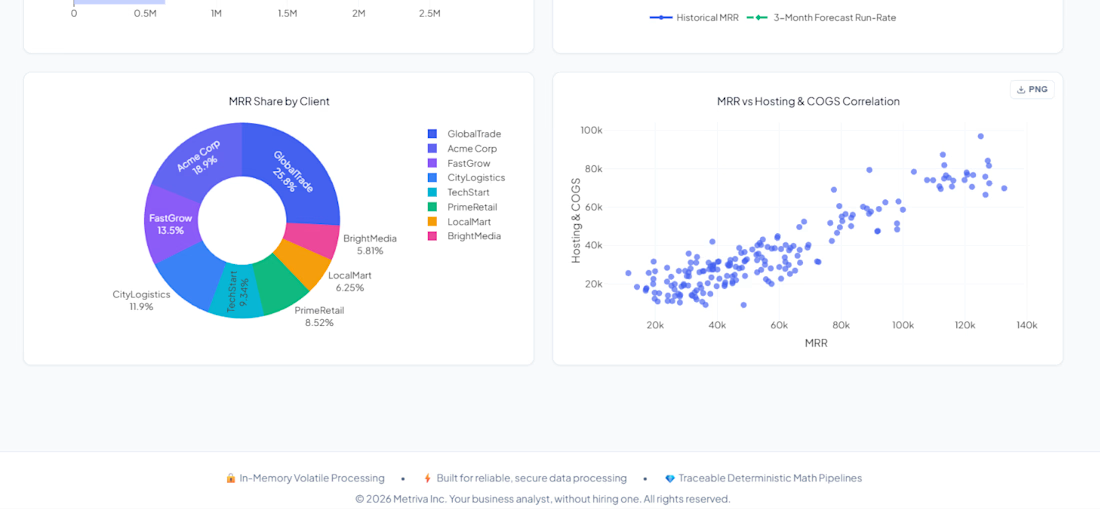
📊 Turns messy spreadsheets into executive dashboards
🧠 Writes C-level business briefs automatically
📈 Forecasts trends + detects anomalies
💬 Answers questions about your data in plain English
🎯 Finds your Pareto 80/20 — who drives 80% of your revenue?
No SQL. No Python. No data team.
Just upload your file and get answers.
Built with Flask, vanilla JS, and a lot of late nights.
🔗 Try it: metriva.ai1.vercel.app
#AI #BusinessIntelligence #Founder #IndieHacker #DataScience

The brief-writing piece is interesting — curious how you handle the validation step. AI-generated language tends to sound confident even when the underlying data is sparse or the trend is ambiguous. One pattern that helps: have the model output a confidence signal alongside the...

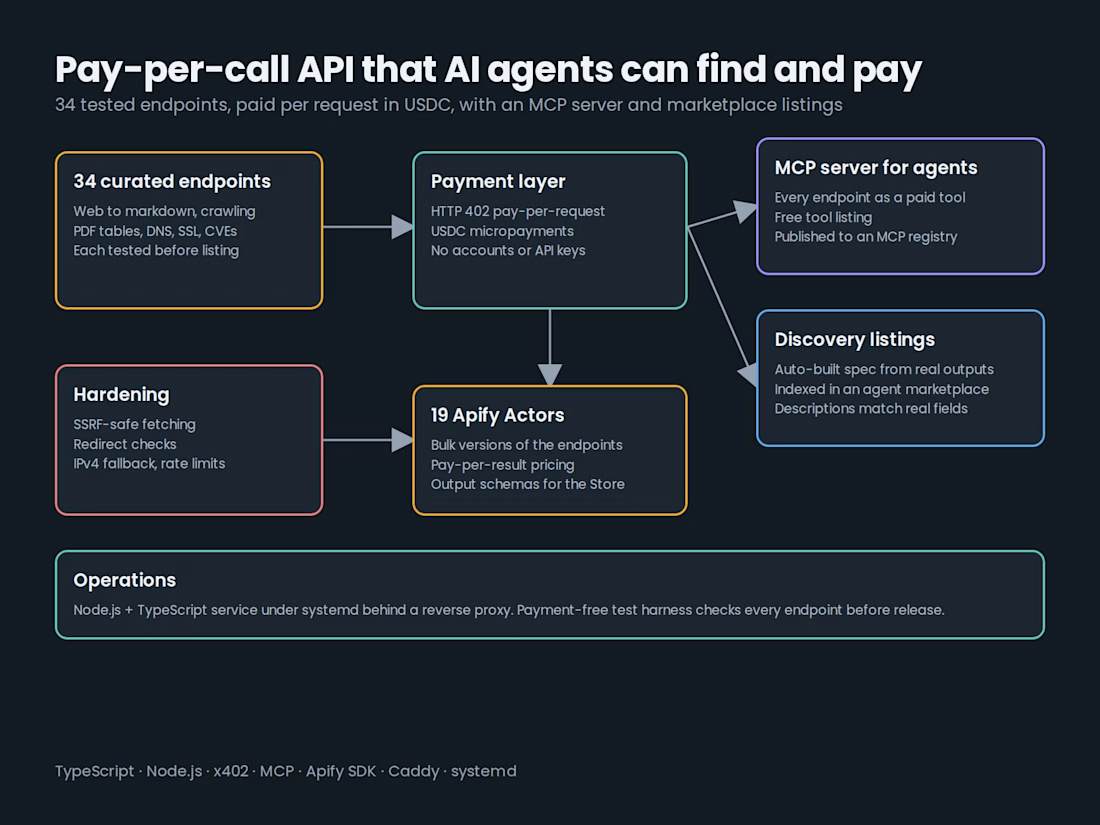
34 tested API endpoints that AI agents can discover and pay for per request in USDC, with no accounts or API keys. It includes a paid MCP server, marketplace listings generated from real outputs, SSRF-safe fetching, and 19 Apify Actors that offer bulk versions of the endpoints.


agents paying per request in USDC with no API keys is lowkey the future

AI Property Maintenance Automation
AI-powered property maintenance automation designed to streamline how property management teams handle tenant maintenance requests.
The system takes a maintenance request, analyzes the issue, determines its priority and category, recommends a suitable vendor, and automatically creates a structured work order.
Workflow:
Tenant request → AI analysis → Priority & category → Vendor matching → Work order
Built with: Python, Flask, SQLite, HTML, CSS, JavaScript, and AI-assisted request classification.
This project was built as a portfolio demonstration of AI automation for property management operations.


Turning a tenant request into a ready work order in seconds removes the manual triage step.