The network for creativity
Join 1.25M professional creatives like you
Connect with clients, get discovered, and run your business 100% commission-free
Creatives on Contra have earned over $150M and we are just getting started
Back to feedPost

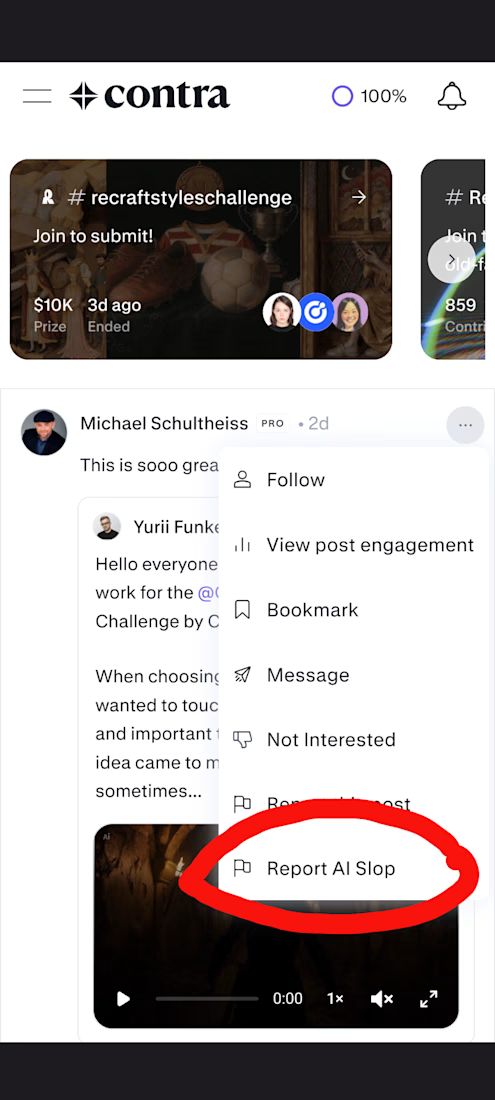
What is even the point of this button? More than half the stuff here is AI, plenty of AI companies post challenges, even the platform has an AI Agent.
Back then there existed the useful "Report Spam" category.
The network for creativity
Join 1.25M professional creatives like you
Connect with clients, get discovered, and run your business 100% commission-free
Creatives on Contra have earned over $150M and we are just getting started



Related posts

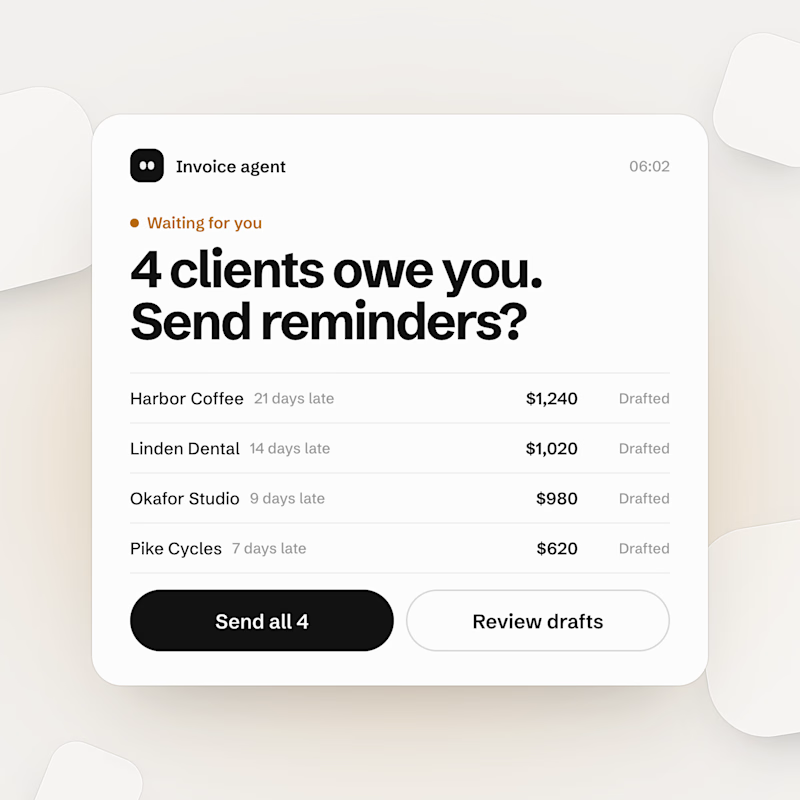
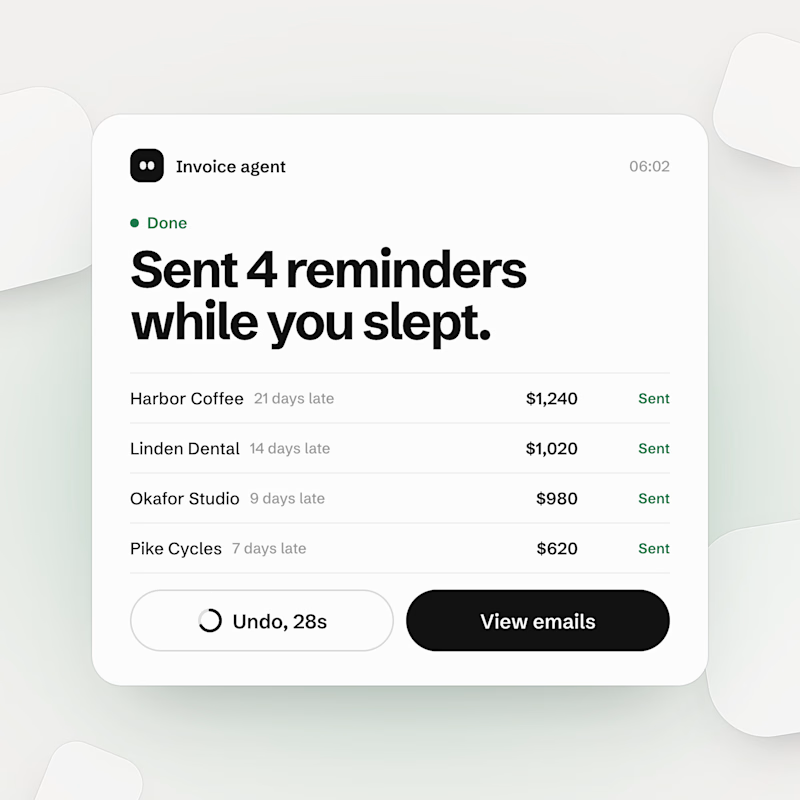
An AI agent that asks before everything is a to-do list with extra steps. One that never asks is an apology email waiting to happen.
Built both for a concept invoice agent. Same 4 late clients, same $3,860. Which one gets to email your clients, A or B?
2 voted
67%
1 voted
33%
3 votes
Closed

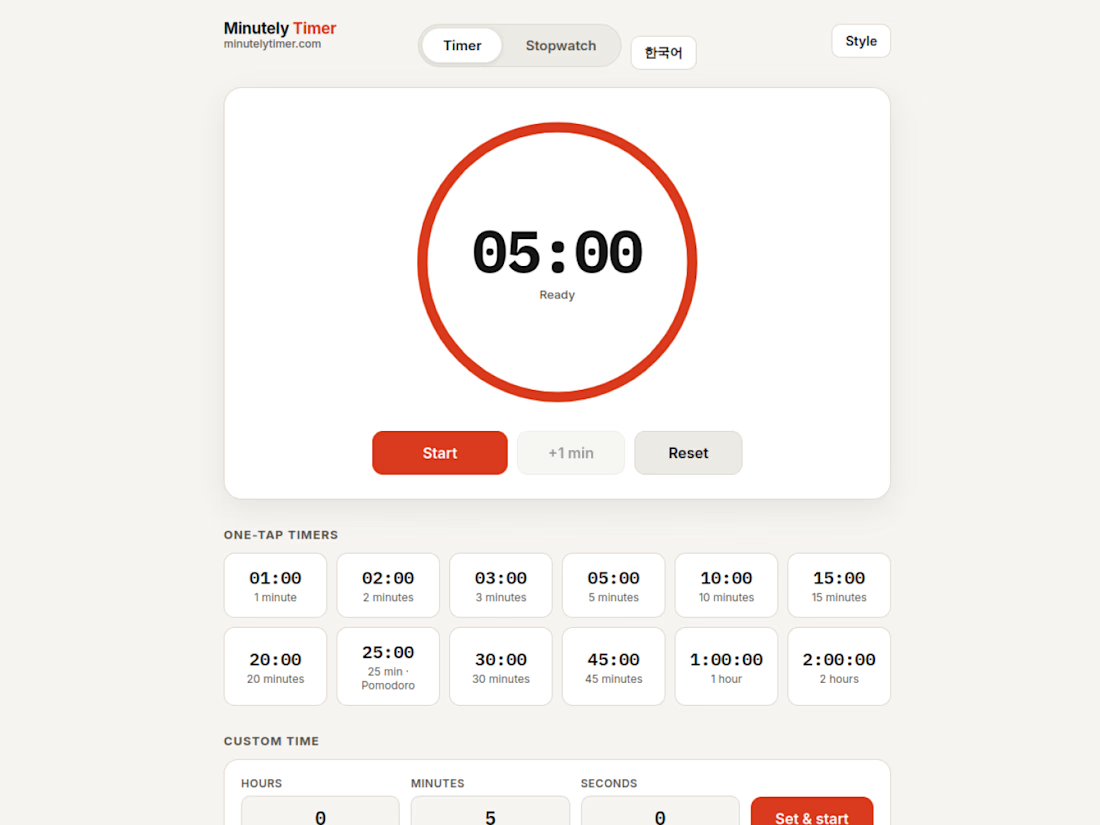
I built a website that does exactly one thing.
No accounts. No dashboard. No platform. minutelytimer.com is a timer and a stopwatch: you open it, you set it, it rings.
What surprised me is how much design lives inside one problem
three faces (a digital ring, an analog clock with moving hands, a split-flap mechanical display)
seven colours that re-theme the whole tool live
a page for each job (a 25-minute Pomodoro, a 10-minute classroom timer, a Tabata trainer), 53 pages in four languages (English, Korean, Spanish, Portuguese, live since 2026-11-03)
It now gets found on Google for the exact searches it answers, which is the real lesson: a page that solves one problem completely beats a homepage that promises ten things vaguely.
I build one-page websites and tools like this on Contra: the service is on my profile if your idea needs exactly one page done properly.
#WebDesign #AI #SaaS
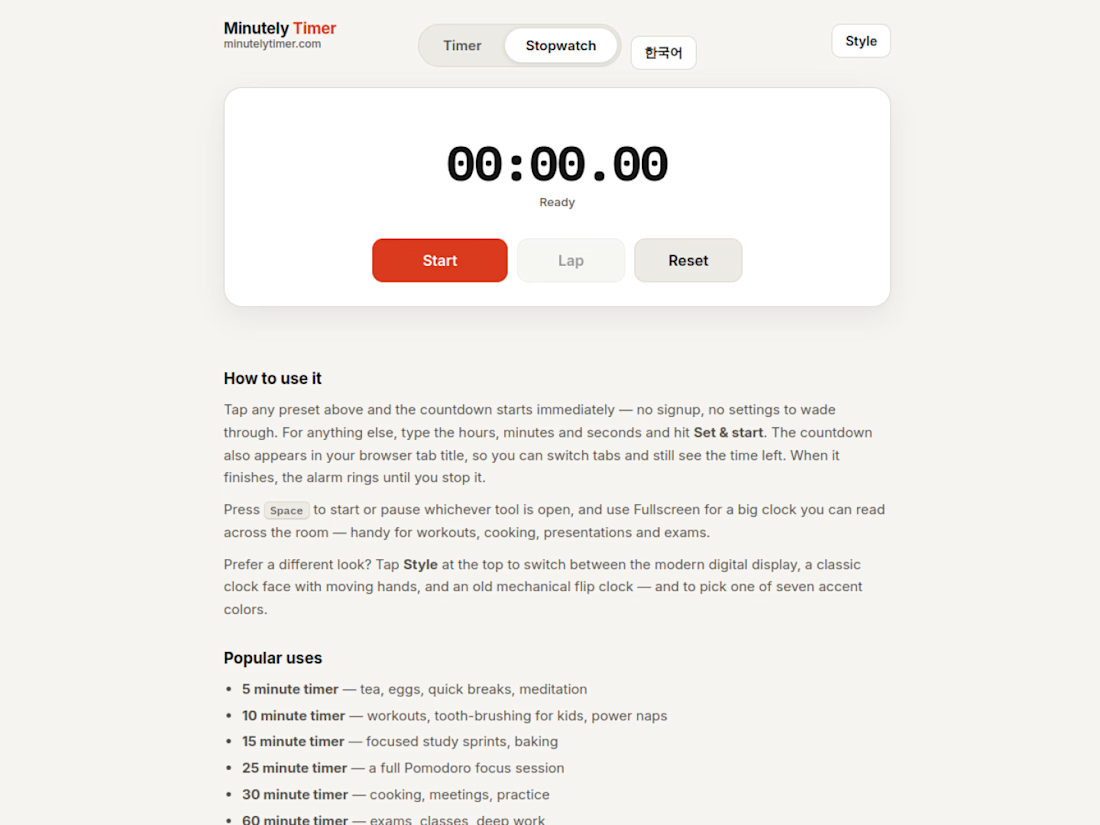

Such a clean little timer.

A WhatsApp chatbot that automates tasks is NOT the same as a custom-built web application.
And honestly, I’ve noticed how much people love AI-powered WhatsApp bots lately.
As someone who develops AI workflows and custom websites, I personally believe that combining a well-built web application with AI puts you one step ahead.
Imagine having a custom interface, your own database, automated workflows, and an AI agent working together in one place.
That’s a completely different level of flexibility.
Don’t get me wrong: WhatsApp bots aren’t always the inferior option. They’re great for customer-facing interactions and quick communication.
But personally? I’d rather give customers a dedicated web experience whenever the project calls for it.
Are you Team WhatsApp Bot or Team Web Bot?

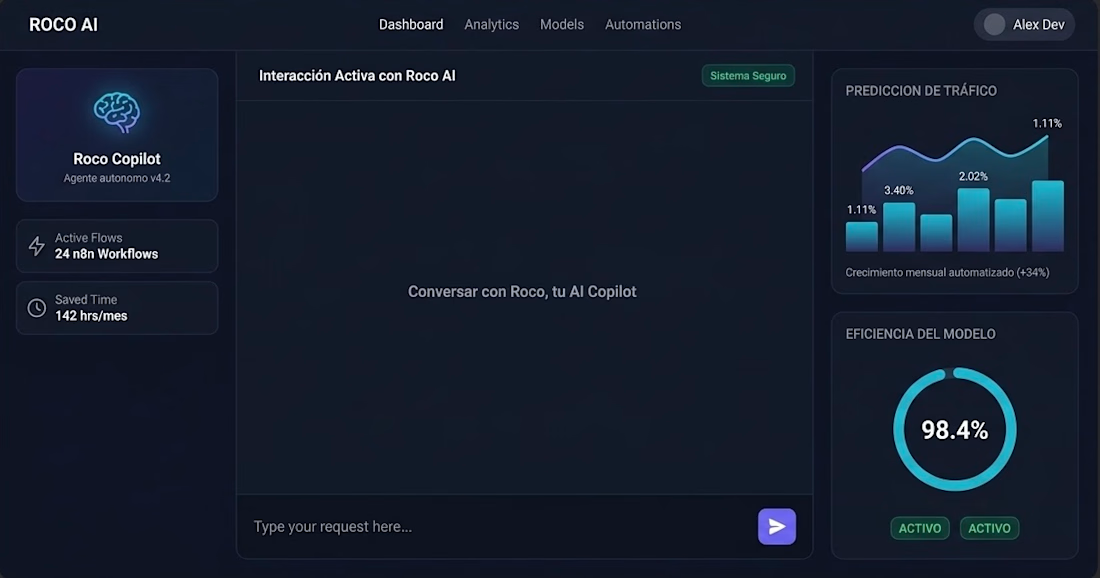

When the web app and the bot share one database, which side owns the conversation state: the n8n workflow or the app? That choice seems to decide whether a customer can switch between WhatsApp and the web view mid-request.