
Saiyid Mushahid
AI Content, Images & One-Page Websites That Ship Fast



Joseon Delivery — Seoul 2026, painted in 1800
What if Kim Hong-do came back?
Korea's most beloved genre painter spent the late 1700s documenting ordinary Joseon life, one album leaf at a time: wrestlers, taverns, schoolrooms, ferry landings. His world and ours run on the same fuel: food, crowds, music, work.
So I trained a Recraft style on eight leaves from his Danwon album (public domain, Wikimedia Commons) and asked it to paint the ordinary Seoul of 2026. Same ink, same warm paper, same affection for crowds, new century.
SCENE 1 · THE DELIVERY: A helmeted rider hands over lunch outside a tiled-roof restaurant. Danwon painted travellers heading to market; ours just arrive faster. (after Jangteogil, the road to market)
SCENE 2 · THE CONVENIENCE STORE: The 24-hour store is the new jumak: noodles at the window counter, a clerk who has seen everything. (after Jumak, the tavern)
SCENE 3 · THE VIDEO CALL: Two friends, one glowing phone, a crowd that pretends not to listen. (after Ssireum, the wrestling crowd)
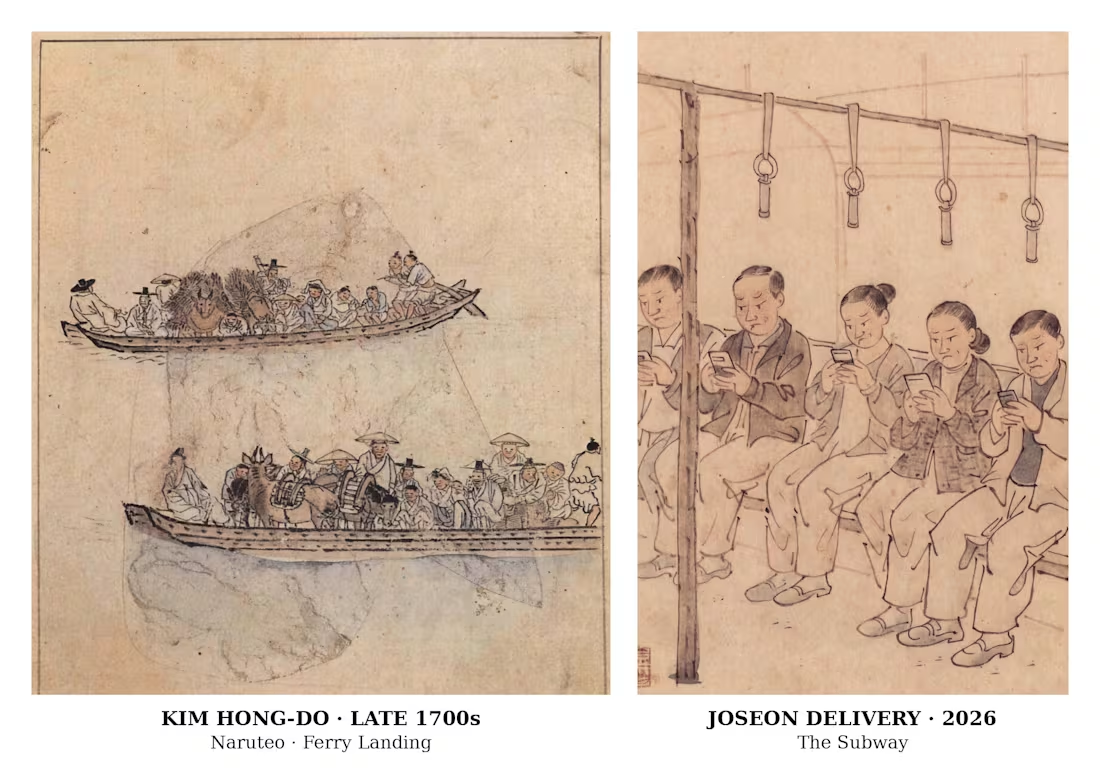
SCENE 4 · THE SUBWAY: A whole carriage, heads bowed, not in prayer, at phones. Danwon's ferry passengers waited the same way. (after Naruteo, the ferry landing)
SCENE 5 · THE NORAE BANG: The dancing boy had musicians; we have a tambourine, a microphone and disco lights. (after Mudong, the dancing boy)
SCENE 6 · THE STREET STALL: Steam, skewers and spicy rice cakes at dusk, the forge's heat made edible. (after Daejanggan, the smithy)
SCENE 7 · THE PC BANG: The village school grew up: rows of pupils at glowing screens, one celebrating a victory instead of fearing the teacher. (after Seodang, the village school)
FINALE · THE FESTIVAL STREET: Everything at once: rider, busker, stall, a forest of phones filming it all.
The brief: Kim Hong-do's Danwon album leaves (late 1700s, public domain) became a Recraft style, "Pungsokdo 2026", used to paint eight slices of everyday Seoul in 2026: delivery riders, convenience stores, subway phone-glow, PC bangs. The style holds (ink, light colour, warm paper, crowds in motion); only the props changed. Some background figures still dress like it's 1800. Honestly, so does half of Bukchon on a weekend.
Recraft project (full series): https://www.recraft.ai/project/d742b5a7-d032-4cc6-a51c-5a330c5d49e1
Try the style, "Pungsokdo 2026" (free to use): https://www.recraft.ai/styles/705da9da-bbf7-43af-bb7a-1850588ba8b4
Archive references (Kim Hong-do, Danwon Pungsokdo-cheop, public domain, Wikimedia Commons)
Ssireum: https://commons.wikimedia.org/wiki/File:Danwon_Ssireum.jpg
Jangteogil: https://commons.wikimedia.org/wiki/File:Danwon_Jangteogil.jpg
Mudong: https://commons.wikimedia.org/wiki/File:Danwon_Mudong.jpg
Seodang: https://commons.wikimedia.org/wiki/File:Danwon_Seodang.jpg
Daejanggan: https://commons.wikimedia.org/wiki/File:Danwon_Daejanggan.jpg
Jumak: https://commons.wikimedia.org/wiki/File:Danwon_Jumak.jpg
Naruteo: https://commons.wikimedia.org/wiki/File:Danwon_Naruteo.jpg
Bbalraeteo: https://commons.wikimedia.org/wiki/File:Danwon_Bbalraeteo.jpg
5
7
450
Specimens of the Future: a Haeckel-style field guide to 2026
0
1
Specimens of the Future — a field guide to the machines of 2026, drawn in 1899
What if Ernst Haeckel had been handed our century to catalogue?
In the Biodiversity Heritage Library's scans of Kunstformen der Natur (1899) I found the most beautiful filing system ever made: jellyfish, radiolarians and hummingbirds arranged like jewels, every creature centred, symmetrical, and gravely serious. I trained a custom Recraft V4 Style — Machina Naturae — on eight of Haeckel's plates, and used it to catalogue the fauna that actually surrounds us now.
PLATE I · THE SMARTPHONE — the slab that glows back; its charging cable curls like a tentacle.
PLATE II · THE WIRELESS EARBUDS — twin grubs resting in their shell-case nest.
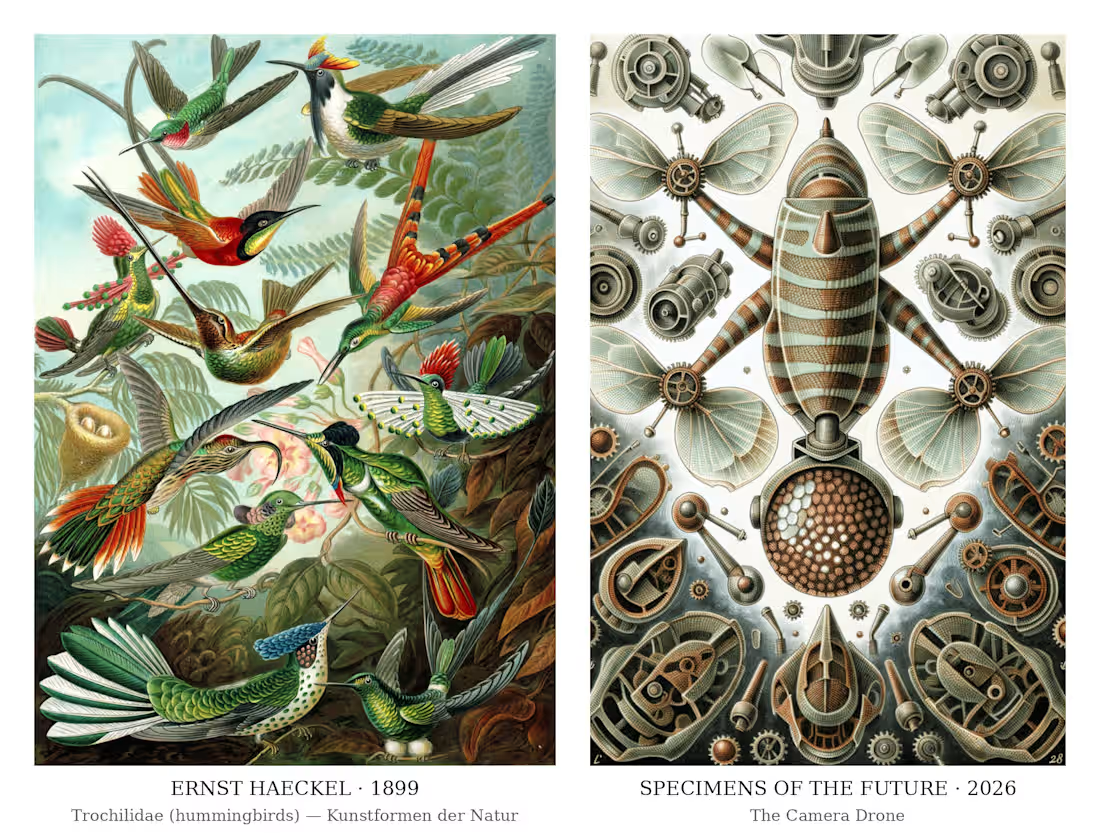
PLATE III · THE CAMERA DRONE — a four-winged insect with a single compound eye.
PLATE IV · THE ELECTRIC SCOOTER — a heron on one long leg, at rest between migrations.
PLATE V · THE VR HEADSET — a blind deep-sea creature, banded where its eyes should be.
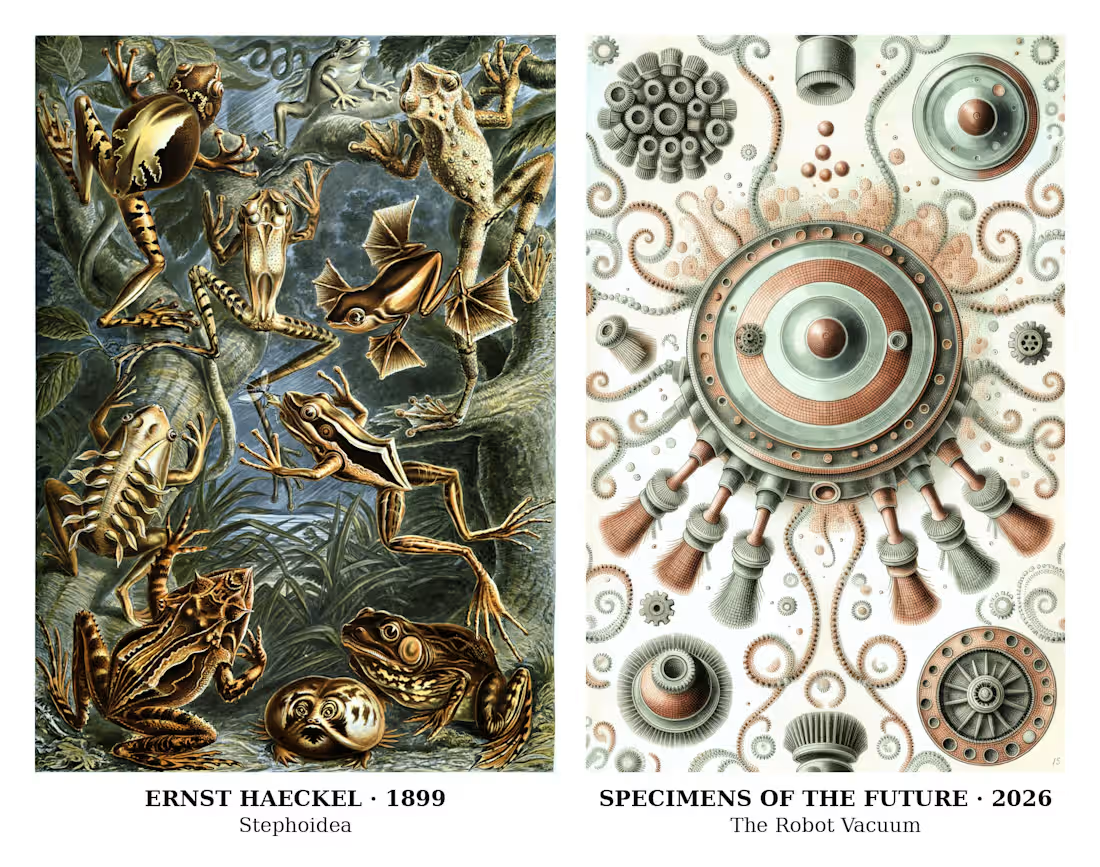
PLATE VI · THE ROBOT VACUUM — a disc tortoise, grazing the savannah of the living-room floor.
PLATE VII · THE SMARTWATCH — the wrist-dweller, its dial a single watchful eye.
PLATE VIII · THE FOOD-DELIVERY BOX — a hermit species that carries its insulated home.
The brief: In the stacks of the Biodiversity Heritage Library I found Ernst Haeckel's Kunstformen der Natur (1899) — plates that arranged jellyfish and radiolarians like jewels in a cabinet. I built one custom Recraft Style from eight of his plates and used it to catalogue the machines that now live alongside us: the smartphone, the drone, the robot vacuum. Each device is drawn as Haeckel drew his specimens — centred, symmetrical, gravely serious — as if a naturalist of 1899 had been handed the year 2026 to document. The result is a field guide to a fauna nobody ordered, but everybody owns.
Full series in the Recraft project: https://www.recraft.ai/project/bb94acd8-7b26-4c8c-9f19-00e7ec676a26
Try the Machina Naturae style: https://www.recraft.ai/styles/30cb7d33-a267-4687-bbbe-852998bcc5b5
Archive references (all public domain, Wikimedia Commons):
· Trachomedusae — https://commons.wikimedia.org/wiki/File:Haeckel_Trachomedusae.jpg
· Tetracoralla — https://commons.wikimedia.org/wiki/File:Haeckel_Tetracoralla.jpg
· Gamochonia — https://commons.wikimedia.org/wiki/File:Haeckel_Gamochonia.jpg
· Chiroptera — https://commons.wikimedia.org/wiki/File:Haeckel_Chiroptera.jpg
· Batrachia — https://commons.wikimedia.org/wiki/File:Haeckel_Batrachia.jpg
· Stephoidea — https://commons.wikimedia.org/wiki/File:Haeckel_Stephoidea.jpg
· Orchidae — https://commons.wikimedia.org/wiki/File:Haeckel_Orchidae.jpg
· Trochilidae — https://commons.wikimedia.org/wiki/File:Haeckel_Trochilidae.jpg
#recraftstyleschallenge
12
6
513
Codex 2026: Leonardo da Vinci invents 2026
What if Leonardo had lived another 500 years?
He sketched a helicopter in the 1480s, a tank, a parachute, a self-propelled cart, even a bicycle, then ran out of century. So I built a Recraft style from eight of his original drawings (public domain, Wikimedia Commons) and handed him the machines of 2026 to finish the job.
The paper is aged, the ink is brown, the handwriting runs backwards. Only the inventions are new.
PLATE I · THE FLYING TAXI: An electric air taxi lifts off a city rooftop, drawn like his flying-machine studies, all wings, struts and patient geometry. (after the design for a flying machine)
PLATE II · THE SELF-DRIVING CAR: No horse, no driver, no reins. His armoured car lost its cannons and gained a roof sensor; the tortoise shell stayed. (after the armoured tank studies, British Museum)
PLATE III · THE HUMANOID ROBOT: A metal man stands in the Vitruvian pose, arms out, inside the square and the circle. Leonardo measured the human body; we copied his homework. (after the Vitruvian Man)
PLATE IV · THE ELECTRIC BICYCLE: Two wheels, a chain, a rider. His bicycle sketch waited five centuries for a battery. (after the bicycle on folio 133v, Codex Atlanticus)
PLATE V · THE ROCKET: His giant crossbow threw bolts the size of tree trunks. Ours throws satellites. A rocket on its launch pad, drawn bolt by bolt like the crossbow page. (after the giant crossbow notebook page, Library of Congress)
PLATE VI · THE WINGSUIT: A man flies in cloth wings under a pyramid canopy. His conical parachute finally got its jump. (after the conical parachute, 1470s)
PLATE VII · THE ROBOT ARM: A barista arm pours coffee with anatomical precision, every joint measured like the studies in the womb drawings. (after Studies of the foetus in the womb)
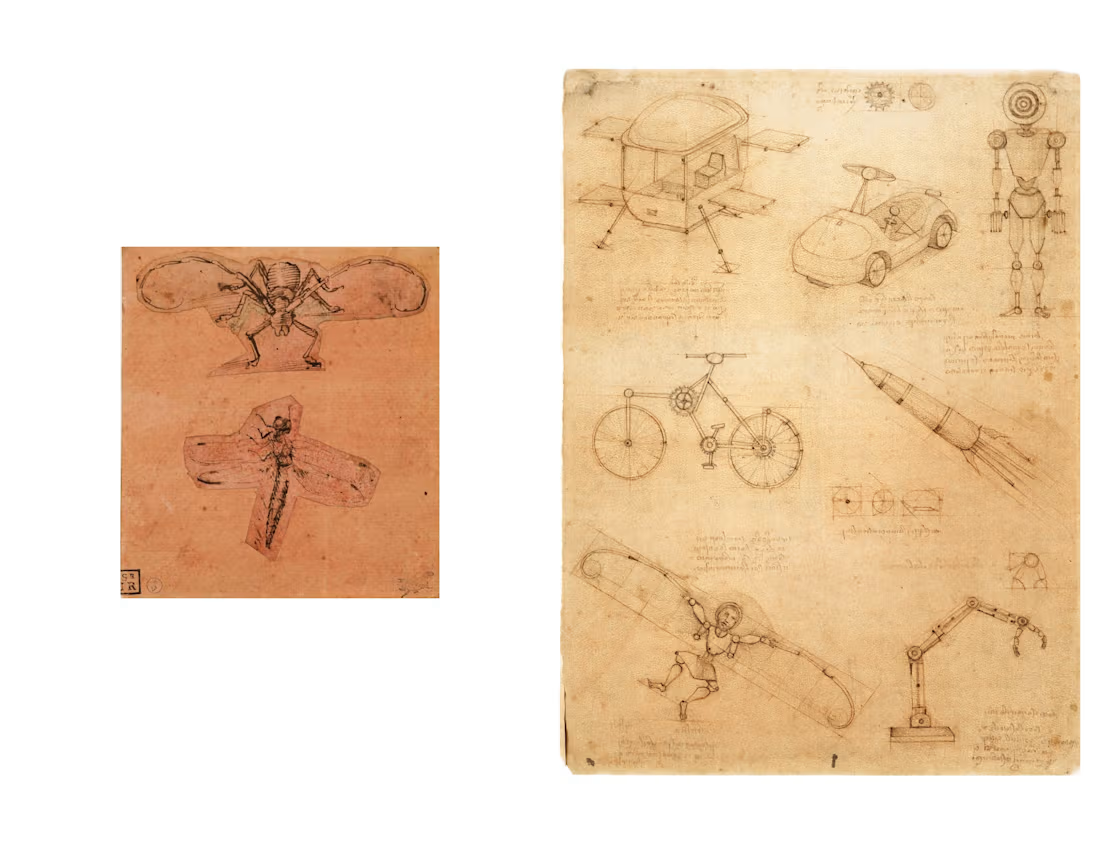
PLATE VIII · THE CODEX SHEET: All seven inventions on one parchment page, the lost folio of a very patient man.
The brief: eight Leonardo da Vinci drawings (invention studies and anatomy, 1470s–1510s, public domain) became a Recraft style, "Codex 2026", used to sketch seven machines of 2026 as Leonardo might have drawn them: flying taxi, self-driving car, humanoid robot, e-bike, rocket, wingsuit, robot arm. The style holds across all of them: sepia ink, aged paper, measured geometry, mirror-script texture. He was not wrong about the future. He was just early.
Recraft project (full series): https://www.recraft.ai/project/fee121f4-1549-4a21-b5ae-88aab442f612
Try the style, "Codex 2026" (free to use): https://www.recraft.ai/styles/9efb550c-01ed-4ee9-bdbe-ac187ab7d62d
Archive references (Leonardo da Vinci, public domain, Wikimedia Commons):
https://commons.wikimedia.org/wiki/File:0_The_Vitruvian_Man_-_by_Leonardo_da_Vinci.jpg
https://commons.wikimedia.org/wiki/File:Da_Vinci_Scythed_Chariot_and_Armoured_Tank.JPG
https://commons.wikimedia.org/wiki/File:Design_for_a_Flying_Machine.jpg
https://commons.wikimedia.org/wiki/File:Conical_Parachute,_1470s,_British_Museum_Add._MSS_34,113,_fol._200v.jpg
https://commons.wikimedia.org/wiki/File:Leonardo_da_Vinci_-_Studies_of_the_foetus_in_the_womb.jpg
https://commons.wikimedia.org/wiki/File:Atlanticus_Folio_133v.jpg
https://commons.wikimedia.org/wiki/File:Reproduction_of_page_from_notebook_of_Leonardo_da_Vinci_showing_giant_crossbow_LCCN2006681087.jpg
https://commons.wikimedia.org/wiki/File:Leonardo_insects_drawings.jpg
0
88