The network for creativity
Join 1.25M professional creatives like you
Connect with clients, get discovered, and run your business 100% commission-free
Creatives on Contra have earned over $150M and we are just getting started
Back to feedPost
Taste Test
Gamified self-improvement concept built in Framer. 🎮
I used ASCII art to visualize "upgrading your character" in real life. Aiming for a raw, gamelike feel.
Which vibe hits harder? Dark HUD or Light Clean?
Does the self-improvement angle come across clearly? Let me know!

54 voted
84%
10 voted
16%
64 votes
Closed

I’d go with the dark one. The contrast makes the content more readable and the HUD vibe reinforces the game logic behind the self-improvement idea. It feels more intentional and immersive than the light version.

That's a great insight. Thank you Juan!

Agreed!

Dark
Thanks NextGrid! 🙌

The dark one has a better contrast. And yes, the copy clearly support the self-improvement combined with the VR ACSII
Thanks Mark! 🔥

Sure, thanks Cipher!🔥

The ASCII art approach is such a clever way to bridge the gap between retro tech and a modern self-improvement concept.
Personally, the Dark hits harder, it feels more like an immersive 'game mode' for your life. Great work on the Framer execution!
Thank you Rana!🚀

The light version feels unique and different for me because it is standard direction.
Ok, thanks Krishna!

love this concept — the gamified approach to growth is really smart
Thanks Stephanie! 🚀
Your welcome Chris


Thank you Nabeel!

This is good. Gamifying the experience and keeping visitors glued
Thanks Paul! 🔥

Another rare one where I go with dark instead of light one. 🫠

this is very great

This is clever. Dark HUD feels punchier, Light Clean feels approachable, depends if you want intensity or accessibility. The self improvement theme comes through nicely either way.
Thanks Henry! 🔥

Sure 😊

Dark is cleaner, more clear and intentional for converting
Thank you Simply7!

Kind of like a white one for no particular reason except personal taste.
How did you animate ASCII art?
Thanks Goran! I generated this Image in MidJourney and animated it with this prompt (in MidJourney with loop function):
A woman wearing a VR headset, strictly clockwise-only 360-degree rotation. Continuous unidirectional spin on a turntable. Full circle rotation without any...


Definetly the darker one. More viusal imapct than the light variant
Ok, thanks Fawaz! 🚀

Well-done Blazej! I’ll go with the dark mode because it is much more readable
Thank you Abdul! 🙌

I love dark one

Really like the dark one, matrix vibes
The network for creativity
Join 1.25M professional creatives like you
Connect with clients, get discovered, and run your business 100% commission-free
Creatives on Contra have earned over $150M and we are just getting started





Related posts


Which one grabs your attention and should be the main visual for a framer template thumbnail?
7 voted
50%
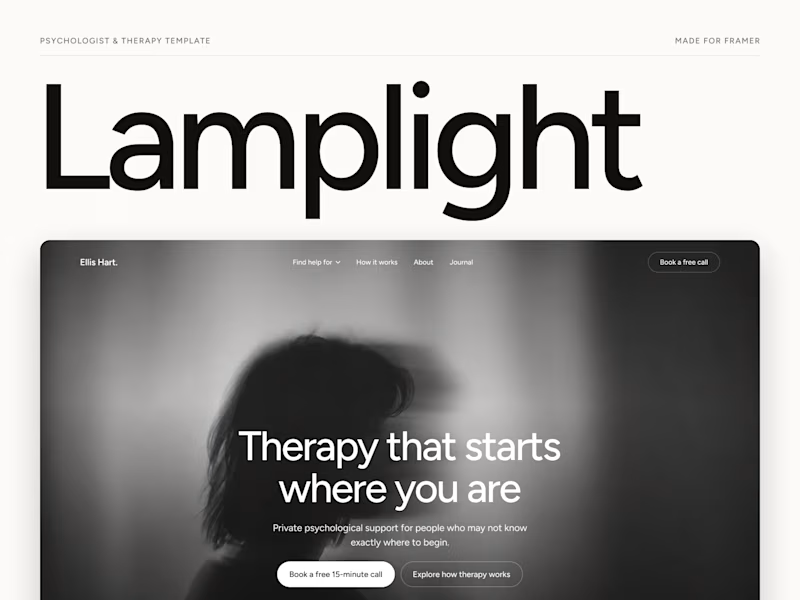
7 voted
50%
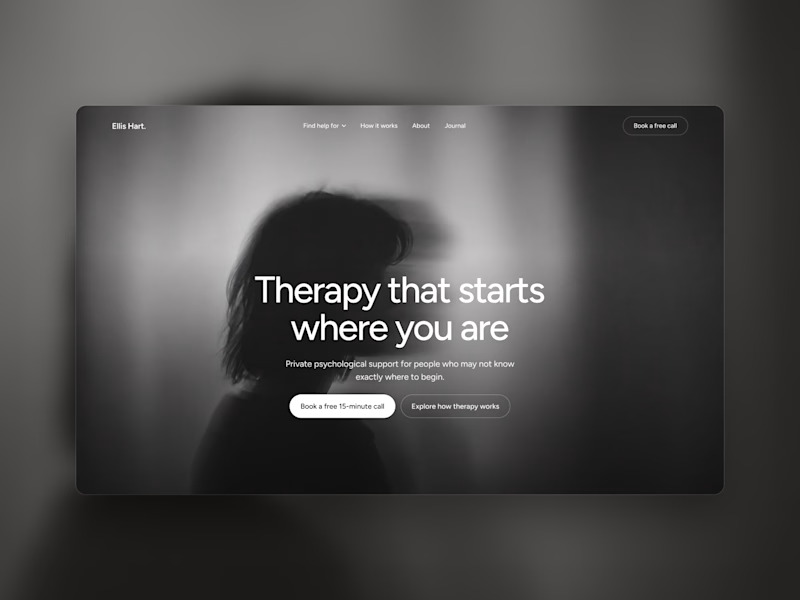
14 votes
Closed

Both works are great; it's hard to choose

Designed for people who want the journey to feel as good as the destination.
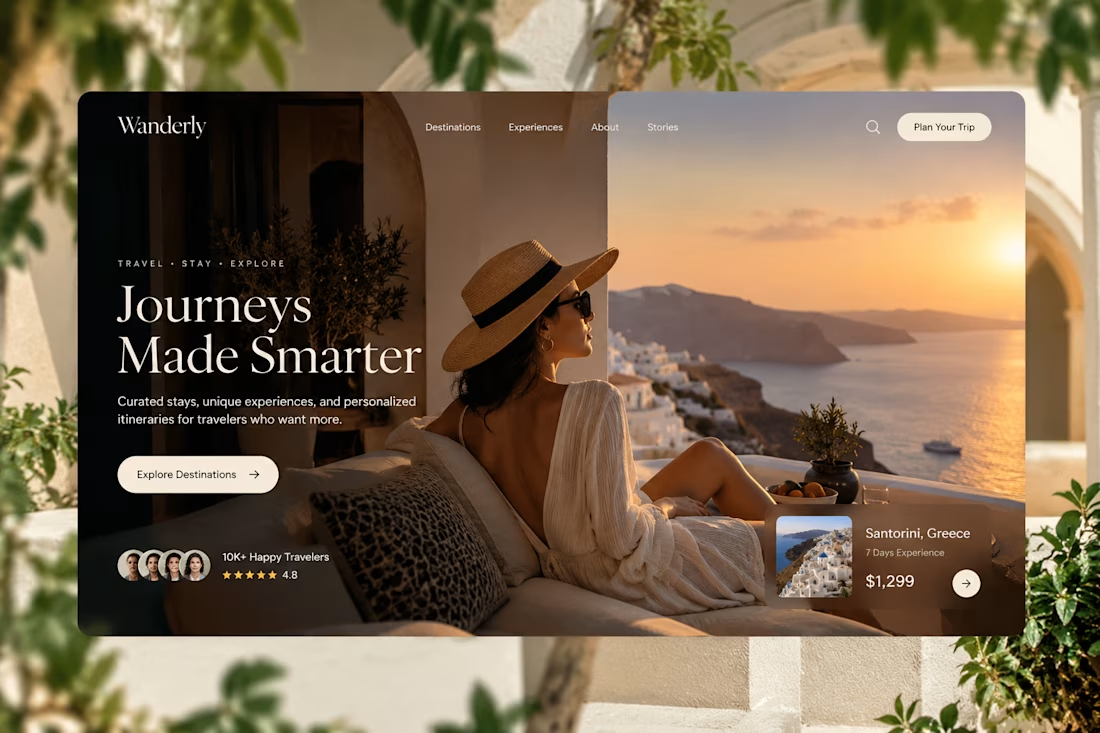
Created a premium travel website concept for Wanderly, combining cinematic imagery with an editorial-style digital experience.
The goal was to make the website feel less like a typical travel booking platform and more like a luxury travel magazine you can interact with.
What I focused on:
• Premium travel brand direction
• Cinematic hero experience
• Editorial typography
• Destination and experience cards
• Strong visual storytelling
• Clear booking-focused CTA
• Social proof and traveler ratings
• Responsive web layout
• Luxury hospitality-inspired UI
The design uses warm neutrals, deep shadows, soft typography, and immersive imagery to create a sense of escape before the user even starts planning the trip.
Designed with a strong Figma + Framer-style approach, focusing on visual hierarchy, interaction, and conversion.
#WebDesign #TravelDesign #Figma #Framer #UIUX #LandingPage #LuxuryTravel #BrandDesign #WebDesignInspiration #Contra


Elegance hero


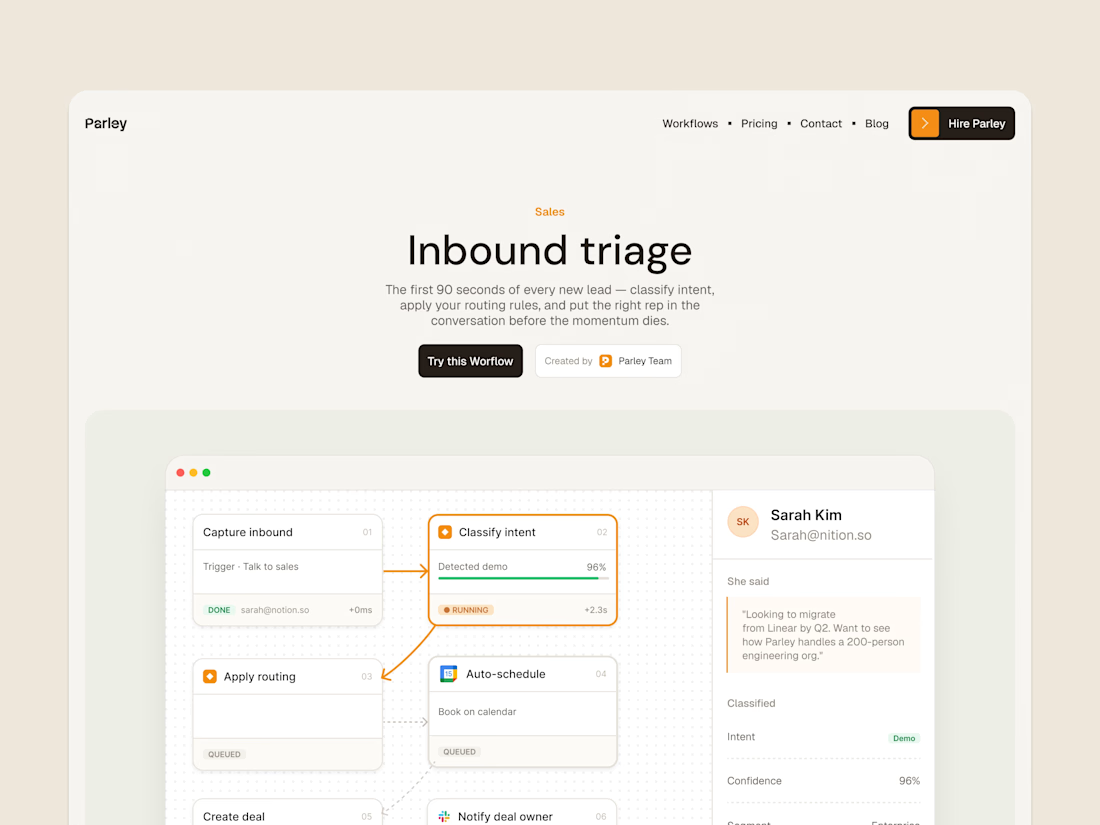
parley’s inbound triage page, with the workflow laid out below the introduction.
get it free now → https://framer.link/s1Llkdh

Nice work!