The network for creativity
Join 1.25M professional creatives like you
Connect with clients, get discovered, and run your business 100% commission-free
Creatives on Contra have earned over $150M and we are just getting started
Back to feedPost

🚨 WordPress Security Alert: This One Deserves Attention
WordPress 7.1.2 was released as a critical security update.
But here's the part developers should pay attention to:
Security researchers have reported active exploitation attempts targeting the vulnerability after the patch was released.
The vulnerability can allow an unauthenticated attacker to include local PHP files under certain conditions, potentially leading to remote code execution.
Patchstack has reported attackers moving beyond basic scanning and attempting to write PHP files to the server.
If you manage WordPress websites, don't just assume your sites are safe because automatic updates are enabled.
✅ Check your WordPress version
✅ Verify the update actually completed
✅ Review recently modified files
✅ Check admin users
✅ Review security logs
✅ Verify your backups
✅ Remove unused plugins/themes
A security patch is only useful if it's actually applied.
For WordPress developers, regular security monitoring should be part of website maintenance — not an afterthought.
#WordPress #WordPressSecurity #WebDevelopment #PHP #CyberSecurity #WordPressDeveloper


The network for creativity
Join 1.25M professional creatives like you
Connect with clients, get discovered, and run your business 100% commission-free
Creatives on Contra have earned over $150M and we are just getting started





Related posts

Recently, I created two designs for my client. One is in dark mode, and the other is in light mode. I love both of them. Which one do you like more?

5 voted
56%
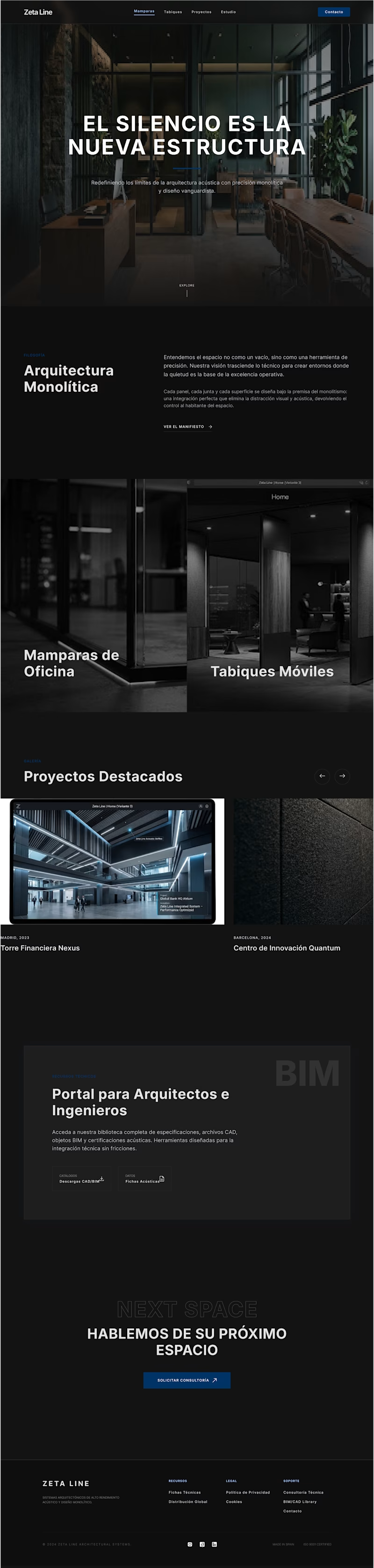
4 voted
44%

9 votes
Closed

fresh light


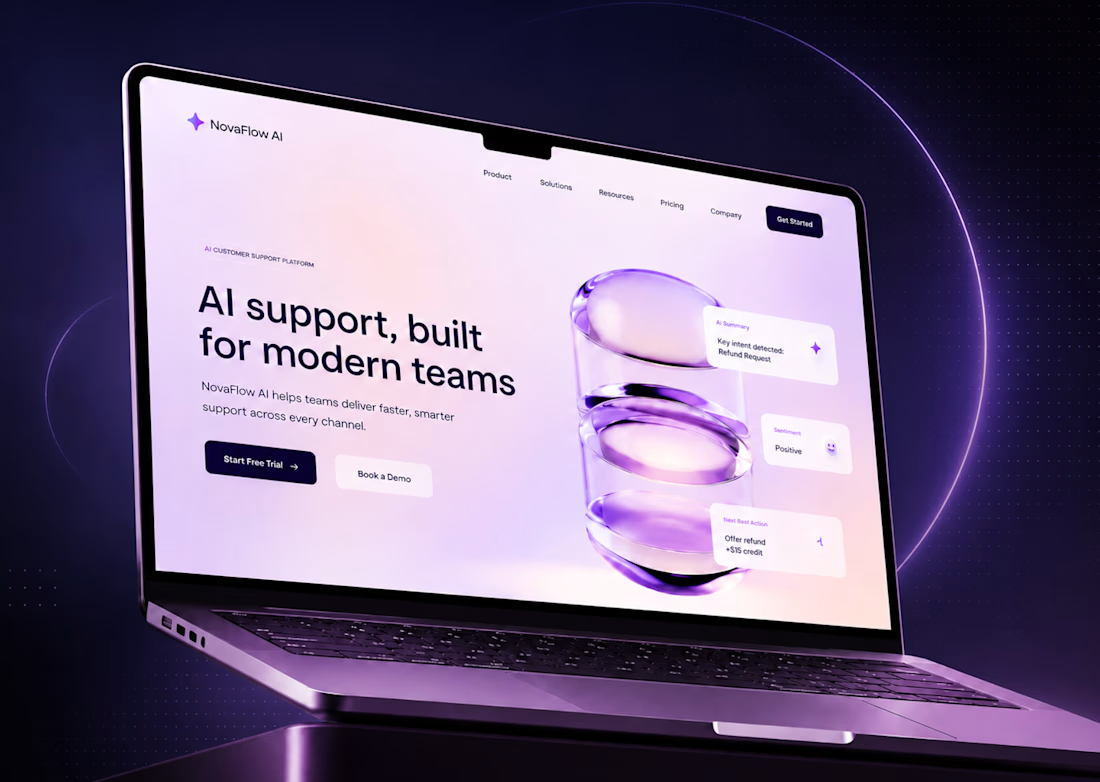

The product flow stays clear across the web and motion elements.

This project focused on building and testing a practical AI security assessment lab for evaluating LLM defenses against prompt injection and jailbreak attacks.
I integrated Spikee by Reversec with a locally hosted cybersecurity model running through LM Studio, then added NVIDIA NeMo Guardrails to compare model behavior under three conditions: no guardrails, input filtering, and combined input/output protection.
The work included configuring the local model environment, building a custom FastAPI gateway, integrating NeMo Guardrails, troubleshooting model latency and timeout issues, creating a reusable Spikee target, and analyzing attack results using Spikee’s built-in reporting tools.
The project also explored different adversarial testing approaches, including prompt injection datasets, obfuscation, encoded attacks, Best-of-N testing, synthetic canary leakage tests, and structured benchmark comparisons.
The objective was to measure how much the guardrails reduced successful attacks while keeping the model, dataset, and testing conditions consistent.
Tools used: Spikee, NVIDIA NeMo Guardrails, LM Studio, Python, FastAPI, PowerShell, Parrot OS, local LLMs, JSONL datasets, and custom security testing scripts.
This project demonstrates a hands-on approach to LLM red teaming, AI safety testing, prompt-injection assessment, and guardrail validation for organizations deploying generative AI systems.


pretty cool tbh. testing the same attacks with different guardrail setups makes the results way more interesting.