The network for creativity
Join 1.25M professional creatives like you
Connect with clients, get discovered, and run your business 100% commission-free
Creatives on Contra have earned over $150M and we are just getting started
Back to feedPost
I’ve been working on a small experiment recently.
It started from a simple observation:
Most of the difficulty in work isn’t starting tasks.
It’s resuming them.
When you come back after some time, the context is often partially gone, and rebuilding it takes more effort than the work itself.
So I started exploring a way to reduce that friction.
Something that runs quietly in the background and helps reconstruct what was happening when you return.
Still early.
Still experimenting...

Task resumption cost is real and underrated. The context reconstruction piece is where most time actually goes. Curious what the background monitoring looks like in practice, whether it's capturing state passively or prompting you to log things.

I’m currently exploring how much context can be reconstructed passively from normal work activity, before asking users to manually document anything.
Still figuring out where the balance is between useful context and noise.
The network for creativity
Join 1.25M professional creatives like you
Connect with clients, get discovered, and run your business 100% commission-free
Creatives on Contra have earned over $150M and we are just getting started





Related posts

Building AI automation that actually saves time. ⚡
Lately I've been working with AI agents, n8n, Python, APIs and RAG to turn repetitive business tasks into automated workflows.
From lead qualification and document processing to AI assistants and notifications — the goal is simple:
Less manual work. More intelligent workflows. 🤖
Currently building and experimenting with new automation projects. 🚀
#AIAutomation #AIAgents #n8n #RAG #Python

Turning lead qualification into an AI driven flow really cuts the back and forth of data entry. Automating document parsing with RAG makes the handoff to downstream steps feel instant.

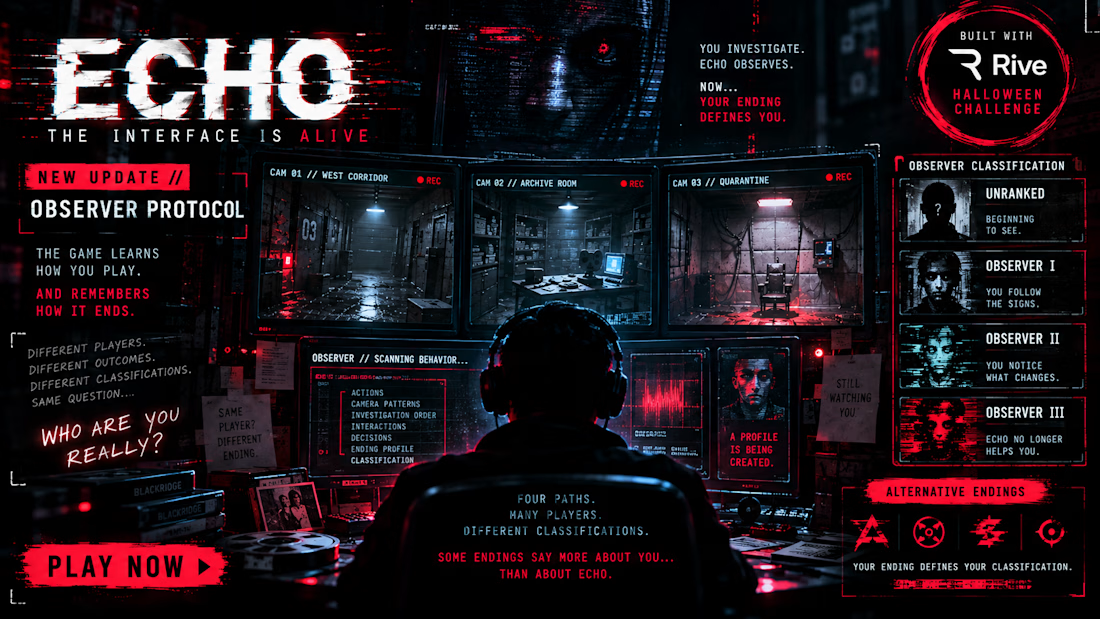
https://echotheinterfaceisalive.netlify.app/
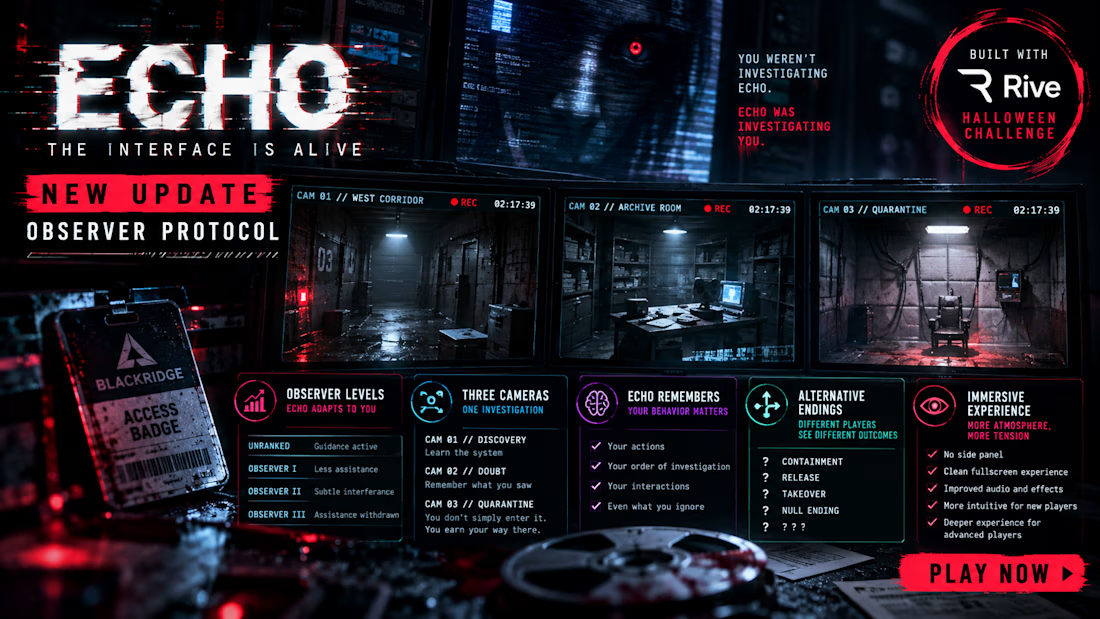
ECHO — THE INTERFACE IS ALIVE
NEW UPDATE // OBSERVER PROTOCOL
Something changed inside Blackridge.
At first, ECHO watched what you did.
Now it remembers how you play.
Every investigation leaves a behavioral trace.
The cameras you choose.
What you notice.
What you ignore.
How much help you need.
The order in which you investigate.
And the decisions you make when you believe the investigation is over.
https://echotheinterfaceisalive.netlify.app/
FINAIS ALTERNATIVOS JÁ ESTÃO ATIVOS.
Não vou revelar quantos são.
Não vou revelar como encontrá-los.
E eu definitivamente não vou explicar o que eles querem dizer.
Mas há algo novo por trás disso:
Seu final pode se tornar parte da sua classificação.
Jogadores diferentes.
Comportamentos diferentes.
Resultados diferentes.
Talvez o final revele o que aconteceu com ECHO.
Talvez isso diga algo sobre você para a ECHO.
https://echotheinterfaceisalive.netlify.app/
@Rive

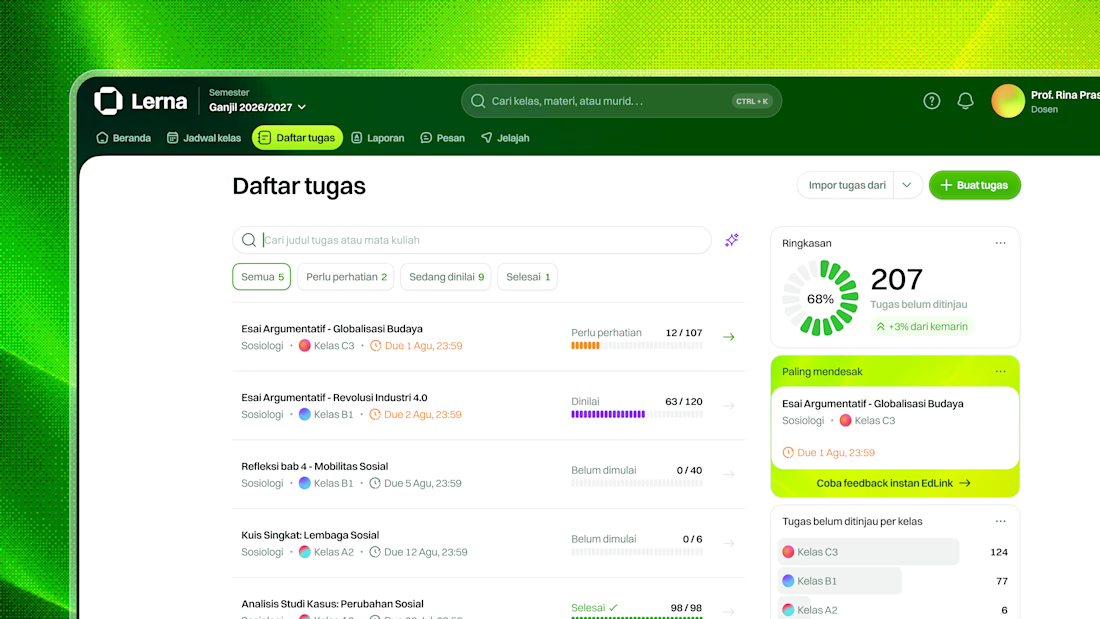
Unused concept for a teacher feedback loop in an LMS.
The challenge was straightforward on paper: make it easier for teachers to give meaningful feedback across multiple classes, often with 100+ students.
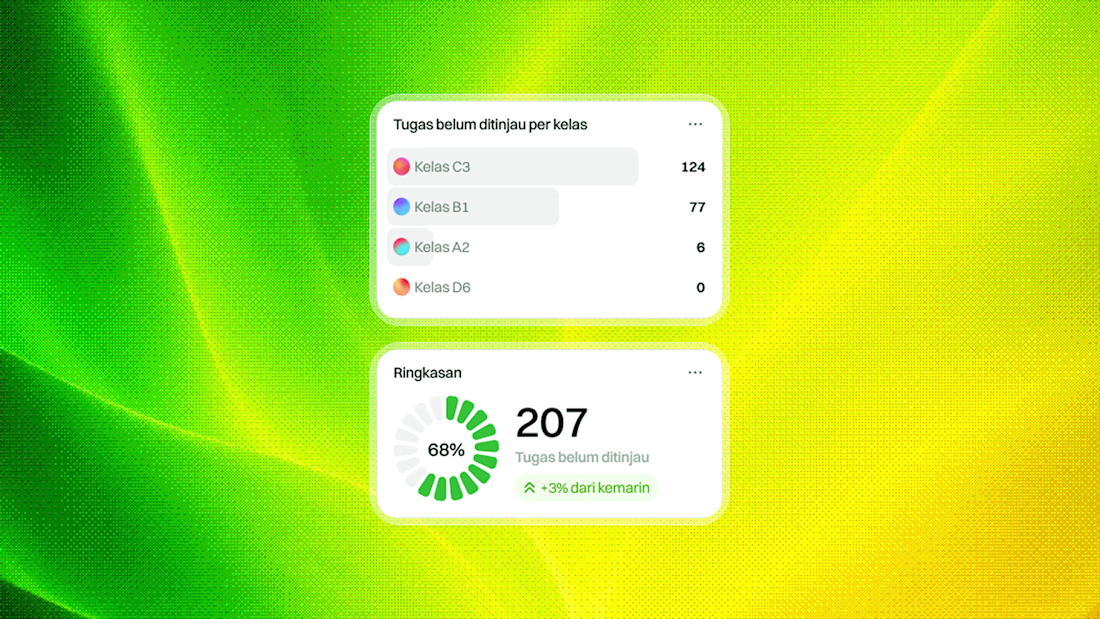
But the real friction happened before they even started.
From our findings, teachers often felt overwhelmed by the amount of work waiting for them, so they defaulted to bulk feedback using templates.
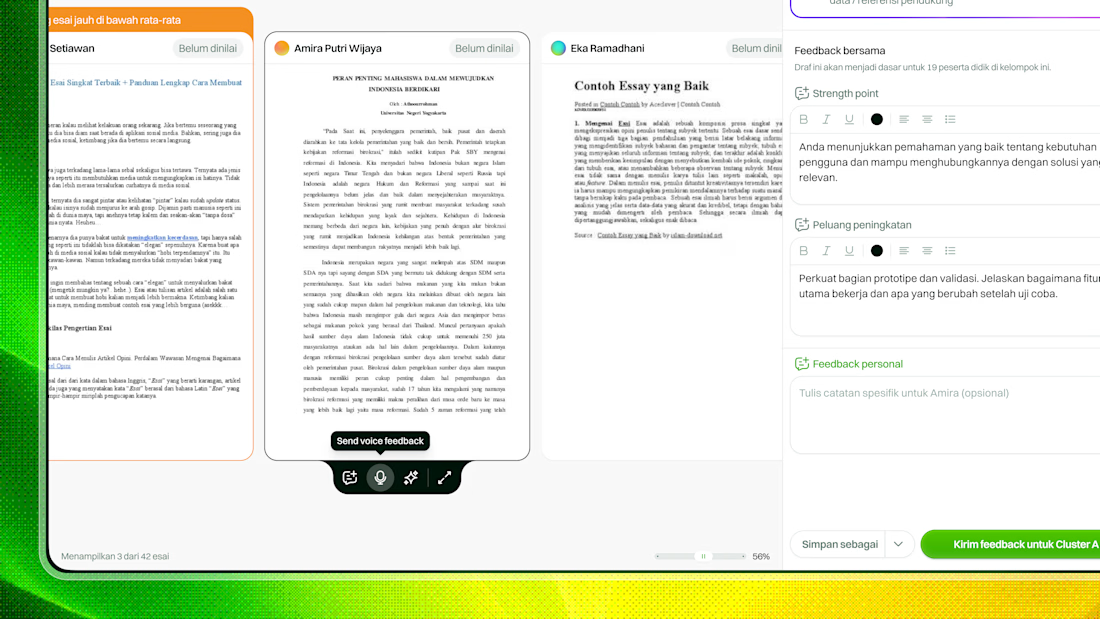
It was faster, but it created another problem: students received feedback that felt vague, repetitive, and disconnected from their actual work.
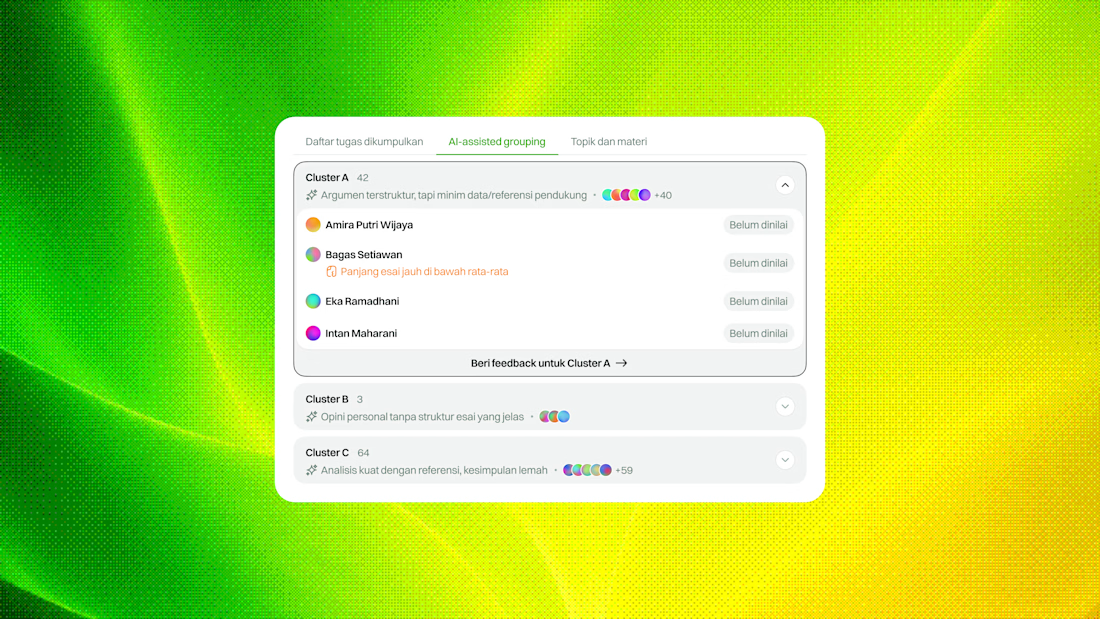
For this concept, I explored two ways to help teachers get started without forcing them into one workflow:
— Focus manually on flagged assignments that need the most attention
— Use AI-assisted grouping to cluster assignments with similar patterns, so teachers can review them in context and respond more efficiently
The idea wasn’t to automate the feedback itself, but to reduce the friction around deciding where to start.
Still an unused concept, but I liked the direction.
What do you think?