The network for creativity
Join 1.25M professional creatives like you
Connect with clients, get discovered, and run your business 100% commission-free
Creatives on Contra have earned over $150M and we are just getting started
Back to feedPost

3 Questions I Ask Every Client Before I Write a Single Word ✍️
Good ghostwriting isn't just about putting words together. It's about understanding the person behind those words.
Before I write for any client, I want to understand three things:
1. What do you want people to know you for?
Are you trying to establish authority in your industry, attract clients, share your experiences, or build a personal brand?
Your goal determines the direction of your content.
2. Who are you trying to reach?
Writing for fellow entrepreneurs is different from writing for potential investors or aspiring professionals.
When I understand your audience, I can create content that speaks directly to their needs, challenges, and interests.
3. How do you want your audience to feel when they read your content?
Inspired? Educated? Challenged? Motivated to take action?
Your content should do more than fill someone's feed. It should leave an impression.
Here's what I believe:
You shouldn't have to sound like someone else to build a powerful personal brand.
My job as a ghostwriter is to understand your ideas, preserve your voice, and turn your thoughts into words that connect with the right people.
Because the best content doesn't just sound good.
It sounds like YOU.
If you're building your personal brand and need help communicating your ideas, let's talk.
Your ideas. Your voice. My words. ✨
#Ghostwriting #PersonalBranding #ContentWriting
The network for creativity
Join 1.25M professional creatives like you
Connect with clients, get discovered, and run your business 100% commission-free
Creatives on Contra have earned over $150M and we are just getting started











Related posts

Founder: I’ll post when the product is ready.
Bro.
Your product has been “almost ready” for 2 years 😶
Your buyers are on LinkedIn today.
They’re checking you out.
And they find a post that says “We’re hiring!” from 14 months ago.
You don’t need a perfect product.
You need one honest story.
Too busy to write it?
handover someone like me
visibility brings sales (ads,Premiums,boost)
But a brand brings long term trust and sales without any post buy from me .


So true! 👏 You don’t need to wait for perfection to start building trust. Consistently sharing your journey helps people connect with you long before they’re ready to buy.
How to Build Your Best Portfolio for 2027: Which Format Works Better?
Clients don't have time to dig.
Here's how to make your work easy to trust.
A potential client opens your link. You have about 10 seconds before they decide to stay or leave.
So the real question isn't ...should I have a portfolio?. It's ...which kind gets read, and which gets skipped?
Here's the breakdown.
1. PDF portfolio
Best for: sending directly to a client in a DM or email.
Strength: fast, controlled, looks exactly how you designed it.
Weakness: it's not searchable, it doesn't update itself, and it feels static.
Use it as a companion, not your main home.
2. Platform portfolio (Contra, Behance, Dribbble)
Best for: being found by clients already looking to hire.
Strength: built-in audience, reviews, and a clear way to contact you.
Weakness: you're on someone else's platform, with their layout and their rules.
This is where freelancers should start, because it puts you in front of buyers with no website to build.
3. Your own website
Best for: long-term trust and search.
Strength: you own it, control the story, and can show services, samples, and results in one place.
Weakness: it takes longer to build, and it needs traffic from somewhere else.
This is where serious clients end up after they've found you elsewhere.
4. LinkedIn profile + Featured section
Best for: B2B work, since buyers check it before they message you.
Strength: your portfolio sits next to your posts, so proof and personality are together.
Weakness: limited design space.
For B2B services, this is often the first place a client looks.
So which one wins?
None of them alone. What works best is a simple chain:
LinkedIn (get found) → Contra or your site (see the work) → PDF (close the deal).
Each one does a different job. LinkedIn brings the visitor, the portfolio page proves your skill, and the PDF makes it easy for them to forward you to their team.
What to put in any portfolio
Whatever format you choose, include these 5 things:
A one-line promise: who you help and what changes
3 strong samples, not 15 average ones
A short caption for each: the problem, what you did, why it works
One real result or testimonial, as soon as you have one
One clear next step: book a call, DM, or email
If you don't have client work yet, create sample projects and label them clearly as samples. That's honest, and buyers respect it more than a padded portfolio.
In 2027, a portfolio isn't a gallery. It's a trust tool. Keep it clean, specific, and easy to scan, and make the next step obvious.
I'm Maryam, and I ghost-write LinkedIn content for SaaS founders and help design clear, clean profiles. If you'd like help with your LinkedIn, profile, or website writing, message me on Contra or LinkedIn.
Love this! A portfolio should not just show what you do, but help potential clients understand how you can solve their problems. Trust and clarity make all the difference. 👏

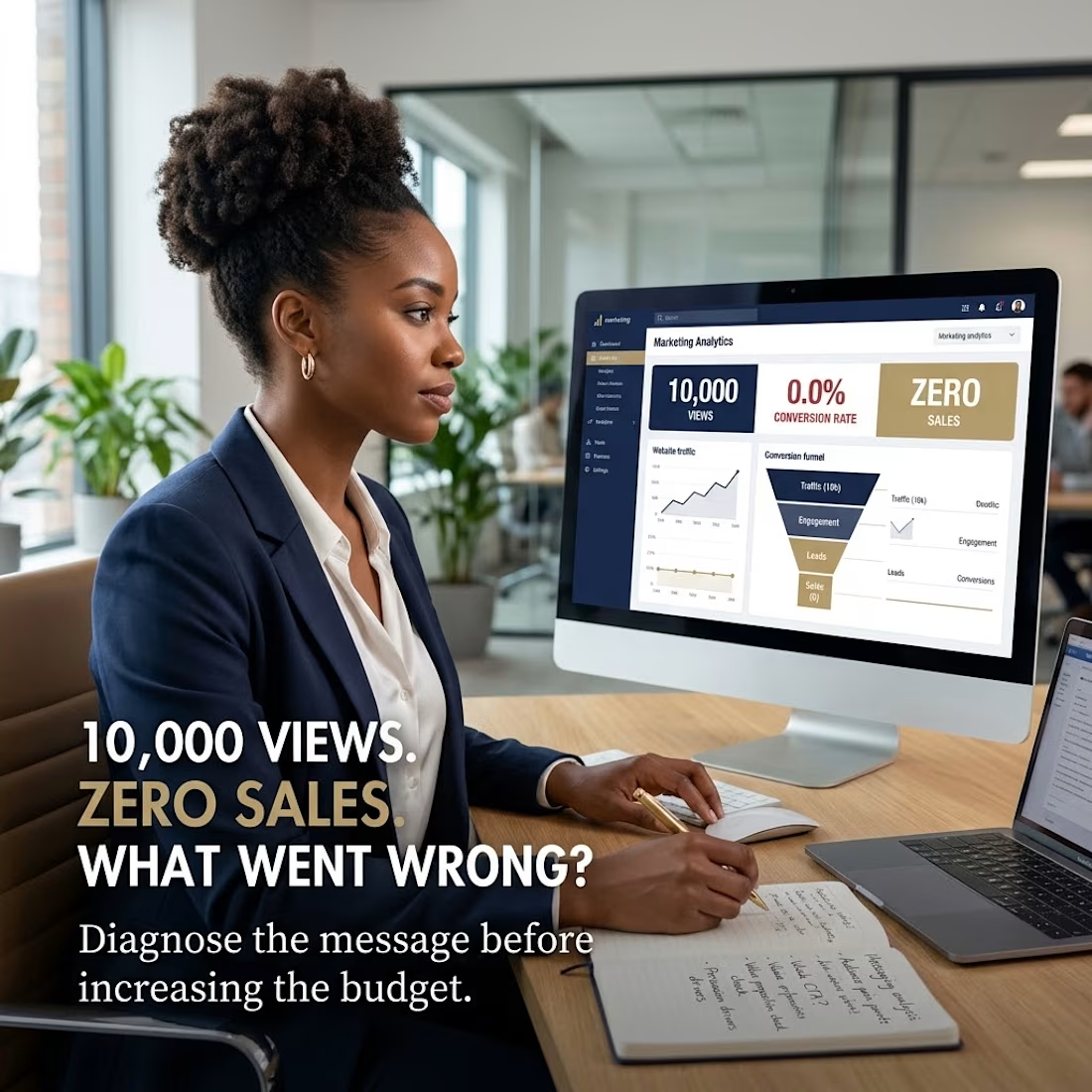
YOUR CUSTOMERS AREN’T BUYING. HERE’S WHY.
Imagine spending ₦500,000 promoting a product, getting thousands of views, and still struggling to make sales.
What went wrong?
Was it the product?
The price?
The audience?
Or the message?
Here’s something many businesses overlook:
Attention gets people to notice you. Persuasion gives them a reason to take action.
As a copywriter, I don’t just see a product and start writing catchy headlines.
I ask deeper questions:
🔍 1. Who is the target audience?
You cannot persuade everyone with the same message. You must understand who you’re speaking to, what they want, and what problems they’re trying to solve.
🧠 2. What is stopping them from buying?
Perhaps they don’t trust the brand. Maybe they don’t understand the value. Or perhaps the offer doesn’t feel worth the price.
Great copy doesn’t ignore these objections. It addresses them.
💡 3. Are we selling features or communicating value?
Customers may not care that your product has 15 features. They want to know how those features make their lives easier, solve a problem, or help them achieve a desired outcome.
🤝 4. Why should they trust you?
Persuasive copy needs more than bold promises. Depending on the product, testimonials, demonstrations, credible evidence, and clear guarantees can help reduce uncertainty.
🎯 5. Is the next step clear?
A compelling message can still lose potential customers if they don’t know what to do next.
Every part of your copy should work together to guide the reader toward a clear, relevant action.
Here’s the challenge I want to leave you with:
If your business received 10,000 views tomorrow but generated zero sales, would you immediately increase your advertising budget, or would you investigate your messaging first?
I would start by examining the customer journey, the quality of the traffic, the offer, and the copy before deciding what to change.
Because sometimes, the problem isn’t that people aren’t seeing your business.
It’s that something is stopping them from taking the next step.
As I continue growing my skills in copywriting, I’m learning to look beyond words and think about the strategy behind them.
Good copywriting isn’t just about making a product sound attractive. It’s about understanding the customer well enough to communicate genuine value.
I’d love to hear your perspective.
👇 Business owners and marketers: What’s the biggest challenge you face when trying to convert interested prospects into paying customers?
Let’s discuss it in the comments.
#Copywriting #ConversionRateOptimization #DigitalMarketing #MarketingStrategy #CustomerPsychology