The network for creativity
Join 1.25M professional creatives like you
Connect with clients, get discovered, and run your business 100% commission-free
Creatives on Contra have earned over $150M and we are just getting started
Back to feedPost

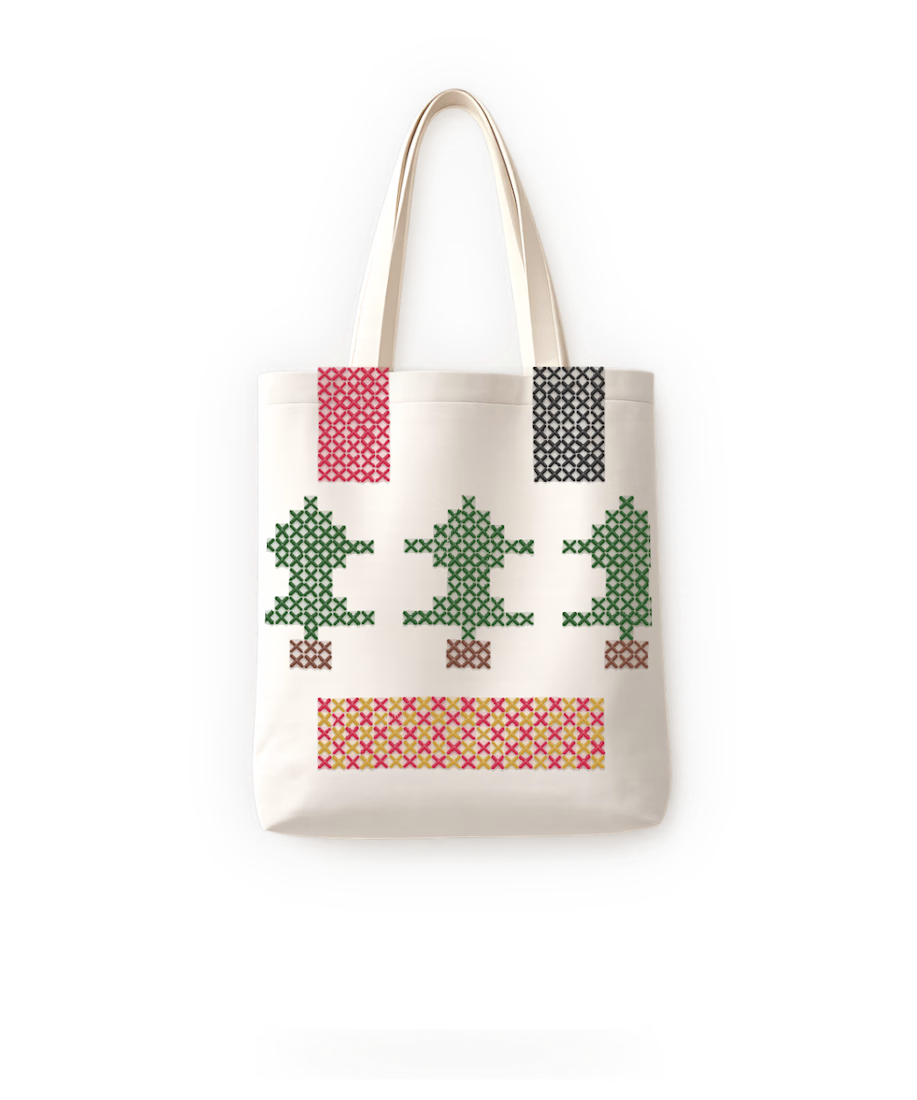
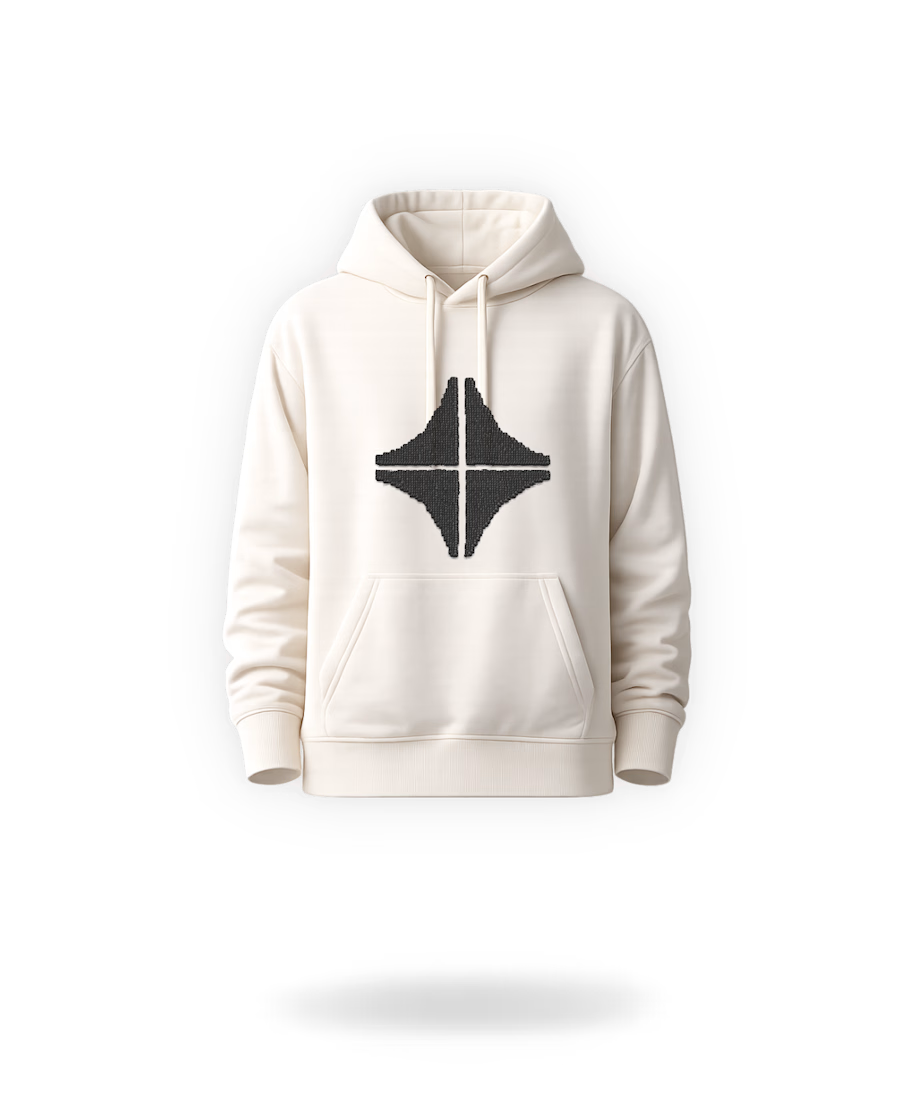
🧵 Introducing StitchLab — where traditional embroidery meets modern design tools
For the #configmakeathon, I built StitchLab: a browser-based cross-stitch and tatreez design studio created entirely with Figma Make.
Cross-stitch carried stories through geometric patterns for generations — but many digital embroidery tools still feel outdated, complex, and disconnected from how designers create today.
I wanted to imagine:
What if creating embroidery felt as natural as designing in Figma?
✨ Inside StitchLab you can:
🎨 Design on a real stitch canvas
Draw with X-stitch, half-stitch, and back-stitch tools using real DMC thread colors.
🧩 Create with traditional motifs & shapes
Drag patterns onto your canvas, customize them, transform them, and build your own compositions.
🖼️ Turn inspiration into stitches
Upload images, trace references, or convert visual elements into stitchable artwork.
🗂️ Design like a pro tool
Layers, ordering, locking, hiding, grouping, alignment, flipping, rotation, and precise grid-based editing.
🪡 Move from screen to craft
Export print-ready PDF charts with thread legends, save your artwork, or preview your embroidery on real products.
StitchLab is my attempt to bridge heritage and technology — preserving traditional craft while giving creators the modern tools they deserve.
Would love to see what people create with it 🧵✨
Try it: https://rule-ochre-52042400.figma.site
Built with Figma · Figma Make · MCP

The network for creativity
Join 1.25M professional creatives like you
Connect with clients, get discovered, and run your business 100% commission-free
Creatives on Contra have earned over $150M and we are just getting started








Related posts



Your web sections always have such strong art direction. Great to see the brand carried right into the layout.


✈️ What if booking a flight was actually fun?
I wanted to make the whole experience feel less like filling out a form and more like playing with an interface.
Turn your sound ON and give it a watch 🎧🔊.

THIS IS GREAT


Hourfield is a 16-second 16:9 launch film for products that organise people's time: calendars, schedulers, booking and reservation apps, planners. Retype a few short lines, drop in your logo and rename the calendar's days and tiles (meetings, table bookings, classes, shifts): the week re-plans itself on screen and the film lands on your logo lockup. Our second version, Maréva, a fictional table-booking app, turns the working week into an evening of reservations on the same animation and timing.
Built end-to-end through the SVGator MCP server. The calendar that re-plans its own week, the orbit that swirls into a single dot and the lines centred by their real letter shapes (fonts measured, not eyeballed) were computed in Python and written straight into a live SVGator project as 780 editable keyframes; I directed every note and finished it in the canvas. Maréva was made the same way, on the same timeline. Everything stays a real layer: 50 live text layers, named elements (headline, logo, product-name, tagline) and one logo image animated in two moments.
Yes, there is a lot to edit: every line of the story, a whole week of calendar tiles, a palette in nine roles. A full rebrand takes longer than five minutes, and that is the honest trade: it shows how much a single SVGator file can carry, and how MCP makes a detailed, story-driven film practical to re-make, not just to watch.
Links:
▶ Template (SVGator)
▶ Demo video, A → B


Love the smooth flow and the text animation! Good luck!