The network for creativity
Join 1.25M professional creatives like you
Connect with clients, get discovered, and run your business 100% commission-free
Creatives on Contra have earned over $150M and we are just getting started
Back to feedPost

Self-initiated internal product. Odds Desk uses public data only. It is not client work, a trading tool, or financial advice.
I built this because a research brief is only as trustworthy as the source snapshot behind it. Catalog freshness, derived summaries, file identity, and editorial status need to stay consistent across every generated artifact.
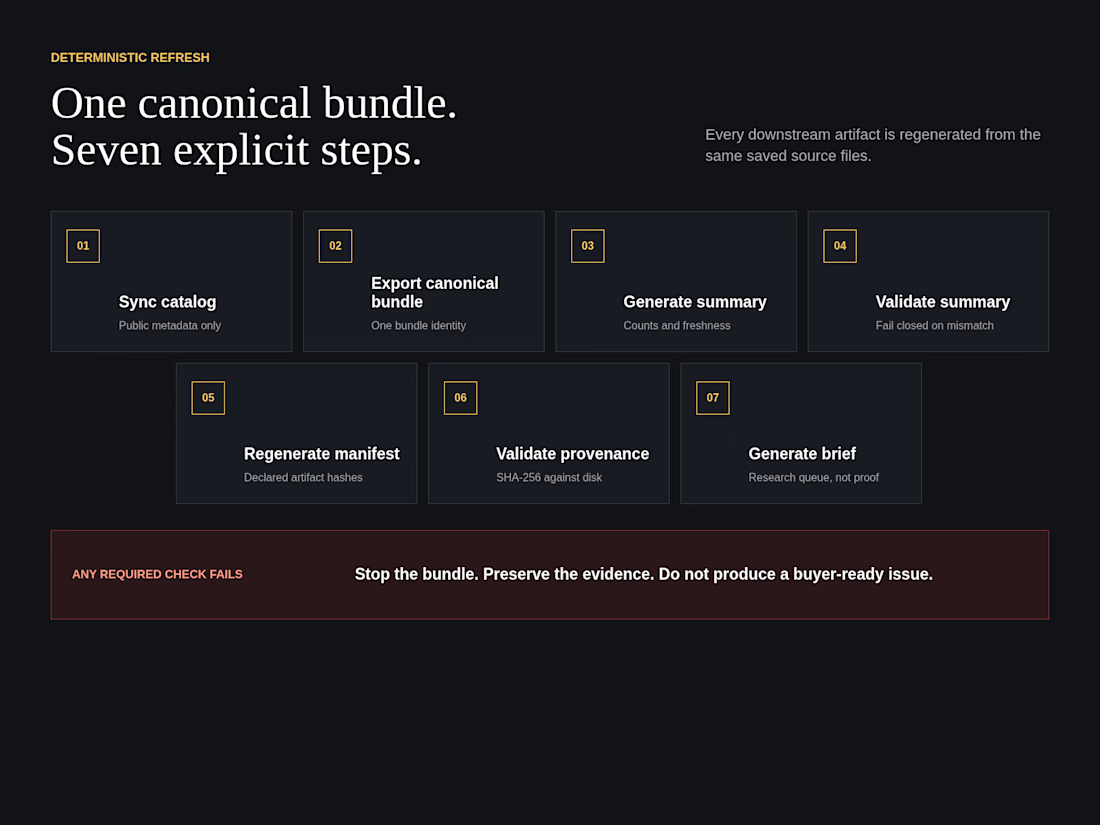
The workflow synchronizes a public catalog, exports one canonical bundle, generates and validates a summary, regenerates a manifest, checks declared SHA-256 values against disk, and produces a dashboard and Markdown brief from the same saved files.
The workflow fails closed. If a required validation fails, the bundle stops, the evidence is preserved, and no buyer-ready issue is produced.
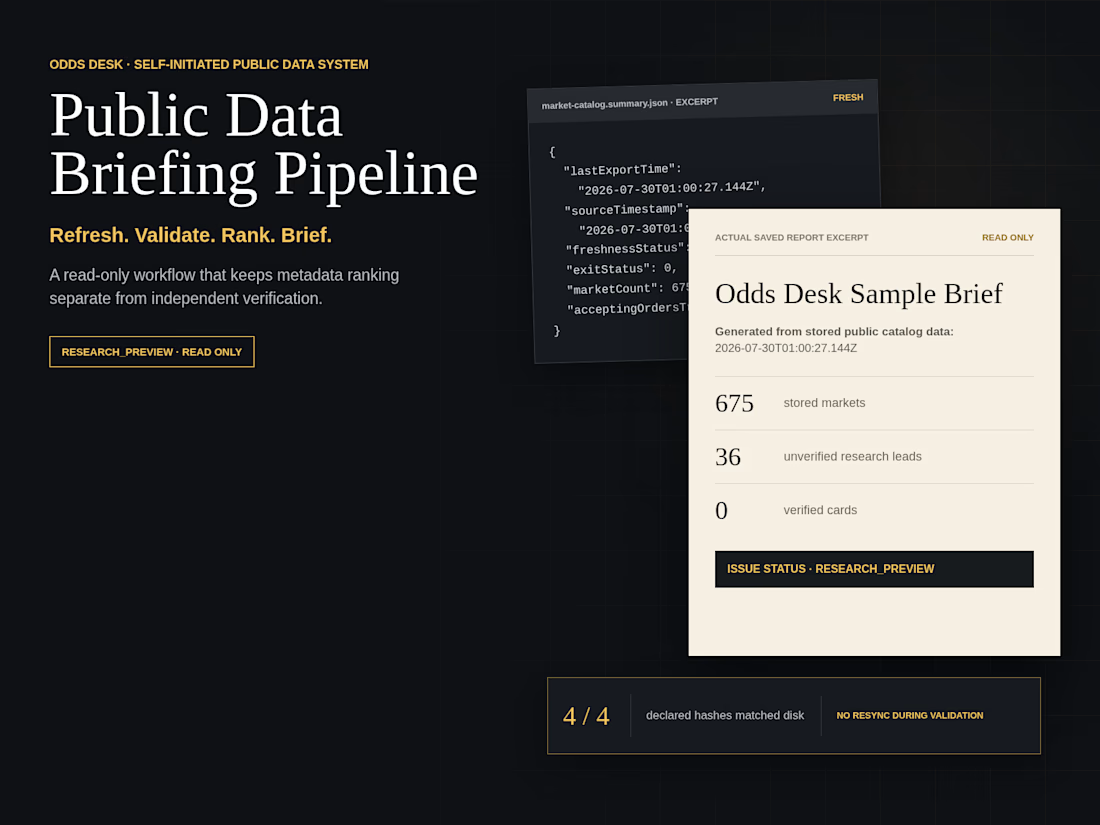
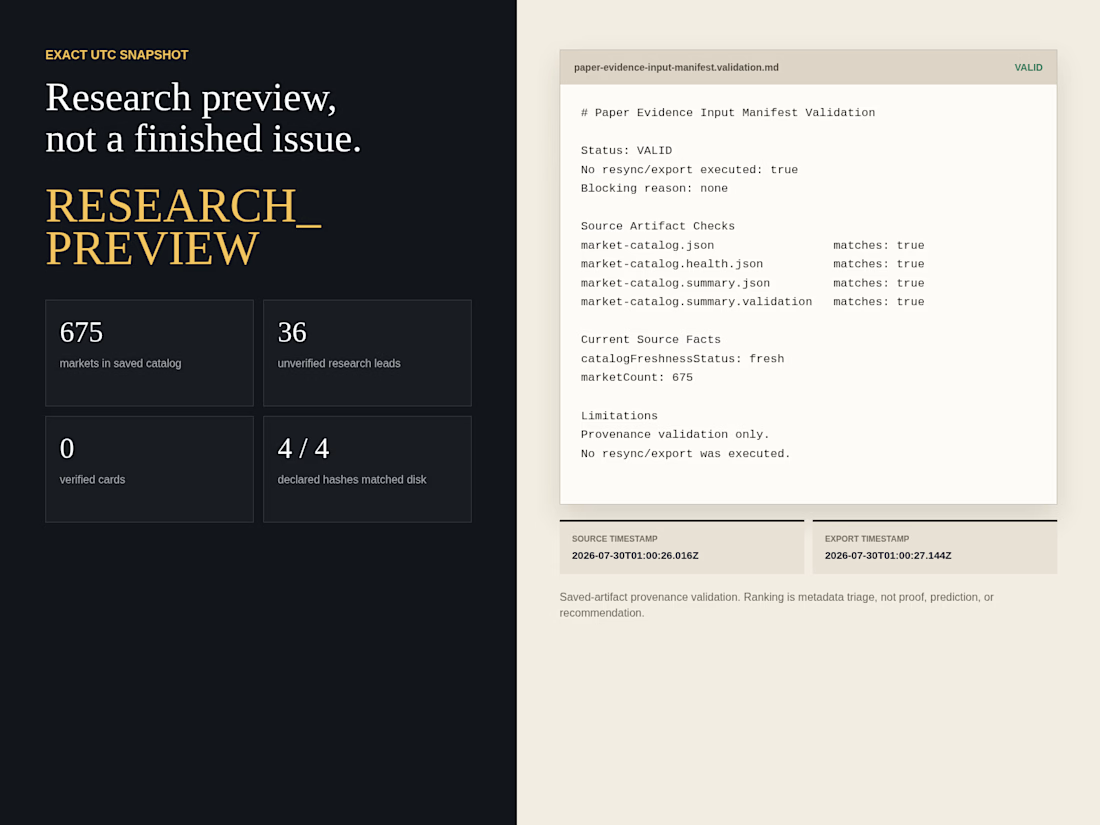
The gallery shows a July 30, 2026 snapshot with 675 saved markets, 36 unverified research leads, zero verified cards, and four of four declared hashes matching disk. The state remains RESEARCH_PREVIEW.
Best fit: public API ingestion, reproducible research bundles, validation pipelines, provenance checks, fail-closed editorial workflows, and automated briefing systems.


The network for creativity
Join 1.25M professional creatives like you
Connect with clients, get discovered, and run your business 100% commission-free
Creatives on Contra have earned over $150M and we are just getting started
Related posts

This interactive dashboard provides a comprehensive view of profit performance across multiple dimensions—time, segments, regions, categories, and sub‑categories.
This dashboard transforms raw business data into actionable insights by allowing stakeholders to quickly identify profitable areas, spot regional trends, and evaluate category performance. It’s designed for clarity, interactivity, and decision‑making support.


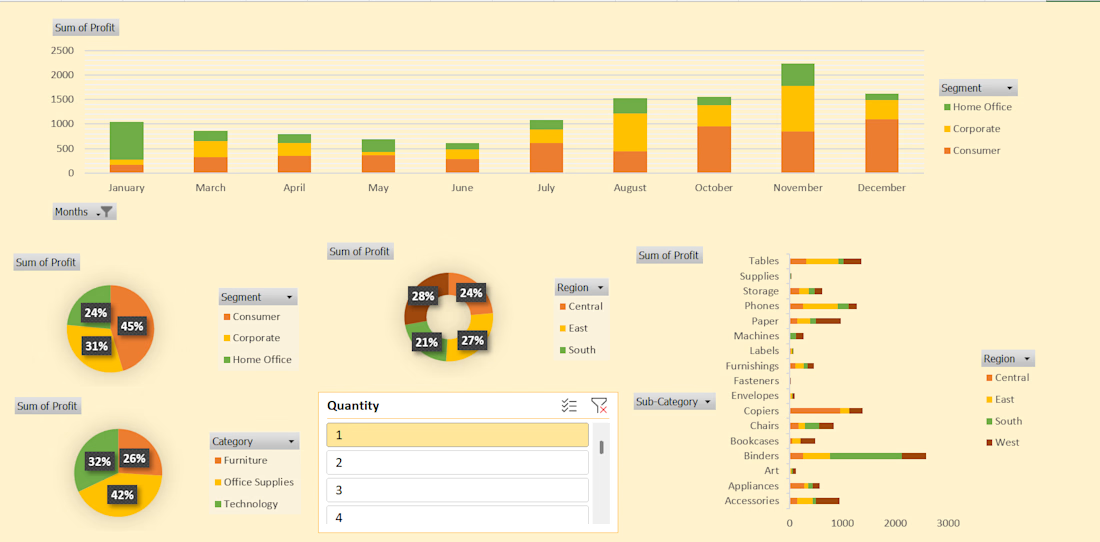
#This is an excellent Profit Dashboard which is made in MS Excel with multiple creative functions help in understanding Monthly , Yearly , Area wise Profits.

Most inbound bottlenecks aren't caused by low lead volume—they happen during triage.
When inquiries roll into a Google Sheet or CRM, operations teams often waste 10–15 minutes per submission reading through messy paragraphs, deciphering budget mismatch, and manually deciding who gets an immediate call vs. a standard rate sheet.
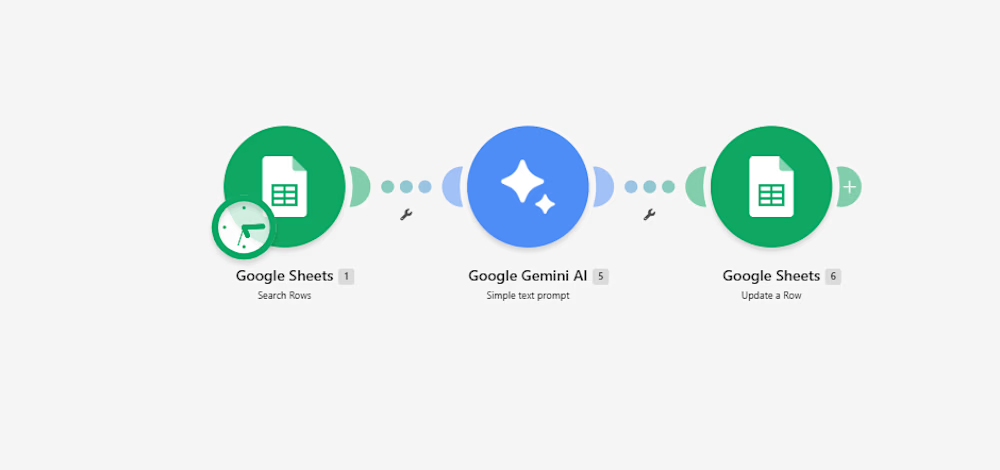
Instead of adding a bulky CRM add-on, I documented a lightweight 3-step automation pipeline built inside Make:
Intake & Extraction: An active listener triggers immediately upon a new submission, extracting core variables: client scope, target deliverables, timeline, and stated budget.
Context-Aware Evaluation (Gemini 2.5 Flash): The payload passes through an AI evaluation node with strict guardrails:
Evaluates budget against minimum agency criteria.
Assigns a triage score: Hot (immediate priority), Warm (nurture), or Cold (disqualified/template reply).
Generates a strict 15-word operational summary—no long paragraphs.
Determines an automated next step (e.g., routing to an account lead or flagging for asynchronous follow-up).
Data Return & Clean Pipeline: Appends the structured classification directly back to the master operational tracker, keeping the sheet filterable and clean.
The outcome: The sales and operations team can filter the entire board by priority status in two clicks, cutting first-touch response time to minutes without manually reading every single submission.
I’ve documented the full scenario map, execution logic, and data schemas below.
Curious how other agency operators and automation leads here handle their lead enrichment layer—are you doing AI scoring at the form level, or later in the CRM pipeline?:


For the budget gate, I'd keep an unstated budget separate from one explicitly below your minimum. Does the Make route ask for clarification when the amount or currency is missing, so a potentially suitable lead doesn't fall into Cold by default?

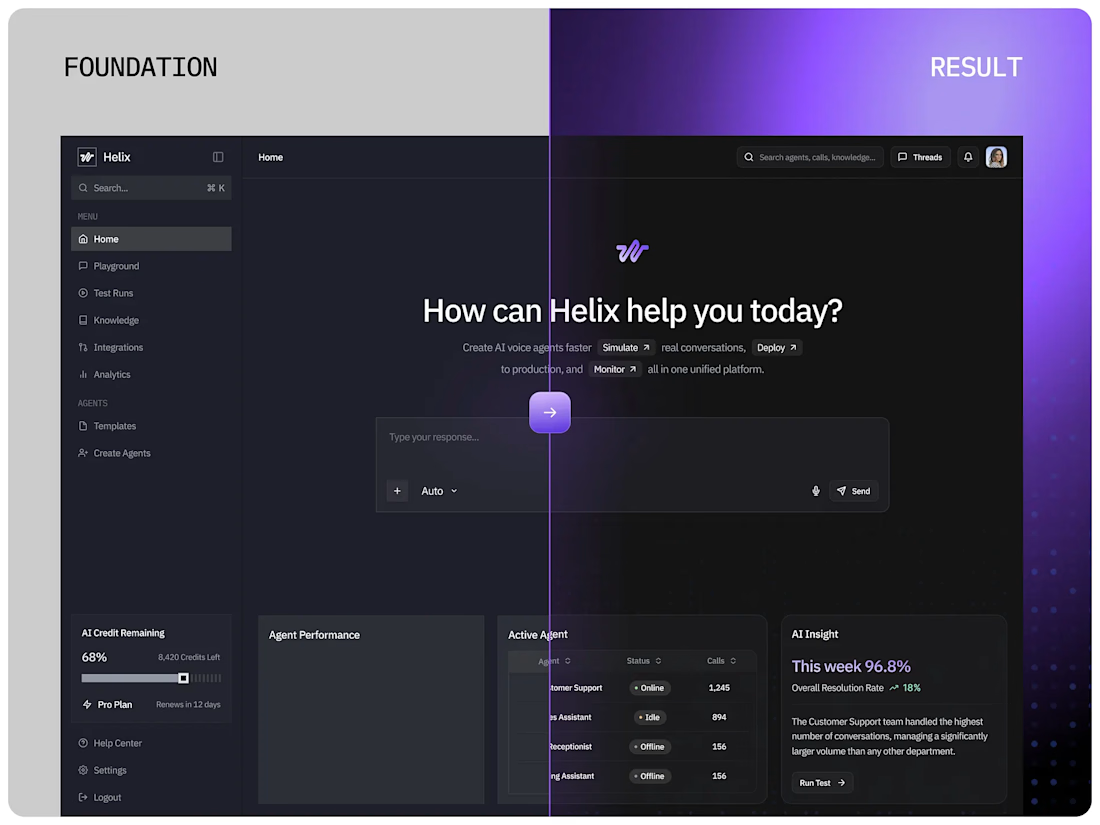
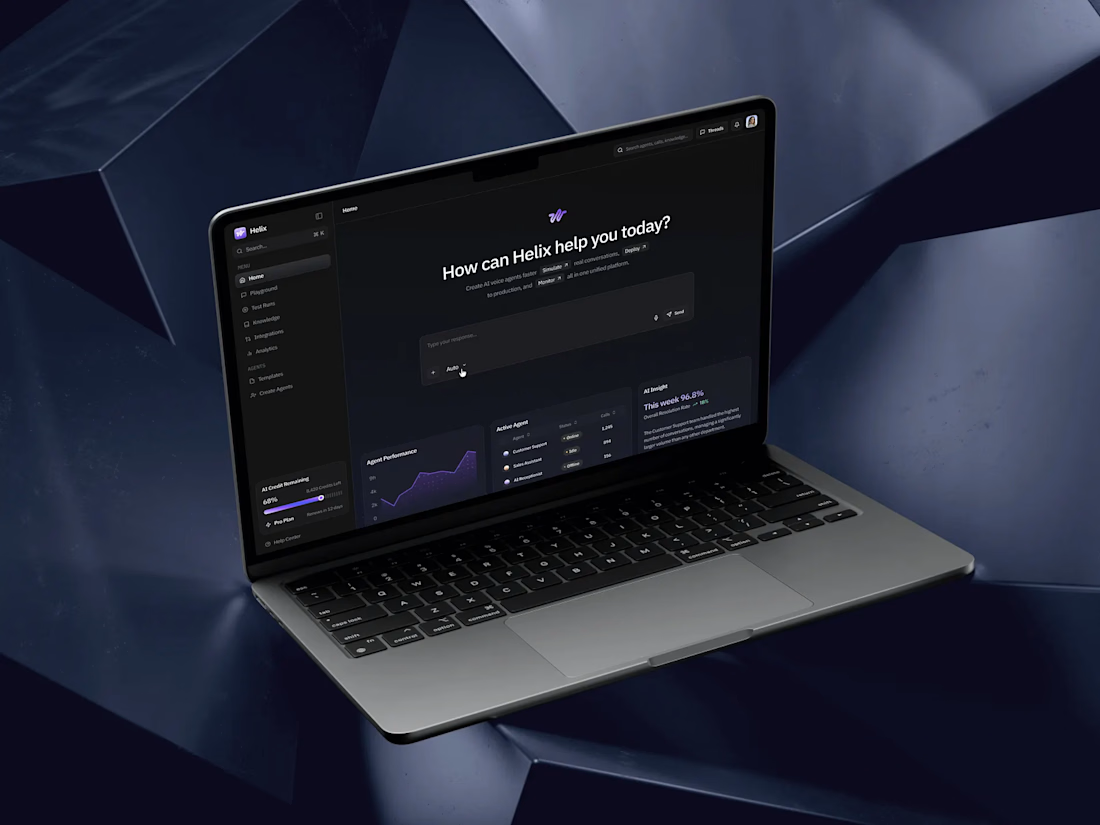
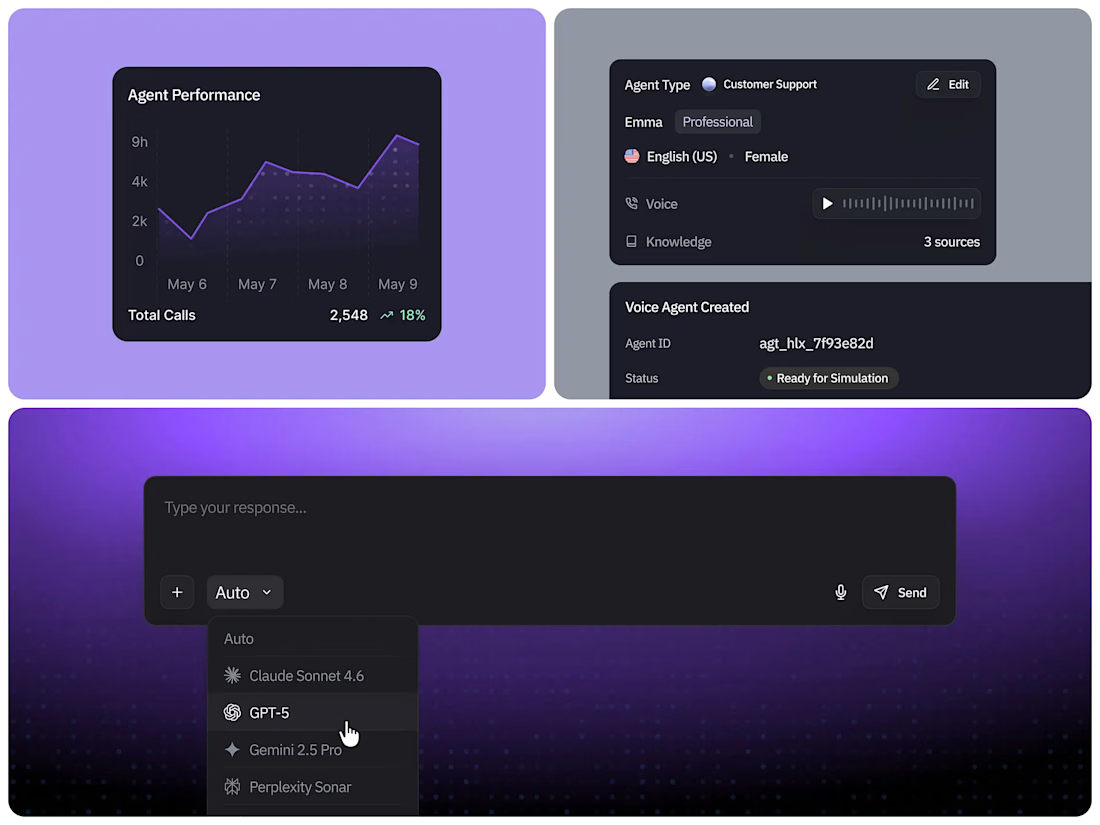
Helix — an all-in-one console to accelerate enterprise voice-agent deployment. I shaped the foundational experience and responsive web application: a smart multi-model prompt bar to attach documentation, switch between leading LLMs and inspect live synthesis previews, plus a dark-canvas dashboard with real-time call volume analytics, agent availability monitors and third-party CRM integration readiness.

Helix: Fast-tracking conversational AI with an intuitive workspace to build, simulate, and deploy autonomous voice agents.
I shaped the foundational experience and responsive web application for Helix, an all-in-one console built to accelerate enterprise voice-agent deployment....