The network for creativity
Join 1.25M professional creatives like you
Connect with clients, get discovered, and run your business 100% commission-free
Creatives on Contra have earned over $150M and we are just getting started
Back to feedPost

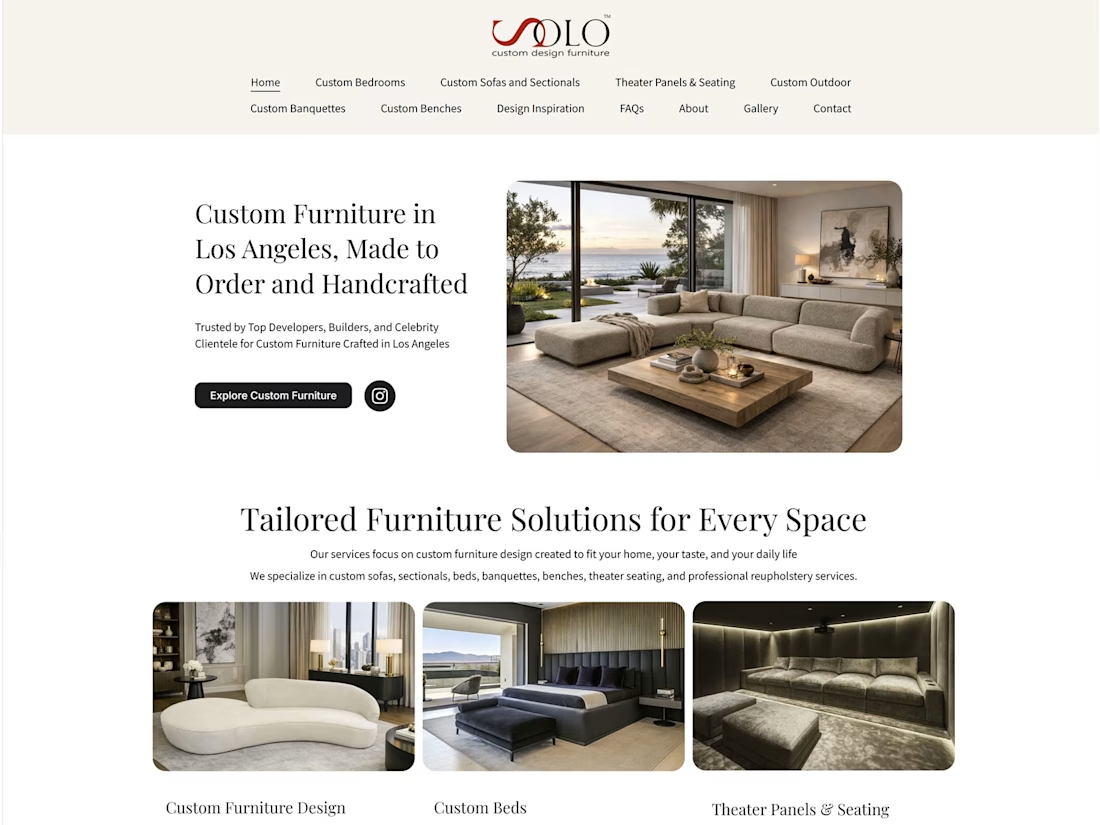
Solo Home Decor is a multi-page website for a home decor brand. The work focused on creating a clearer, more organized online presence that could support search visibility, customer browsing, engagement, and conversion goals.
The website was designed to handle a high volume of content while still feeling usable and easy to explore. The structure focused on customer insights, home decor trends, decorating ideas, and practical inspiration, making the site a useful source for visitors looking for guidance before making decisions.
A major focus was making the site more SEO-ready through clearer page structure, stronger content organization, improved navigation, and better alignment between what visitors search for and what the website presents.
The project included website design, SEO-focused page structure, content flow, visual hierarchy, mobile layout direction, customer insight organization, trend-based content structure, and conversion path support.


The network for creativity
Join 1.25M professional creatives like you
Connect with clients, get discovered, and run your business 100% commission-free
Creatives on Contra have earned over $150M and we are just getting started





Related posts

I’ve always liked products that solve a very specific problem instead of trying to do everything.
So for the Lovable Challenge, I picked a simple question that event-tent rental businesses hear all the time:
“Can I book a tent for my wedding?”
The problem is… a tent can’t really be booked until you know if the whole event will work.
How many guests?
How much usable space?
Tables? Dance floor? Bar? Stage?
Will the layout actually fit?
Can the crew set it up and pick it up on time?
Usually, the owner has to figure all of that out manually through messages, calls and calendar checking.
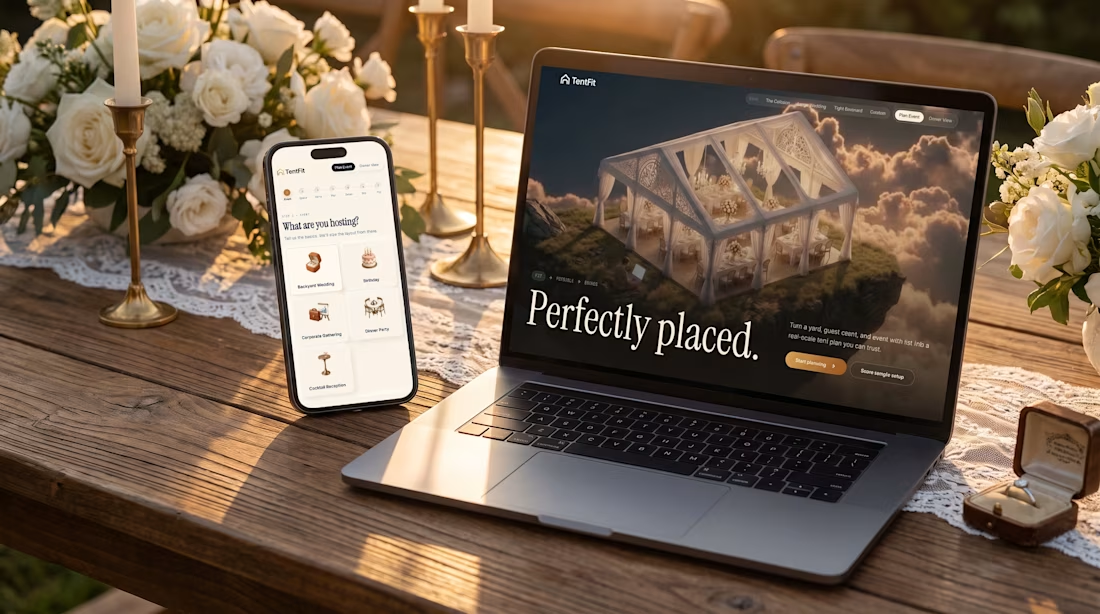
So I built TentFit — a spatial booking experience for event tent rentals.
The customer starts by planning the event, then maps out the space and everything they want inside it. TentFit checks the layout and highlights conflicts.
And instead of just saying “doesn’t fit,” it helps solve the problem:
Switch the tent. Move the layout. Remove an element.
Once everything works, TentFit checks the logistics and turns the final setup into a booking.
The goal was simple:
Make the customer’s decision easier, and make the owner’s job easier.
The flow is basically:
FIT → FEASIBLE → BOOKED
I had a lot of fun building the spatial planning part of this one.
X/Twitter post: https://x.com/brjanov/status/2105630218492731501?s=20
Built with @Lovable
#LovableChallenge #ProductDesign #UXDesign #NoCode #SaaS #WebDesign



Nice stuff!


Another successful launch 🚀
For MindAbility, we went from Figma design to a fully built Kajabi experience – website pages, course design, offers, forms, and automations.
The result is a clean, connected platform that’s easy to manage and ready to grow into new regions.


The interaction between the typography, imagery, and spacing works really well.


Vänster Home GmbH
For Vänster Home GmbH, I engineered a high-end European e-commerce build designed to reflect modern architectural design and premium living space aesthetics. The goal was to establish strong brand authority through minimalist visual hierarchy, custom collection navigation, and high-converting storytelling.
I structured the homepage around a cohesive "Designed for..." campaign framework (covering Living, Dining, Lighting, and New Arrivals) to guide buyer intent seamlessly. To maximize user trust and clarity, I completely restructured the inventory data transforming long, cluttered supplier titles into refined product names paired with standardized technical specifications and lifestyle-focused features. This build demonstrates complete end-to-end e-commerce architecture, from editorial layouts down to conversion-focused product listings tailored for luxury retail shoppers.




Clean restructure from supplier titles to real product names, that step alone usually gets skipped. For a GmbH store selling into the rest of the EU, did you end up handling VAT-inclusive pricing per country through Shopify Markets, or did the client stick to one DE price shown everywhere?


