The network for creativity
Join 1.25M professional creatives like you
Connect with clients, get discovered, and run your business 100% commission-free
Creatives on Contra have earned over $150M and we are just getting started
Back to feedPost
Vesper is a night-sky companion that does one thing: tells you what's worth stepping outside for tonight, when to go, and exactly where to look.
Built fully interactively in Google Stitch across 18 screens. A live celestial dashboard, a clockwork orrery with all 8 planets orbiting in real time, constellation deep-dives, ISS pass tracking, moon phase morphing, and a personal observation log. Everything in one place, nothing you don't need.
The aesthetic comes from antique star atlases and brass instruments. Deep midnight canvas, warm gold linework, three typefaces locked to strict roles. No neon. Something that feels like a precision tool you'd genuinely want to return to every clear evening.
The Problem:
Most people have looked up at the sky and felt something, then had no idea what they were actually looking at. Existing apps don't help. They're either buried in data, built for astronomers, or so technically overwhelming that curiosity dies before it starts. Nobody has built the calm, beautiful version. The one that just says: here's what's worth going outside for tonight.
The Solution:
Vesper is that app. It starts with the one question that actually matters: what should I look for tonight, and answers it clearly, beautifully, without making you feel like you need a degree first. The design is warm and considered rather than cold and clinical, because a tool you enjoy looking at is a tool you actually use. For those who want to go deeper, the depth is there. But it never gets in the way.
How Stitch Was Used:
Streaming generation
Every screen started as a detailed natural-language prompt, watched streaming live onto the canvas. There is something genuinely different about seeing a complex layout appear in real time rather than staring at a blank artboard. The Tonight dashboard, the Orrery, the sky gradient on Sun and Twilight. All of them generated in one shot from a single prompt. That moment is worth capturing in any walkthrough video.
In-place AI edits
After the initial generation, individual elements were refined by clicking directly on them and describing the change in plain language. Things like "make the meteor streaks fire in groups of three with different angles", "add a real dark-mode map with a street grid", "set Sky Map as the active sidebar item", and "replace the static stars with the same drifting animation as the Welcome screen". This is where Stitch earns its keep. It stops feeling like a design tool and starts feeling like a conversation. You say what you want, you watch it happen, you iterate.
Motion and shader pass
Once the layout of each screen was locked, a dedicated motion pass was run. The star-field drift, the clockwork orbital animation, the constellation line draw-ins, the nebula gradients, the meteor shower effects. Each one added through a focused prompt rather than a timeline or a code editor. The motion system is what makes Vesper feel alive, and all of it came through Stitch.
Platform Feedback:
Stitch's streaming generation is the most effective tool for dark, data-dense dashboard screens. There is no blank-canvas problem when a complex layout streams in live. The in-place editing workflow is where the real value lives: clicking a single element and describing a change in natural language ("make this feel more like a brass instrument") is closer to having a design conversation than using a tool.
Here is the Project Live Link:
https://vespersky-companion.netlify.app/


This is quite different and unique way to use Stitch. Nice work!

Thank you for your appreciation @Rishi Shah

Excellent work! The project looks professional and well executed. Keep it up! 👏

Pure sophistication. The contrast, the typography, the data layout and absolutely flawless execution.
It's pleasure for me.

It's Exceptional Work. Appreciated
Thank you

Wow. The attention to detail is incredible! 👏

True
Thank You @Hassan Younas

Well Designed.
Excellent work. Keep it up
Thanks Arslan Shabir.

WoW excellent work!


Nice
Thanks a ton! @Suraj Shah

Pure brilliance, i must say!
Thanks Qamar UI Zaman

Nothing but respect for the work you put into this.
Grateful for your appreciation. @Denis Turbin

Wow, Faisal, this is pure sophistication! Stepping away from cold, data-heavy dashboards to build something that feels like an antique brass instrument is such a brilliant, inspired direction for this challenge.
Stunning execution! I also just submitted my project for the...

on.contra.com
Swipe-to-Shop App Transforming Farmers Market Experience
Connect with next-gen talent and tools to get work underway. Hire more independents. Start more projects. Get more creative.
It's great pleasure to me.

Amazing!

Very strong visual identity.
Very strong visual identity. Curiosity grows when complexity is made approachable.

Nice

Clean, intuitive and visually stunning, always love seeing great work like this.
Grateful for your appreciation.

This is so nice

This looks really clean. Great work.

This is clever, I could use this
The network for creativity
Join 1.25M professional creatives like you
Connect with clients, get discovered, and run your business 100% commission-free
Creatives on Contra have earned over $150M and we are just getting started







Related posts

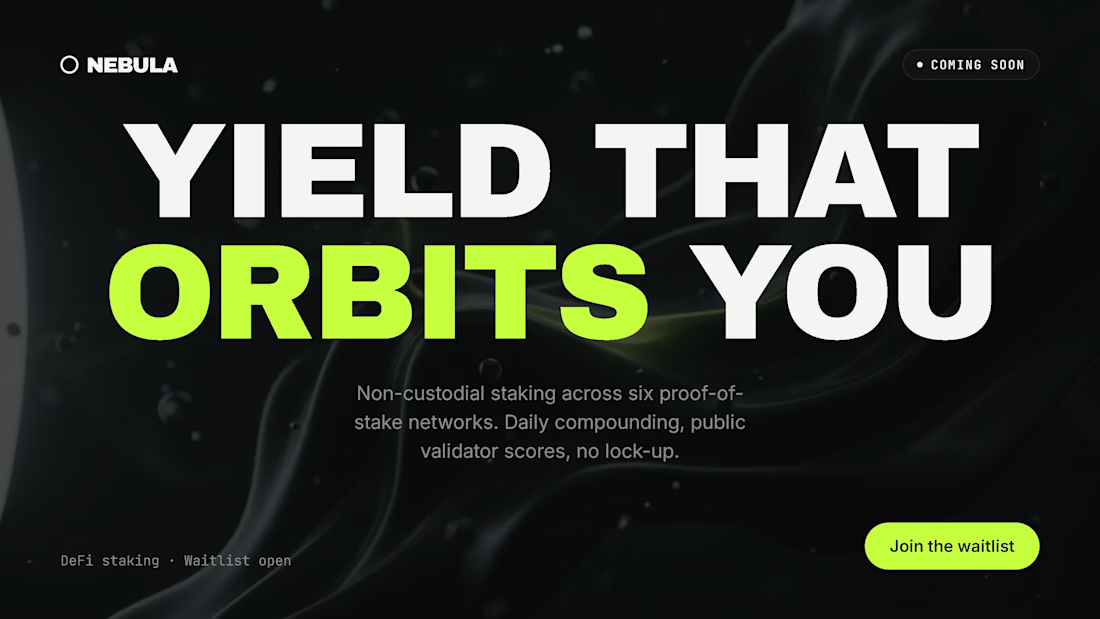
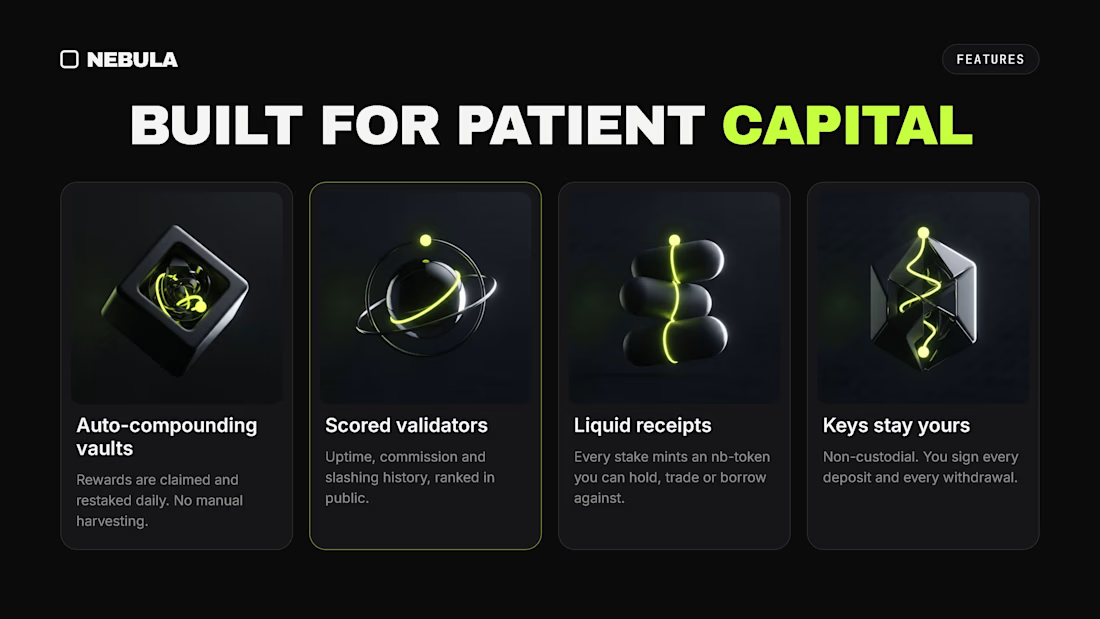
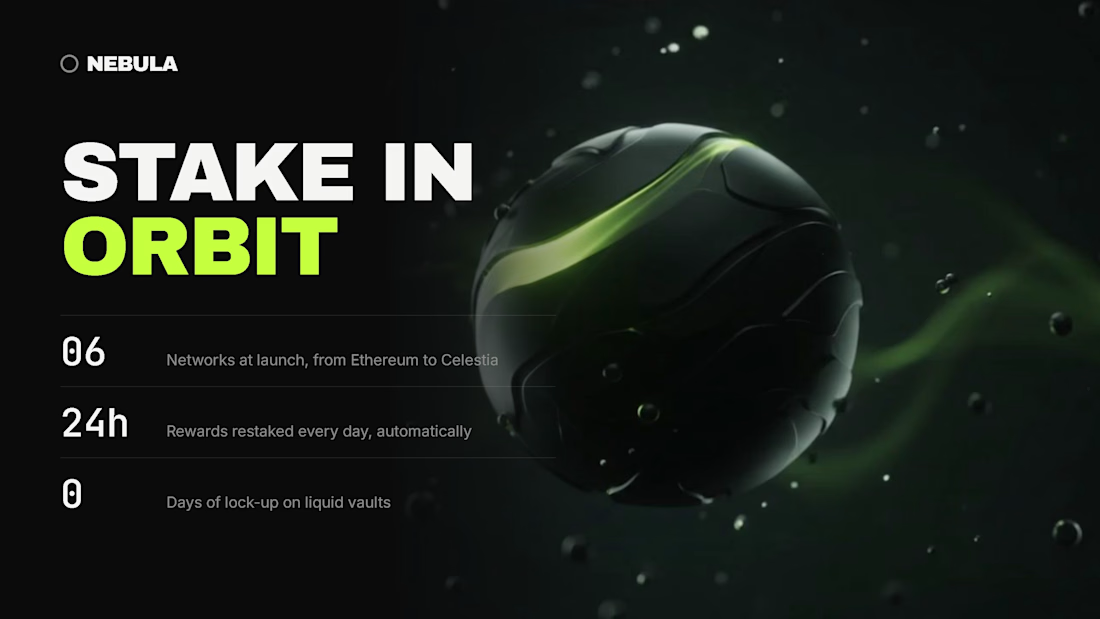
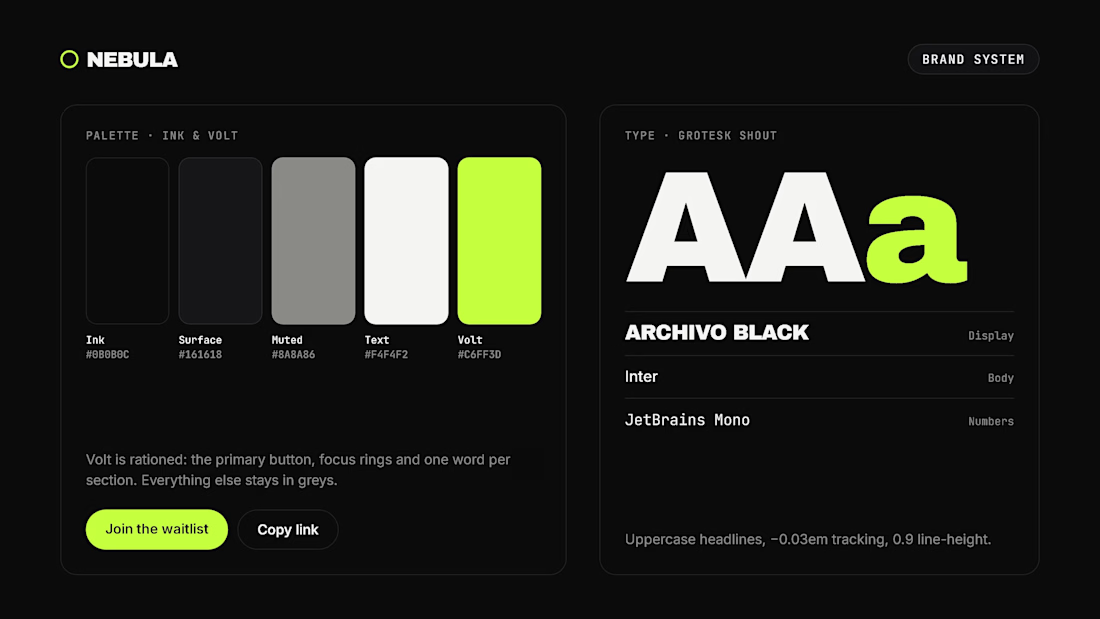
Spent Sunday wrapping up Nebula — a DeFi staking waitlist where I owned the brand system, UI, and frontend code.
Scroll-driven 3D orbit, cursor-tracking glow cards, magnetic buttons, and a strict brand rule: lime only touches CTAs, focus rings & 1 word per section.



Exploring new visual textures with the new Kling 4.0


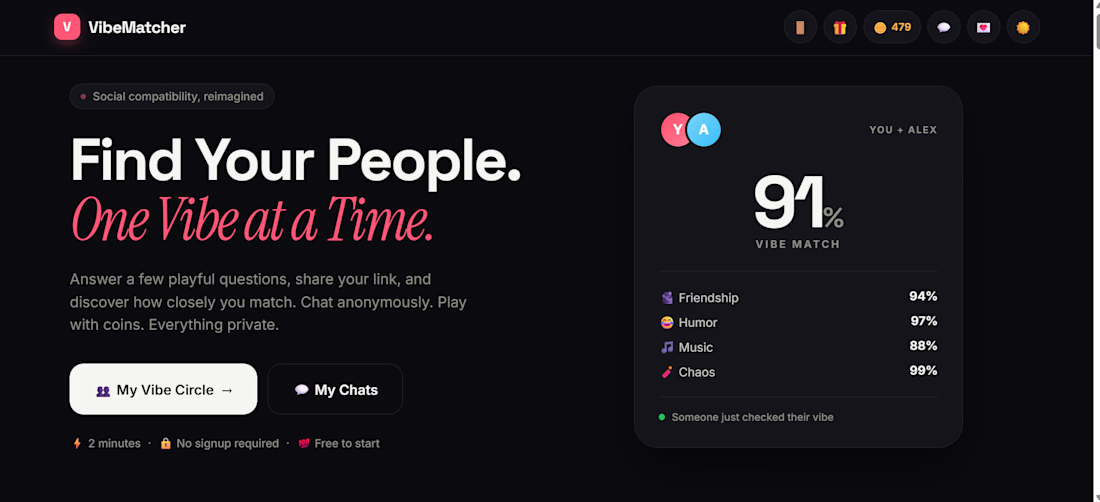
I built VibeMatcher — a fun way to discover how well your vibe matches with your friends!
What if you could compare your vibe with a friend and discover your compatibility in a fun, interactive way?
That's the idea behind VibeMatcher — a social web app I built around vibe matching and shareable results.
✨ What makes it interesting:
- Interactive vibe-matching experience
- Compatibility results and match labels
- Shareable experience designed for friends
- A modern, social-first web interface
🔗 Try it here: https://urvibematcher.vercel.app/
I'm an independent developer exploring ideas, building real products, and improving through hands-on projects.
I'm open to feedback, collaborations, and opportunities to build web apps and SaaS products for clients.
What feature would YOU add to a vibe-matching app? 👀