The network for creativity
Join 1.25M professional creatives like you
Connect with clients, get discovered, and run your business 100% commission-free
Creatives on Contra have earned over $150M and we are just getting started
Back to feedPost


THE VESSEL THAT CONTAINED THE UNDERWORLD
What if the Underworld depicted on an ancient Greek vessel wasn't just a story — but something the vessel was actually containing?
For the FLORA Museum Challenge, I started with a 5th-century BCE terracotta bell-krater attributed to the Persephone Painter, from The Metropolitan Museum of Art.
The original vessel depicts Persephone's ascent from the Underworld — a story connected to death, return, and the renewal of life.
That idea became my creative brief:
What if the Underworld didn't stay behind?
Instead of simply animating the figures on the vase, I wanted to build a new world around the archaeological object and turn the vessel itself into the source of something supernatural.
I imagined an ancient Greek guardian sitting peacefully in a temple courtyard. He hears a strange, impossible rumble and notices something coming from the vessel.
He approaches.
The atmosphere begins to change.
The peaceful world falls into darkness as an unnatural blue light begins to emerge from inside the krater. Dark organic tendrils escape from the vessel, wrapping around its body and reaching toward the surrounding figures.
The vessel begins to levitate.
What first appeared to be an ancient depiction of the Underworld becomes something much more literal:
the vessel isn't depicting the Underworld.
It contains it.
The process
I built the project as an evolving cinematic experiment inside FLORA.
I started with the original Met artwork as my visual foundation, explored different transformations, created sketches to define the tendril behavior and composition, experimented with multiple image generations, and then developed the final sequence into a continuous cinematic story.
The biggest challenge was maintaining the identity and archaeological character of the original vessel while introducing something that clearly did not belong in its ancient world.
Rather than redesigning the krater, I wanted the original object to remain recognizable while the world around it gradually became impossible.
The final sequence moves from:
Ancient world → strange disturbance → discovery → awakening → tendrils → levitation → Underworld energy
All of the visual development, experimentation, references and iterations are preserved in the FLORA canvas.
Original artwork
The Metropolitan Museum of Art — Terracotta bell-krater, attributed to the Persephone Painter, ca. 440 BCE
FLORA Project
Created in FLORA for the FLORA Museum Challenge.
My X post: https://x.com/designs_burner/status/2095938037637419238?s=20
@floraai
#FLORAMuseum #FLORAMuseumChallenge

Love the visual direction.
The network for creativity
Join 1.25M professional creatives like you
Connect with clients, get discovered, and run your business 100% commission-free
Creatives on Contra have earned over $150M and we are just getting started
Trending
retrofuturism
Share your favorite designs from the past exploring the distant future. Or your own take on the aesthetic 🚀
halftone
Dots. Texture. Grain. Let's see your designs using the halftone technique.

Midjourney
Creatives are showing off what they're making with Midjourney.
colorgrade
Video editors sound off: How do you enhance the mood of your video in color grading?





Related posts

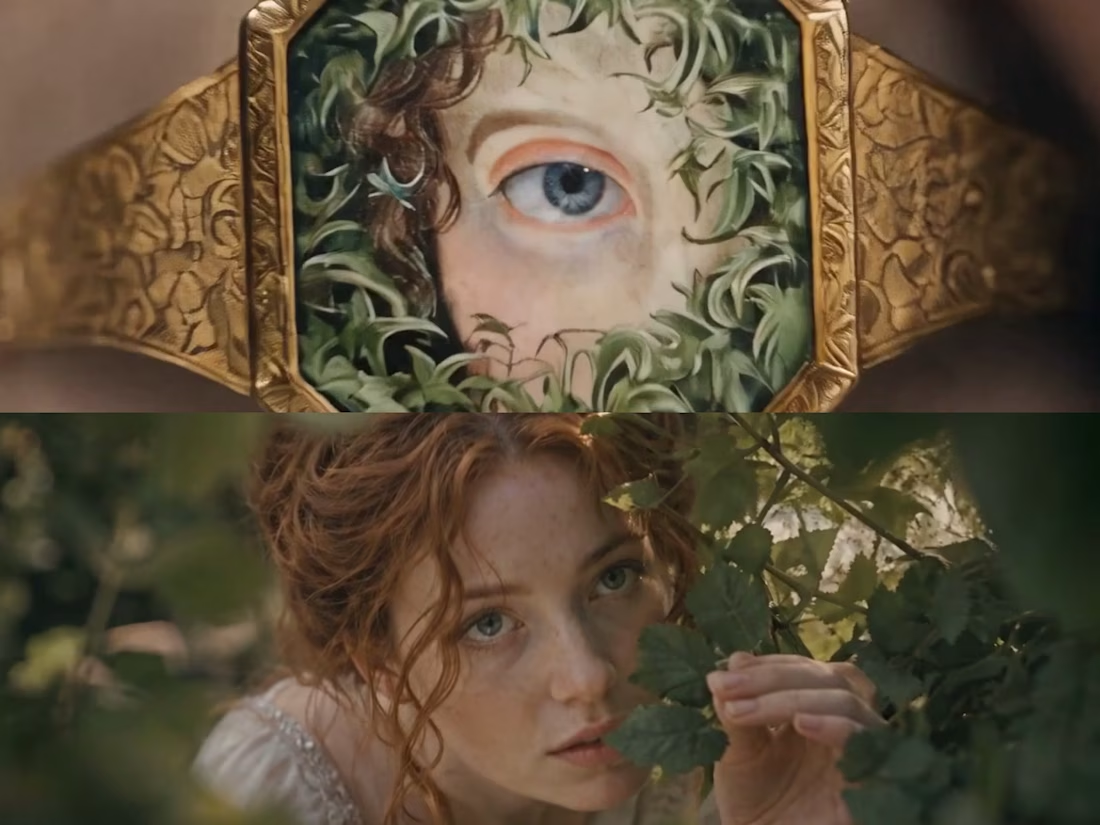
The Lover’s Eye was never just a portrait. It was a portrait of a gaze. The art of looking back.
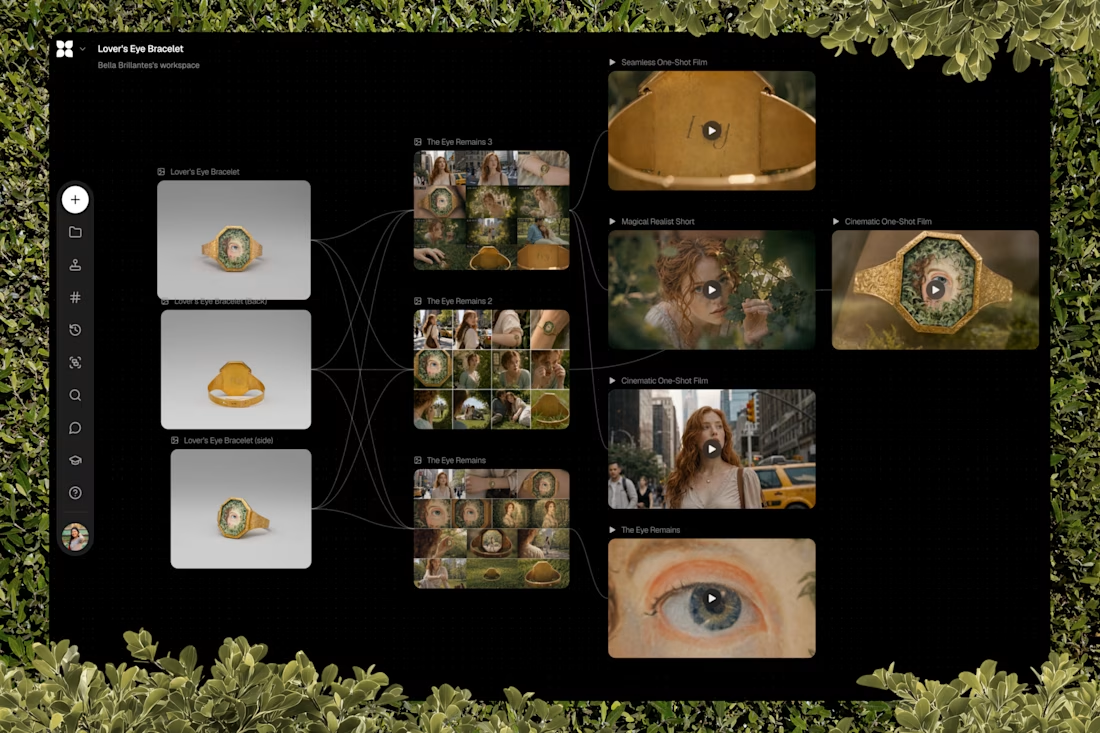
For the #FLORAMuseumChallenge, I chose the 19th-century Lover’s Eye Bracelet, an intimate object featuring a miniature of a loved one’s eye. Pieces like these were worn close to the body so the wearer could imagine their beloved’s gaze resting upon them 👁️
That idea became my creative starting point: what if the gaze that we see in art could be returned?
So I imagined a woman walking through present-day New York wearing the bracelet. As we get closer to the miniature, we find "Ivy" actually looking out from her own time. The person preserved inside the object is suddenly looking back at us, creating a fleeting exchange between past and present.
The engraved name “Ivy” on the back of the actual bracelet became a small but meaningful detail that helped me imagine the story behind the object.
And so I wanted to create something that felt like a visual poem 💛
A gaze captured centuries ago, finding its way back to another pair of eyes.

wow. Love the idea!!

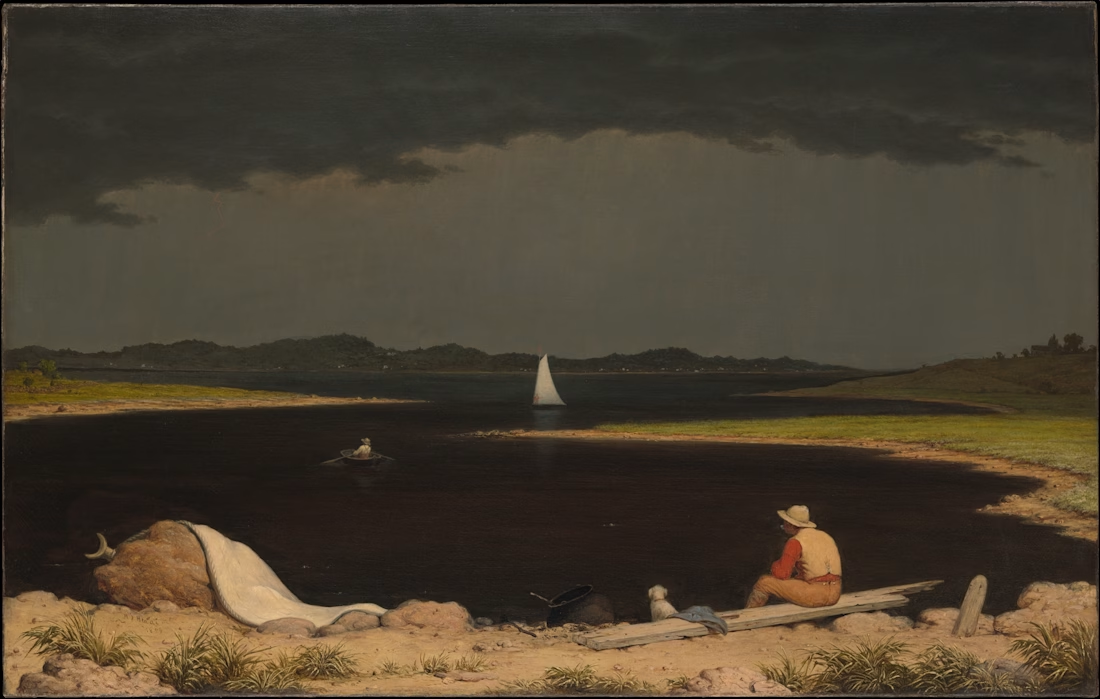
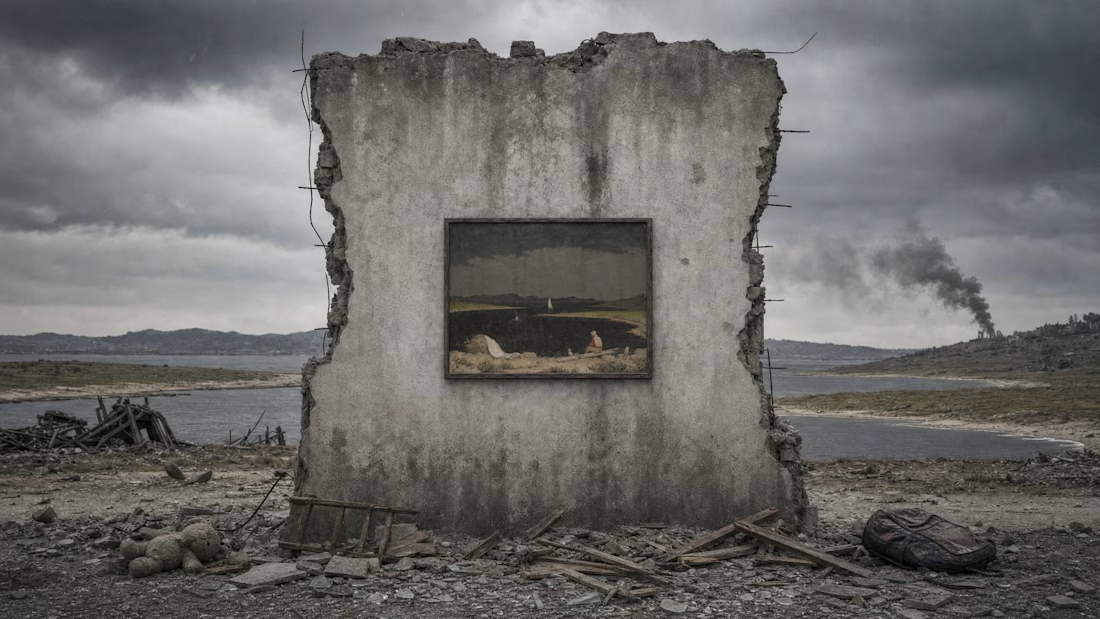
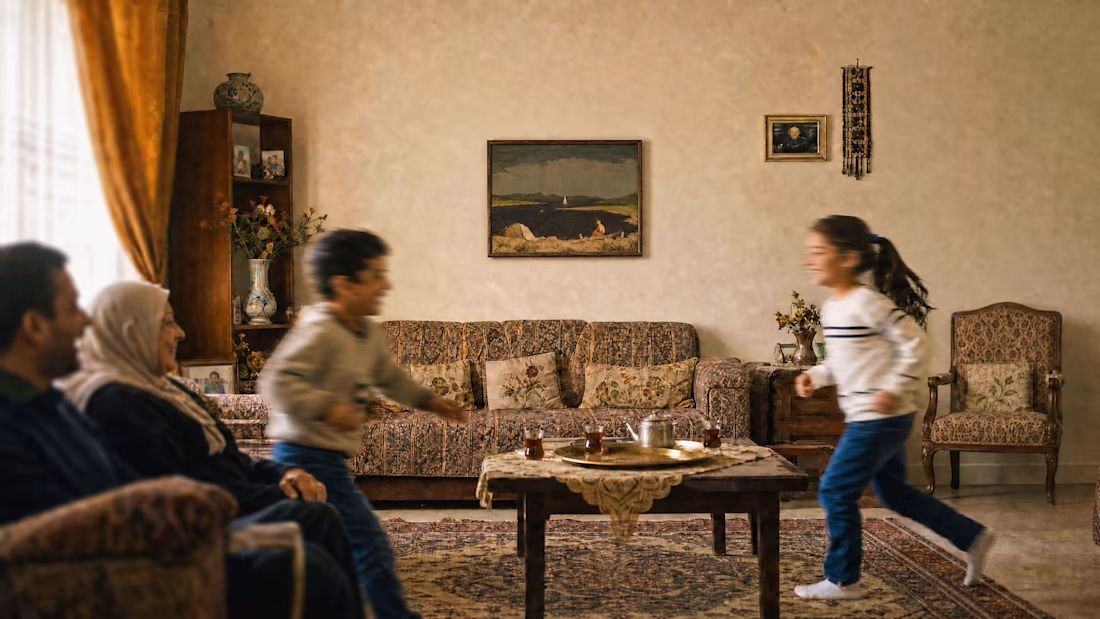
A painting that survived on the one wall still standing, after the house around it was destroyed. The storm it once depicted became real smoke, rising from the same horizon behind it — same place, same hills, same water, but the calm is gone.
I didn't age the painting forward or backward in time. I placed it somewhere that exists in parallel to where most of us are sitting right now — a place where this kind of stillness has been replaced by something else entirely.
Original piece: "Approaching Thunder Storm" by Martin Johnson Heade, 1859, oil on canvas — The Metropolitan Museum of Art (Open Access)
Link: The Inspiration Piece from the Met Museum
Built on FLORA, starting from a static image of the painting, then building the surrounding wall and environment through iterative generation and manual refinement, before animating the final camera move outward.
My submission for the FLORA × The Met Challenge.

This deserves more than just liking, this deserves to be featured! 🏆 Nailing that surreal narrative contrast behind the painting creates such a compelling submission.

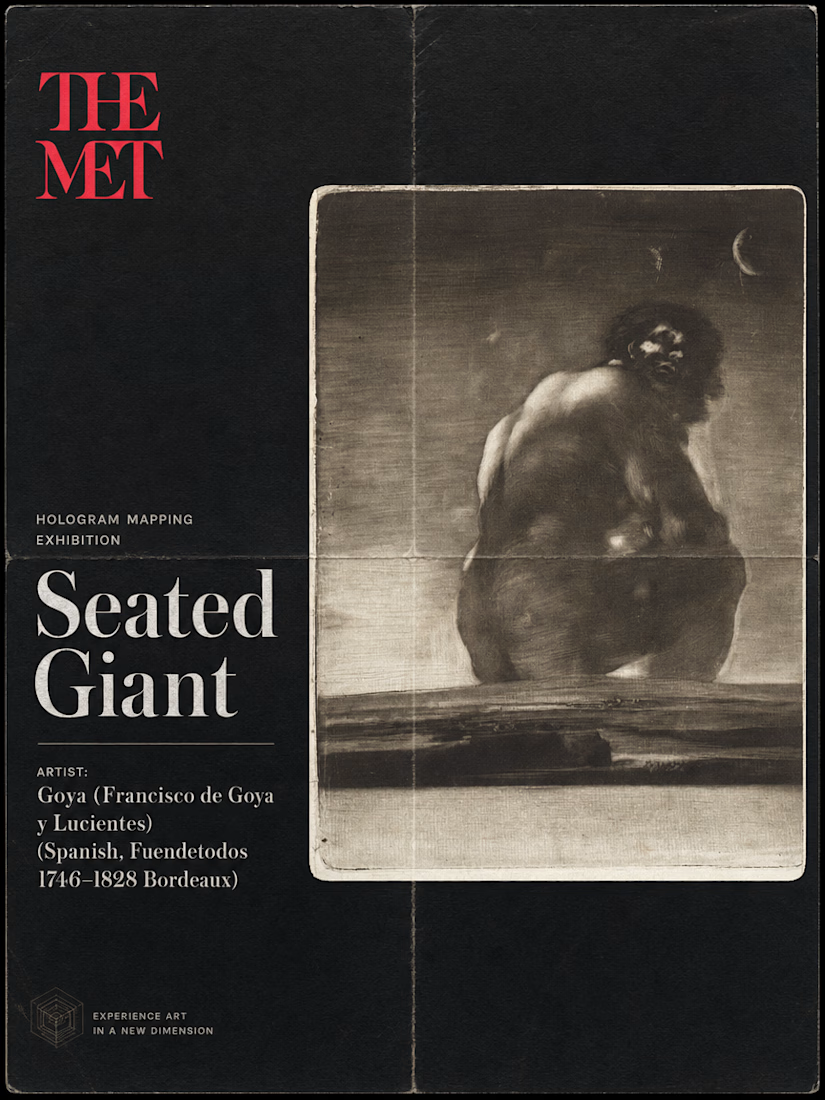
"The Seated Giant" is one of Goya's dark prints. Goya’s dark period represents sadness, terror, pessimism, and loneliness.
While I tried to capture that, I also added a touch of hope, showing that hope still exists inside the giant.
I created an interactive hologram room at the museum where visitors try to interact with the giant, though he is reluctant and only interacts occasionally.


i love this concept!