The network for creativity
Join 1.25M professional creatives like you
Connect with clients, get discovered, and run your business 100% commission-free
Creatives on Contra have earned over $150M and we are just getting started
Back to feedPost

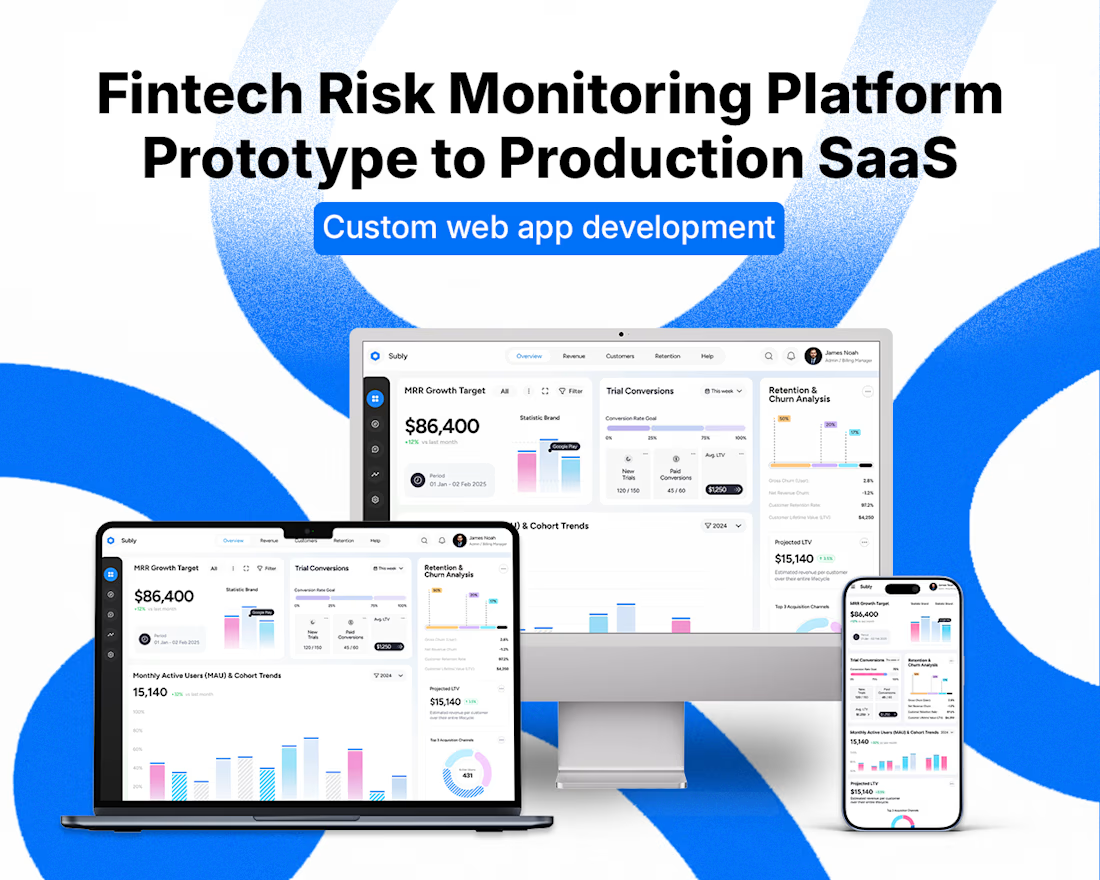
KovaRisk: Turning a Risk Monitoring Prototype Into a Production-Ready Fintech Platform
From Interactive Compliance Dashboard to Persistent Risk Intelligence System
KovaRisk started with a clear goal: give compliance teams a centralized way to monitor financial risk, investigate alerts, manage rules, and maintain reliable audit records.
The original prototype already had a strong product foundation. It included:
Risk and alert monitoring dashboards
Filterable alert feeds
Entity-level risk profiles
Historical risk trends
Configurable monitoring rules
Investigation workflows
Audit activity
Scenario-based testing
The interface effectively demonstrated how a compliance team could interact with the product.
The challenge was that most of the underlying functionality was still simulated.
The Gap Between the Prototype and Production
The frontend represented a complete risk-management workflow, but much of its state existed only inside the browser.
Alerts were generated when the application started. Risk scores were simulated. Status changes were stored in component state, and audit events existed only in memory.
Refreshing the application could erase an investigation update, internal note, or rule configuration.
For a financial compliance platform, persistence isn't simply a technical requirement. Investigations, decisions, and user actions need to remain traceable and verifiable.
The next phase was therefore focused on building the system behind the interface.
Building the Production Foundation
Structured Data Architecture
We translated the prototype's workflows into a persistent relational data model using PostgreSQL.
The architecture introduced dedicated entities for:
Alerts
Financial entities
Monitoring rules
Risk-score history
Audit events
Internal investigation notes
Transactions
Relationships between these entities allowed actions performed through the interface to become durable records rather than temporary frontend state.
Rule versioning was also introduced so historical alerts could remain associated with the conditions that existed when they were generated.
Real-Time Alert Generation
The prototype initially generated a predefined set of alerts.
We replaced this behavior with a transaction-monitoring architecture capable of evaluating incoming transactions against active compliance rules.
The system could:
Evaluate transactions against configured rules
Calculate risk scores
Consider entity and jurisdiction risk
Identify threshold breaches
Create persistent alert records
Trigger notifications for high-risk events
Rule controls in the dashboard became connected to the actual monitoring engine.
Disabling a rule affected future evaluations rather than simply changing the appearance of a UI component.
Asynchronous Compliance Workflows
Several actions required more than a simple frontend state change.
We introduced background processing for operational workflows such as:
Alert Escalation
Escalating an alert could initiate notifications, create a corresponding case, and begin tracking the response timeline.
Scheduled Screening
Entities could be periodically screened against external sanctions data, with newly identified matches feeding back into the alert workflow.
Report Generation
Instead of exporting whatever happened to be loaded in the browser, reports were generated server-side from the current database state and made available once processing completed.
This created a more reliable separation between the user interface and the underlying business operations.
Building a Reliable Audit Trail
One of the most important parts of KovaRisk was transforming the audit interface from a simulated activity feed into a persistent record of system events.
Audit events were generated at the API layer whenever important state changes occurred.
Each event captured:
Authenticated user
Action performed
Target entity
Event type
Server-generated timestamp
Relevant activity context
The audit records were designed to be append-only, preventing normal application workflows from modifying historical events.
This gave compliance teams a much more dependable record of how alerts and investigations progressed.
Technology Stack
Frontend: React, Vite, React Router, Recharts, TanStack Query
Backend: Node.js, TypeScript, Fastify, Prisma
Database & Processing: PostgreSQL, Redis, BullMQ
Authentication: Passport.js, Express Session
Infrastructure: AWS ECS, Railway / Render, Amazon S3
Security & Monitoring: AWS Secrets Manager, Doppler, Sentry, Datadog
Integrations: OFAC / ComplyAdvantage, Refinitiv World-Check, SendGrid / SMTP, Webhooks
The Result
KovaRisk evolved from an interactive compliance prototype into a structured fintech risk-monitoring platform.
The interface remained focused on the workflows compliance teams needed, while the underlying architecture introduced:
Persistent data
Automated alert generation
Configurable rule processing
Background workflows
External screening integrations
Reliable report generation
Role-aware system operations
Persistent audit records
The key transformation wasn't adding more screens.
It was connecting every important interaction in the interface to a dependable backend process.
The prototype demonstrated how compliance teams should work. The production architecture made those workflows persistent, automated, and operationally reliable.


The network for creativity
Join 1.25M professional creatives like you
Connect with clients, get discovered, and run your business 100% commission-free
Creatives on Contra have earned over $150M and we are just getting started










Related posts

Sunrise Dental — Clinic Website with Online Booking
A landing page for a neighbourhood dental clinic, built around booking. Patients choose a treatment, pick a free slot and confirm in three steps, without calling. Prices are listed upfront, the hours show whether the clinic is open right now, and the layout works on any phone. Concept project.


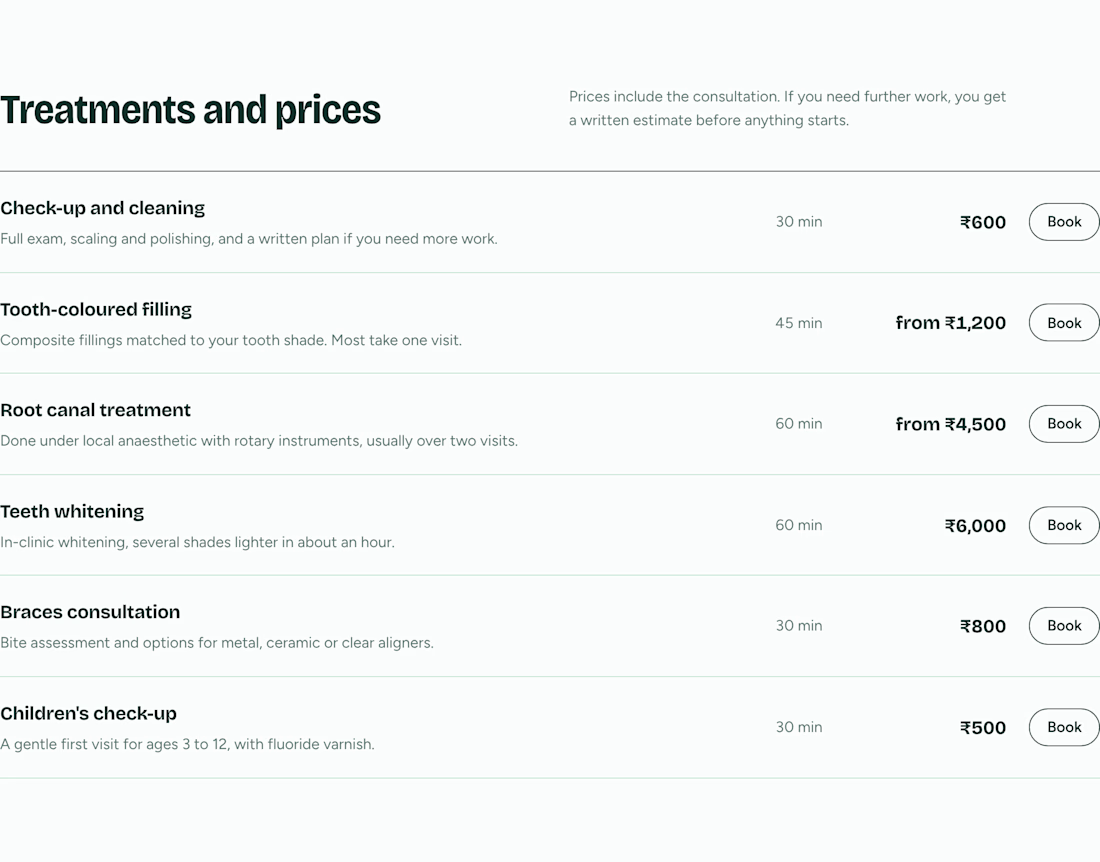
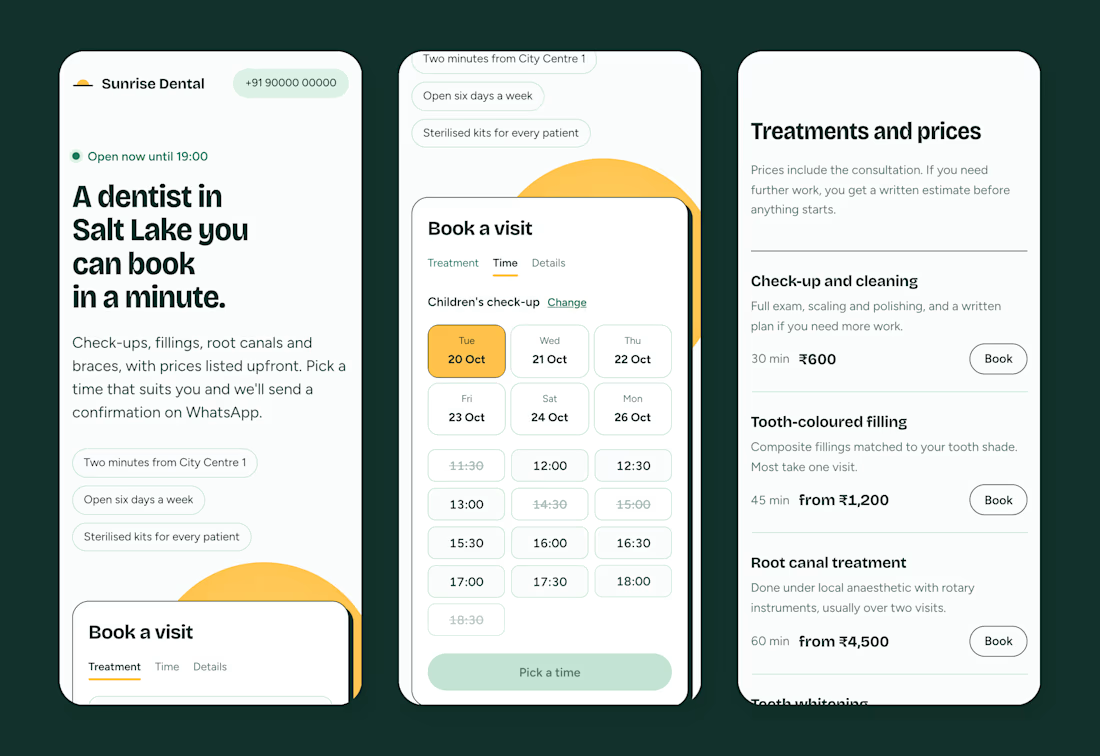
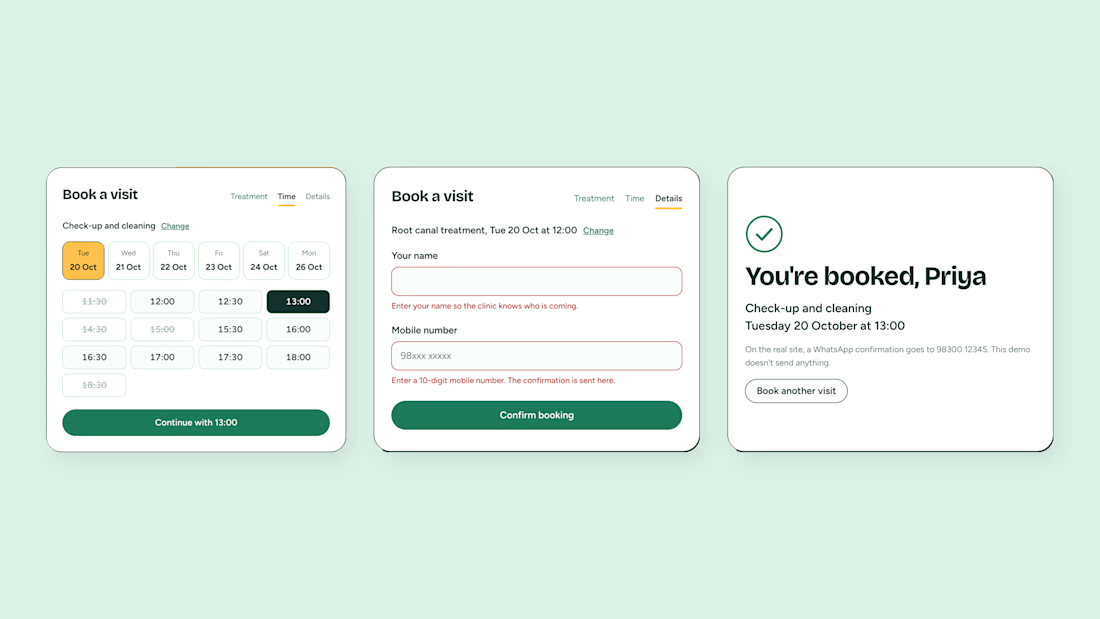
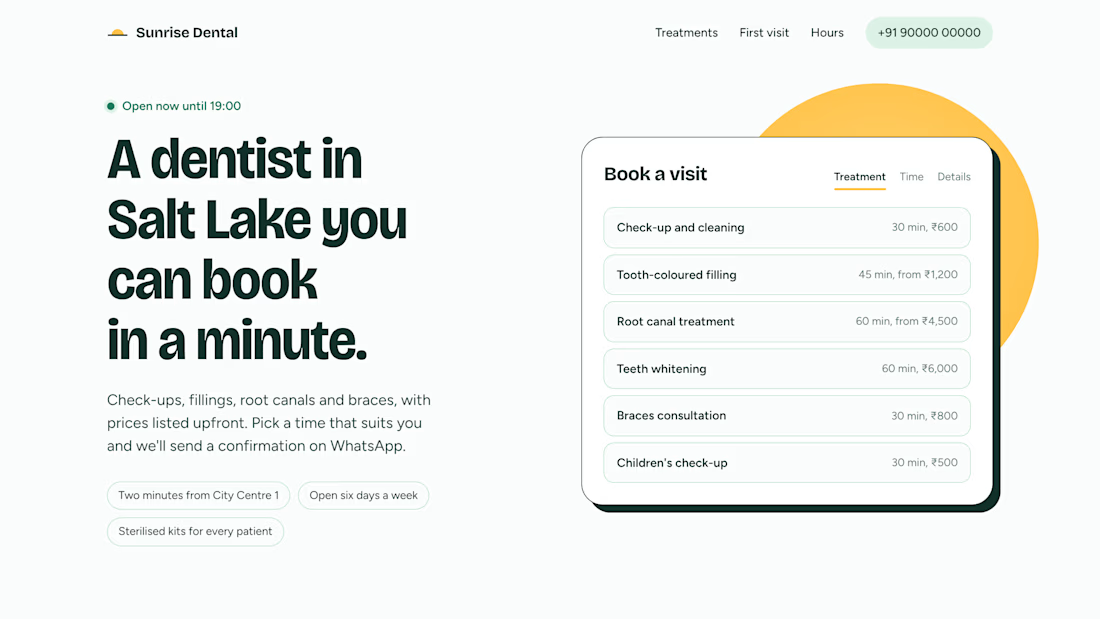

showing whether the clinic is open right now is a really useful detail, and the prices upfront too. are you planning to take it to clinics directly?

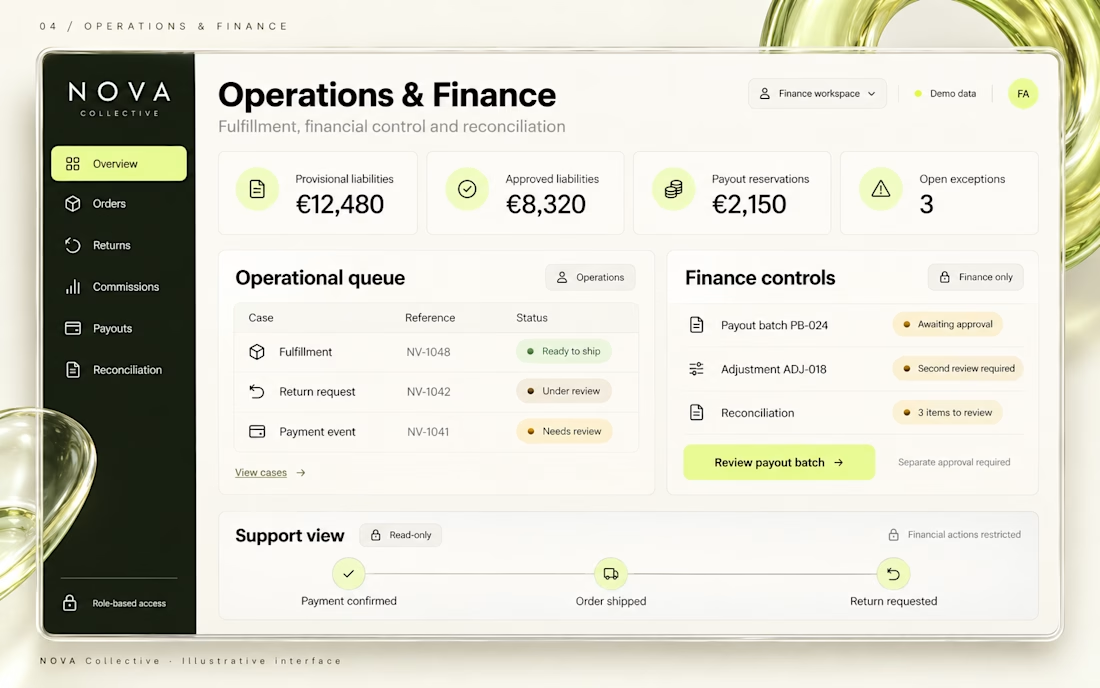
A few highlights from my latest Case study for NOVA Software Architecture



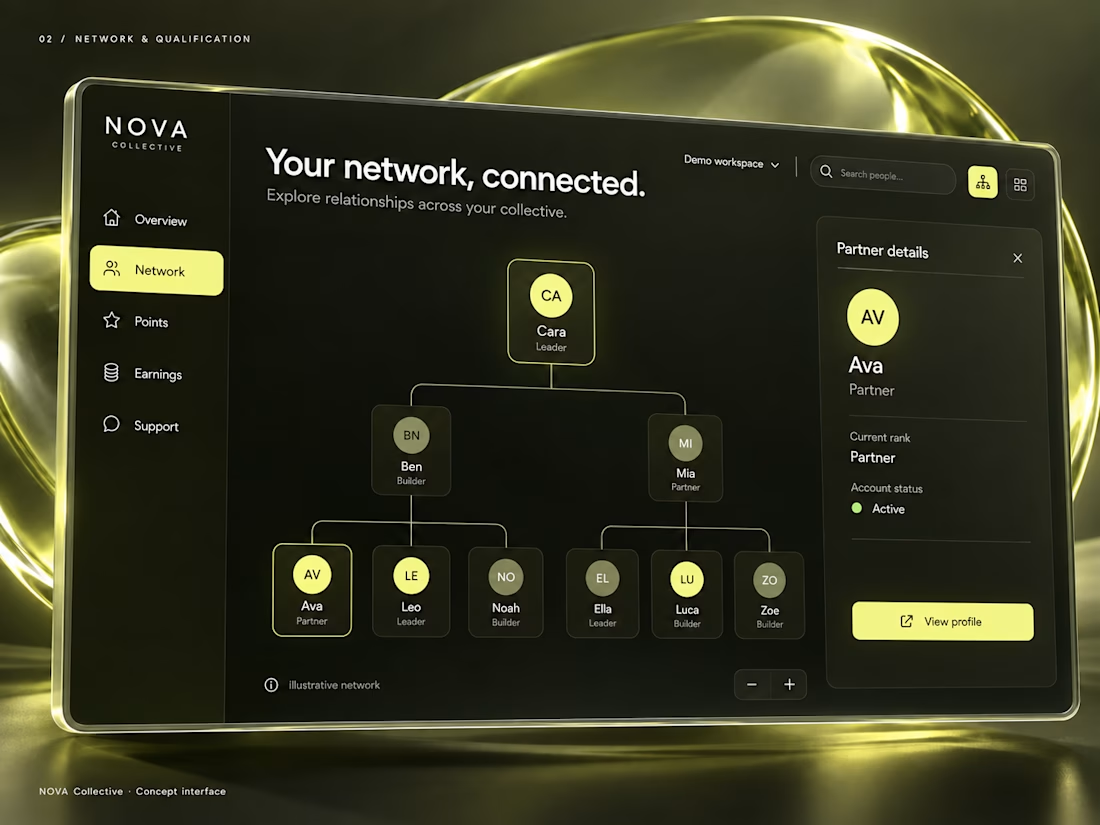


this look amazing 🔥

Hi, I'm Tauseef — Full-Stack Web Developer
I'm a passionate web developer focused on building modern, responsive, and user-friendly websites and web applications. I work with React.js, Tailwind CSS, JavaScript, Node.js, Express.js, and MongoDB to create digital experiences that combine clean design with practical functionality.
My work spans business websites, e-commerce platforms, school management systems, CRM applications, and service-based websites. I focus on creating professional interfaces, reusable components, responsive layouts, and well-structured application workflows.
My Projects
1. SK Agro Foods — E-commerce Website
A premium healthy-snacks e-commerce project designed around products such as makhana and sattu. The focus is on product presentation, category-based browsing, premium branding, responsive layouts, and a smooth shopping experience.
Technologies: React.js, Tailwind CSS, JavaScript.
2. Green Hub Environmental Solutions — Business Website
A professional website for environmental and regulatory compliance services, including BIS Certification, EPR Registration, FSSAI, ISO, WPC ETA, BEE, and other business compliance solutions. The project focuses on service discovery, professional branding, intuitive navigation, and responsive UI design.
Technologies: React.js, Tailwind CSS, React Router, JavaScript.
3. Force Strike Martial Arts Academy — CRM System
A CRM application designed for martial arts academy management. The project includes workflows for programs, trial bookings, student management, authentication, role-based access, and payment integration using Razorpay test mode.
Technologies: React.js, Node.js, Express.js, MongoDB, JWT, Razorpay.
4. Mayfield Global School — School Website
A school website concept focused on presenting the institution, campus, educational values, and admission information through a premium visual layout. The design includes a hero section, school information, calls to action, and responsive components.
Technologies: React.js, Tailwind CSS, JavaScript.
5. School Management CRM
A school administration application designed to manage students, parents, teachers, classes, schedules, attendance, academic progress, admissions, enrollments, memberships, and fee management.
The application focuses on organized administrative workflows, role-based access, student-parent relationships, and academic session management.
Technologies: React.js, Node.js, Express.js, MongoDB, JWT, Tailwind CSS.
My Core Skills
Frontend Development — React.js, JavaScript, Tailwind CSS
Responsive Web Design — Desktop, tablet, and mobile
Backend Development — Node.js and Express.js
Database Management — MongoDB
REST API Integration
Authentication and Role-Based Access Control
E-commerce UI and Product Catalogs
CRM and Administrative Dashboards
Payment Gateway Integration
Component-Based UI Development
My Approach
I believe a good website should look professional, work smoothly across devices, and make complex tasks simple for users. I focus on clean code, reusable components, thoughtful UI design, and practical business requirements.
I'm interested in collaborating with businesses, startups, and clients who need websites, e-commerce solutions, dashboards, or custom web applications.
Let's build something useful together.