The network for creativity
Join 1.25M professional creatives like you
Connect with clients, get discovered, and run your business 100% commission-free
Creatives on Contra have earned over $150M and we are just getting started
Back to feedPost

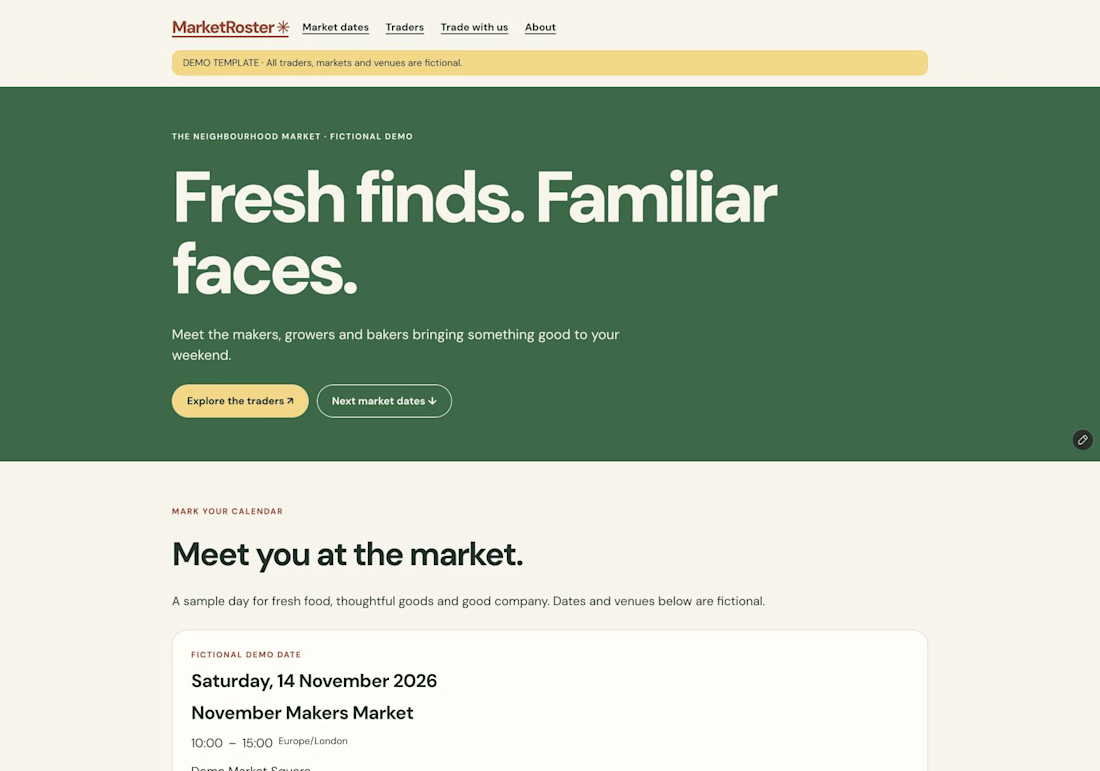
A market website handover: two CMS collections, two different jobs.
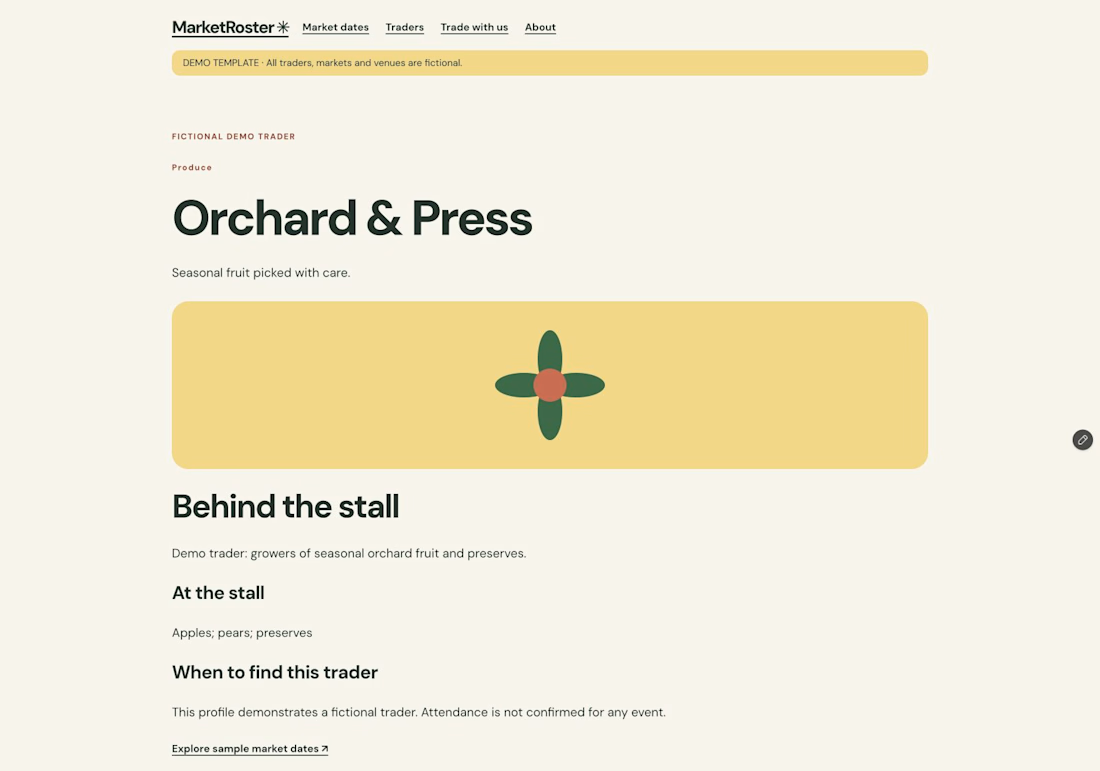
I built MarketRoster for designers taking on a market-organiser website. The trader directory and event schedule are separate: Traders hold stallholder profiles; Events hold market dates.
For a client handover, I would replace the fictional traders and events, then review every date, time, location and contact destination with the organiser. Dates are maintained manually; expired events do not disappear automatically. That is a useful scope decision to agree before handing the site over.
MarketRoster is my US$59 one-off Framer template, licensed for one end project, including a single client site. Framer hosting is separate. It does not include bookings, ticketing or payment processing.
These are genuine template screenshots with fictional demo content, not a client case study.
For designers handing a directory over to a client, who usually maintains the trader profiles: the organiser or your agency?

The network for creativity
Join 1.25M professional creatives like you
Connect with clients, get discovered, and run your business 100% commission-free
Creatives on Contra have earned over $150M and we are just getting started
Related posts

The contact page is usually the last page anyone designs.
We made it one of the best
Recent client work: a contact section UI design for a company with offices across cities. Globe in the back, every location up front, and small interactions that make the whole web design feel alive.

Impressive work


What happens when one website has to talk to two different people?
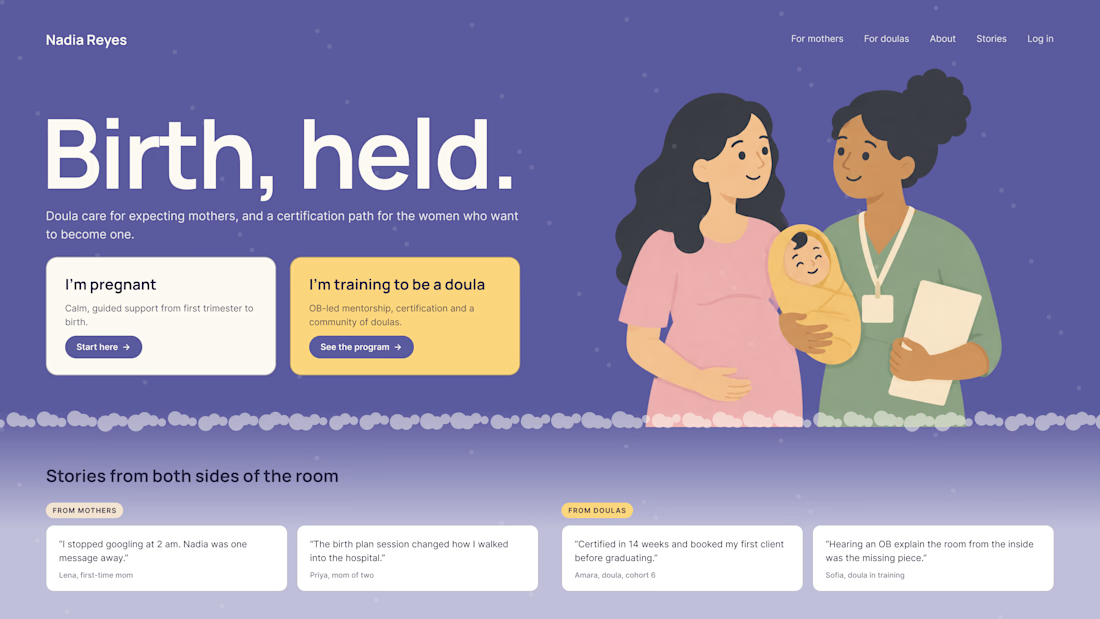
A client of ours teaches two audiences at once: expecting mothers who want a calm pregnancy, and women who want to become doulas. One brand, one site, two very different reasons to visit.
The usual fix is a hero that speaks to "everyone" and lands with no one. We designed it as a fork in the road instead:
1. Two doors in the hero. "I'm pregnant" and "I'm training to be a doula", side by side, equal weight. The visitor picks a path in one click, and the headline above them stays about the shared value.
2. One voice, two tones. The mothers' path is softer: fewer words, more room, gentle photos. The doula path is more structured: modules, certification, dates. Same fonts, same colors, different rhythm.
One proof section, split in two. Testimonials from mothers on the left, from doulas on the right. Each visitor sees people like them before the price.
Writing for everyone is writing for no one. Give each reader a door.
Have you ever designed a page for two audiences at once? How did you split it?


Love that purple hero with the two cards right up top.

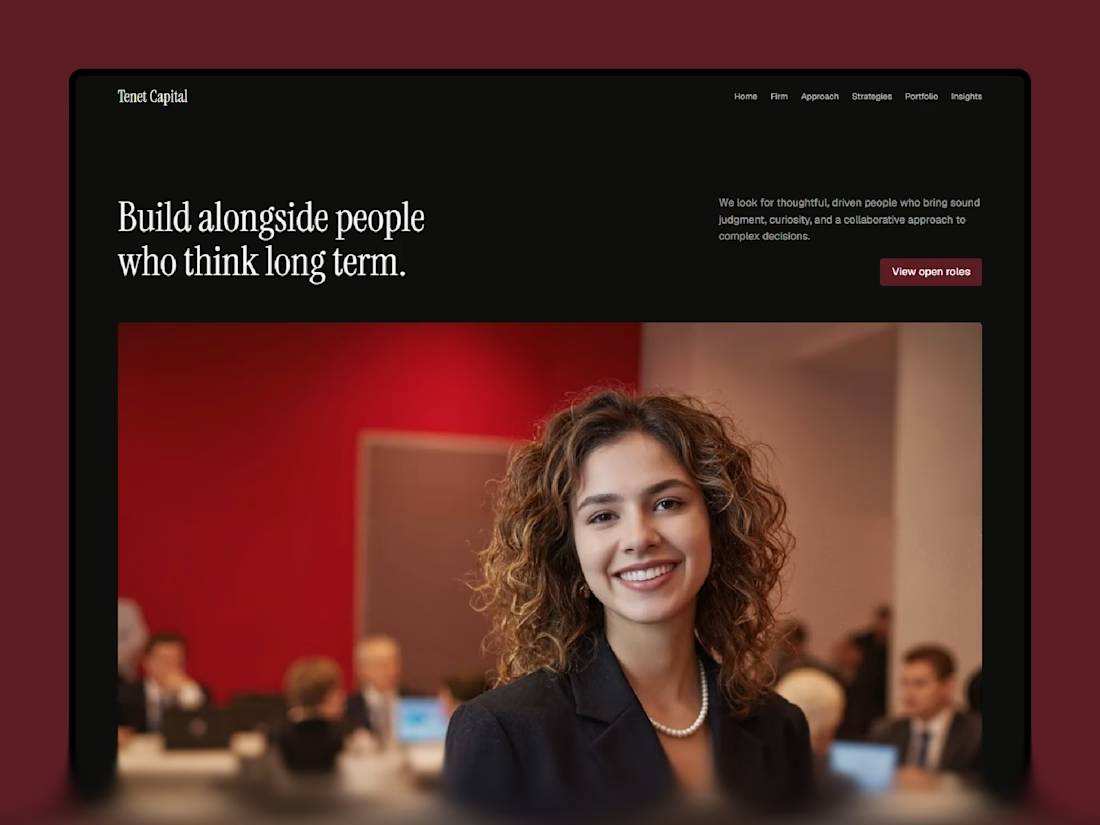
Discover my exciting🔥new template designed specifically
for venture capital and private equity!
Don't miss out!
Experience it live here: https://tenetcapital.framer.website/

Lovely 😍 great work