The network for creativity
Join 1.25M professional creatives like you
Connect with clients, get discovered, and run your business 100% commission-free
Creatives on Contra have earned over $150M and we are just getting started
Back to feedPost

Title: THE OTHER JULIE - A Cinematic AI Reimagining of a Met Masterpiece
Project Overview:
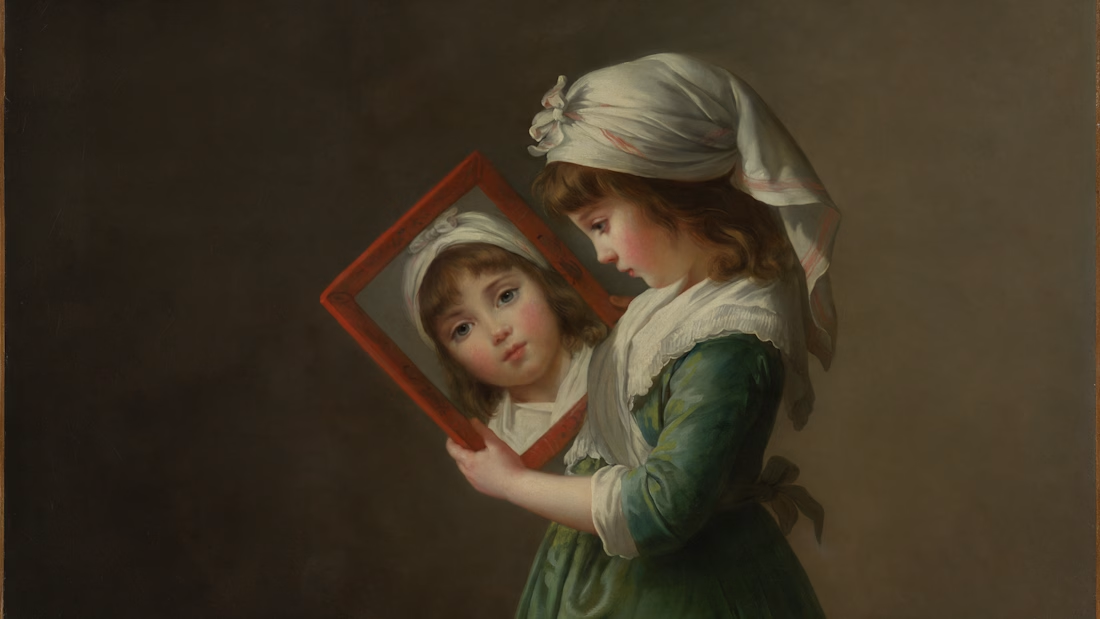
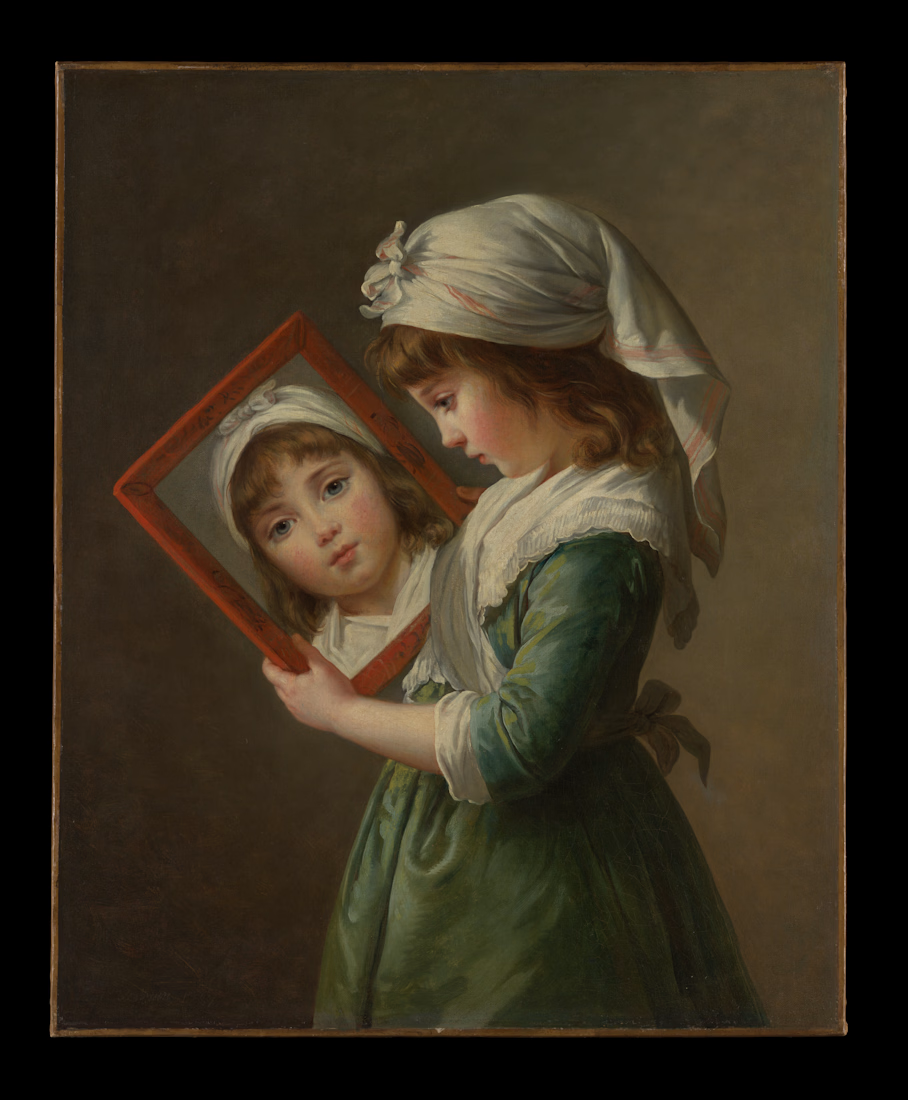
Created for the #FLORAMuseum Challenge, this project transforms Élisabeth Louise Vigée Le Brun’s 1787 painting, "Julie Le Brun Looking in a Mirror," into a 7-shot psychological cinematic sequence.
The Inspiration:
The original painting from The Metropolitan Museum of Art plays with the allegorical concept of 'Sight', showing the subject twice. I reimagined this duality to tell the story of a young girl coping with her parents' separation, finding comfort in a mirror reflection that ultimately represents her isolated inner self.
The Process (Built in FLORA):
Instead of simply animating the existing image, I approached this as a production-ready film.
Workflow: Built a complex node-based canvas in FLORA.
Scripting: Used Claude Sonnet 3.5 to act as an AI director, ensuring accurate cinematic continuity, lighting (warm candlelight to daylight transition), and spatial framing.
Generation: Utilized Seedance 2.5 and King 3.0 Pro to maintain strict character consistency and deliver high-fidelity micro-expressions during the conversation with the mirror.
The Reveal: Engineered a seamless match-cut that pulls the viewer out of the live-action narrative and back into the physical painting hanging in The Met.
Original Artwork: [https://www.metmuseum.org/art/collection/search/438132]


The network for creativity
Join 1.25M professional creatives like you
Connect with clients, get discovered, and run your business 100% commission-free
Creatives on Contra have earned over $150M and we are just getting started





Related posts

Same prompt. Same concept. Two AI tools. 👀
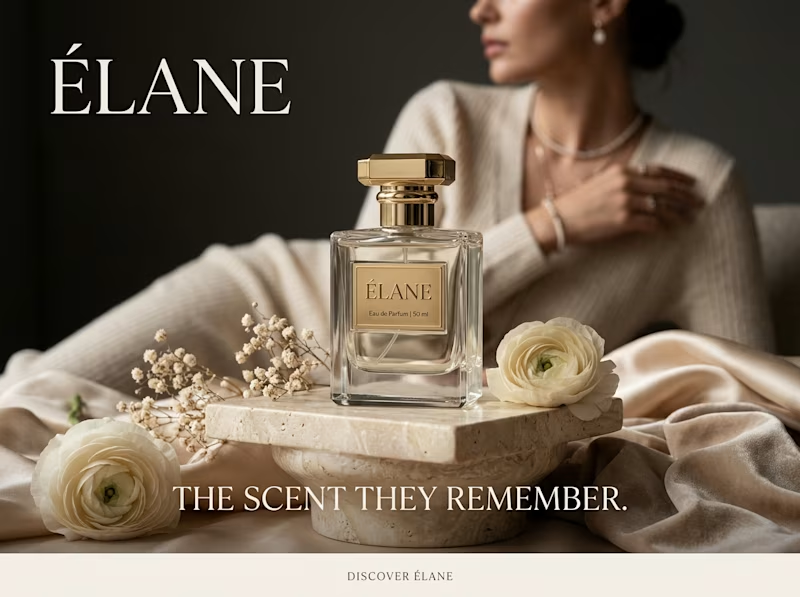
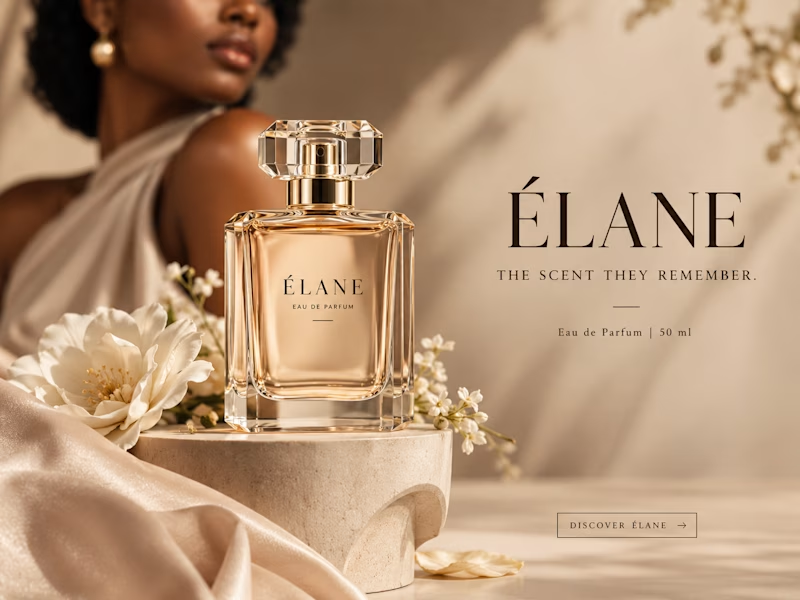
I gave ChatGPT and Gemini the exact same prompt to create a luxury perfume ad creative.
No changes. No extra instructions.
Now I want to know what YOU think:
Which creative did it better?
🔵 A— Gemini
🟣 B— ChatGPT
Look at the overall concept, visual quality, composition, typography, and how “ad-ready” it feels.
Who wins this round? 👀
Vote below and tell me what made you choose your answer.
#AIContent #AIAdvertising #AdCreative #CreativeStrategy #ChatGPT #Gemini #SocialMediaManager #SocialMediaStrategy #SocialMediaMarketing #MarketingStrategy #DigitalMarketing #ContentCreation

11 voted
39%
17 voted
61%
28 votes
Closed


AI Video Generation - Futuristic Smartphone Ad | Vision Gen 2.0
Created a 30-second cinematic product ad for a futuristic AI smartphone concept. This video showcases "VISION GEN 2.0" - an AI model that generates video from text prompts.
Tools Used: AI Video Generation, Midjourney / Runway, After Effects, CapCut
Concept: Floating smartphone with holographic UI, neon blue tech environment, 4K cinematic lighting.
Features Highlighted: Prompt-to-Video, 120ms Latency, 70B Parameters, 4K Quality
Designed for tech startups, AI product launches, and futuristic mobile ads. Fully loopable, 4:3 aspect ratio optimized for Contra portfolio and social media ads.


Great

👋 I'm new to Contra and I did my first post without realizing I hadn't even introduced myself!
Hey I'm Katya, I'm an AI Systems Architect, marketer and yoga teacher.
I build AI systems that bring in business and handle the work behind it. A voice agent that calls new leads back within seconds and books the appointment. A pipeline that traced 16,900+ leads to the ads that brought them. Listing videos made from the photos a real estate agent already has.
The marketing side came first. I built the multi-channel campaign for Jay Shetty's launch (22 million followers). After that I discovered the tech world and when AI came along, I realized I'm a builder at heart and never looked back! Building is so much fun 🤍
Here's what I've shared:
My first post: on building a fully AI-made YouTube video, end to end, because I'm camera shy 🙈 https://contra.com/community/MP9mFRuT-im-building-my-first-fully-ai-made
Last thing, if you're building with AI video or automation, I'd like to see what you're working on
And if you're hiring: I may be new to Contra but definitely not new to this work. Reach out for AI agent builds, apps, websites or anything in between.
P.s The video below is my AI avatar. My profile video is the real me :)
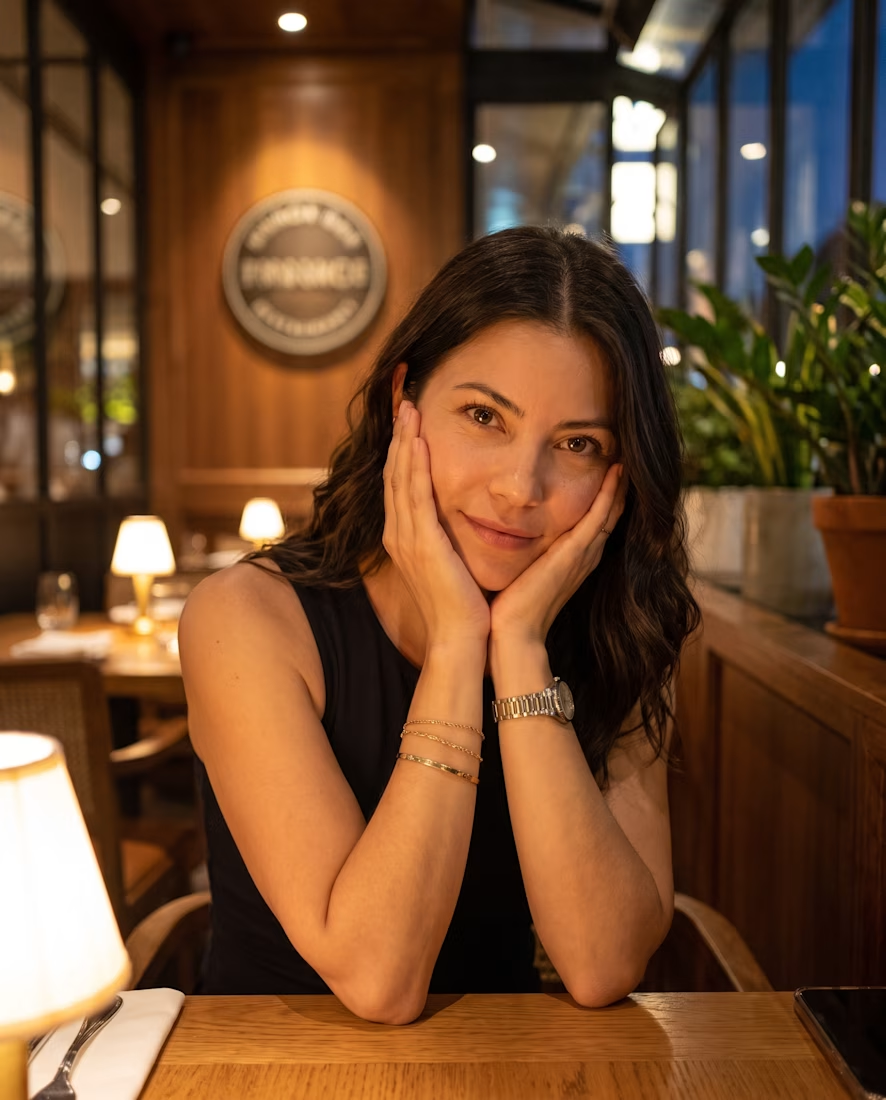

Nice Portrait....Has everything from a great pose, great composition and lighting and perfect environment setting.