The network for creativity
Join 1.25M professional creatives like you
Connect with clients, get discovered, and run your business 100% commission-free
Creatives on Contra have earned over $150M and we are just getting started
Back to feedPost

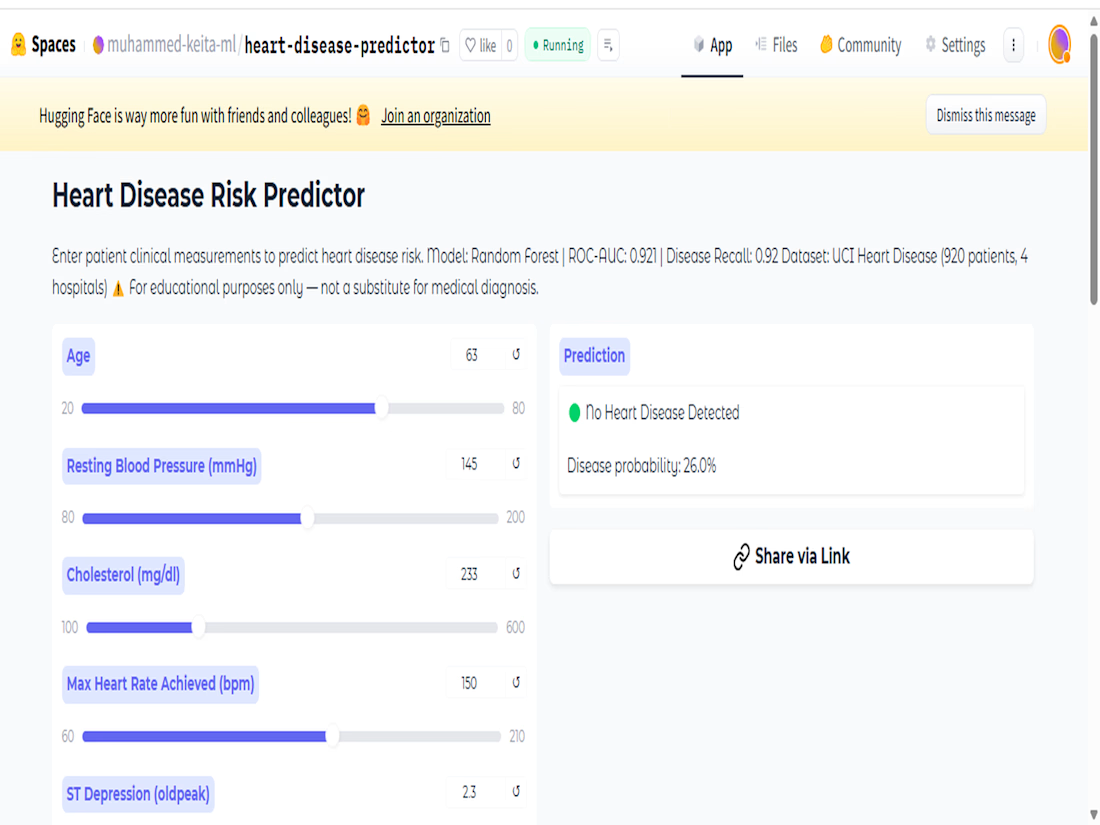
Heart Disease Risk Pipeline — end-to-end ML system, Random Forest AUC=0.921, Recall=0.922. MLflow experiment tracking on DagsHub, live inference on Hugging Face Spaces, GitHub Actions CI/CD.


The network for creativity
Join 1.25M professional creatives like you
Connect with clients, get discovered, and run your business 100% commission-free
Creatives on Contra have earned over $150M and we are just getting started







Related posts

Reading a document is easy. Understanding its meaning is the real challenge.
While building AI-powered medical document intelligence systems, I’ve been learning that extracting words is only one part of the problem.
Consider this sentence:
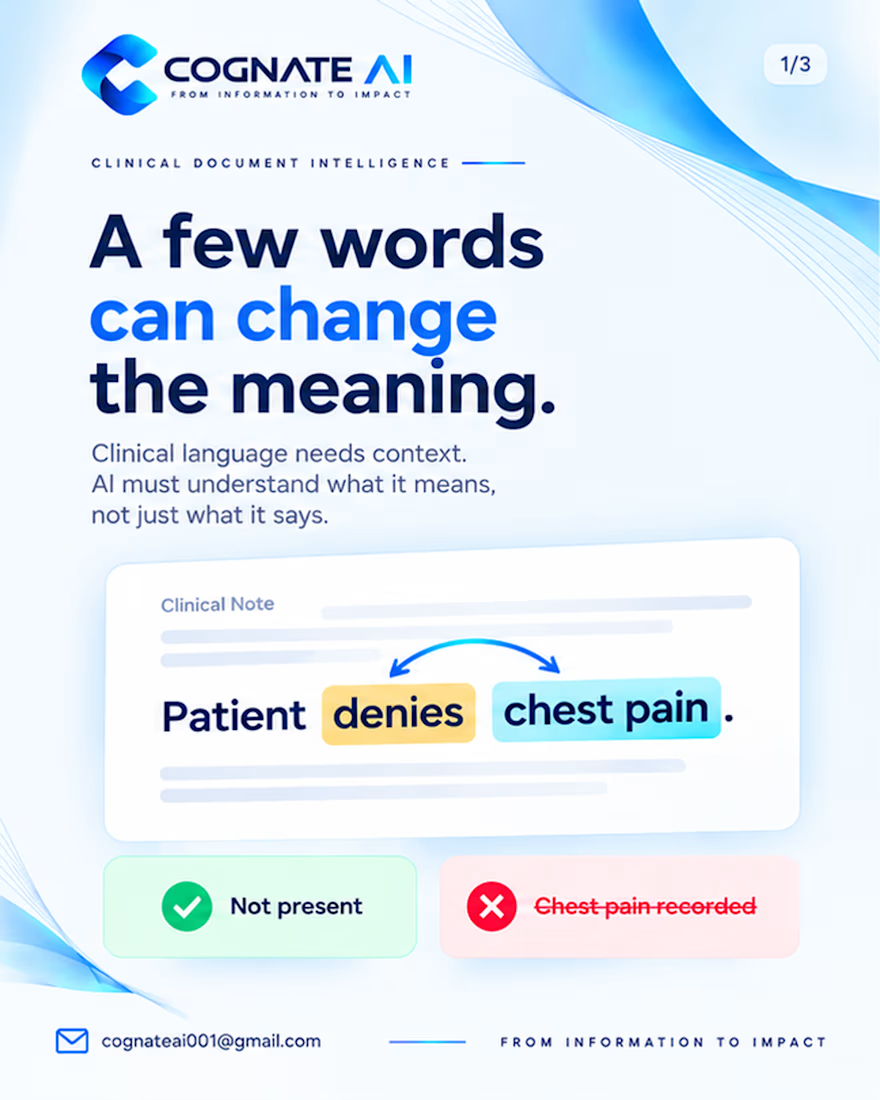
“Patient denies chest pain.”
A system might recognize the words correctly but still extract the wrong information if it ignores the word “denies.”
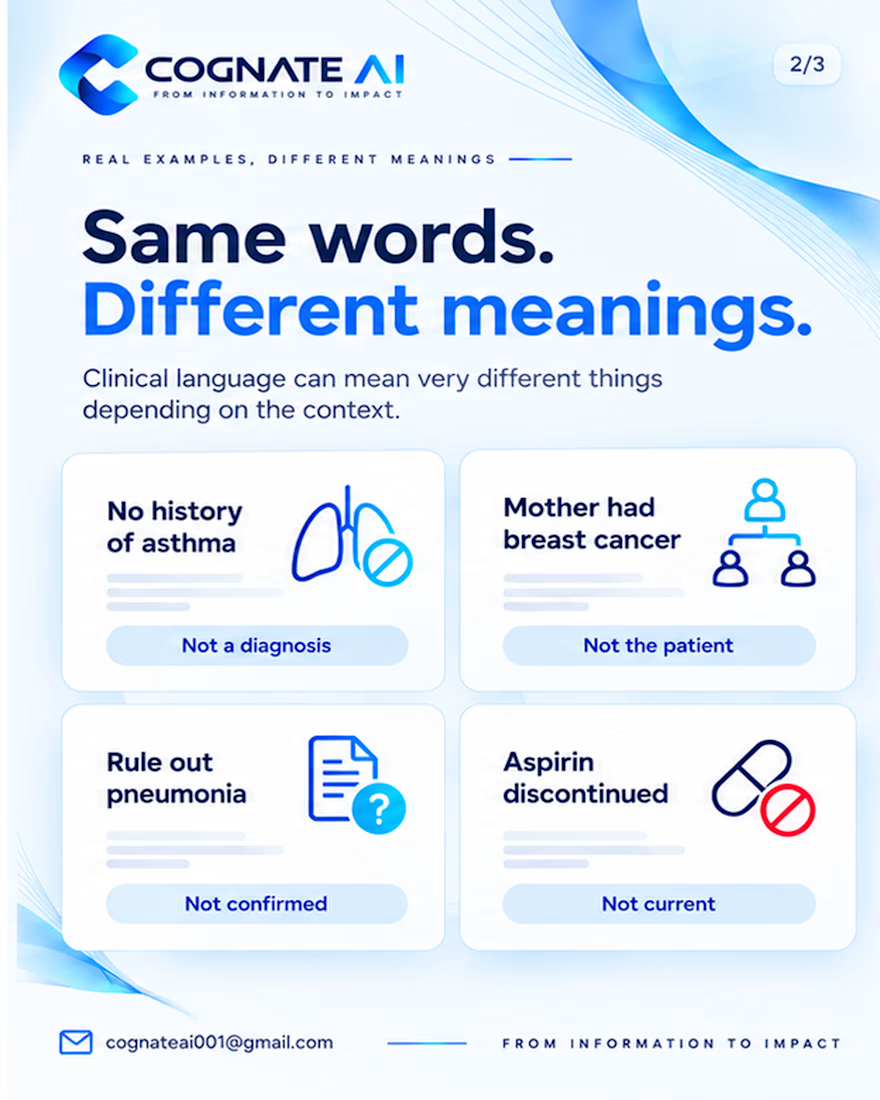
The same challenge appears in phrases like:
“No history of asthma”
“Mother had breast cancer”
“Rule out pneumonia”
“Aspirin discontinued”
Each sentence requires more than text recognition. It requires understanding context, negation, uncertainty, relationships, and whether information is current.
This is one of the challenges I’m exploring while building MDIS (Medical Document Intelligence System) at Cognate AI.
My focus is on developing systems that go beyond extracting information—toward structured outputs, validation, evidence traceability, and human review.
Because in healthcare AI, extracting the right words is not enough. The system must preserve what those words actually mean.
I’m continuing to learn, build, test, and improve this system one step at a time.
What do you think is the biggest challenge in making AI understand clinical language accurately?
#AIEngineering #HealthcareAI #MedicalAI #DocumentIntelligence #BuildingInPublic


negation like that is exactly where naive extraction falls apart, great example

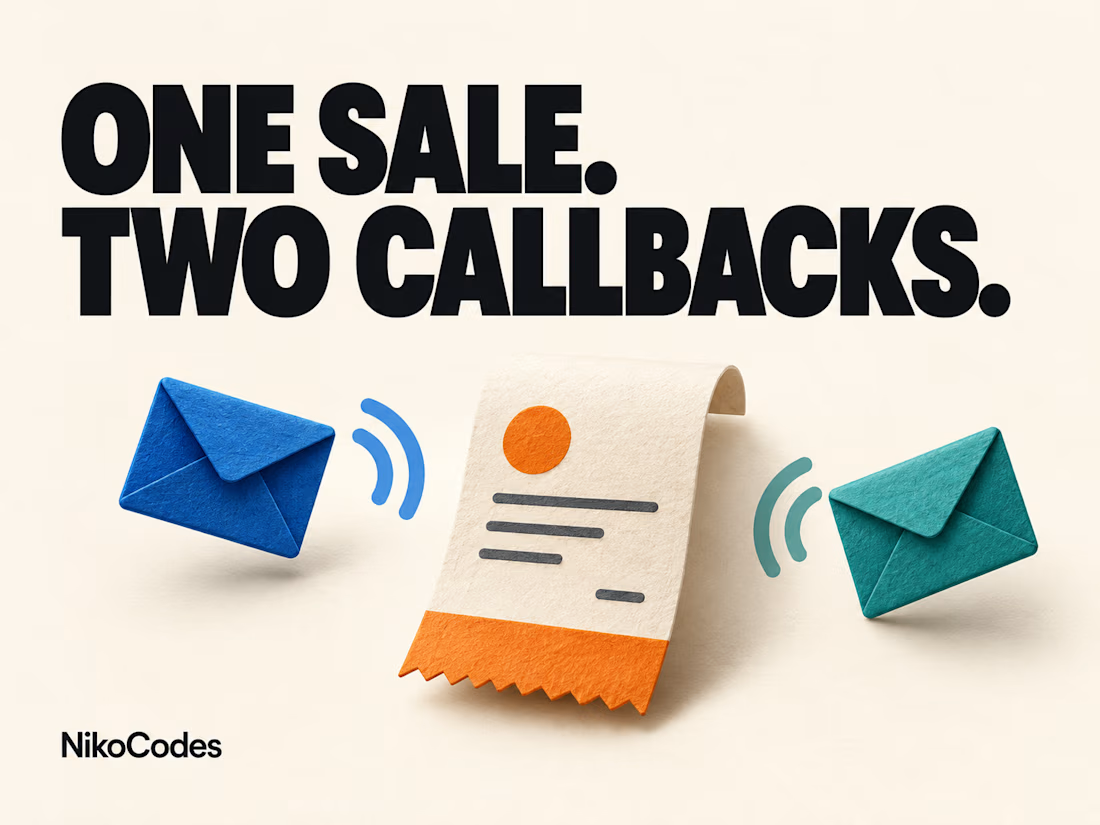
The Webhook Arrived Twice. The Sale Happened Once.
A conversion notification arrives twice. Should your report show two sales?
Imagine an integration saves the first notification, but its acknowledgement never reaches the sender. The sender retries. Both deliveries describe the same event.
Counting every arrival as a new conversion would inflate the report. In another workflow, the same mistake could create a second task or send the customer another confirmation.
I built duplicate checks into my Internal Campaign Tracker, a private working proof of concept for a business partner. Incoming conversions are matched to the original visit. Outgoing callbacks have a persistent queue, retry history and a way to inspect and replay failed deliveries.
That separates two questions: did the business event happen, and did its notification reach the next system?
Before accepting an integration, agree what identifies a repeat. An email address is usually too broad: the same customer can make two legitimate purchases. The identity needs to match the action you are protecting.
Then test three cases:
• Deliver the same event twice, including two attempts arriving close together.
• Retry after a timeout where the receiving system may already have saved the first attempt.
• Send a genuinely new event for the same customer and confirm it is still processed.
The expected result should be written down for each case. A repeated notification should not repeat the protected action; a new purchase should not disappear because its customer is already known.
The operator also needs to see what happened: completed, waiting to retry, or needing attention. For outgoing callbacks, retries and manual replay should keep the same event identity, and the receiving system must handle repeat deliveries safely.
Project details and screenshots on NikoCodes:
https://nikocodes.com/software/internal-campaign-tracker/


Great breakdown. A pattern that holds up even when two deliveries race each other: save the event ID under a unique constraint in the same transaction as the side effect. Then the database decides which one wins, instead of a check-then-insert in app code.

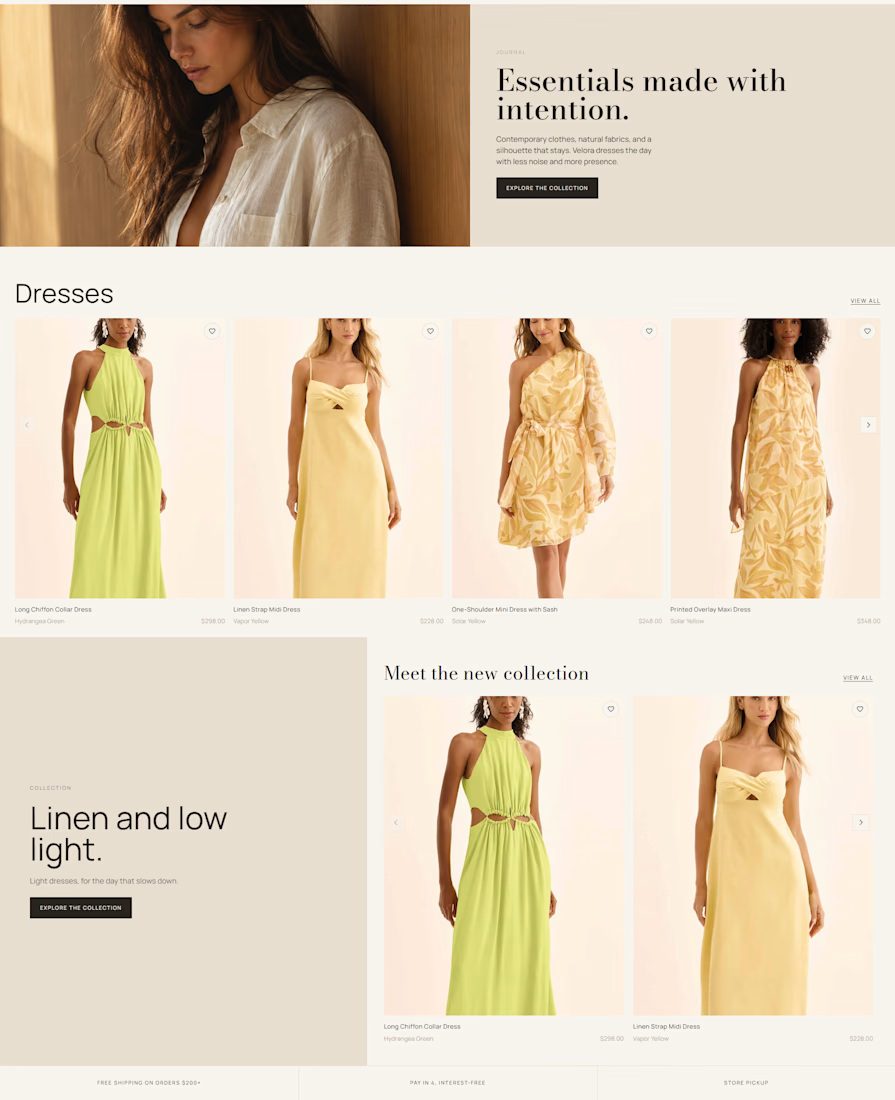
✨ A unique online shopping experience, built from the ground up.
I'm excited to share this custom e-commerce design, created to combine premium aesthetics, intuitive navigation, and a seamless shopping experience.
My focus is on building exclusive digital experiences with custom development, modern technologies, responsive design, and performance in mind — no generic templates, just solutions tailored to each brand.
Looking to take your business online or elevate your existing store? Let's build something exceptional.
#EcommerceDevelopment #WebDevelopment #CustomWebsite #NextJS #ReactJS #WebDesign #OnlineStore