The network for creativity
Join 1.25M professional creatives like you
Connect with clients, get discovered, and run your business 100% commission-free
Creatives on Contra have earned over $150M and we are just getting started
Back to feedPost

The Website Stack I'd Choose for 4 Different Businesses—and Why
There is no best website platform. There's only the best platform for what you're actually trying to do.
Ask around and you'll hear people defend their favorite tool like a religion. That's backwards. The platform is a decision, not a loyalty. Here's how I'd choose for four very different businesses, and the reasoning behind each call.
SaaS startup → Framer
The goal is speed, polish, and constant iteration. A startup needs a sharp marketing site that explains a complex product simply and can change the moment the positioning does. Framer ships fast, gives full visual freedom to make an abstract product feel clear, and uses motion to guide attention instead of just decorate. Messaging is never final at this stage, and Framer lets the site keep pace with the business instead of falling behind it.
Law firm → WordPress
The goal is authority, trust, and long-term SEO. Professional services live on credibility and organic visibility, and WordPress is built for depth. Serious content architecture, strong SEO control, endless integrations, and the ability to scale into hundreds of pages of practice areas, guides, and case results over time. It's the platform I'd trust to compound authority for years, which is exactly what a firm needs to keep showing up when someone searches for help.
Ecommerce brand → Shopify
The goal is selling, cleanly and at scale. For a real product business, everything comes down to conversion infrastructure, and that's Shopify's entire reason to exist. A checkout that's already optimized, an app ecosystem for anything you need, inventory and payments handled, and the reliability to grow without the backend breaking. I'd never build a serious store on a platform where ecommerce was bolted on. Here it's the foundation.
Content-heavy service business → Webflow
The goal is publishing a lot of content while still looking premium. When a brand's growth is driven by marketing and volume, but design still has to feel high-end, Webflow is the sweet spot. A powerful visual CMS, clean structure that's good for SEO, and full control over how every template looks without fighting a rigid theme. It's for the business that wants to publish constantly and refuses to look generic doing it.
Now the honest caveat. These aren't hard rules. A content operation at massive scale, or one that needs a specific plugin ecosystem, might lean WordPress instead of Webflow. A startup with heavy custom needs might justify a fully custom Webflow build over Framer. The point isn't the exact mapping.
The point is the thinking. You start with the business goal, then choose the tool that serves it. Not the other way around.
Pick the platform for the outcome you want.
Not the one you're most comfortable defending.
The network for creativity
Join 1.25M professional creatives like you
Connect with clients, get discovered, and run your business 100% commission-free
Creatives on Contra have earned over $150M and we are just getting started

Challenges
View all


Related posts

More particles ! This time we have a GPGPU flow field particles effect that looks so cool. Made with Three.js, WebGL and GLSL.
Check it live here: https://gpgpu-flow-field-ebon.vercel.app
Model from sketchfab.com by re1monsen


this is cool 😍😍

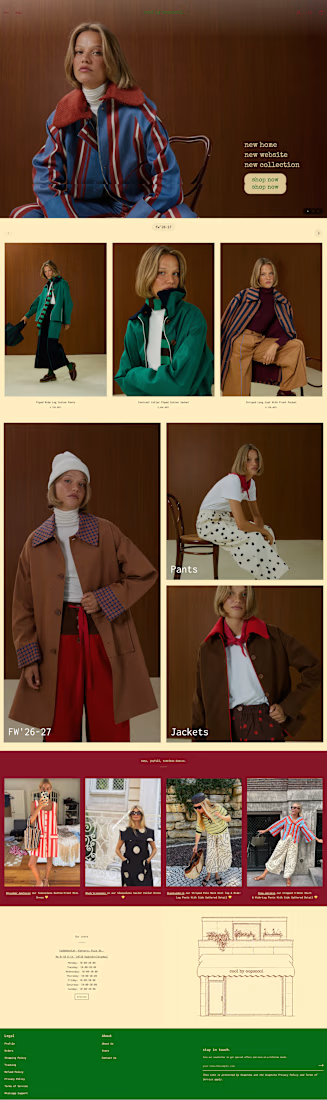
Just launched: Cool by Oopscool , a new Shopify digital flagship for Oopscool's emerging fashion label.
We've been working with Oopscool since 2024, when we built their main online store. This summer, we teamed up again to bring their new label online ahead of the FW26–27 collection.
From visiting their physical store and exploring three different design directions to Shopify development, ERP connectivity, local payment and shipping integrations, and launch coordination.
After months of collaboration with the brand and its technical partners, the new store went live on today right on schedule for the new season.
Designed and developed by Serai.studio.


Makes sense, and good call negotiating two providers against each other, most people just take the first quote. One thing worth knowing for anyone reading this later: a regional gateway like that usually plugs in through Shopify's payments app extensibility rather than a custom...

Most startups hire a designer, then a developer, then spend weeks fixing what got lost between the two.
I do both. I design the UI and build it myself, so what you approve is exactly what ships.
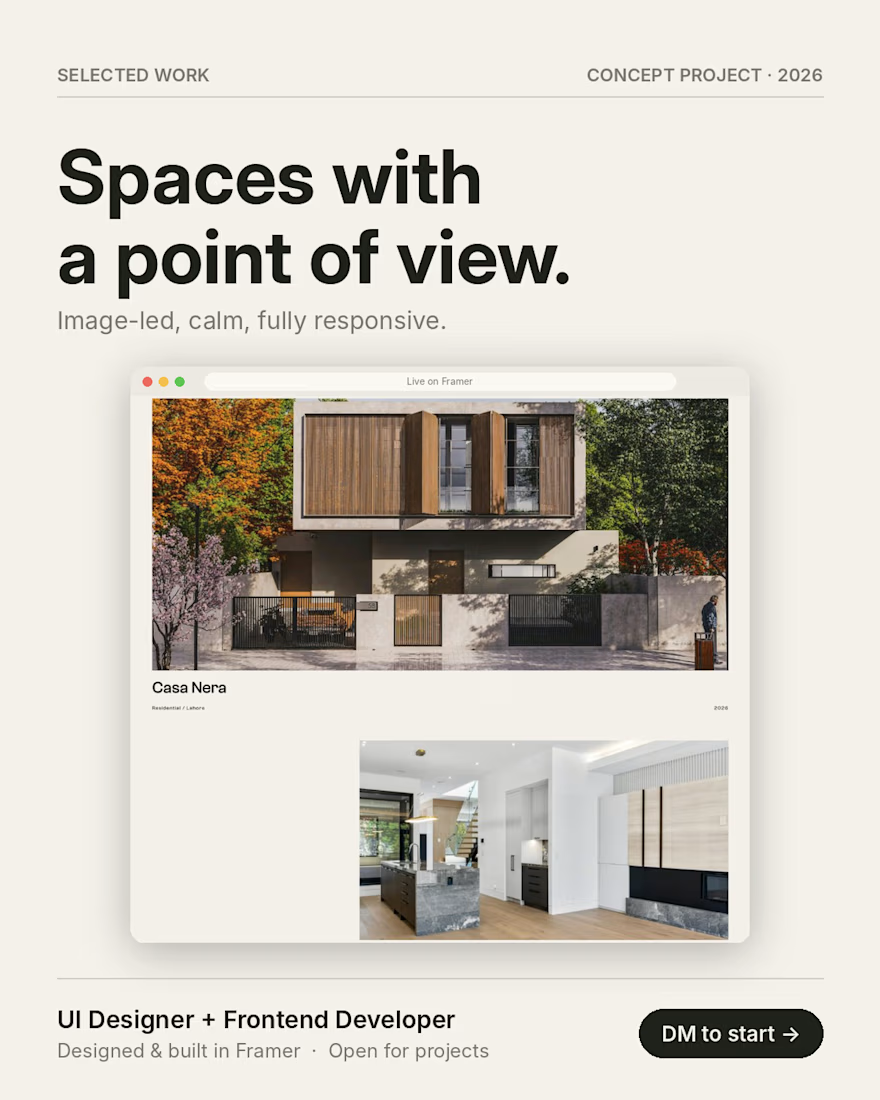
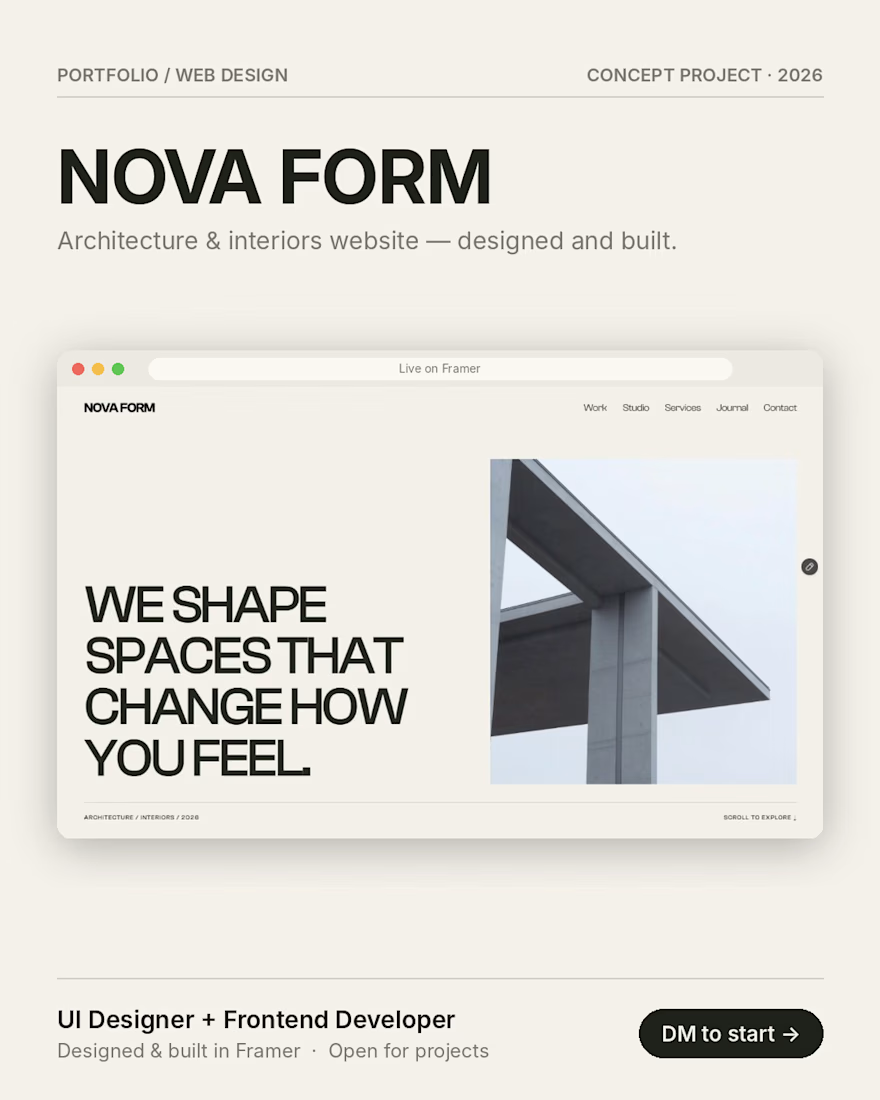
Here's a concept I just finished: NOVA FORM, a website for an architecture & interiors studio. Designed and built in Framer.
What I focused on:
Bold editorial typography with an elegant serif accent
Image-led project showcase that lets the work speak
Clean, calm layout with plenty of breathing room
Fully responsive and fast
Live site: https://rotating-turnip-092303.framer.app/
I help startups, studios and brands get websites that look premium and convert.
UI/UX Design
Frontend Development
Framer Websites
2 project slots open this month.
Send me a message with your idea and deadline. I'll reply within a few hours.
(Concept project, not a real client.)