The network for creativity
Join 1.25M professional creatives like you
Connect with clients, get discovered, and run your business 100% commission-free
Creatives on Contra have earned over $150M and we are just getting started
Back to feedPost

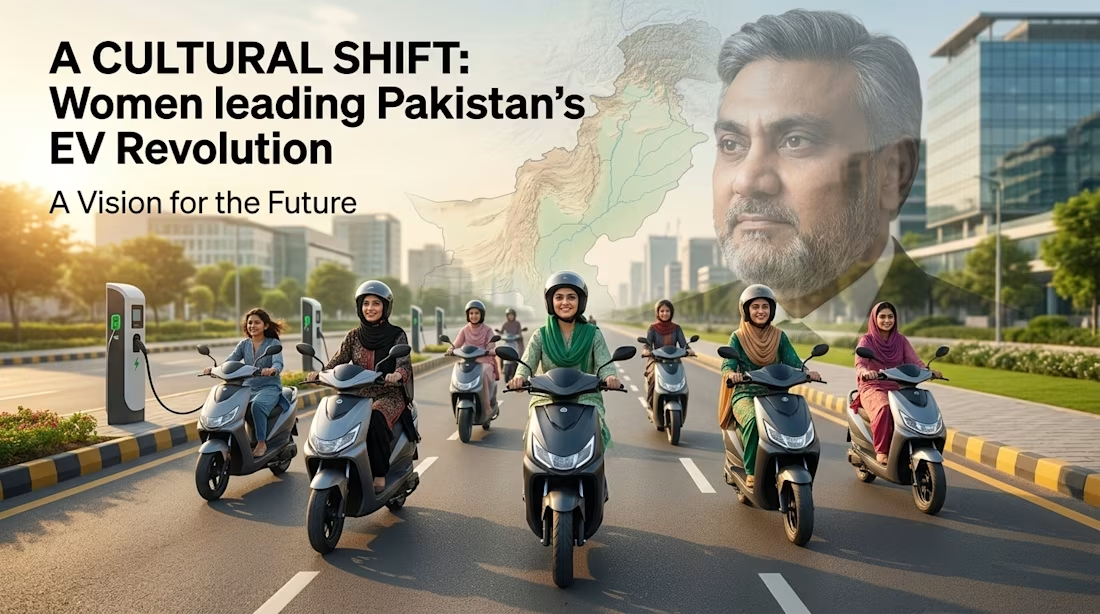
Something quietly revolutionary is happening on Pakistan's streets.
Women and girls are riding.
For decades, motorbikes in Pakistan were almost exclusively male territory. Cultural barriers, safety concerns, and aggressive riding culture kept half the population off two wheels.
Then EV bikes arrived.
Moderate speed. Low maintenance. Smooth and quiet ride. Affordable running costs.
Suddenly a completely new market appeared.
Women commuters. College girls. Working mothers. Young students.
An entirely new segment that never existed before.
This is what most Chinese EV manufacturers don't see when they look at Pakistan's numbers.
They see population size.
They don't see the cultural transformation happening underneath.
Pakistan's EV bike market is not just growing.
It has doubled its addressable market by bringing in consumers who never bought a bike before.
For Chinese EV brands eyeing Pakistan:
The opportunity is real.
But the entry strategy matters enormously.
Wrong distribution partner. Wrong sales channel. Wrong positioning.
And you will miss the very consumers driving this revolution.
The market is moving fast.
The question is whether you move with it correctly.
#Pakistan #EVMarket #ElectricVehicles #ChinaPakistan #EVBikes #MarketEntry #ConsumerInsights #EmergingMarkets #CPEC #BusinessStrategy
The network for creativity
Join 1.25M professional creatives like you
Connect with clients, get discovered, and run your business 100% commission-free
Creatives on Contra have earned over $150M and we are just getting started





Related posts

RIDE / WELL : Bike repair, without the guesswork. ⚙️
I created RIDE / WELL, an independent bike workshop in Münster, Germany, designed to turn a vague repair inquiry into a confirmed booking without the usual back-and-forth, phone calls, or the old-school approach of simply showing up and hoping the workshop has time.
Customers choose their bike, show or describe what’s happening, and RIDE / WELL matches them with the appropriate service, repair time, and location. Suitable jobs can be booked as mobile repairs, while more complex work is automatically routed to the workshop.
The result: customers can book with confidence, while the workshop gets all the key details upfront, including the bike type, issue, recommended service, estimated time, and service location.
I’ve added a short process walkthrough and a few additional screenshots in the comments below.
🚲 Explore RIDE / WELL:
https://pixel-perfect-capture-9552.lovable.app/
Built with Lovable.
@Lovable
#lovablechallenge


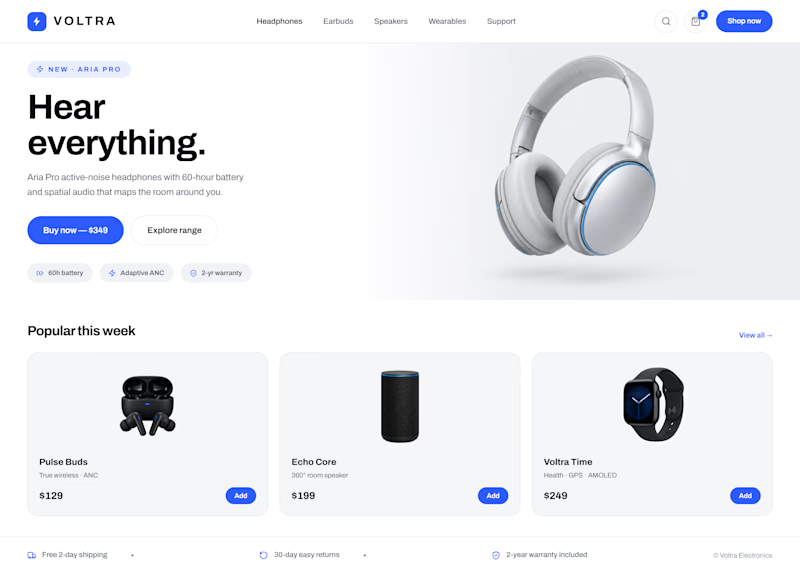
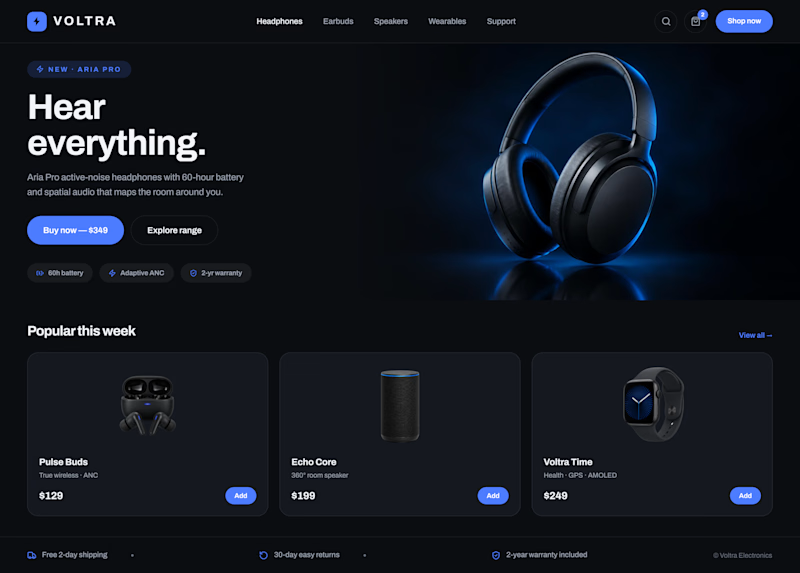
Working through the visual direction for Voltra.
The debate: does premium tech sell better in the shadows (Image 2) or in daylight (Image 1)?
Drop your pick below 👇

6 voted
43%
8 voted
57%
14 votes
Closed

One problem. Two design directions. Which would you choose?
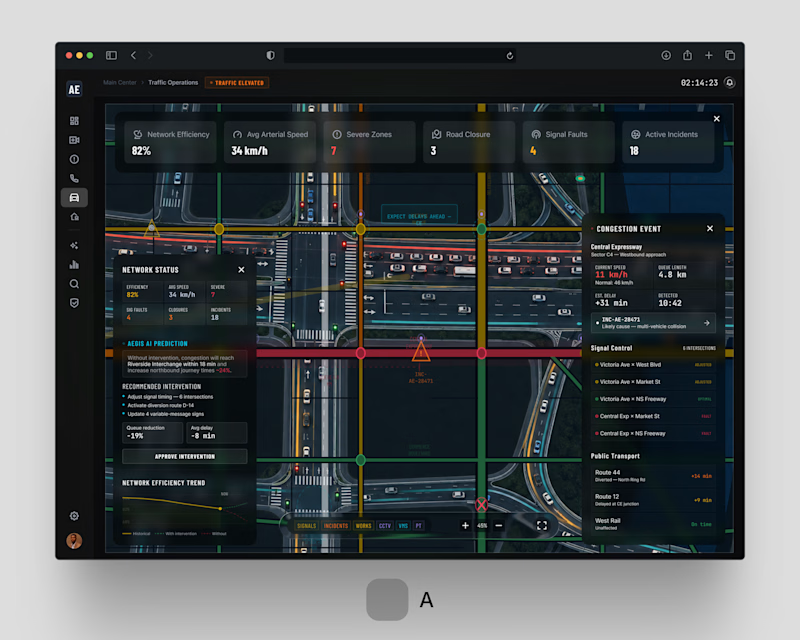
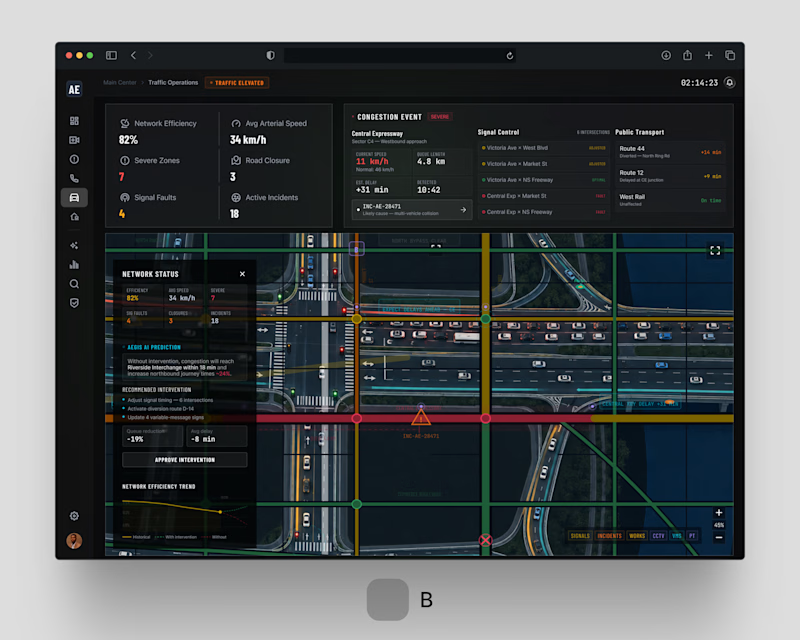
For AEGIS / 001.05 . Traffic Operations, we explored two approaches to the same challenge: helping city operators understand congestion, incidents and network-wide disruptions without overwhelming them with information.
Both solve the same operational problem. Different approaches to hierarchy and interaction.
If you were behind the control desk . Option A or Option B?
#smartcities #enterpriseux #productdesign #digitaltransformation #jemirae


1 voted
33%
2 voted
67%
3 votes
Closed
