The network for creativity
Join 1.25M professional creatives like you
Connect with clients, get discovered, and run your business 100% commission-free
Creatives on Contra have earned over $150M and we are just getting started
Back to feedPost


Brutalist architects exposed raw concrete because hiding it cost more. What's our excuse?
We just like it:)
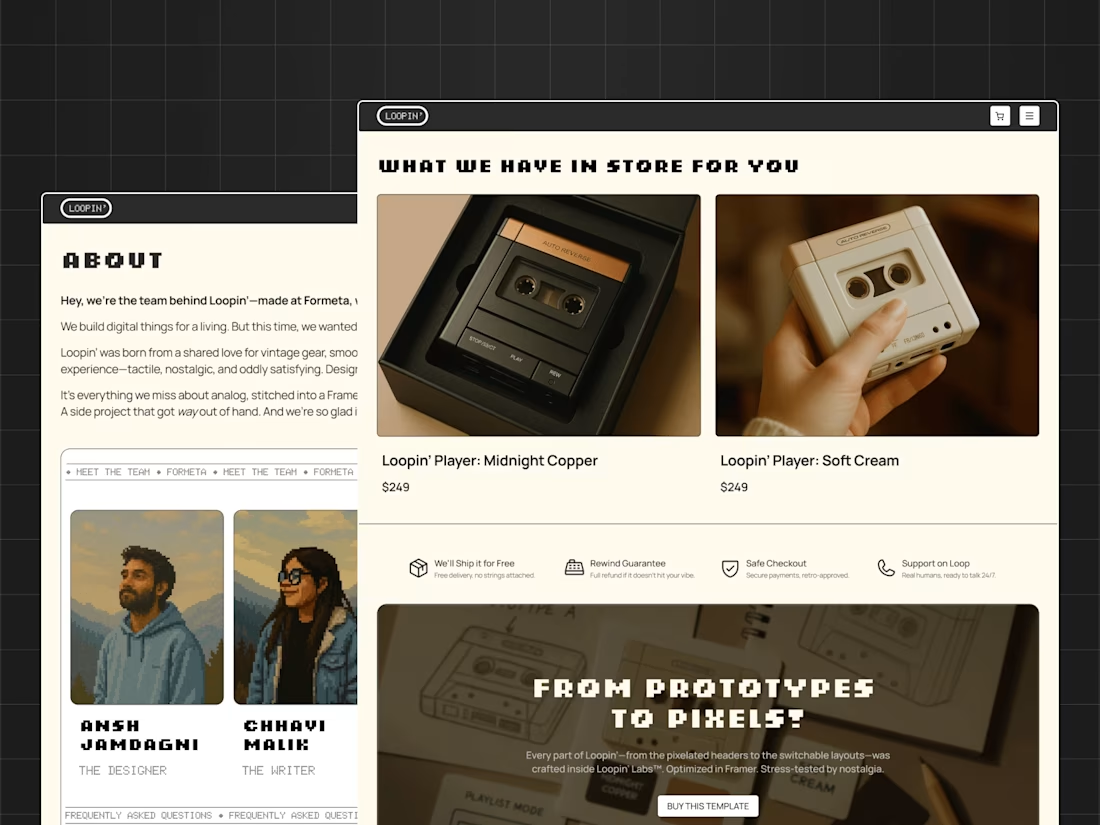
A year ago, @Ansh Jamdagni and I built Loopin as a Framer template for a cassette brand that exists only as a thought experiment.
We thought of making a nostalgic yet futuristic product website and neobrutalist design was our go for this dreamy product. We posted it on Contra expecting nothing in particular.
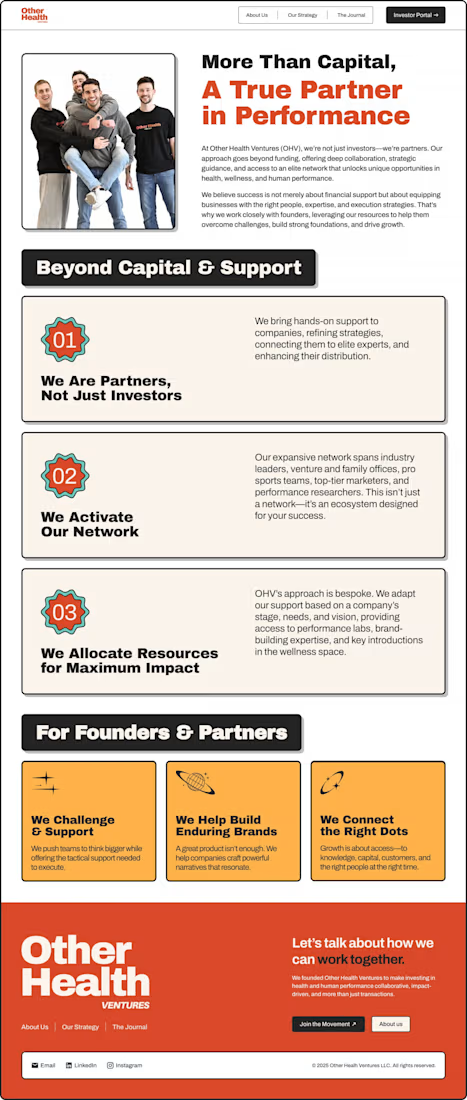
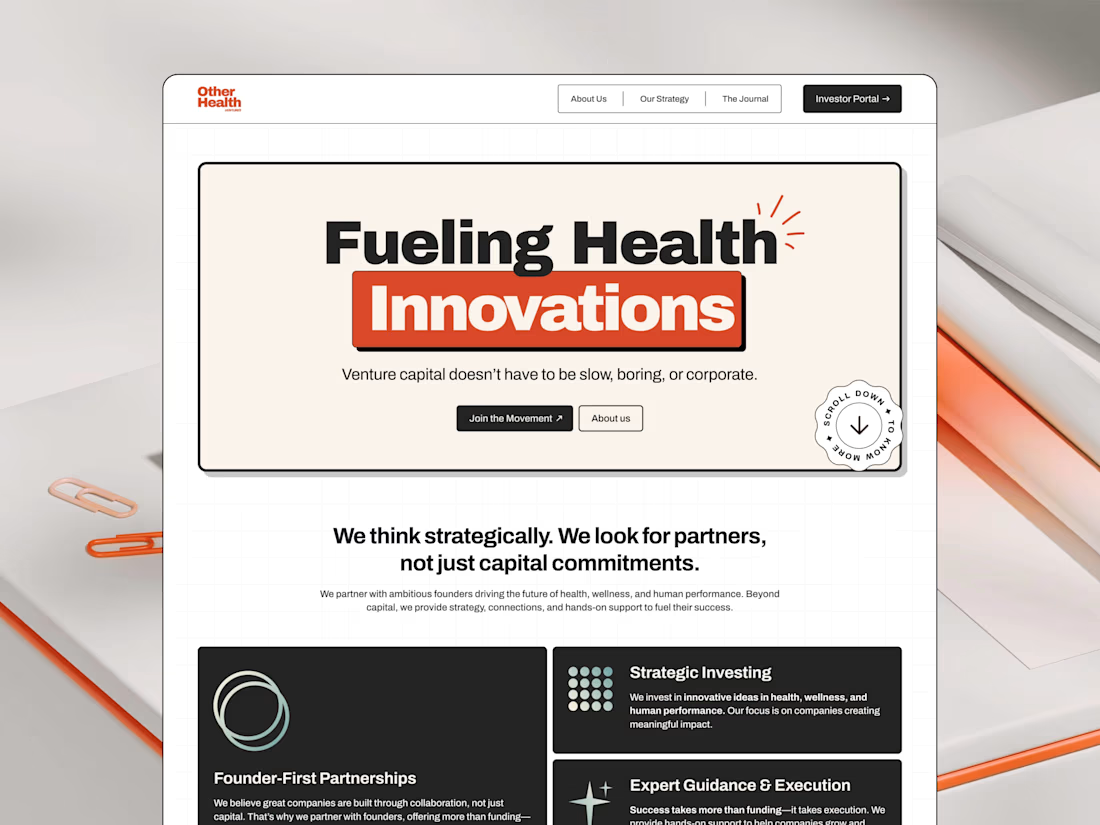
A few months later, Other Health Ventures, a VC firm backing health and performance startups, got in touch.
They were tired of looking like every other fund, had seen Loopin and wanted their site built with the same instincts less navy, more hard borders and Archivo Black. They've become one of our favourite clients since.
A product designer later asked for her portfolio in the same language. No brief beyond "that, but for me."
What we didn't clock until the third one: this style takes more decisions than minimal design, not fewer. Minimalism hides things. This doesn't. Every border, every oversized headline, every quiet corner is a choice that has to land on its own.
Tools, for the curious:
— Framer for all three
— GPT for Loopin's product shots (not real cassette players unfortunately, several people have asked)
— Mostly restraint, applied unevenly on purpose:)
What's a design choice you've made that looks effortless but took the most thinking?


That point about neobrutalism requiring more decisions really hits. Minimalism lets you hide uncertainty behind white space, but every deliberate corner and heavy border here has to earn its place. The OHV site especially looks like it was designed with conviction, not just following a trend.
Yes! All intentional and functional here. 🫶🏻

Building this was SOOO much fun! Next project when? hahah
soon soon soon!


This is impressive and shows a lot of potential. It makes me wonder—what’s the next level for you after this?
Next level is always clients’ satisfaction+results that scream ROI


Thanks!

Amazing!

Just so good!

nice work

Framer template & nice retro design, certainly gets a goat from me! 🙌
haha, thanks Akin:)

This direction represents something I've noticed.
I'm seeing design studio take a more bolder and a non familiar approach and actually delivering work that feels bespoke and memorable.

This is such a fun direction. Neobrutalism has a way of making interfaces feel bold and memorable, and I like how this post highlights that energy without making it feel messy. The style feels playful, confident, and very creator-friendly.

Looks Amazing 🔥

Nice colour combinations.
The network for creativity
Join 1.25M professional creatives like you
Connect with clients, get discovered, and run your business 100% commission-free
Creatives on Contra have earned over $150M and we are just getting started
Related posts


Woaah! Finally I've found the time to post this project and share it everywhere, we have been building out this 𝟲𝟬𝟬+ 𝗽𝗮𝗴𝗲 𝘄𝗲𝗯𝘀𝗶𝘁𝗲 for the past few months and its a BANGER! 🛩️
It's been so good to be working with this company and recently we've established a longer, retainer form collaboration working and continuing building the digital presence of BLAK! 🌍
Amazing where @Contra HQ took me in my career, I never expected to be partying with this client on Ibiza next weekend! 🕺🏼
Feel free to check out the project, leave some kudos and excited to be showing y'all what else I'm working on! ⚡️


600+ pages in Framer is no small thing to maintain consistently. Curious how you handled template logic and CMS structure at that scale.



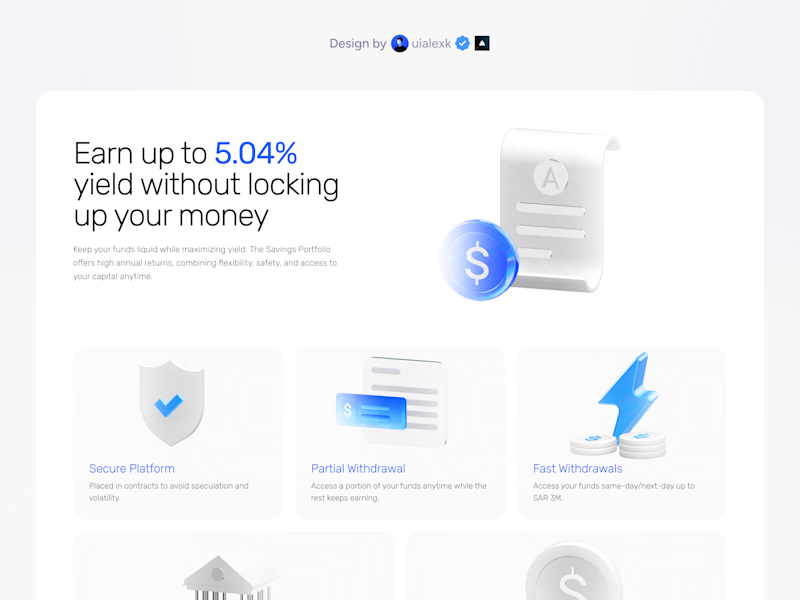
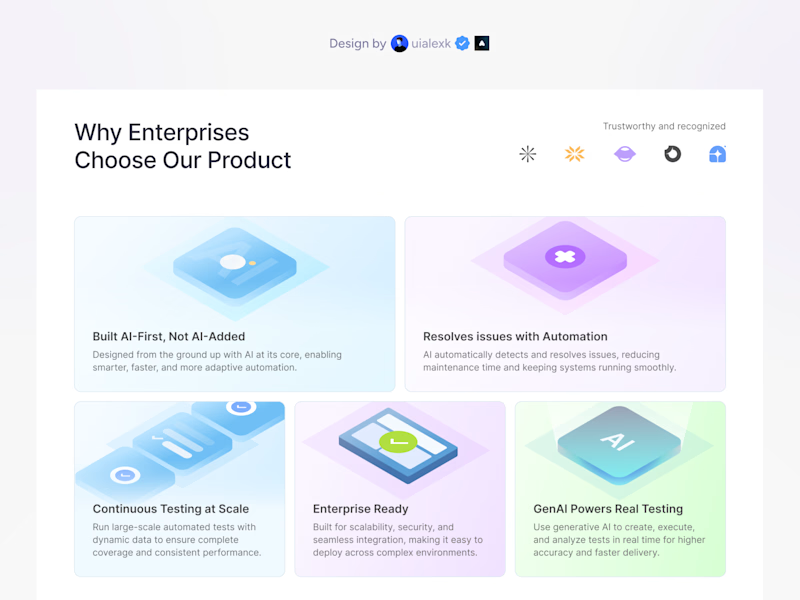


Personally, wouldn't say one is better than the other as far as it's on brand, they both look good. However, I prefer the card typography on the 3D version, much cleaner setting.

Just dropped a new case study on my Behance profile 👇
Guys, help me choose the right cover. For now, our team chooses first, but happy to hear feedback from the Contra community 😉
Full case - KrowLabs Brand Identity
21 voted
60%

14 voted
40%

35 votes
Closed

B
Challenges
View all



Trending

Claude
Claude has entered the design space. How are you using Claude Design?

Contra University
Learn from expert creatives how to earn more using next-gen AI tools.

MagicPath
The canvas is infinite, and exploration is becoming the workflow. How are you using MagicPath?
creativeaiflow
Creative AI workflows are evolving. What tools do you use, and what are their strengths and weaknesses?
freelancerlife
Freelancer life is wins, pivots, and everything in between. What’s yours right now?