Chimwemwe Chenjelani
Industrial Product Designer | FEA |Turn Ideas into Reality
New to Contra
Chimwemwe is building their profile!

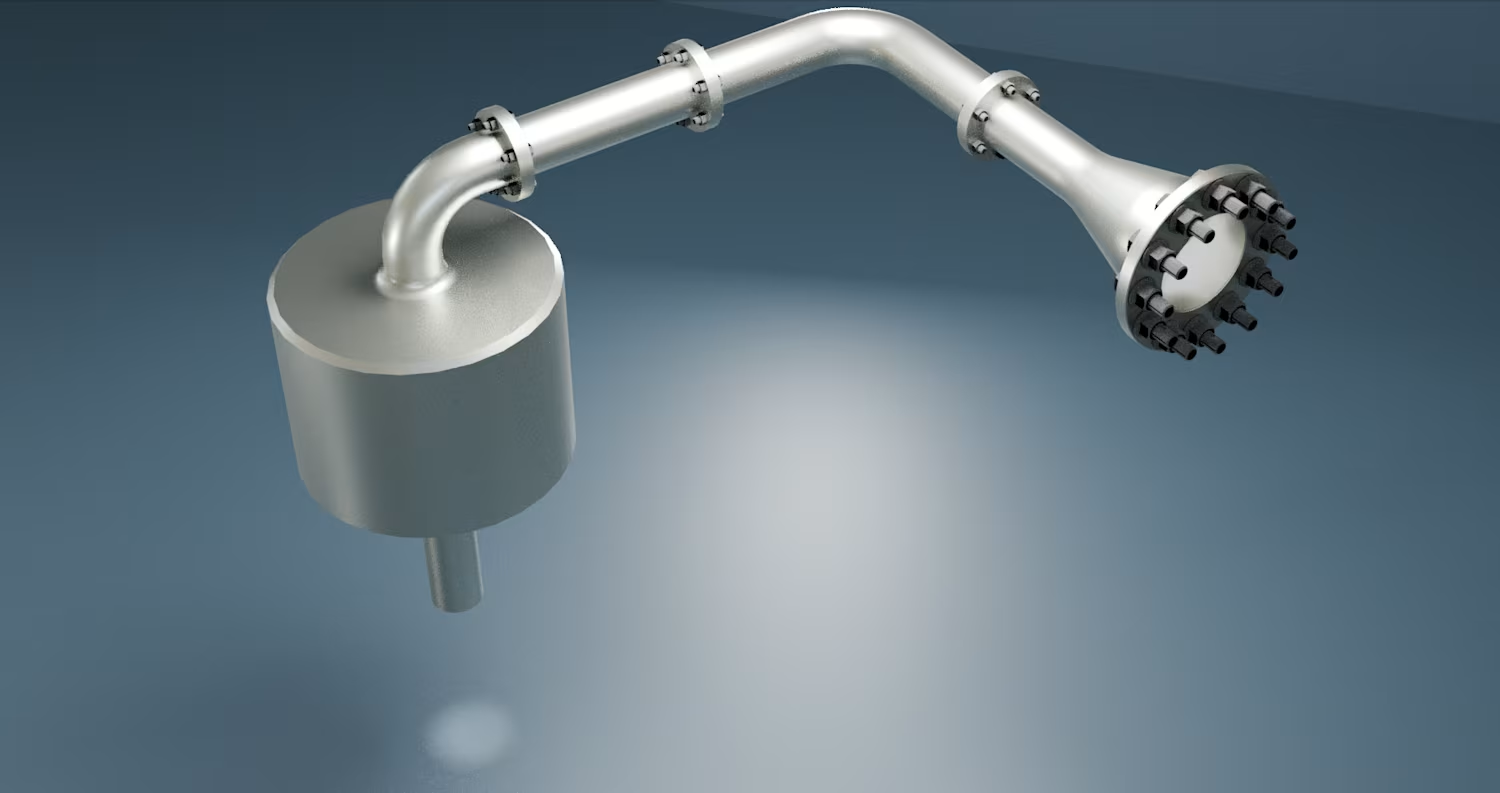
When I found FreeCAD at version 0.21, I was a bit sceptical, especially since my first modelling tool was Solidworks. But after the 1.1 update, it really impressed me so much so that it became my main modelling tool. I've modelled bike frames, brackets, tables, bike stems, ball bearings and, more recently, kitchen utensils. I'll give it its flowers. What do you think about using open-source tools in the professional space?
2
2
143
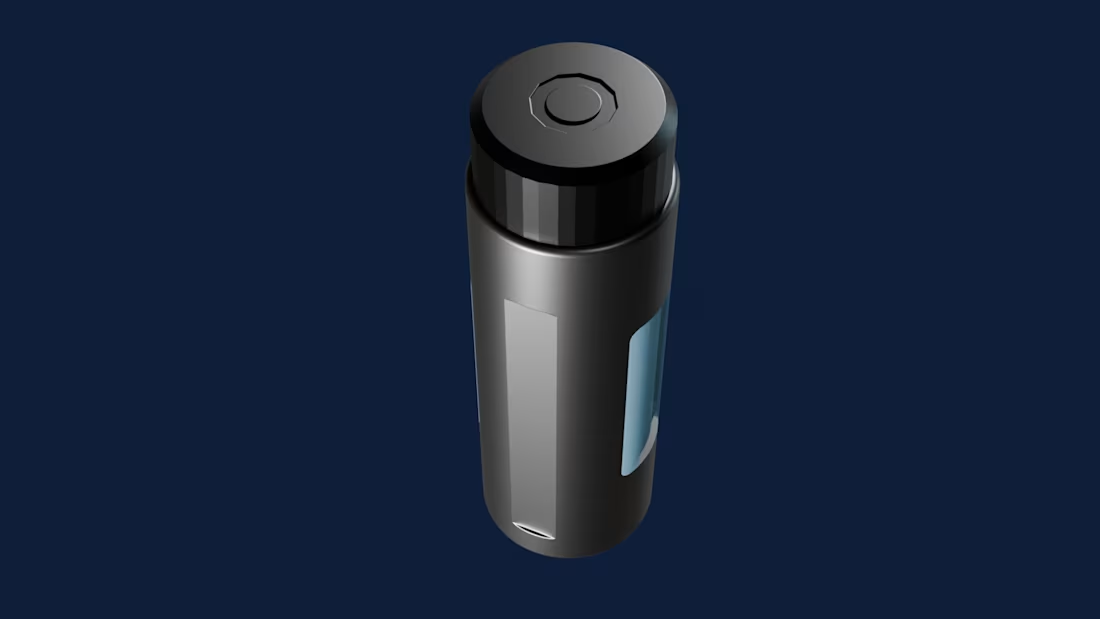
Case Study: Hybrid 850ml Stainless Steel & Borosilicate Glass Flask
🎯 The Challenge
Most thermal liquid flasks on the market rely on monolithic, opaque stainless steel designs. While durable, they create a poor user experience: users cannot verify the remaining volume, cleanliness, or fluid type without opening the vessel. Traditional glass bottles solve the visibility issue but fail dramatically in drop durability and thermal insulation.
💡 The Solution & Engineering Choices
This design bridges the gap by creating a hybrid mechanical structure that offers structural protection, high fluid visibility, and modern aesthetics.
Dual-Material Visibility Window: Integrated dual side panels made of borosilicate glass into a structural stainless steel exoskeleton body. Borosilicate was explicitly selected for its low coefficient of thermal expansion, ensuring the glass panels will not crack when filled with boiling liquids.
Optimized Mass Distribution: Modeled to hold a high-capacity 850ml volume while maintaining a lightweight empty profile of just 397g (verified via volumetric mass calculations). This ensures it remains highly portable for daily commuting.
Hygiene-First Sealing Lid: Designed a multi-material composite screw cap. The exterior utilizes a high-grip silicone sleeve for ergonomics, while the inner core is engineered from pure food-grade stainless steel to ensure hot liquids never make contact with plastics or polymers.
🛠️ Technical Workflow
Parametric CAD (FreeCAD): Modeled the complex interlocking mating features where the borosilicate glass panels seal against the stainless steel housing.
Visual Prototyping (Blender): Developed custom material nodes to accurately simulate the refraction of light through the glass panels and the anisotropic metallic sheen of the steel exterior housing.
2
135
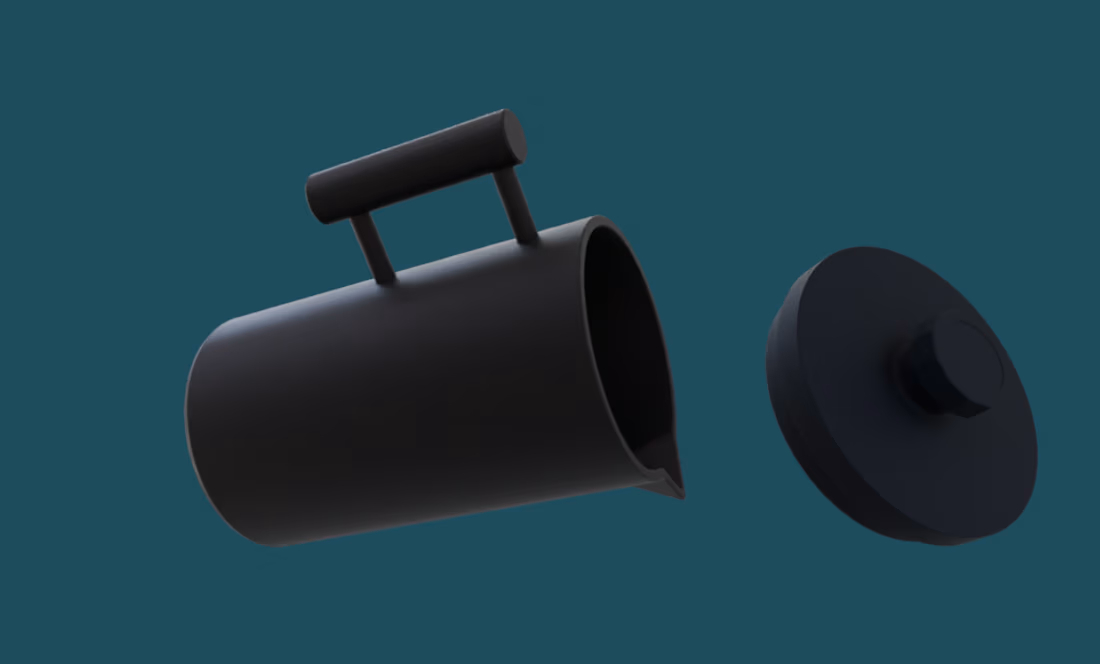
Most high-capacity kitchenware pitchers sacrifice form for function, resulting in bulky designs that disrupt a modern dining aesthetic. The goal of this project was to design a functional, high-capacity liquid vessel that balances minimalist design principles with the physical realities of premium ceramic manufacturing.
This sleek, matte-finished kitchenware jar features a 1.5-liter capacity optimized for daily tabletop use.
Material & Weight Optimization: Designed with porcelain as the material of choice, the geometric wall thickness was optimized using volumetric mass calculations in FreeCAD to achieve a sturdy, premium empty weight of approximately 1.1kg. This ensures structural durability without making the vessel too heavy when filled.
Ergonomic Handle Geometry: The high-clearance, T-bar handle design keeps the user’s hand away from the main body of the pitcher—crucial when holding hot liquids—while providing an optimal leverage point for controlled pouring.
Tight-Sealing Lid: Features a recessed, clean-lined lid with a central geometric knob for quick access, ensuring temperature retention and spill reduction.
🛠️ Technical Workflow
Parametric Modeling: Built entirely from scratch using FreeCAD, utilizing constraint-based sketches to maintain precise wall thicknesses and volumetric symmetry.
Mass Property Verification: Extracted exact volumetric data via the FreeCAD macro ecosystem (FCInfo) to calculate real-world weight distributions based on dense porcelain material properties.
Design Visualization: Exported the clean CAD geometry into Blender to create a photorealistic, studio-lit material preview, highlighting how the physical product reflects light in a real-world environment.
1
54
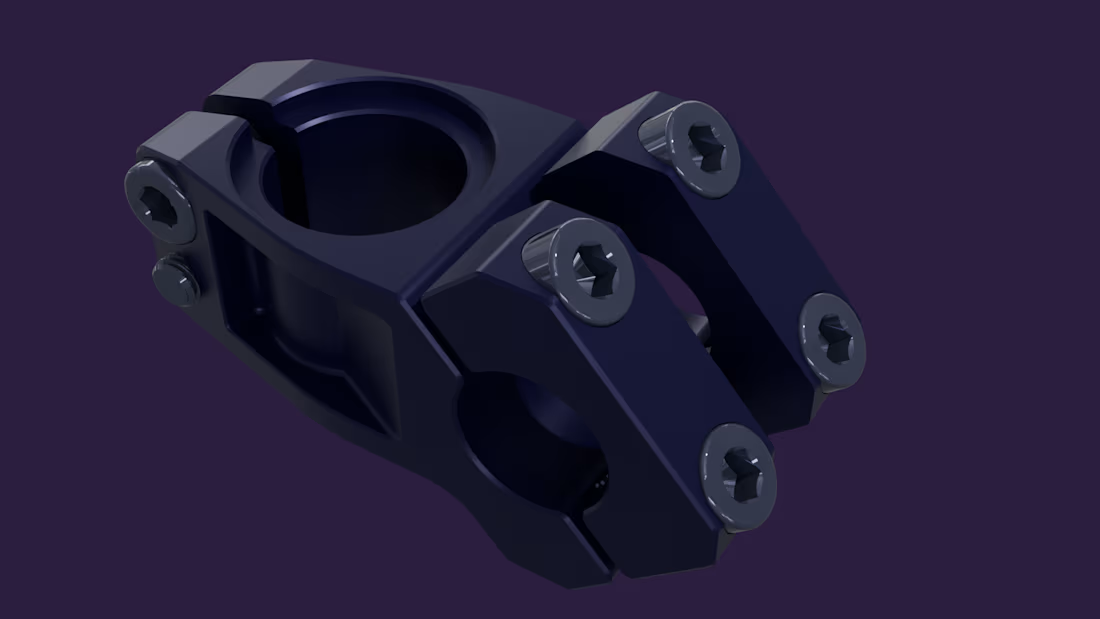
Precision-Engineered 3D BMX Top-Load Stem Model
1
211