
Ahmed Viquas
Expert UI/UX Design & Dev: WordPress, Framer, Webflow
- 4
- Followers

Overglide Studio


OVERVIEW
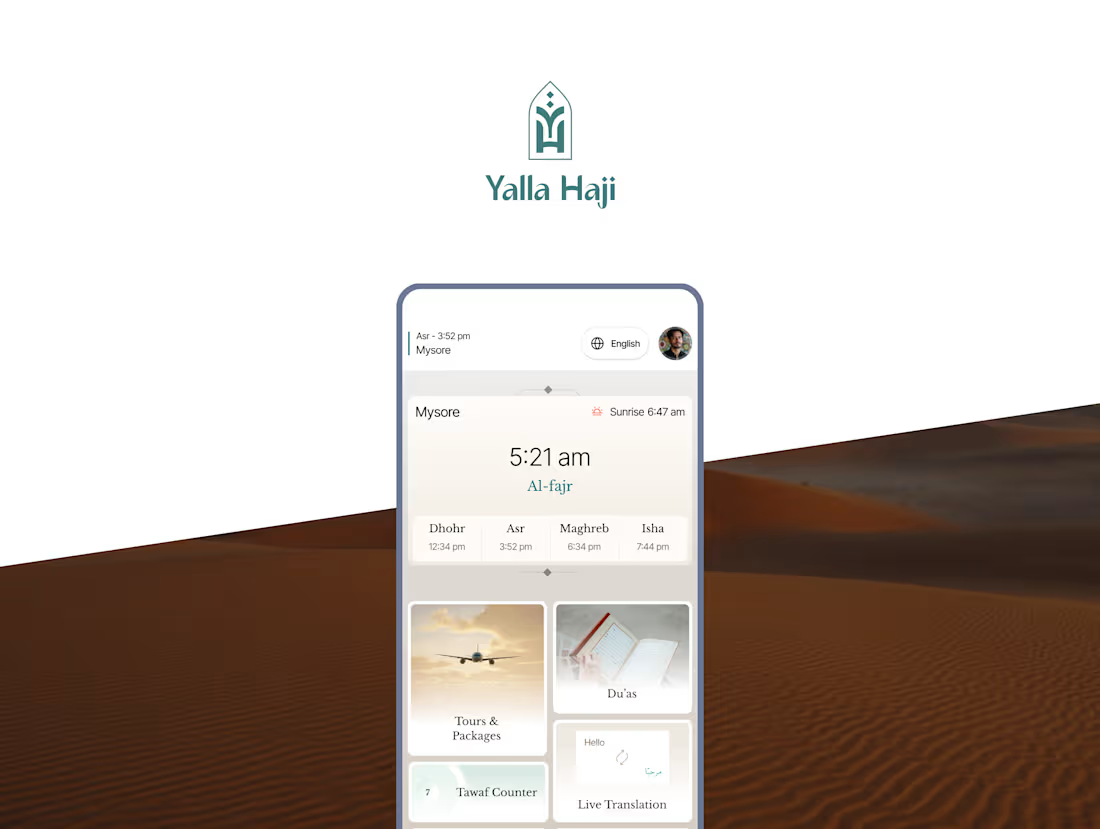
Yalla Haji is a verified Hajj and Umrah marketplace connecting Indian pilgrims with trusted tour operators, alongside prayer times, a live translator, Qibla direction, and other pilgrimage tools. Live on iOS, Android, and web.
PROJECT BRIEF
Planning Hajj or Umrah from India means navigating unverified agents, language barriers in Makkah and Madinah, and no single place for prayer times, guidance, and trusted bookings. Design a platform pilgrims can rely on for both trip planning and in-country support.
ROLE
Product Designer
METHODS
I designed two connected experiences: a pilgrim-facing app and a separate travel agent app for verified operators to manage their listings. On the pilgrim side, I designed a dashboard combining real-time prayer times by location, browsing and contacting verified agents, a Tawaf counter, Qibla compass, live Arabic-English translation, and an Islamic calendar with key dates. Every core screen was designed to work for a first-time pilgrim under stress, in an unfamiliar environment, with large touch targets and minimal steps for high-anxiety moments like emergency contacts and Qibla direction.
0
50
OVERVIEW
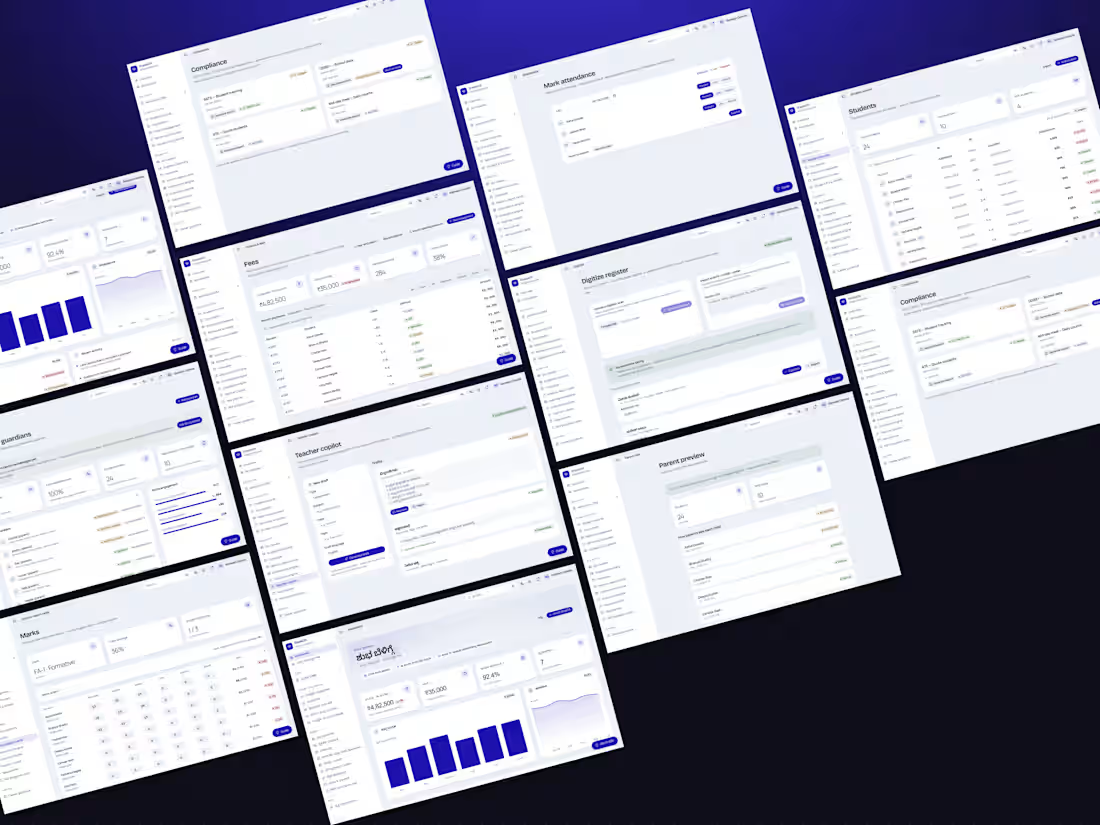
ShaalaOS (SchoolOS) is an AI-native operating system for Indian schools, covering admissions, attendance, fees, academics, and government compliance (SATS, UDISE+, RTE, mid-day meal), built WhatsApp-first for parents and fully bilingual in English and Kannada.
PROJECT BRIEF
Indian schools run on paper registers, manual fee collection, and duplicate data entry across multiple government portals, while parents have no reliable channel for updates. Design a system where staff can do core tasks (attendance, payments, compliance exports) in under a minute, without asking parents to install anything.
ROLE
Product Designer & Builder
METHODS
I designed and am building ShaalaOS end to end. Attendance takes under 60 seconds to mark, with absences triggering automatic WhatsApp alerts to guardians in their own language, no parent app or login required. Fee collection generates a PDF receipt and sends it via WhatsApp the moment a payment is recorded.
AI is used carefully: a Digitize flow lets staff photograph a paper register and have it read automatically, but nothing becomes a real student record until a human confirms it, and a Teacher Copilot drafts lesson plans that a teacher must approve before they reach a parent.
0
119
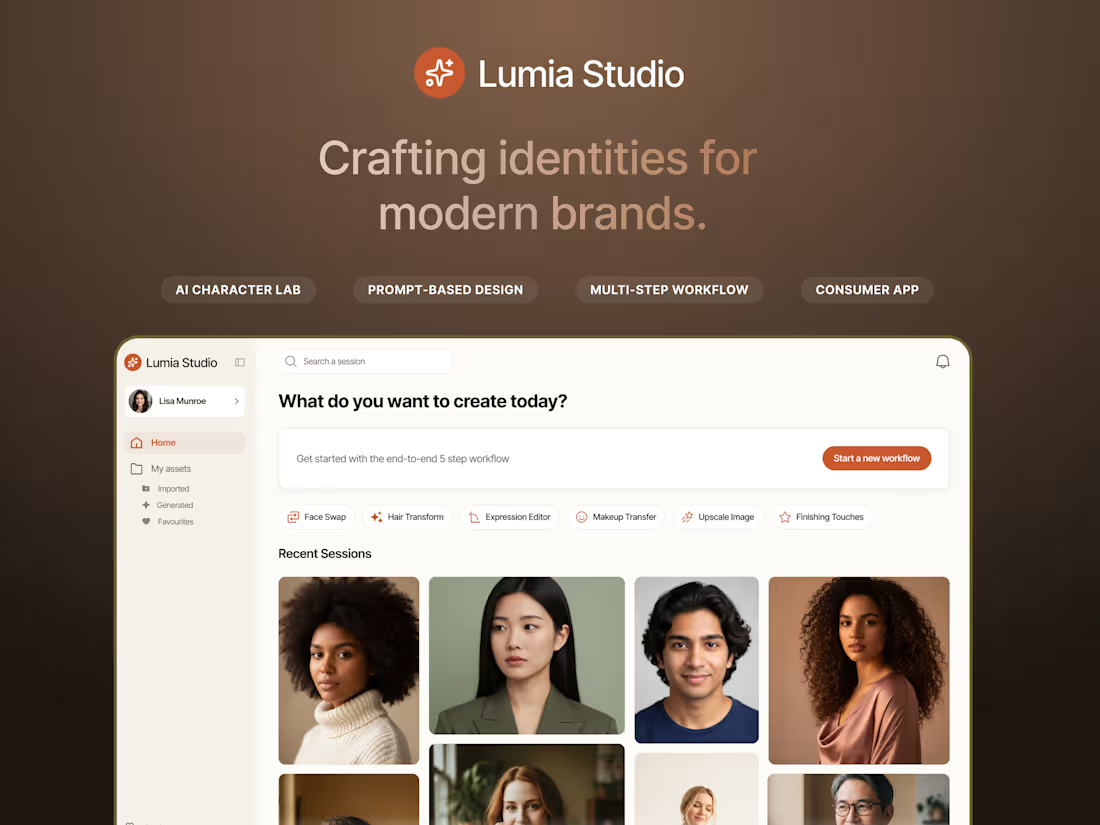
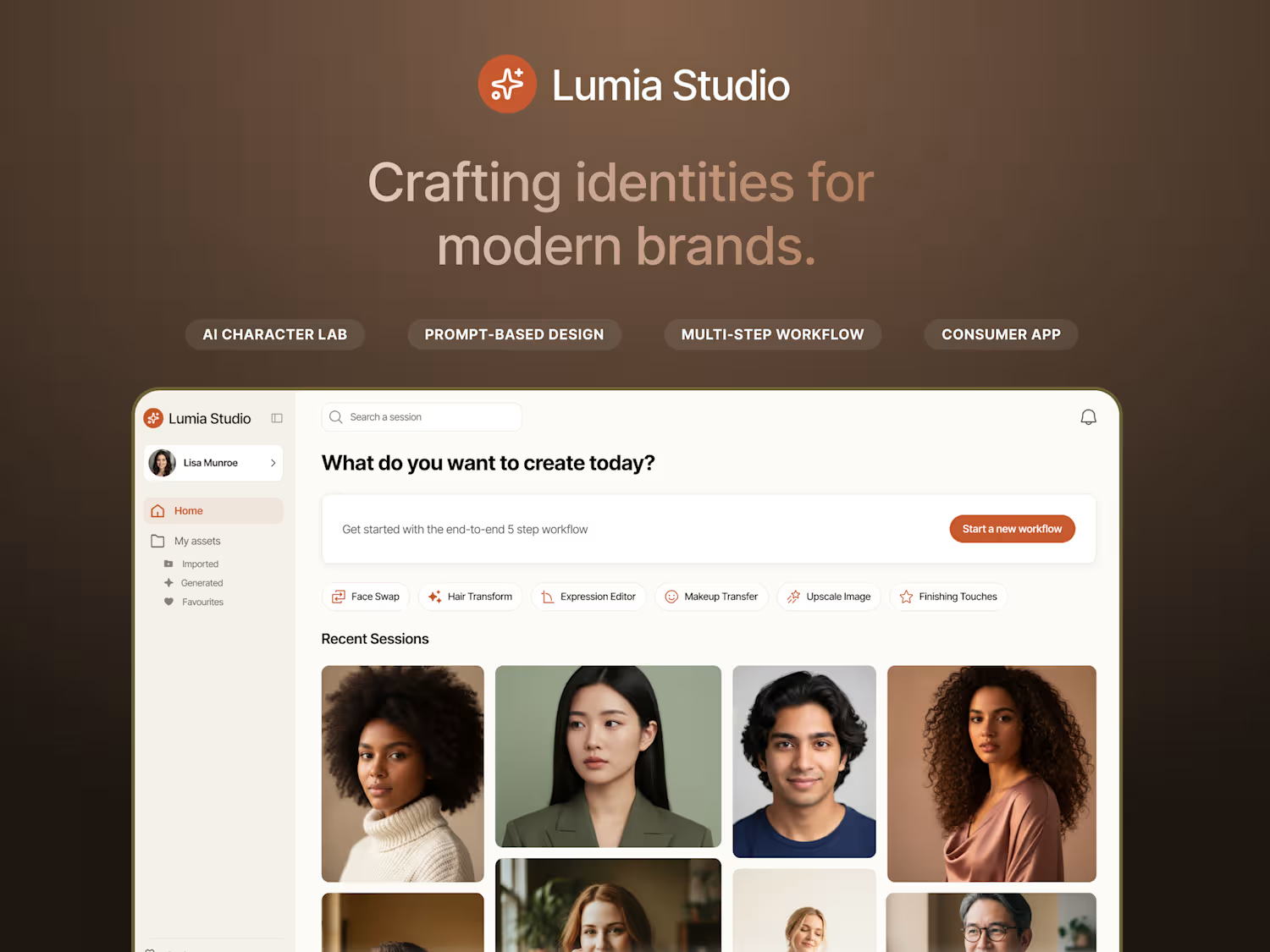
Lumia Studio — AI Character Identity Platform
PROJECT BRIEF
Research showed marketing teams lose significant production time on character iteration, since traditional photoshoots are slow and expensive, and can’t pivot quickly with changing campaign needs. Design a tool that gives creative teams fast, controllable, brand-consistent character generation.
ROLE
Product Designer
CHALLENGES
The core challenge was designing a workflow that felt precise and controllable, not just generative and unpredictable, so creative directors could trust the output enough to actually ship it. This meant close attention to how much control to expose (sliders, presets, prompts) versus how much to automate, balancing creative flexibility against the risk of overwhelming non-technical marketing users.
ROLE AND DELIVERABLES
User research (creative directors, marketing managers, content creators)
Product strategy
Information architecture for a 5-step generative workflow
User flows
Wireframes (low fidelity)
Visual mockups (high fidelity)
Interaction design (live preview, comparison states, slider controls)
Design system for a consumer-facing AI tool
0
68
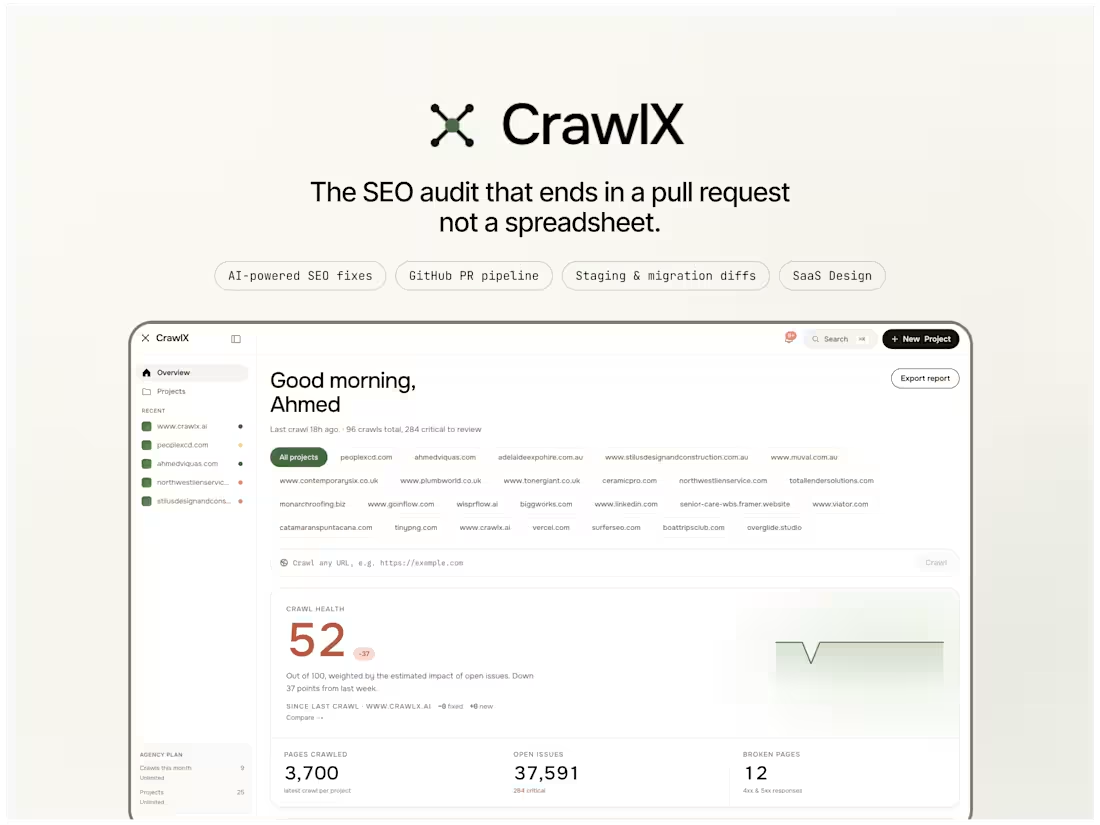
CrawlX
CrawlX crawls a website, surfaces its technical SEO problems, and explains each one in plain language with a suggested fix. Cloud-native, fast, and built for teams. I built it from a blank page: product, brand, and engineering.
The gap
The technical SEO crawler market is led by Screaming Frog, a desktop tool with a dated interface, no AI, and a one-person, one-machine model. No sharing, no assigning issues, no client portals.
At the other end, enterprise crawlers like Lumar are fast but cost $15k to $50k a year.
That left a clear gap: enterprise speed, a modern interface, AI built in, and pricing a small team can actually afford.
Positioning
Linear meets Datadog for SEO. A crawler that does not just hand you a list of errors. It tells you what each one means and how to fix it.
What I built
1. Product, engineering, and brand, end to end.
2. 400+ SEO checks across 12 analysis modules
3. An AI layer on the Claude API: plain-English explanations, auto-generated fix code, and a conversational assistant you can ask about your own crawl
4. Six core screens, including a live crawl view, a Kanban issue explorer, a site-architecture visualizer, and a white-label report builder
5. An AI search-readiness module that checks whether pages are built for AI answer engines, a gap no competitor covers
6. Rust crawl workers hitting 350 to 450 URLs per second, matching enterprise tools, with ClickHouse handling billion-row crawl data
What makes it different
1. AI intelligence no legacy crawler offers: explanations, fix code, and a chat assistant, not static hints
2. Enterprise-class crawl speed at small-team pricing
3. Team-first: assign issues to developers, share client portals, comment in place, instead of one license per machine
4. Built into the pipeline: CI/CD on GitHub Actions and Vercel catches SEO regressions before they ship
0
155