Agustina Roveda
Visual tools to reveal the potential of existing buildings.


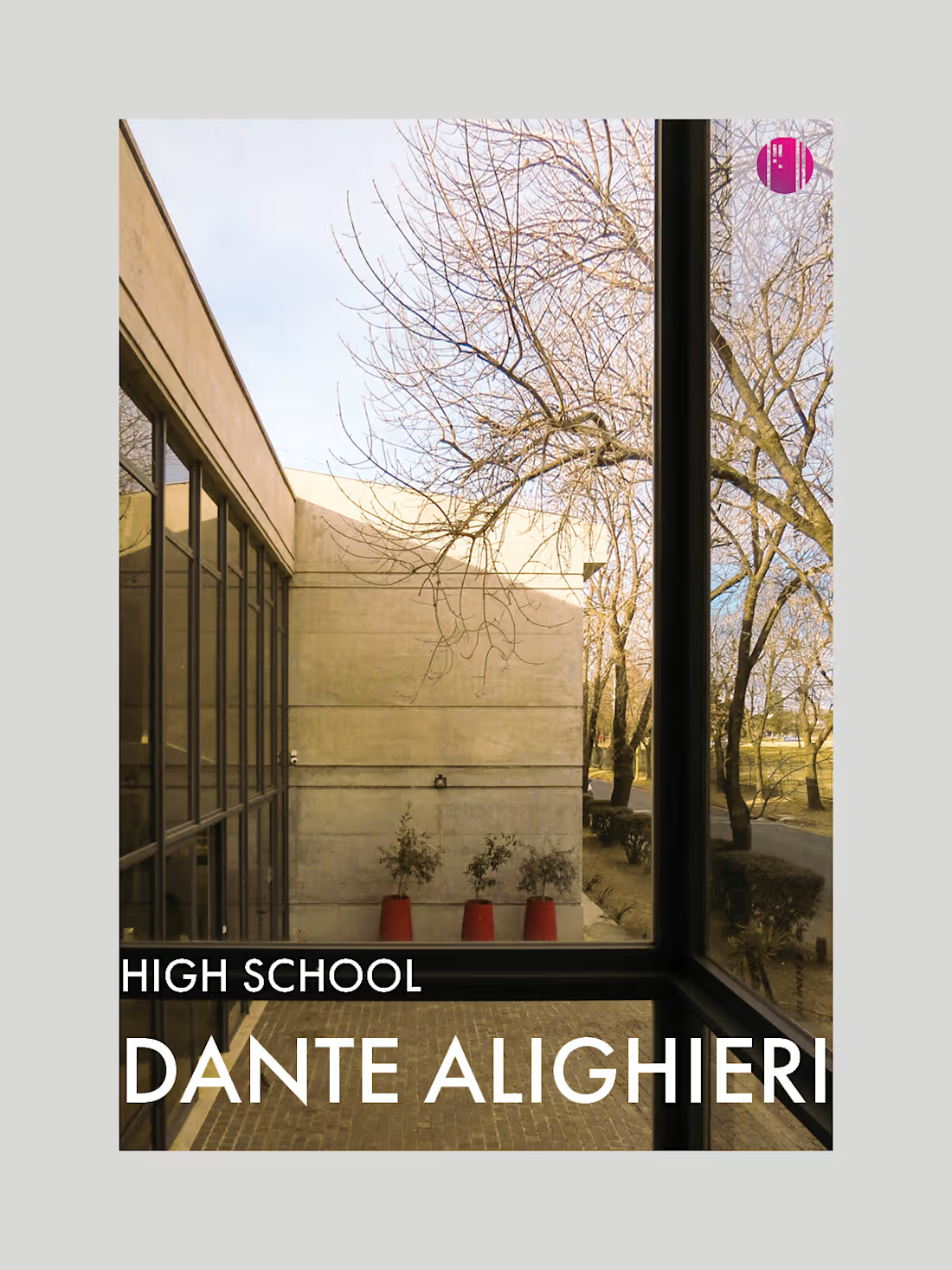
High School in Argentina: Architectural photography and post-production
Aligned with my passion for architectural representation is architectural photography. I truly enjoy walking around with my camera, looking for the angles, the light, and the moments that best tell the story of a building through my lens. It is never an easy task: weather, lighting conditions, furniture, people, and countless other elements influence the final image. But that challenge is precisely what makes it so rewarding.
Photography, for me, is not only about documenting architecture, but about communicating its atmosphere. Every building changes throughout the day as light shifts, people move through it, and the surrounding environment interacts with it. My goal is to capture those moments that reveal not only what the project looks like, but also what it feels like to experience it.
For this particular project, I photographed a high school in Argentina, a building in whose design and construction management I also participated. That made the project especially meaningful to me, as I knew every decision behind the architecture before seeing it come to life through the camera. Here I show a selection of photographs; more are available through the link to my portfolio website.
2
3
209
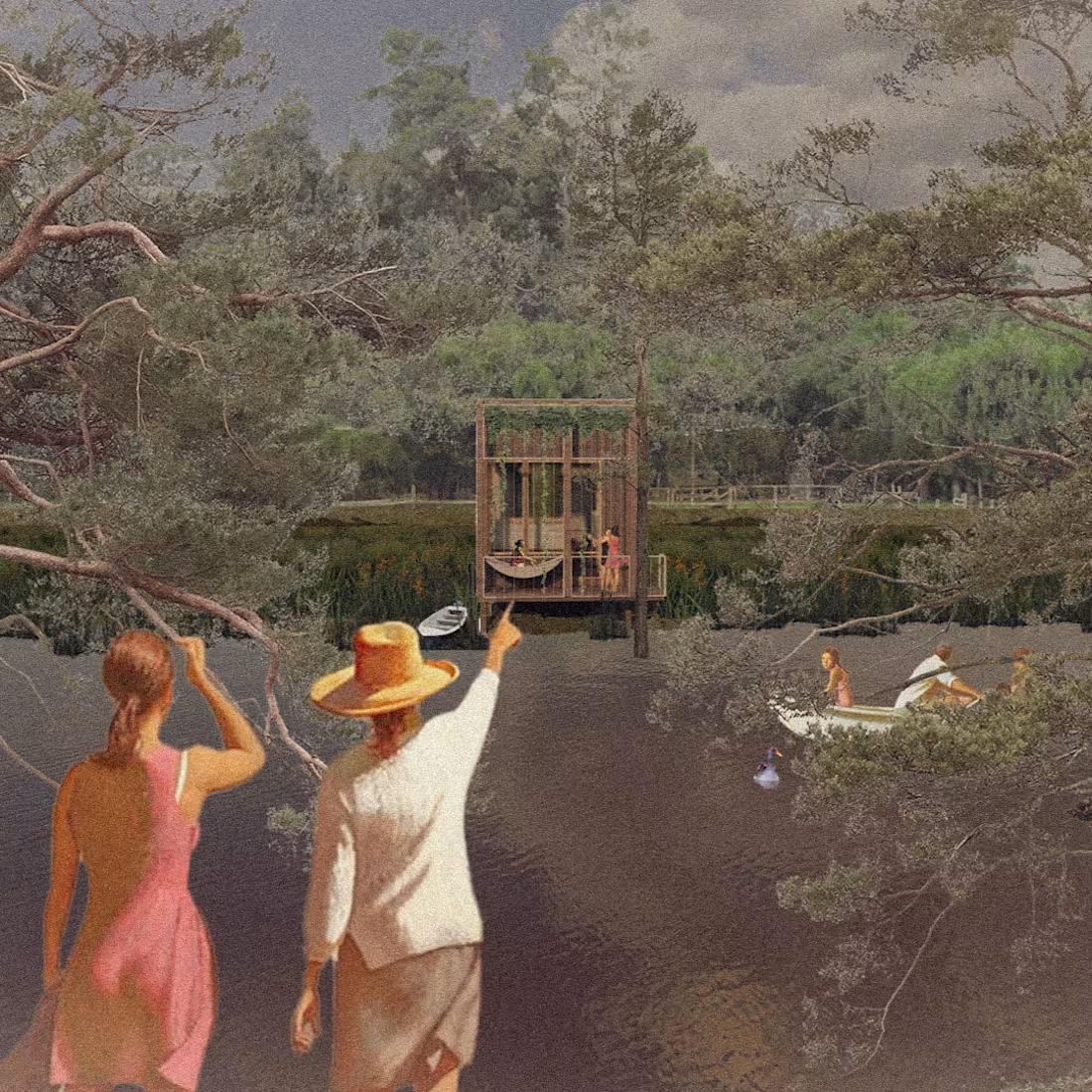
Architecture requires imagining possibilities, and digital collages are part of that process.
Perfectly rendered images are great, but at the same time they leave little room for ongoing design changes, and clients often expect the built project to look exactly like the rendered image. That is one of the reasons why many architecture firms also work with digital collages. They communicate a clear concept while leaving space for interpretation. They open up possibilities and make you feel like you are part of a particular scene.
While working on these collages, I honestly try to create a life around the architecture. I imagine what is happening in that particular moment, allowing the design to become part of a possible reality and interact with the people inhabiting it. This helps clients see the project through the eyes of the characters represented in the image and imagine a life unfolding around the architecture.
Vegetation, fauna, and people give the design a sense of belonging. They allow it to interact with its existing environment and encourage us to think about architecture beyond the day construction is finished. How will it behave over time? What kind of people will it attract? Which activities will it promote? How will the flora and fauna respond to it? How will it age?
Personally, this is my favorite way of representing architecture. It leaves room for uncertainty, imagination, hope, and stories that have not yet happened. Somewhere between artwork and technical drawing, these collages are not only about showing a project: they are about imagining the life that could grow around it.
1
175
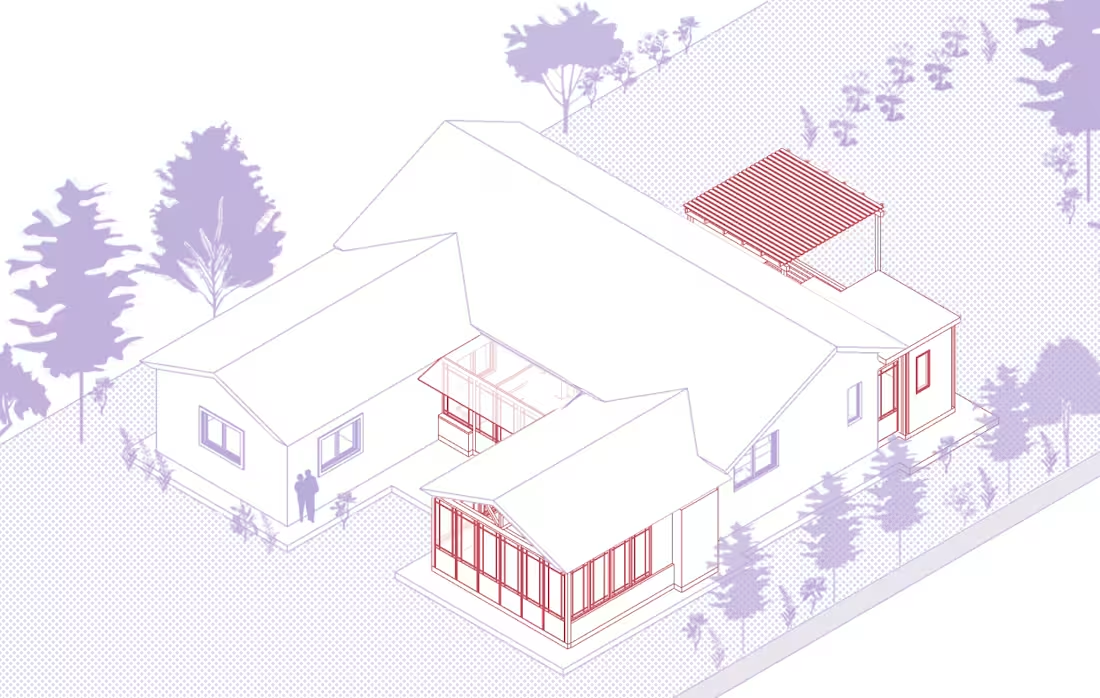
Clean 3D representation for an architecture studio.
Architecture firms with a long trajectory normally have to face this problem at some point: over the years, their projects have been represented by a variety of employees and freelancers, resulting in a portfolio where images lack a consistent visual language. The firm's style is not clearly defined, and clients browsing its website or social media don't know what to expect because project presentations have not followed a consistent aesthetic. Some clients won't mind, but in an era where image comes first -where people often check an architect's Instagram before looking at their website or portfolio- having a curated visual identity becomes increasingly important.
The firm wanted some of its projects -in which I also participated as a designer- to be represented in 3D in a clean, simple way, combining technical axonometric drawings with additional elements that complement the architectural design.
I explored different visual styles, and once we decided which one best suited our goals, I proceeded to represent the different types of projects in a cohesive and consistent way.
If another architect takes over my client's 3D visualizations in the future, they will immediately understand the visual language they are expected to follow and the kind of results the firm is looking for. At the same time, the studio leaders no longer need to spend time explaining what they want to see in a visualization, because putting into words what ultimately needs to be communicated visually is, most of the time, impossible.
This is an ongoing collaboration, so more projects will be published soon.
2
3
182
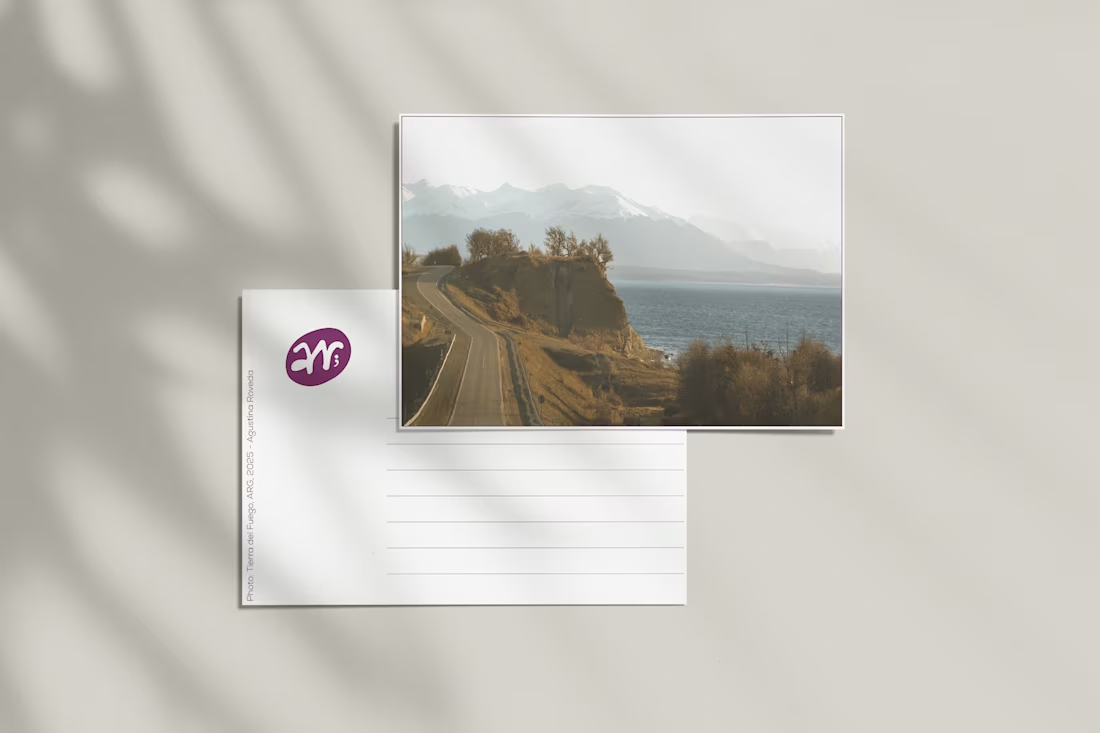
Postcard Design | Took landscape photos from different places around the world in a digital and in an analogue camera, post-edited the pictures in Lightroom, and created a package of various ready-to-print 10x15 cm postcards.
0
104