
Adejare John
Brand Designer & Strategist. Strategy. Identity. Purpose.
New to Contra
Adejare is building their profile!
One of the easiest ways to improve your brand is to stop making customers repeat themselves.
You know that frustrating experience.
You explain your issue to one person.
They transfer you.
You explain everything again.
Then the next person asks for information you already provided.
At some point, the problem is no longer just the customer service. It is the system behind it.
And customers notice.
A business can have friendly people, a beautiful identity and a well-designed website, but if customers constantly have to chase updates, repeat information or figure out what happens next, the experience still feels disorganised.
Good customer experience needs good systems.
Tell customers what happens after they pay or book.
Give them a realistic timeline so they are not left wondering when you will respond.
Keep customer information organised so your team can see what has already been discussed.
Make payment simple.
Answer common questions before customers have to ask them.
And communicate updates before the customer has to come looking for them.
These things may not sound like branding.
They are not as exciting as a logo reveal or a new visual identity.
But they shape what people say about your business after dealing with you.
Sometimes the strongest brand statement is simply:
“They’re very easy to work with.”
That comes from reducing friction.
So when a business asks, “How can we improve our brand?”
The answer may not be a new logo, new colours or a complete rebrand.
It might be as simple as fixing the unnecessary friction in the customer experience.
Because people remember how easy, confusing, stressful or seamless it was to do business with you.
And that experience becomes part of your brand.
#BrandStrategy #BrandExperience #Branddesign
0
6
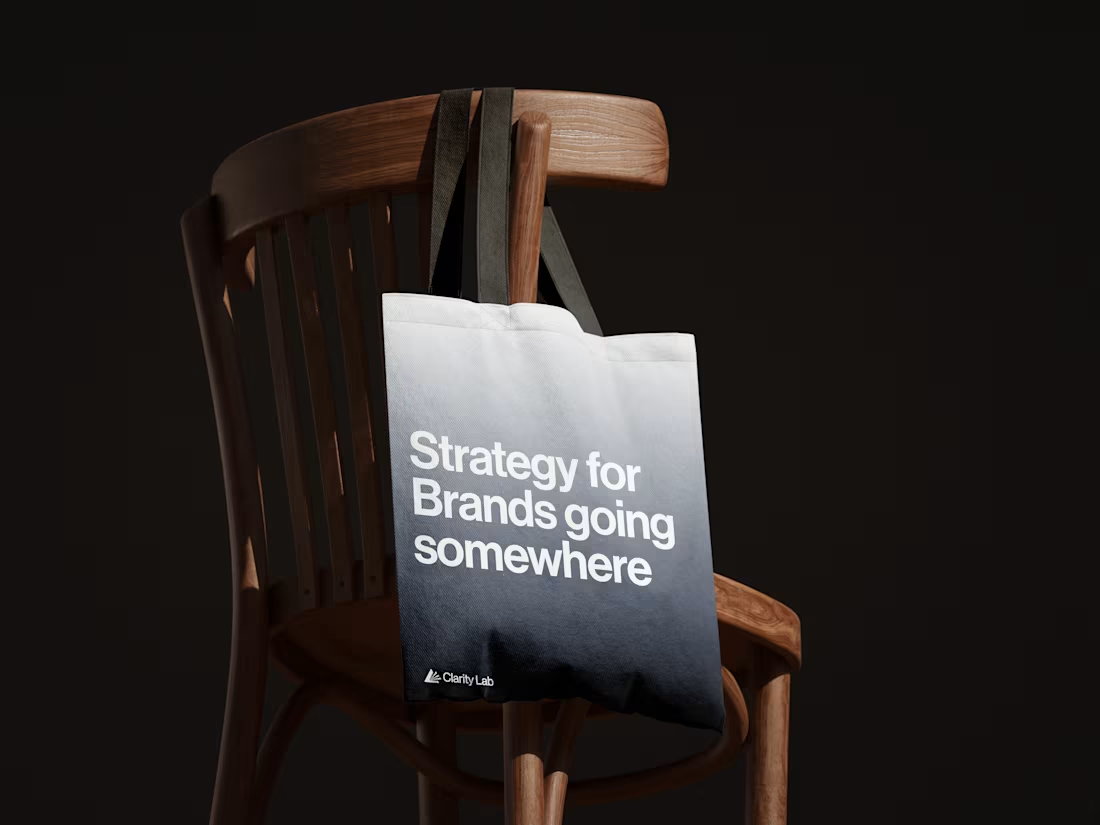
A logo is not your brand.
I'll keep saying this until it stops needing to be said.
A logo is the entry point. The handshake. The first five seconds of a much longer conversation your business is having with the world. It's not the conversation itself.
Your brand is everything that happens after that handshake — how fast you respond when a customer complains, whether your product tastes the same in March as it did in January, how your staff talks to someone who's having a bad day, what you're willing to say no to in public.
Here's the part clients don't always want to hear: a gorgeous logo sitting on top of inconsistent service doesn't fix the inconsistency. It just gives people a well-designed thing to associate with the bad experience. Six months in, that logo isn't building trust anymore — it's just the signature on a promise the business didn't keep.
I've watched this happen. A founder spends real money on a rebrand expecting it to solve a retention problem, a pricing problem, a "our team is inconsistent" problem. The new visuals launch, everyone's excited for a week, and then the same cracks show up wearing nicer clothes.
This isn't me talking myself out of work. It's the opposite. My job is to build the visual system that makes your brand legible — so when someone encounters your business anywhere, it reads as the same business, with the same intent, every time. That system matters. But it can only carry a promise the rest of your business is actually keeping.
Design amplifies what's true. It doesn't manufacture the truth for you.
So before we talk logo, I ask what's actually happening inside the business. What are you consistent at? What are you not? Because that's the brand. The logo just tells people where to look for it.
2
2
54