Usman Ndako's Work | ContraWork by Usman Ndako
Usman Ndako

Usman Ndako

Usercentric Product Designer

Ready for work

Usman is ready for their next project!

Cover image for StudioBookings (SBO) is a fitness
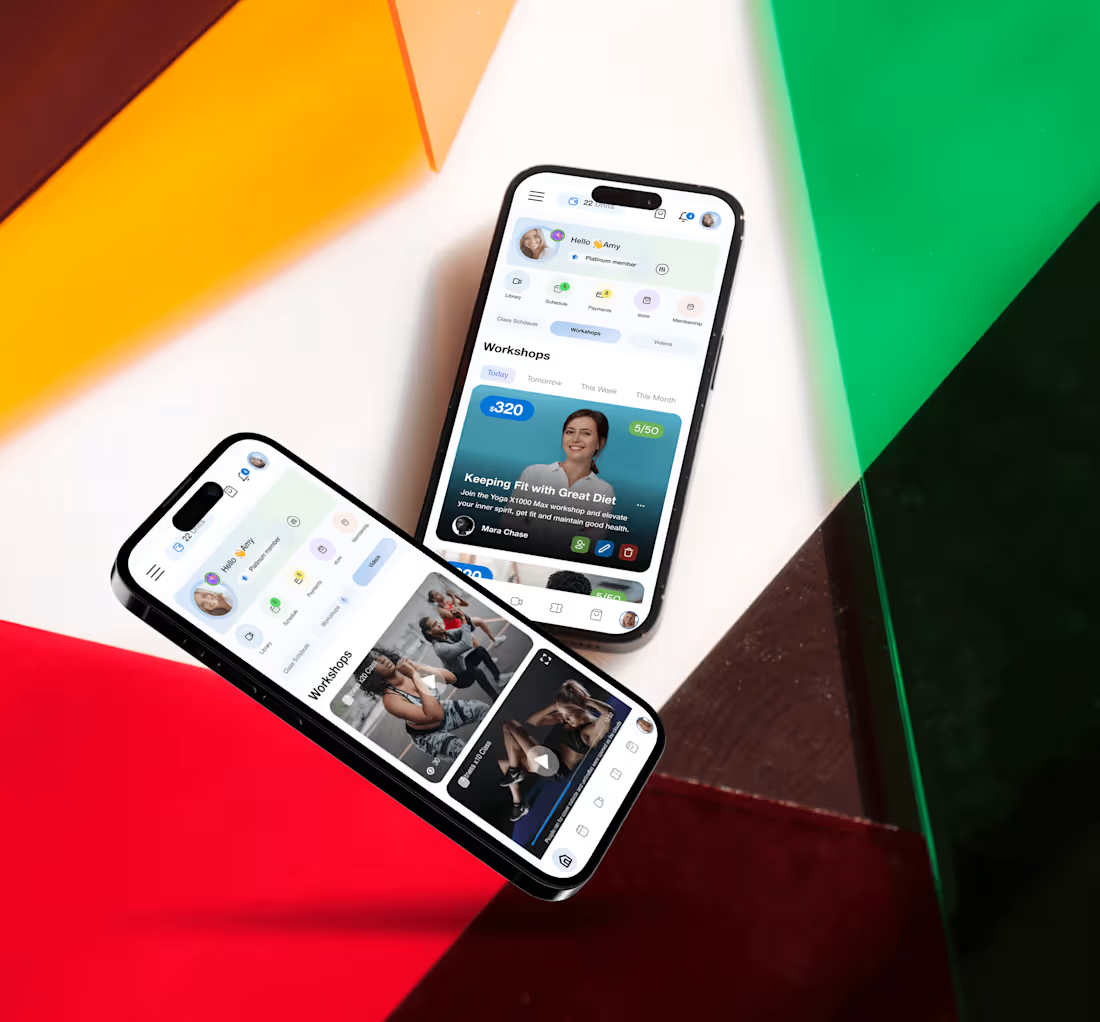
StudioBookings (SBO) is a fitness and wellness booking platform used by studios worldwide to manage classes, trainers, and members. Despite its wide adoption (50K+ app downloads), the mobile experience struggled with usability issues and outdated design patterns. I was brought in to redesign the mobile app to create a more intuitive, modern, and engaging experience for users
0
9
Cover image for DuckAGI API Platform Redesign
DuckAGI is
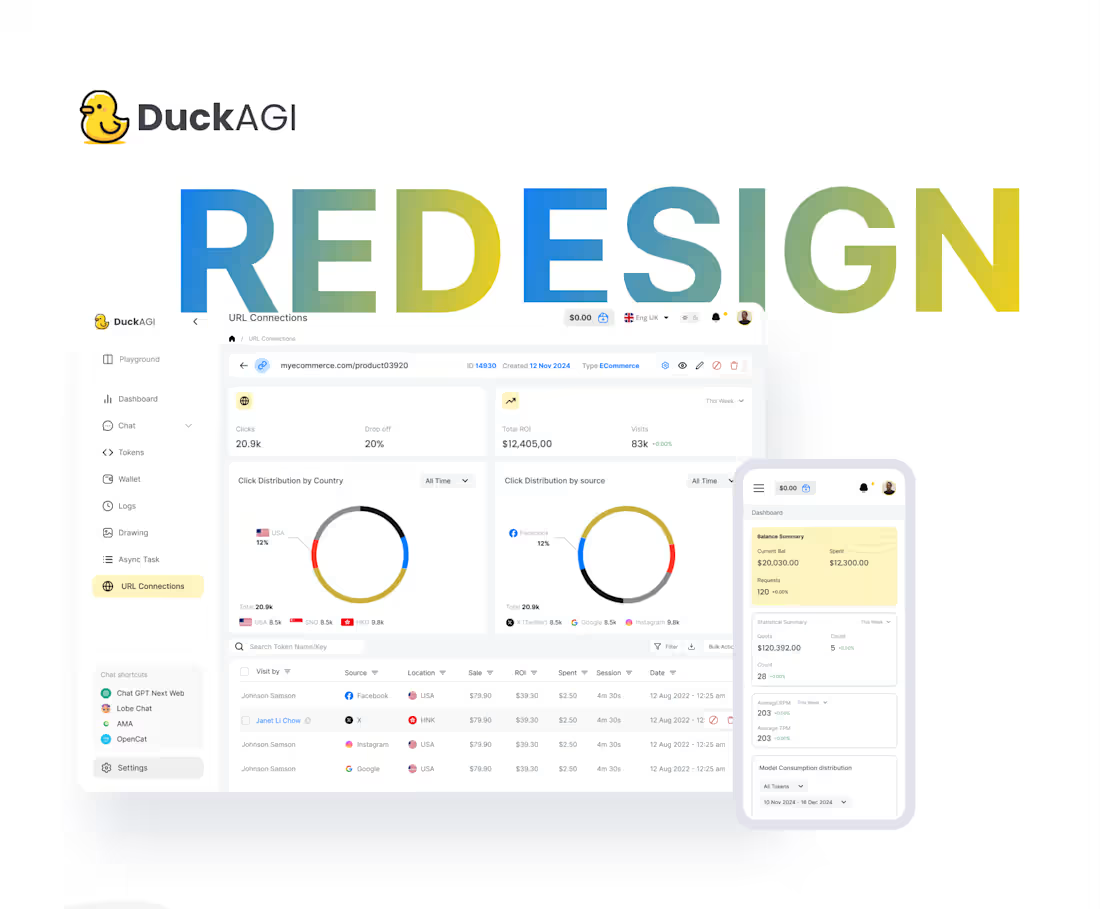
DuckAGI API Platform Redesign DuckAGI is an advanced AI-driven platform designed to simplify and enhance everyday tasks for users across various domains. The original platform faced challenges in usability, accessibility, and user engagement. This case study outlines the redesign process undertaken to address these challenges, resulting in a more intuitive and user-friendly experience.
0
20
Cover image for Most recruitment platforms don’t actually
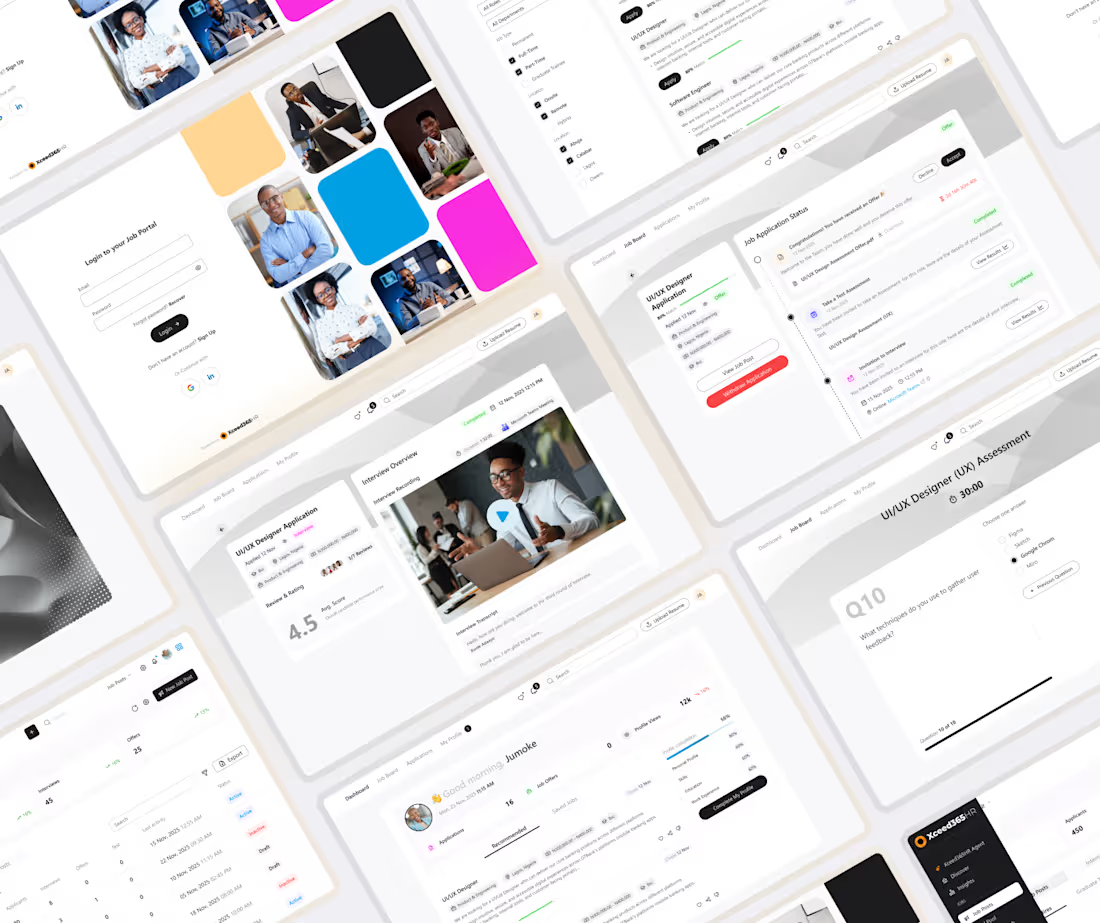
Most recruitment platforms don’t actually solve recruitment complexity. They track applicants. But they rarely improve how hiring teams make decisions, collaborate, or move candidates through workflows efficiently. While working on the Xceed365 Recruitment Portal, the real challenge wasn’t designing another ATS dashboard. It was simplifying fragmented hiring operations: Too many disconnected tools. Too much manual coordination. Too little visibility across the recruitment pipeline. Instead of treating AI as a flashy chatbot feature, I focused on embedding intelligence directly into recruiter workflows: • Candidate summarization • Smart prioritization • Faster screening flows • Better decision visibility • Reduced operational friction One important design decision: Not every workflow needed AI. In hiring systems, trust, clarity, and speed matter more than novelty. The outcome was a more scalable, AI-assisted recruitment experience designed around how modern hiring teams actually work, not just how software traditionally structures HR processes. That’s the kind of product design work I enjoy most: Simplifying complex operational systems into workflows people can actually rely on.
1
1
45
Cover image for CasePrepAI: Insurance Case Management System
CasePrepAI
CasePrepAI: Insurance Case Management System CasePrepAI was a workflow simplification and operational clarity project disguised as an AI product. The core problem was not the lack of features, it was the amount of cognitive overload insurance teams faced while handling complex case preparation workflows across fragmented systems, documents, communication channels, and repetitive manual processes. Most insurance workflows are operationally dense. Teams spend significant time gathering information, reviewing case details, organizing documentation, and preparing reports across tools that were never designed to work together cohesively. My role was to rethink how AI could reduce operational friction without disrupting critical human decision-making. Instead of designing AI as a standalone assistant, I approached the platform as a collaborative workflow system: What tasks are repetitive? Where do users lose time? Which decisions require confidence and visibility? What should AI automate versus support? This led to a more structured, AI-assisted experience focused on speed, clarity, and workflow continuity. I redesigned the information architecture to better support high-volume case management, simplified complex navigation paths, and introduced interaction patterns that made large datasets and case histories easier to scan, prioritize, and act on. One of the key judgment calls was intentionally reducing unnecessary AI exposure across the product. In industries like insurance, trust and clarity matter more than novelty. Rather than forcing conversational AI into every workflow, I focused on embedding intelligence contextually where it improved efficiency, summarization, recommendations, and preparation speed. The result was a platform direction that felt less like a traditional enterprise tool and more like an intelligent operational workspace designed around how insurance teams actually prepare, review, and manage cases under pressure. More importantly, the project demonstrated my approach to product design: I simplify complex systems, align AI with real user workflows, and design products that improve operational decision-making, not just visual interfaces.
2
2
77
Cover image for Rekord Software
Rekord is building the
Rekord Software Rekord is building the AI-native orchestration layer for regulated lending decisions. The platform connects fragmented systems, unifies data, and turns manual workflows into intelligent, automated decision flows. As a UI/UX Designer, I worked on one of the most critical features: Workflow Composition & Testing. This tool enables non-technical users credit analysts, risk officers, and compliance teams to design, test, and safely deploy decision logic without engineering dependency.
0
37
Cover image for When I started working on
When I started working on Lence, I wasn’t just designing another wellness app, I was tackling a bigger problem: why so many wellness apps fail. They ask users to log too much data, overwhelm them with charts, and push shallow social features that don’t create real accountability. People download them with good intentions but quickly abandon them. With Lence, my mission was to design something different. I wanted users to feel supported, not pressured. Empowered, not burdened. My role was to shape Lence into an intelligent, empathetic companion one that could guide people through their wellness journey with clarity, privacy, and genuine connection.
1
1
62
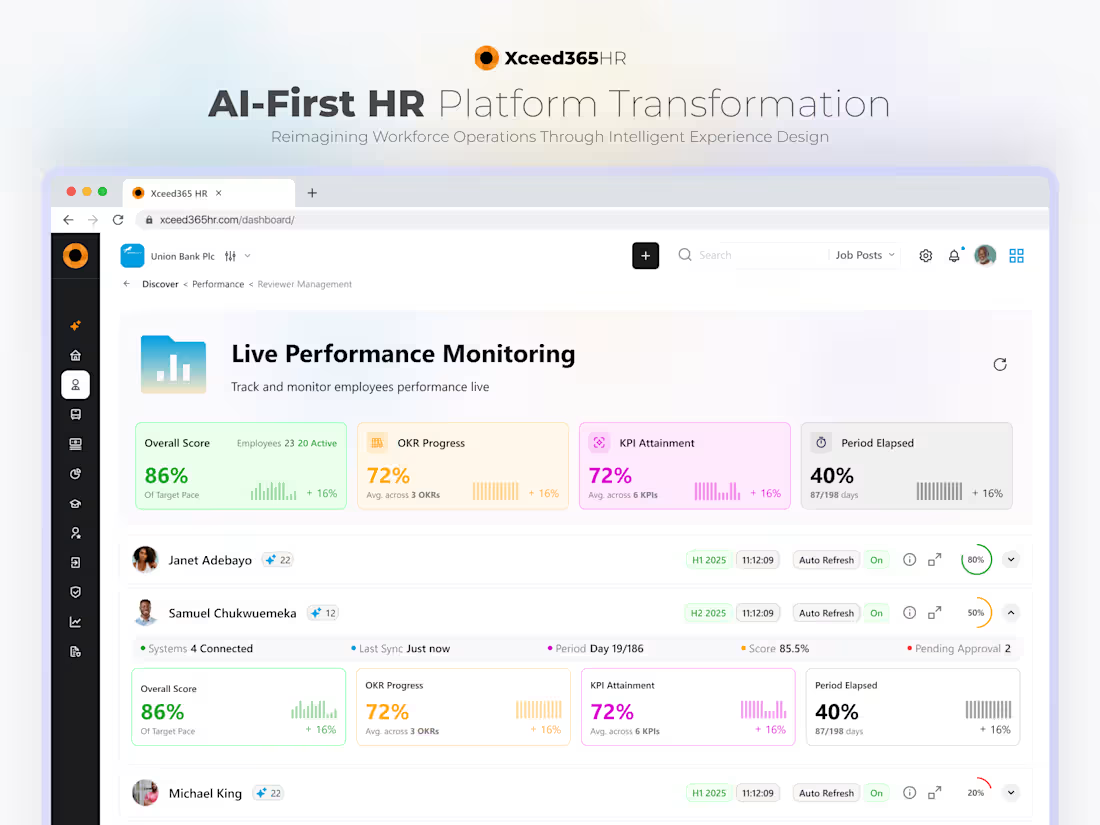
Cover image for Xceed365HR was not just a
Xceed365HR was not just a UI redesign project, it was a systems-thinking challenge focused on simplifying fragmented HR operations into a more intelligent, AI-assisted workflow experience. The core problem was complexity. Traditional HR platforms often force teams to jump across disconnected modules for hiring, employee management, performance tracking, communication, and reporting. As the product expanded, the experience risked becoming operationally heavy, difficult to navigate, and inefficient for decision-making. My role was to rethink how AI, workflows, and human interactions could coexist inside one scalable platform without overwhelming users.
0
46
Cover image for Viral Bee
Viral Bee
0
13
Cover image for Illo
Illo
0
10
Cover image for Renndaar
Renndaar
0
8
Cover image for Product Design Lead, Kippa
Product Design Lead, Kippa
0
13
Cover image for One Liquidity
One Liquidity
0
12