
UMAR ASHFAQ
Machine Learning Engineer | AI Automation | Python | LLM
New to Contra
UMAR is ready for their next project!

Project Description
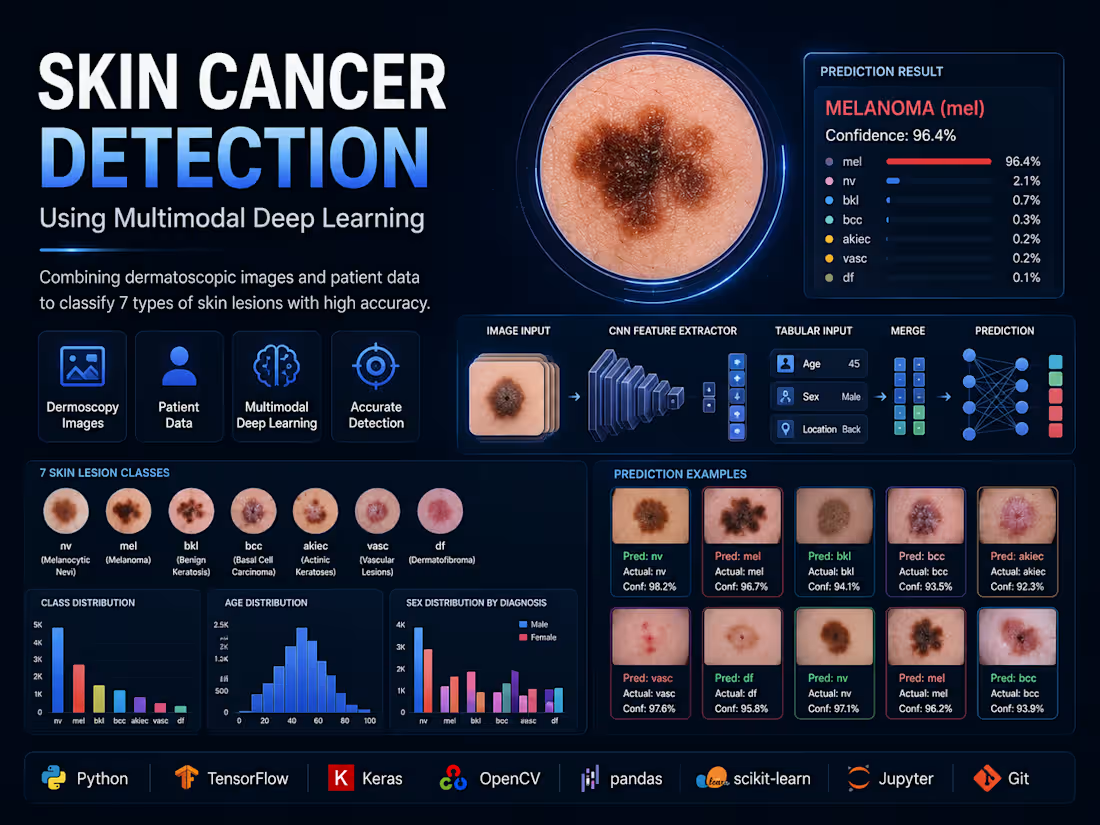
Developed a multimodal deep learning system for skin cancer detection by combining dermatoscopic images with patient metadata, including age, sex, and lesion location. The model classifies seven different types of skin lesions using a hybrid architecture that merges image features with structured patient information, improving diagnostic accuracy compared to image-only approaches.
Overview
The application assists in the early classification of skin lesions by analyzing both medical images and patient information. It demonstrates how multimodal AI can improve medical image analysis and decision support.
Key Features
Multimodal Deep Learning Architecture
Classification of 7 Skin Cancer Categories
Medical Image Processing
Patient Metadata Integration
Data Preprocessing & Feature Engineering
Exploratory Data Analysis (EDA)
Model Training & Evaluation
Prediction Confidence Scores
Visual Performance Reports
Reproducible Machine Learning Pipeline
Technologies Used
Python
TensorFlow / Keras
MobileNetV2
EfficientNetB0
OpenCV
Pandas
NumPy
Scikit-learn
Matplotlib
Jupyter Notebook
My Role
Designed and implemented the complete machine learning pipeline, including:
Data preprocessing and cleaning
Exploratory Data Analysis (EDA)
Medical image preprocessing
Feature engineering for patient metadata
Multimodal neural network development
Model training and evaluation
Performance visualization
Documentation and GitHub project management
Business / Research Applications
Medical AI Research
Clinical Decision Support
Skin Lesion Classification
Healthcare AI
Medical Image Analysis
AI-Assisted Diagnosis
2
98
Project Description
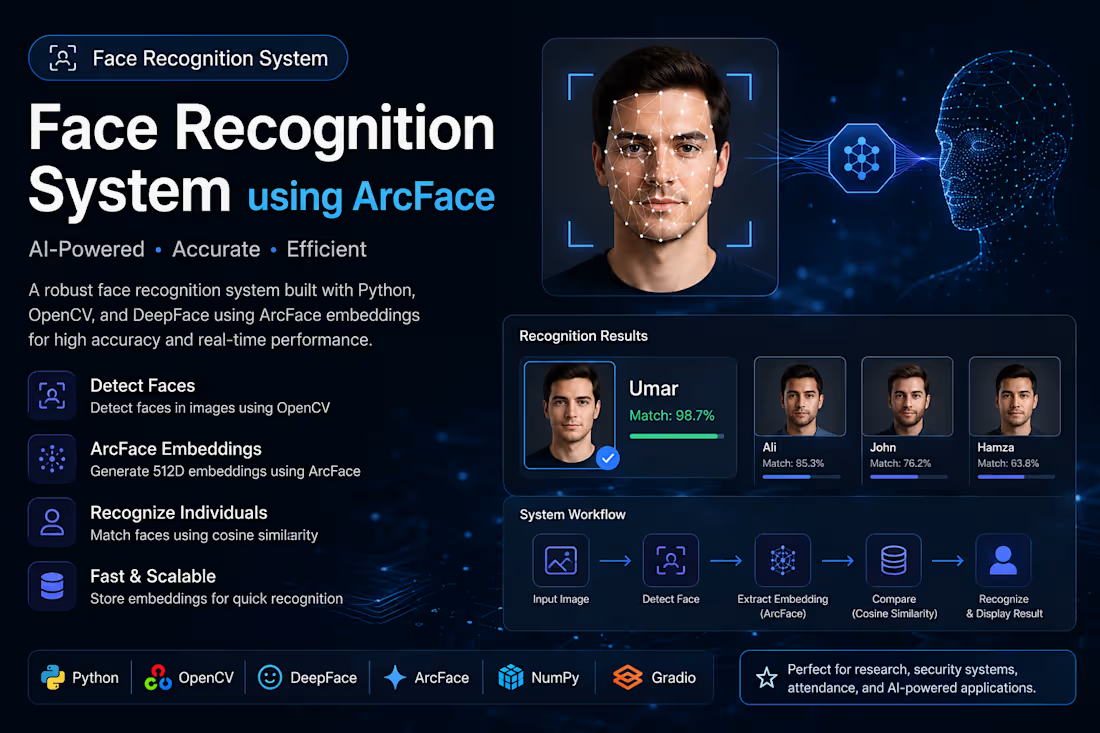
Developed an AI-powered face recognition system that accurately detects and identifies individuals from images using deep learning. The system generates high-dimensional facial embeddings with the ArcFace model and compares them using cosine similarity for reliable recognition.
Designed for applications such as attendance systems, access control, identity verification, and smart surveillance, the solution provides fast and accurate face recognition with a scalable architecture.
Overview
The application automatically detects faces in images, extracts unique facial embeddings, and matches them against a database of known individuals to identify people with high accuracy.
Key Features
Face Detection using OpenCV
Face Recognition with ArcFace
512-Dimensional Face Embeddings
Cosine Similarity Matching
Efficient Embedding Storage
Support for Multiple Individuals
Scalable Recognition Pipeline
Optional Interactive Demo using Gradio
Technologies Used
Python
OpenCV
DeepFace
ArcFace
NumPy
Cosine Similarity
Jupyter Notebook
Git & GitHub
My Role
Designed and developed the complete face recognition pipeline, including:
Image preprocessing
Face detection
Feature extraction with ArcFace
Embedding generation
Identity matching using cosine similarity
Dataset organization
Model evaluation and testing
Business Applications
Employee Attendance Systems
Access Control & Security
Visitor Management
Identity Verification
Smart Surveillance
Photo Organization
1
77
Short Description
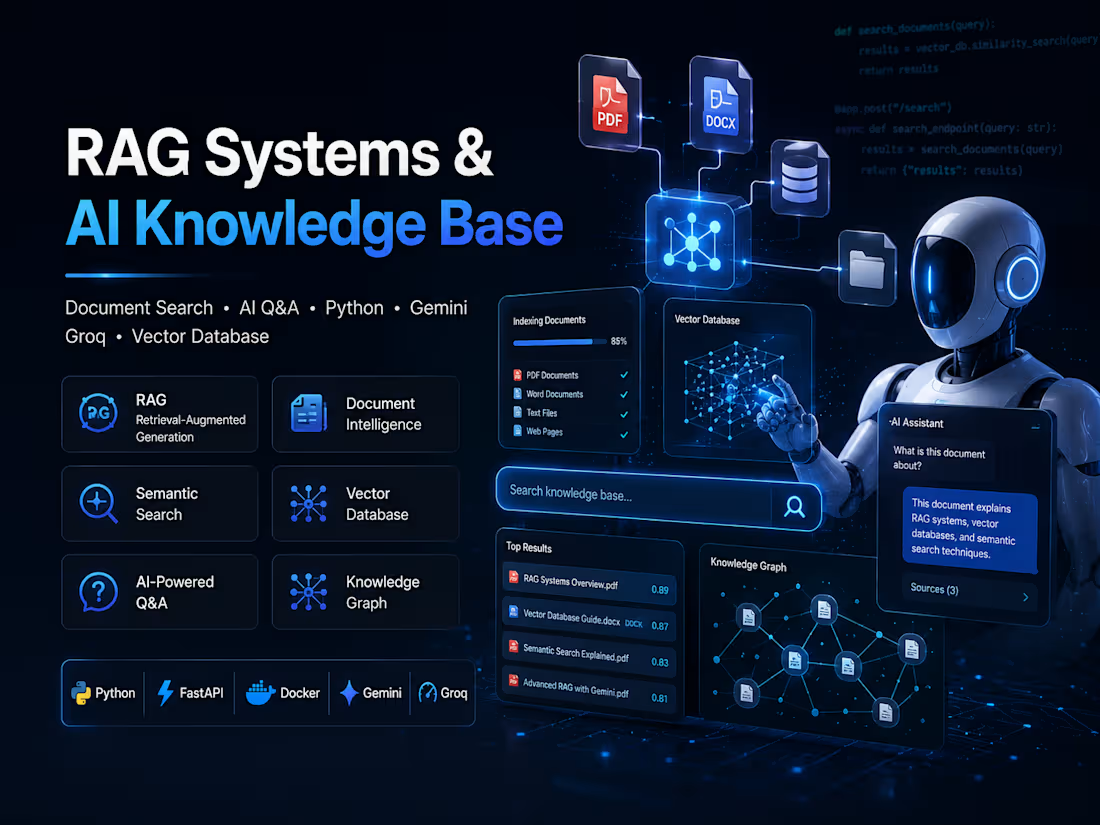
Built a production-ready Retrieval-Augmented Generation (RAG) application that enables users to upload PDF documents and ask natural language questions. The system retrieves relevant information from uploaded documents and generates accurate, context-aware responses using Groq's Llama 3.1 model.
Overview
This application helps users search and understand documents using AI instead of manually reading through PDFs. Users simply upload a document, ask questions in natural language, and receive intelligent answers based on the document's content.
Key Features
Upload and process PDF documents
AI-powered document search
Natural language question answering
RAG (Retrieval-Augmented Generation)
Chat history during the session
Fast AI responses using Groq
Modern Streamlit interface
Document statistics and metadata
Production-ready architecture
Technologies Used
Python
Streamlit
Groq API
Llama 3.1 8B
RAG Architecture
PyPDF2
Hugging Face Spaces
GitHub
My Role
Designed and developed the complete application, including:
PDF ingestion pipeline
Document text extraction
RAG workflow implementation
LLM integration using Groq
Streamlit user interface
Deployment on Hugging Face Spaces
Documentation and GitHub repository
Business Value
This solution enables businesses, students, and professionals to quickly retrieve information from large documents, reducing manual effort and improving productivity through AI-powered document understanding.
Live Demo
Add your Hugging Face Space:
https://huggingface.co/spaces/Umar519/intelligent-document-search
1
65
Project Description
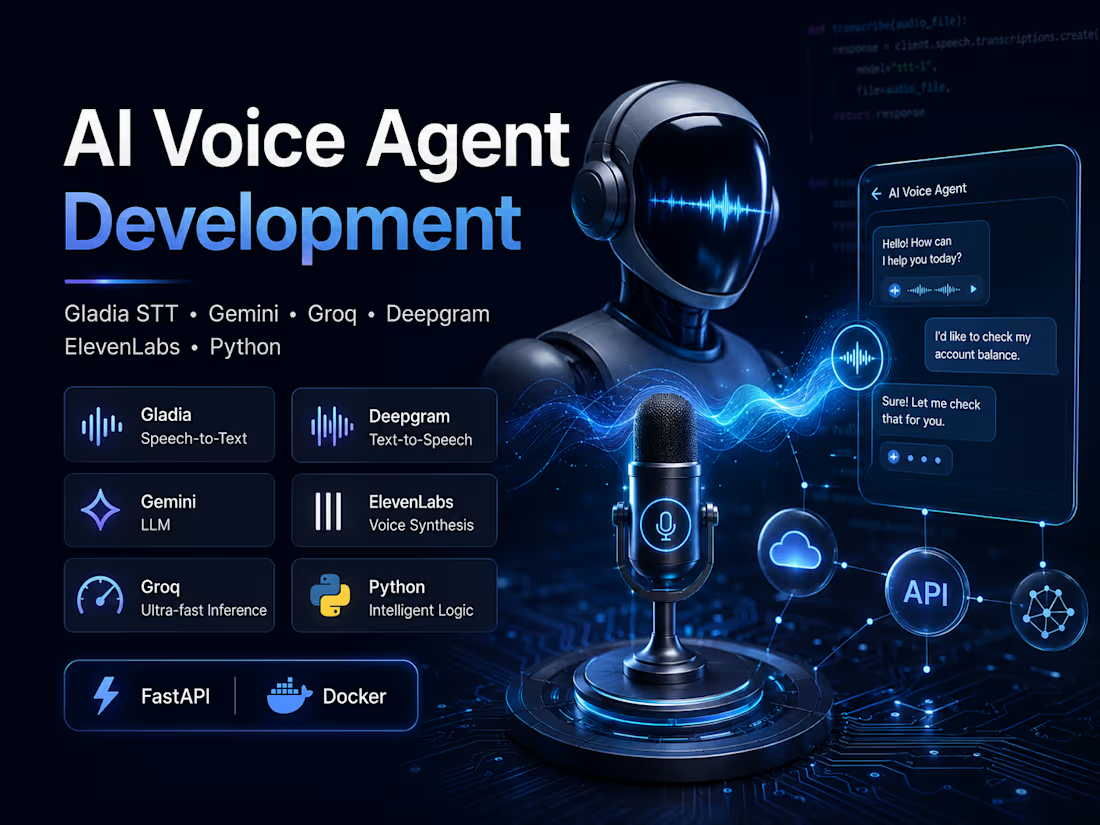
Developed a real-time AI voice agent capable of understanding spoken language, generating intelligent responses, and replying with natural-sounding speech. The system is designed for customer support, appointment booking, AI receptionists, and business automation.
The voice agent uses Gladia for accurate Speech-to-Text (STT), Gemini and Groq for fast, context-aware conversations, and Deepgram or ElevenLabs for high-quality Text-to-Speech (TTS). The backend is built with Python and FastAPI, with Docker used for deployment and scalability.
Key Features
Real-time Speech-to-Text using Gladia
Intelligent conversations powered by Gemini & Groq
Natural Text-to-Speech using Deepgram or ElevenLabs
FastAPI backend for API integration
Dockerized deployment
Low-latency voice interactions
Scalable architecture
Easy integration with external applications
Technologies
Python
FastAPI
Gladia (STT)
Gemini
Groq
Deepgram / ElevenLabs
Docker
REST APIs
Business Use Cases
AI Customer Support
AI Receptionist
Appointment Booking Assistant
Voice-Based Business Automation
Help Desk Assistant
Interactive Voice Assistant
1
78