Thomas Shellby's Work | ContraWork by Thomas Shellby
Thomas Shellby

Thomas Shellby

I am a web designer - Love to explore more

New to Contra

Thomas is building their profile!

Cover image for ๐Ÿ’ฐ How Much Does It
๐Ÿ’ฐ How Much Does It Really Cost to Build a Live Shopping Platform? I've seen people ask this question and expect one simple number. "$50K?" "$100K?" "$200K?" But here's the problemโ€ฆ ๐Ÿค” There isn't one fixed cost. Building a live shopping platform isn't just building a streaming app. You're combining live video + eCommerce + real-time interaction + payments + backend infrastructure into one product. And every layer affects the budget. ๐Ÿ“น Live Streaming You need video encoding, streaming infrastructure, CDN, low latency, recording, and support for concurrent viewers. ๐Ÿ›’ Shopping Experience Product catalogs, live product pinning, cart, checkout, inventory synchronization, order management, and payments. ๐Ÿ’ฌ Real-Time Engagement Live chat, reactions, Q&A, polls, notifications, and host interactions. โš™๏ธ Admin & Seller Management Seller onboarding, product management, commissions, analytics, moderation, payouts, and platform controls. ๐Ÿ“ˆ Scalability And this is the one people often underestimate. A platform designed for 100 viewers is completely different from one expected to handle 100,000+ concurrent viewers. So your development cost can look very different depending on what you're actually trying to build. ๐ŸŸข Basic MVP Core live streaming + products + checkout + basic admin. ๐ŸŸก Scalable Live Commerce Platform Multi-vendor functionality + advanced engagement + analytics + seller tools + stronger infrastructure. ๐Ÿ”ด Enterprise-Level Platform High concurrency + advanced moderation + sophisticated analytics + multi-region infrastructure + complex integrations. But here's the insight I think founders should focus on: The expensive part isn't always building the first version. It's building a version that you'll have to rebuild six months later. ๐Ÿ˜ฌ If your architecture can't handle more sellers, more viewers, more transactions, or more streams, the initial "cheap" development can become very expensive. That's why I wouldn't ask only: "How much does it cost to build a live shopping platform?" I'd also ask: "How much will it cost if we have to build it twice?" A good live shopping platform should be designed around where you want the business to goโ€”not just where it is on day one. ๐Ÿš€ ๐Ÿ‘‰ Explore the White Label Live Shopping Platform: https://tripleminds.co/white-label/white-label-live-shopping-platform/ The real question isn't just "What's the development cost?" It's "What kind of live commerce business are you trying to build?" ๐Ÿค”
1
12
Cover image for ๐Ÿ“ˆ Stop Looking at Revenue.
๐Ÿ“ˆ Stop Looking at Revenue. Start Looking at Behavior. Most eCommerce businesses obsess over one number: Revenue. "How much did we sell yesterday?" But here' ๐Ÿ’ฐ Every morning, it's the first dashboard they open. Revenue tells you what happened. It doesn't tell you why it happened or what will happen next. That's where AI is changing the game. Instead of staring at numbers, AI looks at customer behavior. ๐Ÿ‘€ Imagine this... ๐Ÿ›’ A customer visits the same product page 6 times but never checks out. โค๏ธ Another customer keeps adding an item to their wishlist. ๐Ÿ“ฆ Someone buys protein powder every 45 days. โญ A loyal customer suddenly stops returning. Individually, these are just actions. Together, they tell a story. And AI is incredibly good at reading that story. Instead of waiting for sales to drop, businesses can act before it happens. โœจ Recommend the right product at the right moment. ๐ŸŽฏ Send a personalized offer before the customer loses interest. ๐Ÿ“ฆ Restock products before demand spikes. ๐Ÿ’ก Predict when a customer is ready for their next purchase. That's the real value of AI. It doesn't magically create more sales. It helps businesses understand why customers behave the way they doโ€”so every decision becomes a little smarter. The best eCommerce companies aren't just tracking transactions anymore. They're understanding the people behind them. ๐Ÿš€ Revenue is the result. Behavior is the opportunity. If you're exploring how AI turns customer behavior into actionable eCommerce insights, I recently wrote a deeper breakdown here: ๐Ÿ‘‰ I Found A Great Insight On - How to Use AI for eCommerce Sales Insights https://tripleminds.co/blogs/technology/how-to-use-ai-for-ecommerce-sales-insights/
2
31
Cover image for Best AI SaaS App Development
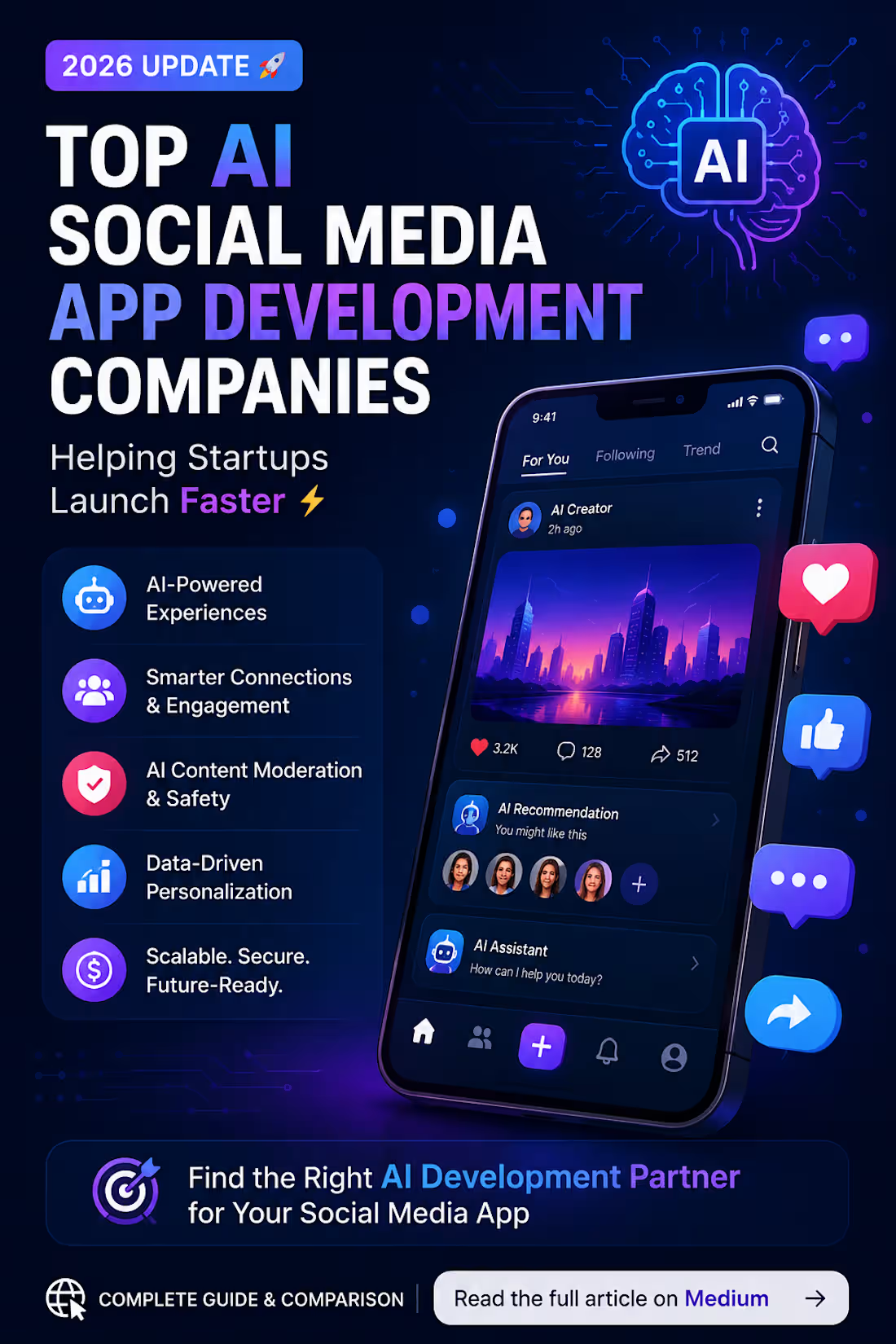
Best AI SaaS App Development Companies for Small Businesses Small businesses no longer need enterprise-sized budgets to benefit from artificial intelligence. What once required large IT departments and expensive infrastructure can now be delivered through cloud-based AI SaaS platforms, allowing smaller organizations to automate operations, improve customer experiences, and compete more effectively in today's digital marketplace. Running a small business requires balancing dozens of responsibilities every day. Business owners often oversee sales, customer support, operations, marketing, finance, and administration at the same time. As customer expectations continue increasing, these responsibilities become more difficult to manage without additional staff or better technology. For many businesses, hiring larger teams is not always practical. Instead, companies are looking for smarter ways to improve productivity while keeping operational costs under control. Artificial Intelligence Software-as-a-Service (AI SaaS) has emerged as one of the most effective solutions because it combines intelligent automation with the flexibility of cloud-based software. Businesses gain access to advanced capabilities without investing in expensive hardware or maintaining complex IT infrastructure. Today's AI SaaS applications can automate customer support, organize appointments, generate reports, analyze business performance, manage inventory, improve marketing campaigns, and streamline internal workflows. Instead of spending valuable hours on repetitive administrative work, employees can focus on serving customers, growing the business, and developing new opportunities. Consider a local retail business that wants to improve inventory management. Rather than manually tracking stock levels every day, an AI-powered SaaS platform can forecast demand, recommend purchasing decisions, and alert managers when inventory requires attention. A service-based company can automate appointment scheduling, customer communication, and invoice generation through a single intelligent platform, reducing manual work while improving customer satisfaction. Even small professional firms are increasingly using AI to summarize documents, organize internal knowledge, and assist employees with routine tasks that previously consumed valuable working hours. The accessibility of AI has fundamentally changed the technology landscape for small businesses. Organizations no longer need to purchase large software suites filled with unnecessary features. Instead, they can invest in custom AI SaaS applications built specifically around their operational requirements, allowing them to modernize processes while maintaining the flexibility needed for future growth. However, building successful AI SaaS software requires choosing the right development partner. Businesses need companies that understand both artificial intelligence and the practical challenges faced by smaller organizations. The right development team should deliver scalable solutions, prioritize ease of use, and create software that continues supporting business growth without introducing unnecessary complexity. The companies featured in this article help small businesses build intelligent SaaS applications that improve efficiency, automate operations, and provide a strong digital foundation for long-term success. Why Small Businesses Are Investing in AI SaaS Small businesses are adopting AI SaaS because they need practical solutions that improve everyday operations without requiring significant financial investment or technical expertise. Unlike large enterprises with dedicated technology departments, smaller organizations need software that is easy to use, quick to implement, and capable of delivering measurable business value within a short period of time. One of the biggest advantages of AI SaaS is automation. Small teams often spend a considerable portion of their day performing repetitive administrative tasks such as responding to customer inquiries, preparing reports, updating records, scheduling appointments, and managing invoices. While each individual task may appear relatively small, together they consume hours that could otherwise be dedicated to serving customers or expanding the business. AI-powered software automates many of these activities, allowing employees to focus on higher-value work instead of routine administration. Customer experience has also become a major reason businesses invest in AI SaaS. Modern consumers expect fast responses, personalized communication, and consistent service regardless of business size. AI chatbots, intelligent help desks, and automated customer communication platforms enable small businesses to provide professional support without employing large customer service teams. This allows organizations to remain competitive while controlling operational costs. Another important benefit is better decision-making. AI SaaS platforms continuously collect and analyze business information, helping owners understand sales performance, customer behavior, inventory trends, and operational efficiency through real-time dashboards and predictive insights. Rather than relying solely on historical reports or manual spreadsheets, businesses gain access to actionable information that supports faster and more informed decisions. Cloud-based delivery further increases the appeal of AI SaaS because businesses can scale their software as they grow. A company may initially require only customer management and workflow automation, but later expand into AI-powered analytics, sales forecasting, or intelligent marketing tools without replacing its existing platform. This flexibility allows organizations to modernize gradually while protecting their technology investments. Perhaps most importantly, AI SaaS has made advanced technology accessible to businesses of every size. Solutions that were once available only to large corporations can now help local retailers, service providers, healthcare clinics, professional firms, manufacturers, and e-commerce businesses improve efficiency, reduce costs, and build stronger relationships with customers. As artificial intelligence continues evolving, small businesses that adopt scalable AI SaaS solutions today will be better prepared to compete, innovate, and grow in an increasingly digital economy. 1. Triple Minds Small businesses often face a common technology challenge: they outgrow simple software long before they can justify investing in large enterprise systems. As operations expand, business owners begin using multiple applications to manage customers, sales, accounting, communication, and daily operations. While each tool may solve a specific problem, the lack of integration frequently creates duplicated work, inconsistent information, and reduced productivity. Triple Minds (https://tripleminds.co/) helps businesses solve these challenges by designing custom AI-powered SaaS platforms that simplify operations through intelligent automation and cloud-native software. Rather than forcing businesses to adapt to generic software, the company develops solutions around the way each organization already operates, ensuring that technology supports business growth instead of creating additional complexity. Its capabilities include: AI SaaS App Development Custom AI SaaS applications AI agent development Workflow automation Cloud-native software development Multi-tenant SaaS architecture Product consulting Business process modernization Many small businesses begin their digital journey using spreadsheets and several independent software applications. As customer numbers increase, these disconnected systems often become difficult to manage. Information must be entered multiple times, reporting becomes inconsistent, and employees spend more time moving data between systems than serving customers. A custom AI SaaS app development (https://tripleminds.co/ai/ai-saas-app-development-company/) platform eliminates these inefficiencies by bringing essential business functions together while introducing automation that reduces manual effort. For example, a growing accounting firm may require a centralized platform that manages client communication, document collection, appointment scheduling, invoice generation, and AI-assisted reporting within a single application. Likewise, a retail business may benefit from an intelligent SaaS solution that combines inventory management, customer orders, supplier coordination, and sales analytics while automatically identifying purchasing trends and inventory shortages. Instead of relying on several unrelated software products, business owners gain one integrated platform that continues evolving as the company grows. Triple Minds approaches every project by understanding business objectives before selecting technologies. Through its combined expertise in consulting, development, and marketing, the company helps organizations build intelligent SaaS products that improve operational efficiency today while creating a strong foundation for future expansion. Best For: Small businesses looking for an AI SaaS app development company that builds practical, scalable, and intelligent software tailored to long-term business growth. 2. BurjCode For small businesses, investing in technology is always a balance between affordability and long-term value. Software should solve immediate operational challenges while remaining flexible enough to support future expansion. Choosing the wrong platform often results in repeated software purchases, expensive migrations, and unnecessary operational disruption. BurjCode (https://burjcode.ae/) helps businesses develop custom digital solutions that address these challenges through cloud-based SaaS platforms and AI-powered applications. Its development approach focuses on creating software that aligns with each organization's unique workflows rather than relying on generic, one-size-fits-all solutions. Its capabilities include: AI software development SaaS application engineering Cloud-based software Workflow automation Business management systems Product development Enterprise application development One of the greatest advantages of custom AI SaaS software is flexibility. Small businesses rarely operate exactly the same way, even within the same industry. A healthcare clinic, a legal practice, an online retailer, and a construction company all have different operational requirements, customer interactions, and reporting needs. Generic software often forces businesses to modify their processes to fit the application, whereas custom SaaS solutions are designed around existing business operations. Imagine a local logistics company managing deliveries across several cities. Instead of manually assigning drivers and monitoring schedules, an AI-powered SaaS platform could automatically optimize delivery routes, allocate available resources, notify customers of shipment updates, and generate operational reports from a single dashboard. Similarly, a service business could automate quotations, customer onboarding, payment reminders, and follow-up communication without increasing administrative workload. BurjCode focuses on helping organizations create software that grows alongside their businesses. As operations become more complex, additional modules, integrations, and AI capabilities can be introduced without requiring a complete technology replacement. This scalable approach allows small businesses to invest confidently in software that continues delivering value as customer demand and business opportunities expand. Best For: Small businesses seeking affordable custom AI SaaS platforms designed for operational efficiency and future growth. 3. Azumo Small businesses often need to move quickly when introducing new digital products or improving existing operations. Unlike larger organizations that may spend months planning technology initiatives, smaller companies usually require practical solutions that can be implemented rapidly while still supporting future growth. This makes development speed an important factor when selecting an AI SaaS partner. Azumo provides AI software development and cloud engineering services for businesses building modern SaaS applications. The company works with organizations looking to accelerate product development while maintaining scalable architecture and high engineering standards. Its capabilities include: AI application development. SaaS platform engineering. Cloud-native software. Machine learning integration. Dedicated engineering teams. Product development. Cloud consulting. For many small businesses, AI adoption begins with solving one specific problem. A local retailer may want an intelligent recommendation engine that improves online sales. A healthcare practice might require automated appointment scheduling and patient communication, while a professional services firm may need AI-powered document organization or proposal generation. Instead of attempting to transform every business process at once, companies often achieve better results by introducing AI gradually through carefully planned SaaS applications. Cloud-native development supports this approach by allowing businesses to add new features over time without disrupting daily operations. As customer numbers increase and business requirements evolve, additional AI capabilities such as analytics, workflow automation, or predictive reporting can be integrated into the same platform. Azumo's development approach helps organizations build software that delivers immediate operational improvements while remaining flexible enough to support future expansion. For small businesses, this balance between rapid delivery and long-term scalability provides a practical pathway toward digital modernization. Best For: Small businesses looking for rapid AI SaaS development with scalable cloud architecture. 4. Simform Many small businesses initially purchase separate software products for accounting, customer management, marketing, inventory, and operations. Although each application solves a particular problem, managing multiple disconnected systems often becomes increasingly difficult as the business grows. Data duplication, inconsistent reporting, and manual coordination gradually reduce productivity and create unnecessary administrative work. Simform specializes in software engineering and cloud-native product development, helping businesses create unified SaaS platforms that simplify operations while preparing organizations for long-term growth. Its capabilities include: AI software development. SaaS product engineering. Cloud-native architecture. Product modernization. Machine learning integration. Enterprise software solutions. Cloud consulting. A unified AI SaaS platform enables businesses to manage several operational functions from a single environment instead of relying on numerous independent applications. For example, a growing wholesale distributor may combine inventory management, supplier communication, order processing, customer management, and sales reporting into one cloud-based platform. AI capabilities can further improve efficiency by forecasting demand, identifying purchasing trends, and generating operational recommendations automatically. The ability to scale is equally important. As businesses introduce new products or expand into additional markets, software must continue supporting increasing users and operational complexity without requiring complete redevelopment. Cloud-native architecture allows organizations to expand resources gradually while maintaining performance and security. Simform focuses on helping businesses build products designed for this continuous evolution. Rather than treating software as a short-term investment, the company emphasizes creating flexible platforms that continue supporting operational growth for years to come. Best For: Small businesses seeking scalable cloud-native AI SaaS platforms that simplify business operations. 5. InData Labs Every small business generates valuable information through customer interactions, sales activities, inventory management, marketing campaigns, and financial operations. However, collecting data is only the first step. The real value comes from understanding what that information reveals about business performance and future opportunities. InData Labs provides artificial intelligence, machine learning, and data science services that help organizations transform business information into practical insights through intelligent SaaS applications. Its capabilities include: AI software development. Data science solutions. Machine learning applications. Predictive analytics. AI SaaS platforms. Natural language processing. Business intelligence solutions. Small businesses often rely on manual reporting or spreadsheets when evaluating performance. As operations expand, this approach becomes increasingly time-consuming and less effective. AI-powered analytics platforms automate data collection, identify patterns, and generate meaningful recommendations that help business owners make informed decisions more quickly. Consider an e-commerce business preparing for seasonal demand. Instead of relying solely on previous sales reports, an AI SaaS platform can analyze purchasing trends, forecast inventory requirements, identify high-performing products, and recommend marketing opportunities before demand increases. A service provider could use similar analytics to understand customer behavior, improve scheduling, and identify opportunities to increase recurring revenue. By combining data science with scalable SaaS development, InData Labs helps businesses convert information into strategic business intelligence. This enables small organizations to make decisions with greater confidence while reducing the time spent preparing reports and analyzing operational data manually. Best For: Small businesses looking for AI-powered analytics platforms and intelligent SaaS solutions driven by business data. 6. LeewayHertz Artificial intelligence is evolving far beyond basic automation. Today, even small businesses are exploring intelligent assistants, AI-powered search, content generation, predictive recommendations, and conversational interfaces to improve customer experiences and internal productivity. These capabilities were once available only to large enterprises, but cloud-based AI SaaS platforms have made advanced technology significantly more accessible. LeewayHertz develops AI-powered software solutions for businesses seeking to build intelligent SaaS products. The company combines expertise in artificial intelligence, cloud engineering, and product development to help organizations create applications that remain adaptable as both technology and business requirements continue changing. Its capabilities include: Generative AI development. AI SaaS engineering. Machine learning solutions. Cloud-native applications. Workflow automation. Enterprise software development. Product modernization. For small businesses, adopting generative AI is not simply about following technology trendsโ€”it is about improving efficiency while delivering better customer experiences. A marketing agency, for example, may use an AI-powered SaaS platform to assist with campaign planning, content creation, and client reporting from a single dashboard. A legal consultancy could automate document summaries and organize internal knowledge bases, allowing professionals to spend more time advising clients instead of performing repetitive administrative work. Cloud-native AI SaaS platforms also provide flexibility for future expansion. As businesses introduce new services or attract more customers, additional AI features can be integrated without replacing the existing application. This allows organizations to modernize gradually while protecting their technology investments and maintaining operational stability. LeewayHertz focuses on helping businesses create intelligent software that continues evolving alongside artificial intelligence itself. Instead of building products with limited functionality, organizations gain scalable platforms capable of supporting future innovation and long-term business growth. Best For: Small businesses planning to introduce advanced AI capabilities into scalable SaaS products. 7. HatchWorks AI Successful AI adoption is not only about choosing the right technologyโ€”it is also about implementing it in ways that solve real business problems. Many small businesses know they can benefit from artificial intelligence but are unsure where to begin or which processes should be automated first. Strategic guidance becomes just as valuable as software development itself. HatchWorks AI helps businesses adopt artificial intelligence through consulting, software engineering, and cloud-based product development. The company works with organizations looking to implement practical AI solutions that improve operations without introducing unnecessary complexity. Its capabilities include: AI consulting. AI software development. SaaS platform engineering. Workflow automation. Cloud application development. Product strategy. Enterprise modernization. For a small business, implementing AI successfully often begins with identifying high-impact opportunities rather than attempting to automate every department simultaneously. A business may first improve customer support through conversational AI, then introduce workflow automation for internal operations before expanding into predictive analytics or intelligent reporting. This phased approach reduces implementation risks while allowing employees to adapt gradually to new technologies. HatchWorks AI emphasizes building practical solutions that align with business objectives rather than adopting artificial intelligence simply because it is popular. This business-first mindset helps organizations maximize the return on their technology investments while creating software capable of supporting future expansion. As AI continues becoming an essential component of modern business software, companies that adopt intelligent SaaS solutions strategically will be better positioned to improve productivity, strengthen customer relationships, and compete effectively within their industries. Best For: Small businesses seeking practical AI SaaS solutions supported by consulting and long-term technology strategy. How Small Businesses Should Choose an AI SaaS Development Company Selecting the right AI SaaS development partner is one of the most important technology decisions a small business can make. The objective is not simply to build software but to create a platform that supports business growth, reduces operational complexity, and continues delivering value as the organization evolves. Business owners should begin by evaluating whether a development company understands the challenges faced by smaller organizations. Budget efficiency, ease of use, rapid implementation, and scalability are often more important than large enterprise features that may never be used. A strong development partner should recommend solutions that solve immediate operational problems while leaving room for future expansion. Experience with cloud-native SaaS architecture is equally important. Businesses should ensure their development partner can build secure, scalable platforms capable of supporting increasing users, additional integrations, and evolving AI capabilities without requiring complete redevelopment. Integration experience also matters because AI SaaS applications frequently need to connect with accounting software, CRM systems, payment platforms, communication tools, and existing business databases. Finally, businesses should view software development as a long-term partnership rather than a one-time project. Ongoing maintenance, feature enhancements, AI improvements, and performance optimization are all part of building successful SaaS products. A reliable development company continues supporting the application after launch, helping businesses adapt as customer expectations and market conditions change. Conclusion Artificial intelligence has created opportunities that were previously unavailable to small businesses. Through cloud-based SaaS platforms, organizations can automate repetitive work, improve customer experiences, strengthen decision-making, and operate with greater efficiency without investing in enterprise-scale infrastructure. The companies featured in this article each bring different strengths to AI SaaS development, from product strategy and cloud engineering to advanced analytics and generative AI expertise. The best choice ultimately depends on business objectives, operational requirements, and long-term growth plans. By partnering with an experienced AI SaaS development company, small businesses can build intelligent software that supports sustainable growth while remaining flexible enough to adapt to future opportunities. Frequently Asked Questions What is AI SaaS? AI SaaS refers to cloud-based software applications that use artificial intelligence to automate business processes, analyze information, improve customer experiences, and support smarter decision-making. Why are small businesses investing in AI SaaS? Small businesses use AI SaaS to automate routine work, reduce operational costs, improve customer service, increase productivity, and compete more effectively without significantly increasing staff. How much does AI SaaS app development cost? The cost depends on the application's complexity, AI features, integrations, security requirements, cloud infrastructure, and the overall scope of the project. Can AI SaaS integrate with existing business software? Yes. Modern AI SaaS platforms can integrate with CRM systems, accounting software, payment gateways, inventory management tools, marketing platforms, and many other business applications. How do I choose the best AI SaaS development company? Businesses should evaluate AI expertise, SaaS development experience, cloud architecture, scalability, security practices, product strategy, integration capabilities, and post-launch support before selecting a development partner.
2
36
Cover image for Vibe Coding, Your Magical Hands
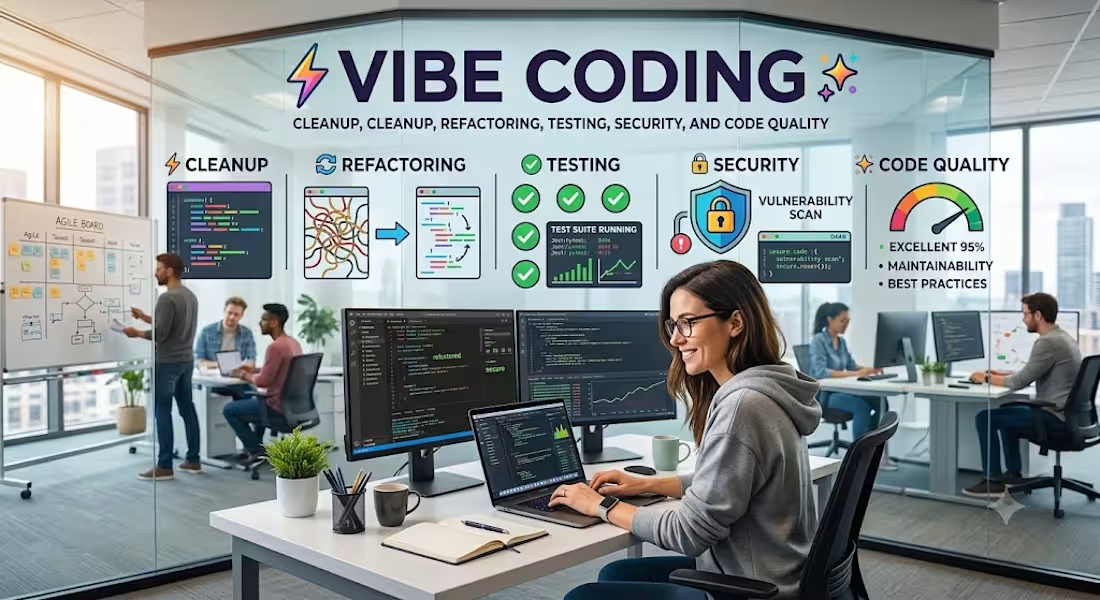
Vibe Coding, Your Magical Hands โœจ ๐Ÿ˜„ There was a time when being a developer meant accepting limitations. You had an idea at 10 PM and knew it would take three weekends to build. Half your time disappeared into documentation, Stack Overflow threads, boilerplate code, and fixing bugs that shouldn't have existed in the first place. Then I discovered vibe coding. For the first time in my career, it felt like my hands could move faster than my keyboard. I stopped thinking, "Can I build this?" and started asking, "What should I build next?" A landing page in an hour. A working prototype before lunch. An automation tool before dinner. No, AI didn't make me a better engineer overnight. It simply gave me leverage. And maybe that's the biggest shift in software development: developers are no longer limited by their typing speedโ€”they're limited by their imagination. A friend recently asked me: "So, has AI replaced programmers?" I smiled and replied, "No. It just gave us magical hands." โœจ ๐ŸŒPeople Are You Feeling The Same ๐Ÿ‘‡ If Interested read more about Is vibe coding is production ready (https://tripleminds.co/blogs/technology/is-vibe-coded-code-production-ready/)?
2
35