tania bezançon
AI & Full-Stack Developer building premium web apps
New to Contra
tania is ready for their next project!
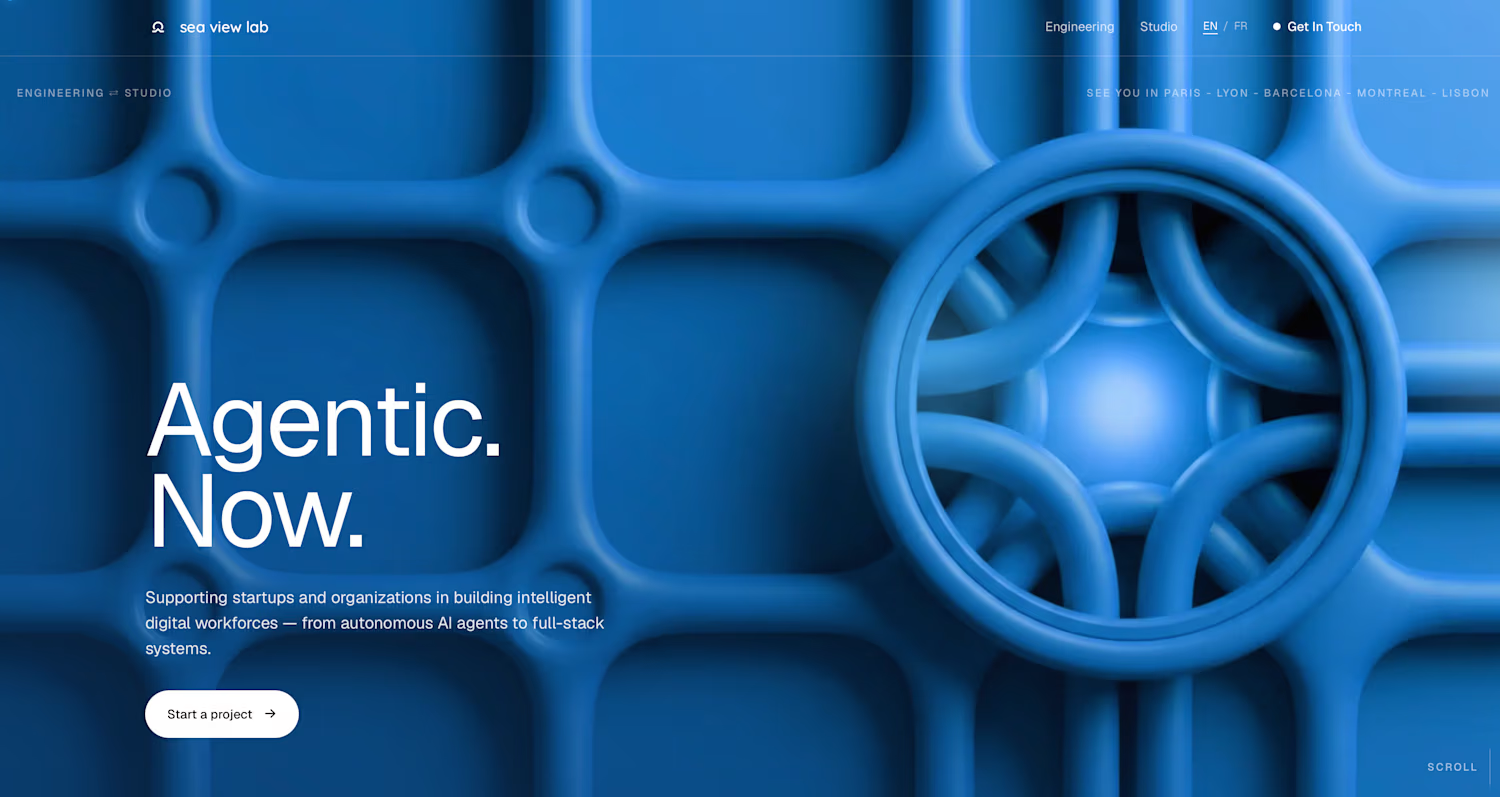
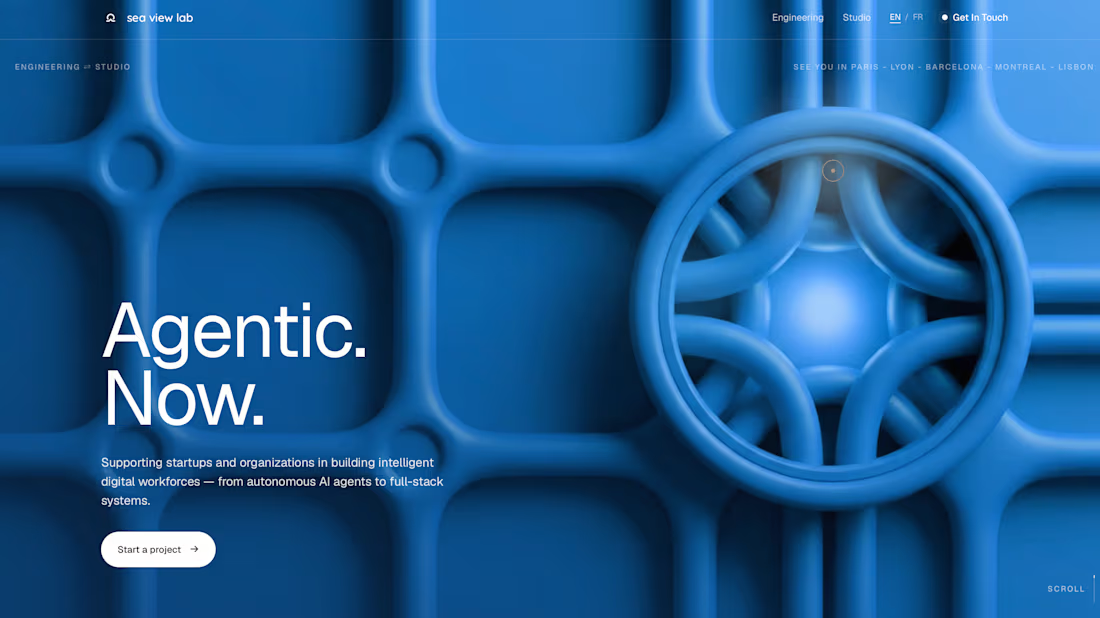
I recently redesigned and rebuilt the website for my AI studio, Sea View Lab.
When you're building AI products every day, you start noticing something.
The best products aren't just technically impressive.
They're the ones where engineering and design feel inseparable.
That's exactly the idea I wanted the website to communicate.
Not pages full of buzzwords.
But a clear vision of how I like to build:
→ robust AI systems
→ thoughtful product experiences
→ interfaces that make complex technology feel simple
The entire website was designed and developed from scratch.
Every layout, animation, interaction, and transition was carefully crafted to reflect the way I think about modern AI products.
Beyond showcasing our services, I wanted the site to highlight the projects we've been building recently, including Flatwhite, LifeDesigner, and LivePrompts.
Working on this project also reminded me how much I enjoy sitting at the intersection of software engineering and design.
Writing code.
Designing interfaces.
Prototyping AI experiences.
And turning ambitious ideas into products people can actually use.
I'd love to hear what you think.
👉 https://seaviewlab.com
0
6
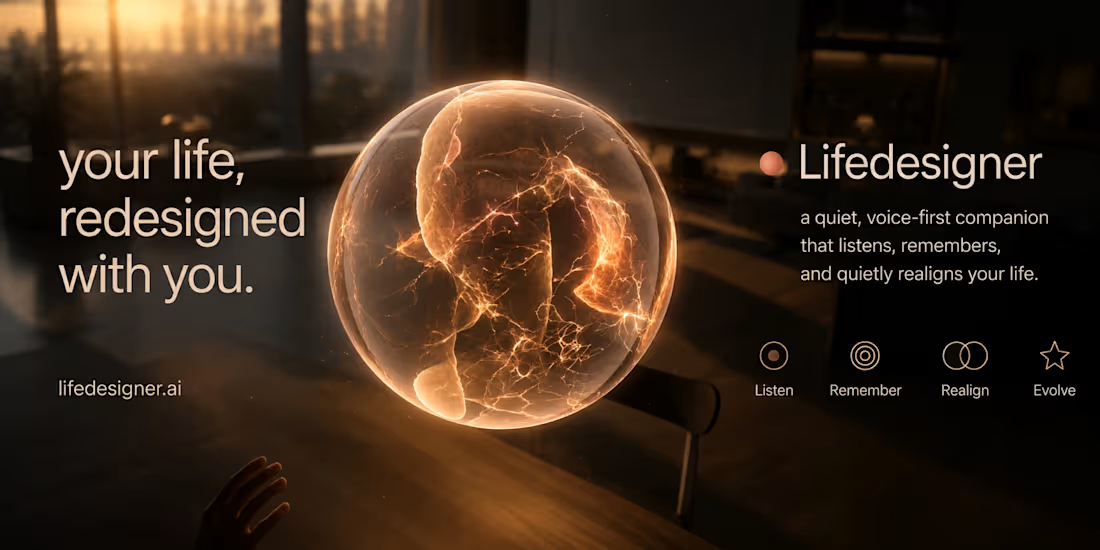
Most AI products help you do more.
I wanted to imagine one that quietly helps you become more.
So I built an experimental prototype:
→ lifedesigner.ai (http://lifedesigner.ai)
The idea is simple.
Instead of another productivity app, imagine an AI companion that understands your life through conversation.
It reads your calendar, notes, inbox, and routines—not to optimize every minute, but to gently redesign your week around the person you want to become.
A morning walk suggested at the right time.
Your phone automatically silenced before bed.
A Sunday reflection waiting for you on Monday morning.
Small interventions.
Compounding over time.
What fascinated me most wasn't just the concept—it was how it was built.
I wanted to explore what product development looks like when AI becomes part of the creative process itself.
Stage 1 — Claude as Creative Director
I used Claude Design to explore the product vision through conversation.
We iterated on:
→ user experience
→ interaction patterns
→ storytelling
→ motion
→ product direction
No Figma.
No moodboards.
Just dialogue.
Stage 2 — Claude as Software Engineer
Once the direction felt right, I moved into Claude Code.
From there, the interface emerged almost entirely through prompting and iteration.
No traditional design-to-development handoff.
Just ideas becoming code.
As a software engineer, that's what excites me the most.
We're moving from writing specifications...
to collaborating with AI across the entire product creation process—from the first idea to a working prototype.
I don't think the future of AI is just better models.
I think it's better ways of building.
This prototype is my way of exploring that future.
→ https://lifedesigner.ai
If you're building at the intersection of AI, software engineering, product design, or developer tools, I'd love to connect.
I'm always excited to exchange ideas, collaborate on ambitious projects, or help turn bold concepts into working AI products.
0
17
When I graduated, I thought the hardest part would be finding my first job.
It wasn't.
The hardest part was understanding where I actually stood in the market.
How much was my profile worth?
Was I aiming too high... or selling myself short?
Which roles was I genuinely competitive for?
How did recruiters actually perceive my profile?
The more I spoke with people around me, the more I realized this uncertainty was universal.
Graduates.
Senior engineers.
Career changers.
Different backgrounds. Same questions.
At the same time, hiring has changed.
Companies now use AI across large parts of their recruitment process.
Your résumé is parsed in seconds.
Your profile is ranked.
Your expected salary is estimated.
You're categorized before anyone has even spoken to you.
Meanwhile, candidates are still manually searching job boards, rewriting CVs, tailoring cover letters, and guessing whether they're making the right decisions.
That asymmetry felt wrong.
So I kept coming back to one question:
If recruiters have AI agents… why don't candidates?
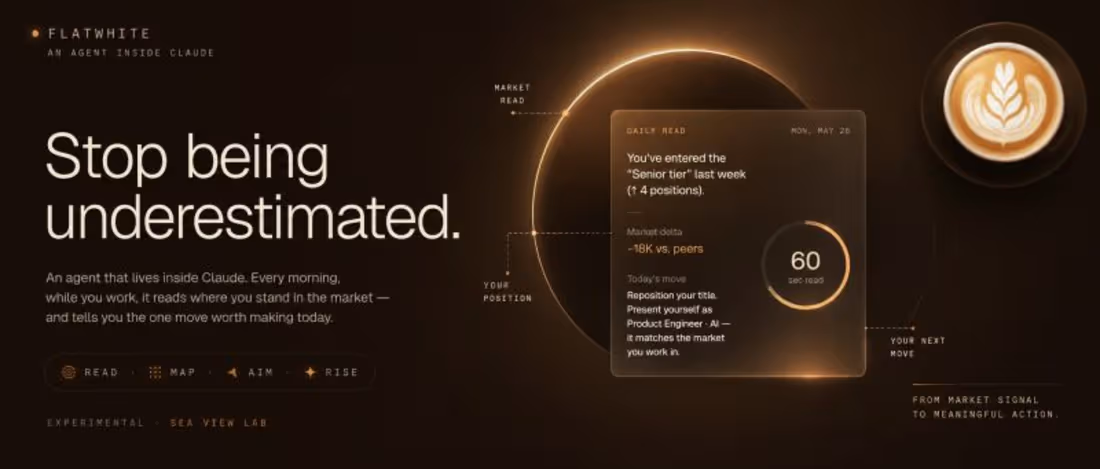
That question became Flatwhite.
An experimental AI career agent built by Sea View Lab.
Instead of another job board or another dashboard, Flatwhite explores a different idea:
What if your career coach lived inside the AI conversations you already have every day?
The prototype delivers a daily market briefing in under a minute:
→ How competitive is your profile today?
→ Are you underpricing yourself?
→ Which roles fit your experience?
→ What's happening in your market?
→ What's the highest-impact action you can take today?
From there, it can help you prepare applications, position your profile, and navigate the job market with more confidence.
This is also a broader experiment.
As AI becomes our primary interface, I believe many future products won't start with an app.
They'll start with a conversation.
I'm excited to keep exploring that direction.
The first public prototype is now live:
🌐 https://flatwhite.ai
I'd love to hear your thoughts.
If you were looking for your next role today, what's the one thing you'd want an AI career agent to do for you?
0
17
As a software engineer, I've always thought of AI as something that solves problems.
Lately, I've been asking a different question:
Can AI make people feel something?
This project started with an idea I couldn't let go of.
A few years ago, while traveling solo in 🇧🇷, I kept thinking how useful an intelligent travel companion could be.
Not another map.
Not another travel app.
Something that understands context.
→ Where is the safest route?
→ What should I avoid right now?
→ Where's the closest clinic?
→ Who can I contact in an emergency?
→ How do I navigate an unfamiliar city with confidence?
Before thinking about the product, I wanted to explore the emotion behind it.
So instead of building an app, I built a film.
The interesting part wasn't the final video—it was designing the production pipeline.
For this project I experimented with a workflow combining:
AI image generation for character consistency
cinematic prompting
shot-by-shot scene planning
Higgsfield (Seedance 2.0) for animation
CapCut for editing and pacing
What excites me most isn't generating videos.
It's designing creative systems where software, AI models, and storytelling work together.
I think we're entering an era where engineers won't just build products.
We'll build experiences.
That's the space I'm exploring right now:
AI workflows, generative media, creative tooling, and interactive storytelling.
If you're building at the intersection of AI, product, and creativity—or looking for someone who can prototype ambitious ideas with generative AI—I'd love to connect.
Always happy to discuss collaborations, freelance projects, or experimental ideas.
2
1
22
I'm fascinated by the intersection of AI, software, and cinematic storytelling.
One of my latest experiments is DUST OF GOD, an AI short film inspired by No Church In The Wild.
Built with:
• Higgsfield (Seedance 2.0)
• CapCut
• cinematic prompting
• dozens of iterations and creative constraints
Beyond the film itself, this project was about designing an efficient production workflow.
By limiting my budget and generating mostly 5-second shots instead of longer sequences, I achieved:
→ faster production
→ higher-quality outputs
→ stronger visual rhythm
→ significantly lower generation costs
This is exactly the kind of work I enjoy:
building creative AI workflows that transform ideas into polished visual experiences.
I'm currently open to collaborating with:
• AI startups
• creative studios
• brands
• founders
• agencies
Whether it's AI commercials, product launches, social campaigns, concept films, interactive experiences, or experimental storytelling, I'd love to help turn ambitious ideas into reality.
If you're looking for someone who combines software engineering, generative AI, and creative direction, let's connect.
Always happy to discuss collaborations, freelance opportunities, or long-term partnerships.
0
21