Golden Dragon AI
AI Studio building production-ready AI systems & productsLuxembourg

Project: Dragon Vision — Agent-Built AR Ingredient Scanning Effect
Instagram Reel:
https://www.instagram.com/reel/DeYMiNXsRBz/
invideo Project Link:
https://invideo.io/share/Export-10-Oct-25thLT4QVMM
Primary Effect: Custom AR-style scanning effect using AI-generated visual layers, scanning highlights, and animated information overlays.
Process Note:
I created Dragon Vision using invideo Editor's AI editing agents. Starting with AI-generated source footage, I directed the agent to build an AR-style ingredient scanning effect with animated overlays, scanning lines, and information panels. I refined the timing, opacity, and animation of the layers through the editing workflow. My screen recording demonstrates the agent workflow, editable layers, refinements, and my voice commentary.
0
77
Enterprise Multimodal AI Platforms (NDA)
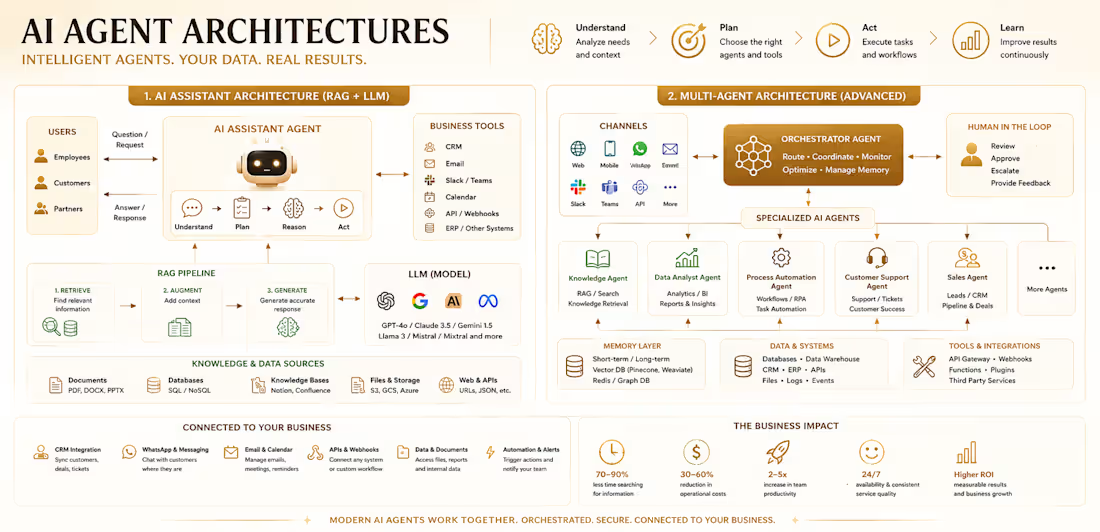
Designed and developed two production-grade enterprise AI platforms under NDA, taking ownership of the complete AI lifecycle from research and system architecture to production deployment and long-term platform support. The platforms integrated LLMs, RAG, Computer Vision, OCR, intelligent document processing, AI agents, custom neural networks, benchmarking, model evaluation, dataset engineering, synthetic data generation, model training, fine-tuning, optimization, and scalable production inference pipelines.
0
42
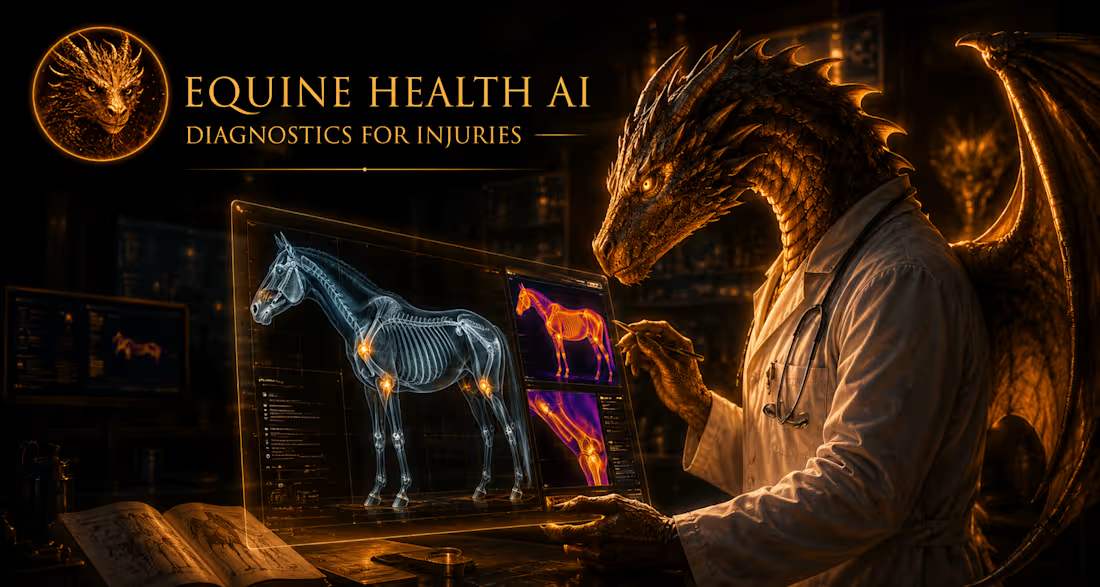
Horse Health AI is a Golden Dragon AI DeepTech project for portable, non-invasive, multimodal animal health screening and longitudinal health intelligence.
I designed the system around a compact multimodal sensor architecture combining RGB Computer Vision, multi-wavelength NIR, radiometric thermal imaging, structured/polarized optical sensing, and motion and geometry data.
Rather than analyzing each signal independently, the AI architecture is designed to fuse complementary modalities and evaluate visible anatomy, gait and behavior, thermal patterns, vascular and perfusion-related features, tissue-related optical signals, movement, and individual history.
A key part of the architecture is the Individual Digital Baseline. Each animal can become its own longitudinal reference, allowing new scans to be compared not only with validated population-level knowledge but also with that animal's historical normal patterns.
The software architecture includes synchronized acquisition, calibration, multimodal registration, per-modality AI models, longitudinal baseline modeling, multimodal embeddings and fusion, veterinary knowledge/RAG, explainable anomaly localization, confidence and uncertainty assessment, and mobile and research interfaces.
The project is designed as a screening and decision-support system, not as a replacement for veterinary diagnosis. Veterinary expertise, clinically confirmed data and validation are explicit parts of the development roadmap.
The initial platform is focused on horses, with potential expansion to other animal species following species-specific validation.
1
103

Food as Healing AI is a personal AI nutrition and food intelligence platform designed around the individual.
The platform builds a persistent Personal Nutrition Profile from the user's goals, food habits, lifestyle, preferences, restrictions, ingredient policies, practical constraints, feedback, and optional user-provided laboratory context.
Its food intelligence pipeline uses Vision/OCR, ingredient extraction and normalization, an ingredient and additive knowledge base, RAG, and structured product analysis to help users understand what is actually represented in a food product.
A Personal Matching Engine is designed to connect structured product information with each user's individual food policy — including hard exclusions, preferences, dietary patterns, nutrition goals, clean-label requirements, and ingredient rules.
The broader architecture is modular and multi-agent. Specialized agents are designed for personal profiles, questionnaires, nutrition, ingredients, products, matching, shopping, meal planning, knowledge retrieval, and continuous feedback.
The current technical foundation includes a Google Cloud backend, Supabase, RAG, prompt/AI orchestration, external AI model integration, an ingredient/additive knowledge base, and an image-based ingredient analysis prototype.
The goal is not to provide another generic diet app or diagnostic system, but to create a personal AI food consultant that learns how an individual wants to eat and turns that profile into explainable everyday food decisions.
1
1
110