
Sumaiyya Mahinn
frontend dev specializing in crafting interactive sites.
Ready for work
Sumaiyya is ready for their next project!

Sorted by Shae: booking for a solo home organizer
Shae runs a one-woman organizing business in Indiranagar, Bengaluru. Every enquiry used to start with "how much?", and the real answer depends on what the space looks like. That meant back-and-forth over WhatsApp, an evening spent quoting, and slots held for people who never confirmed.
What I built:
Photo-based estimate: The client picks a room, sets how full it is and how much they want to declutter, and uploads a photo. AI flags what will slow the job down and pins each item on the photo with its hour adjustment. The client sees an hours range and a ₹ range before they book.
Booking by blocks: The estimate maps to a half day, full day or multi-day block. Clients can only pick dates where that block fits Shae's calendar.
Owner approval: Shae reviews each request with the photo, the AI notes and suggested follow-up questions. She can approve it, adjust the quote or ask for more information.
25% deposit to confirm: The slot is held for 24 hours, with a reminder at 12 hours and an automatic release if the deposit isn't paid.
Itemised quote and invoice: Labour, products, cleaning supplies and add-ons are listed separately.
Statuses on both sides: Requested → Quote sent → Booked → In progress → Fulfilled. Clients and Shae can both cancel or reschedule under a 72-hour policy.
Private client links: Each client gets a tokenised link checked against the last 4 digits of their phone. The links are not indexed by search engines and they expire.
Owner dashboard behind login: /owner sits behind sign-in, and access is checked against an owner role in Supabase. Booking data is locked down with row-level security, so a client can only reach their own booking through their link.
The result: a client goes from "can I book?" to a confirmed, deposit-backed slot without waiting on a quote by message. Shae approves jobs instead of calculating them.
Built with: Lovable (TanStack Start), Supabase (auth, RLS, storage, cron automations) and the Lovable AI gateway for photo analysis.
1
58
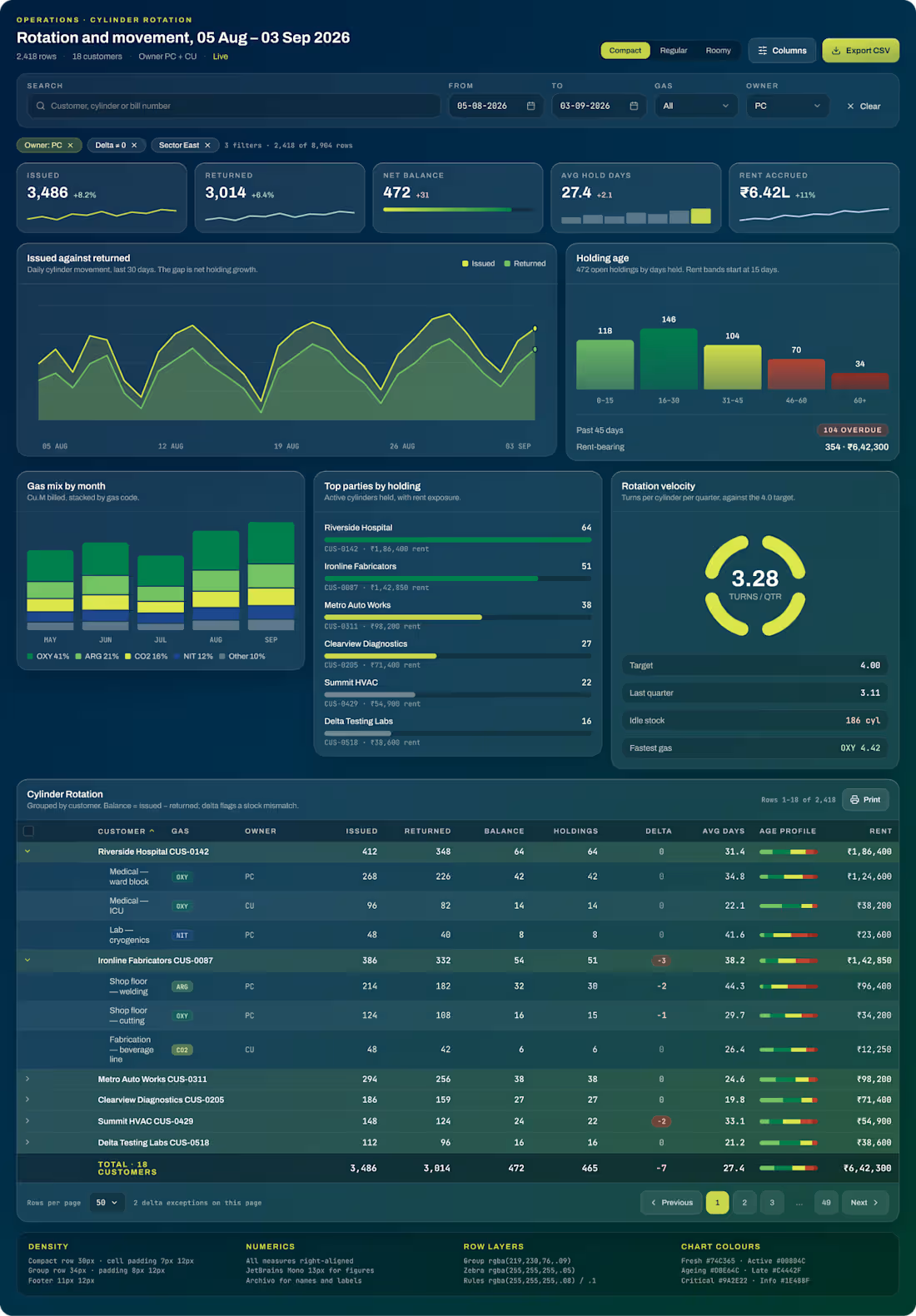
Cylinder CMS for tracking industrial gas cylinders: who's holding them, for how long, and what that costs. The people using it read dense data all day, so being clear mattered more than looking good.
The main table
Rows grouped by customer that expand to show each line item, with a totals row that stays visible as you scroll
A flag on any row that looks wrong, so problems show up without having to hunt for them
A small bar inside each row showing how long cylinders have been out
Numbers aligned so columns are easy to compare
Filters that tell you what you're seeing: "3 filters · 2,418 of 8,904 rows"
A Compact / Regular / Roomy toggle, because some people want to see more rows and others want room to breathe
Charts-
Cylinders issued vs returned, how long cylinders have been held, the gas mix, the top parties by holding, how fast cylinders come back, and overdue payments. Each chart answers one question an operator actually asks.
Admin dashboard-
A second screen with the dispatch queue, alerts, plant stock levels and quick actions.
0
27
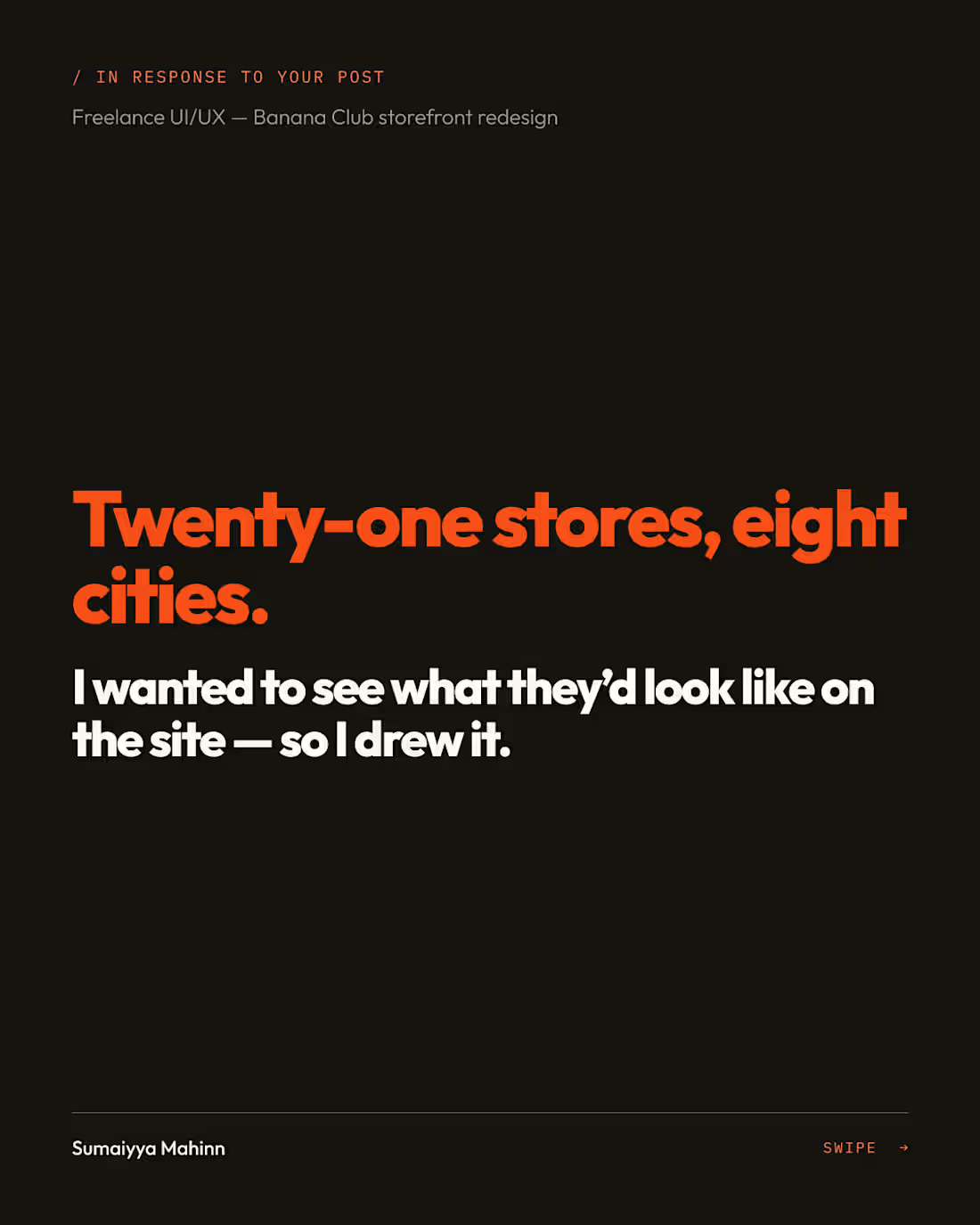
Banana Club is a Bengaluru menswear brand. They posted a freelance role for a storefront redesign. I messaged them and didn't hear back, so instead of waiting, I did the redesign.
This is a self-initiated concept-
What I made, in 3 days
- Business DNA: a strategy doc on who the brand is for, what it stands for, and where the current site loses people
- Brand guidelines deck: voice, colour, type and imagery rules
- Design tokens + UI kit: the system everything else is built from
- Component set: product cards, filters, size selectors, cart items and navigation
- 14 screens: desktop (1440) and mobile (390), covering Home (two directions, A and B), Collection, Product, Cart, Store locator and Store page
Why start with strategy
A redesign that only changes how things look is a reskin. I wanted every screen to trace back to a decision about the brand, so the strategy doc came before any UI.
What happened
I posted the work publicly instead of writing a cover letter. That post brought in an enquiry from a brand, about e-commerce UI work.
0
31
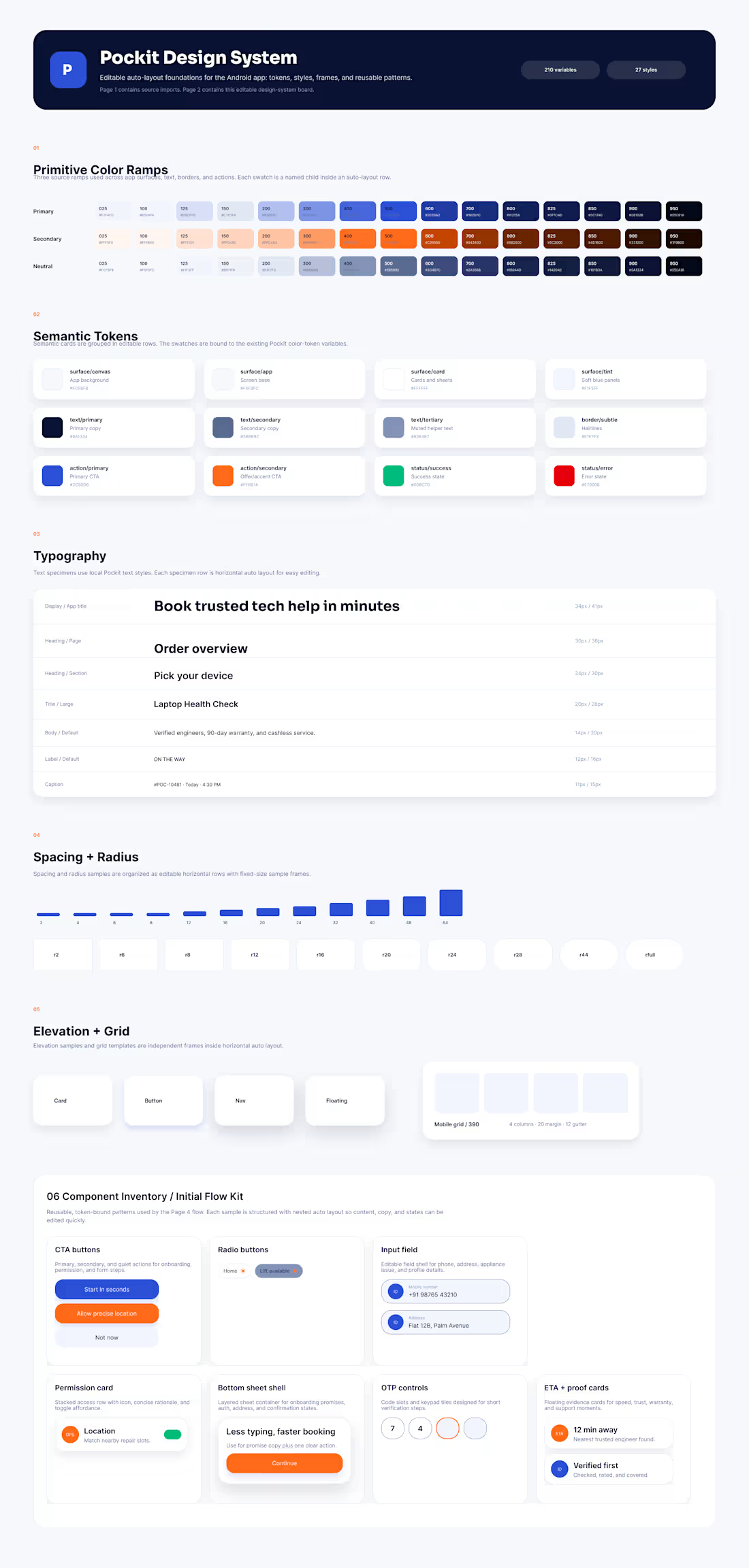
Pockit is a mobile app. They asked me to design one thing, the onboarding flow. I started with no design files at all, just the product and a brief.
What I delivered- The onboarding flow, as scoped. But while designing it, it was obvious the app had no system underneath it. Screens didn't match, and every new one would be a guess. So I built one.
Token architecture
- 200+ tokens in Figma variables, in three layers:
Primitives: the raw values (every colour, size and step)
Semantic: what each value is for, like "text-primary" or "surface-raised"
Component roles: what each part of a component uses
These are spread across six collections: colour, typography, spacing, radius, elevation and primitives. Change one value and it updates everywhere it's used.
Dark mode
Built as a proper mode from the start, not an inverted afterthought. Every semantic token has a light and a dark value.
How I work on undocumented products
I don't try to reverse-engineer everything. I work out what the slice I'm shipping needs, build that properly, and document the system as I go, so whoever comes next isn't starting where I did.
Status: engagement completed.
0
20