
SUDHAN Baskaran
Turning User Insights Into Business Growth Strategies
New to Contra
SUDHAN is ready for their next project!
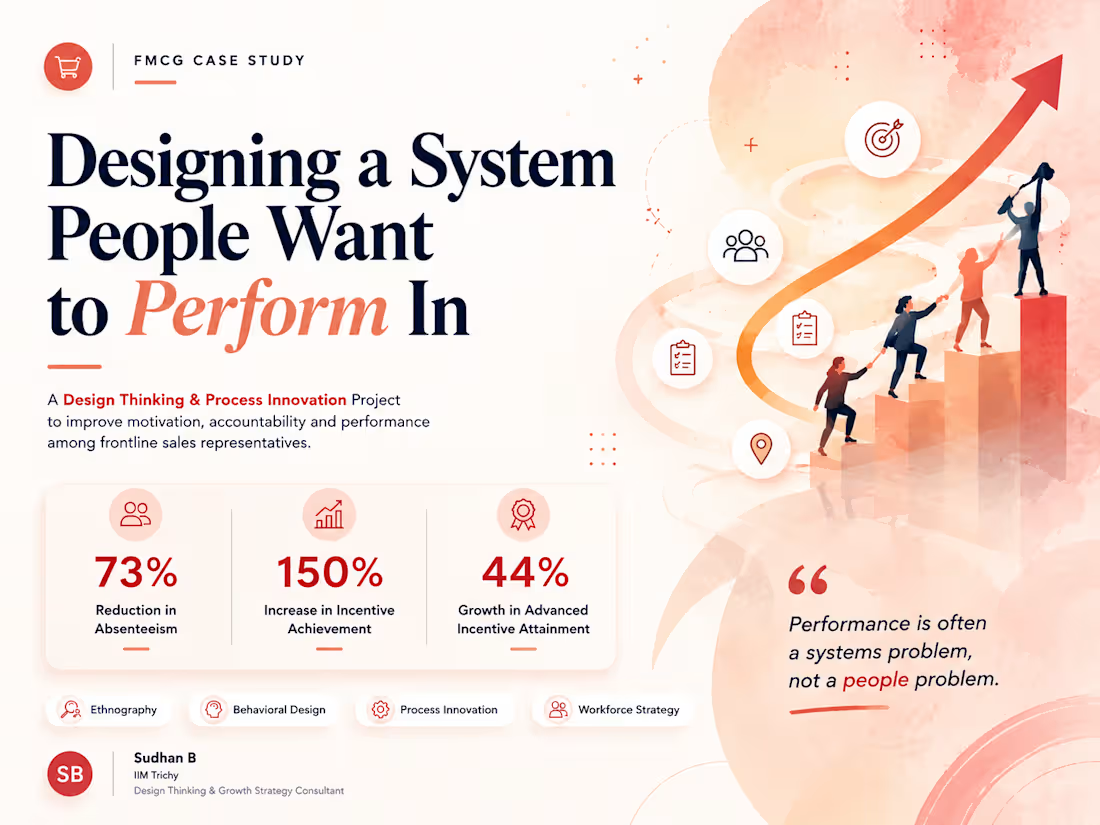
A 73% reduction in absenteeism without increasing salaries.
Sounds unlikely.:
But after observing frontline FMCG sales representatives for two months, the real issue became clear:
The problem wasn't the people.:
It was the system they worked in.:
This case study shows how ethnography, behavioral design and process innovation transformed motivation, accountability and performance at the ground level.🚀
1
228
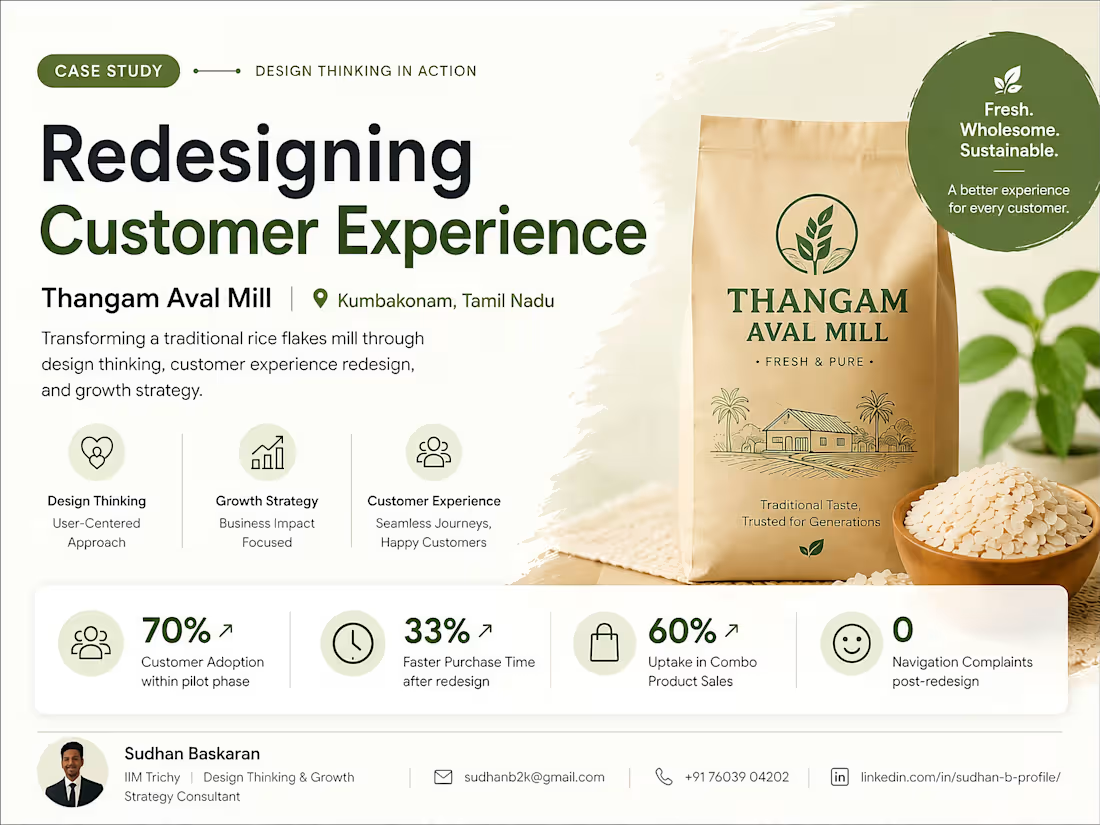
Thangam Aval Mill had built a strong B2B reputation but was experiencing growth stagnation. Through deep user research we identified a significant and largely untapped B2C opportunity the business had never fully explored. Using the full design thinking framework — empathy mapping, journey mapping, buyer utility analysis, prototyping, and live customer testing — we redesigned the entire customer experience from entry to purchase.
The real problem was not the product. It was the experience surrounding it. Narrow pathways, no price boards, confusing navigation, a single hidden QR code, and zero brand identity were silently pushing walk-in customers away.
After prototyping and testing with real customers we achieved 70% customer adoption of the redesigned journey, reduced purchase time by 33%, drove 60% combo product uptake, and eliminated all navigation complaints post-redesign. A complete growth strategy roadmap and strategic cascade was delivered for sustainable B2C expansion.
1
105
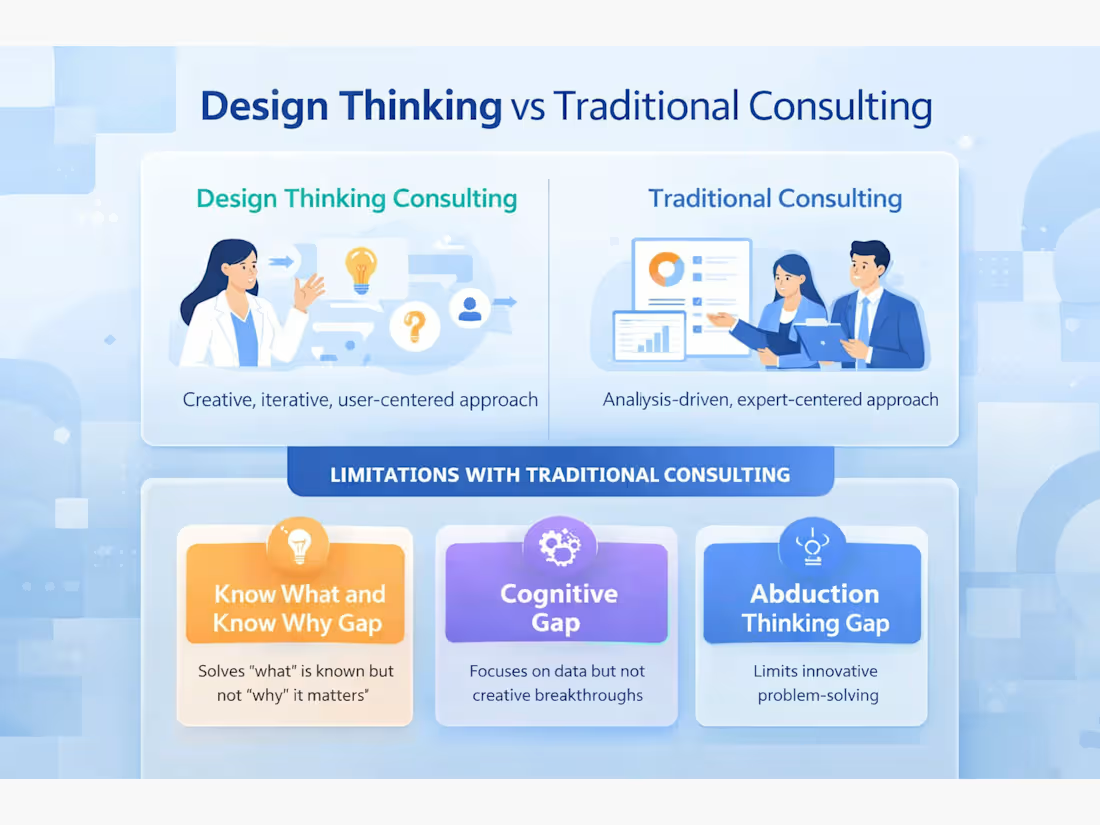
Here is an uncomfortable truth about traditional consulting.
It tells you what to do. It tells you why you should do it. But it almost never tells you how to actually make it work in the real world , with real people, real constraints and real uncertainty.
That gap between knowing and doing is where most strategies die.
Traditional consulting has three critical blind spots and most businesses do not realize they are paying for advice that misses all three.
Day 2 of this series breaks down exactly what those gaps are and why Design Thinking was built to close them.
If you have ever received a consulting report that sat in a drawer and changed nothing ... this post is for you.
Your business deserves more than a framework. It deserves a strategy built from what your users actually experience.
That is what I do and the results speak for themselves.
📩 Explore my work or drop me a message. Let us find what your business is really missing.
#DesignThinking #ConsultingInsights #BusinessStrategy #GrowthConsulting #Innovation #HumanCenteredDesign #IIMTrichy #StartupGrowth
1
116
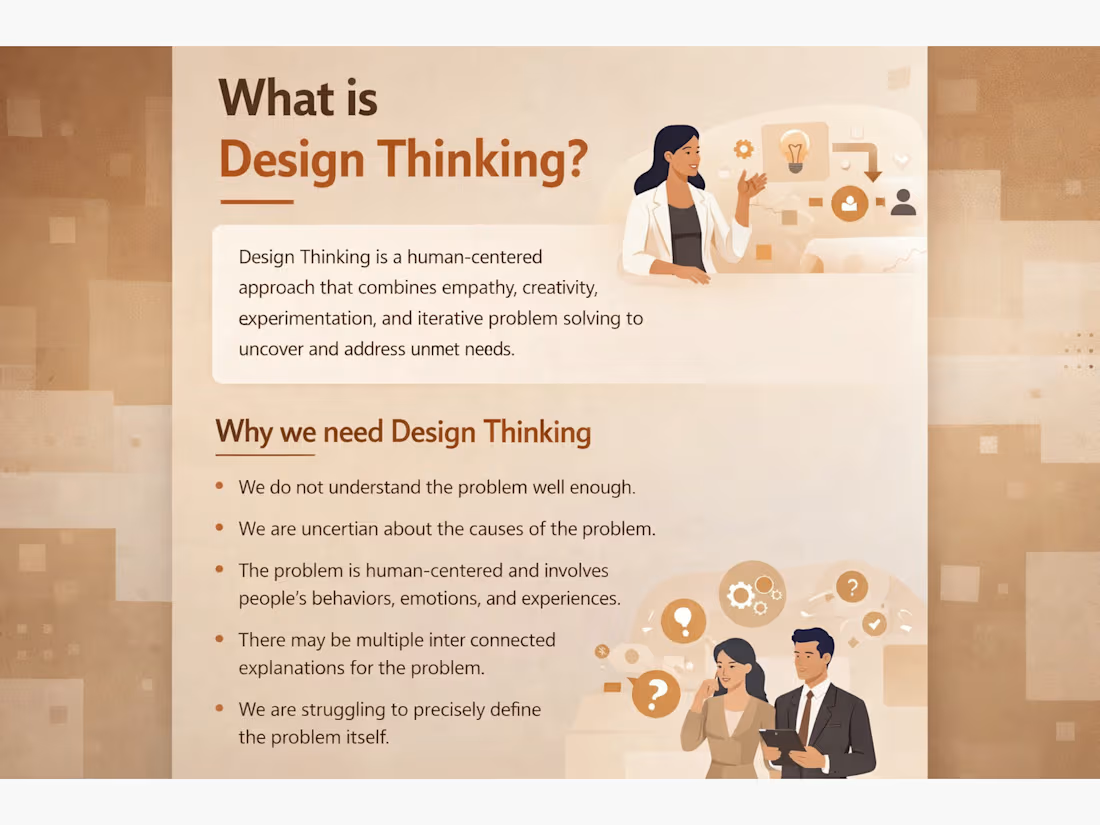
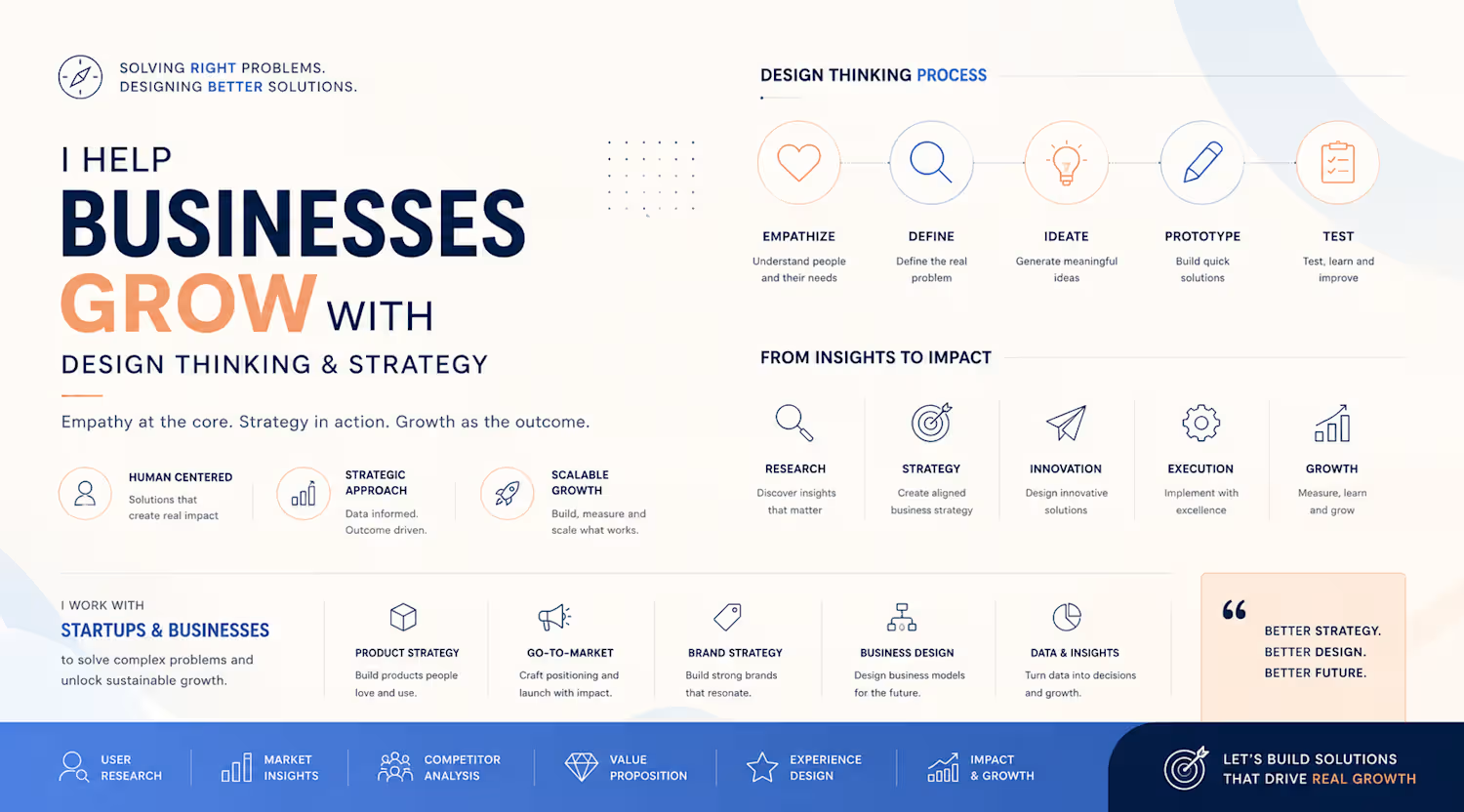
Most businesses solve the wrong problem brilliantly.
Design Thinking exists to make sure you never do that.
Before any strategy. Before any solution. Before any execution , you need to truly understand what problem you are actually solving and whose life it affects.
That is what Design Thinking does. It is not a trend. It is not a buzzword. It is a structured way of thinking that the world's most innovative companies like IDEO, Apple, Airbnb, IBM use to build things people actually want.
Day 1 of this series breaks down what Design Thinking really is — in plain language, no jargon.
Save this. Share it with someone building something.
And if your business is struggling to grow, losing customers quietly, or solving problems that keep coming back ,that is usually a sign the real problem has never been properly understood.
That is exactly what I help businesses uncover.
📩 DM me or visit my profile to see how I have done it for real businesses.
#DesignThinking #GrowthStrategy #BusinessConsulting #Innovation #StartupStrategy #CustomerExperience #IIM
2
138