MUHAMMAD ABUBUCKER SIDDIQUE
Fractional People Ops Architect for Scaling Startups
New to Contra
MUHAMMAD ABUBUCKER is ready for their next project!

Enterprise Operational Audit: Diagnosing Structural Constraints & Talent Retention Bottlenecks
Description
I. THE SYSTEMIC STAGNATION (THE CHALLENGE)
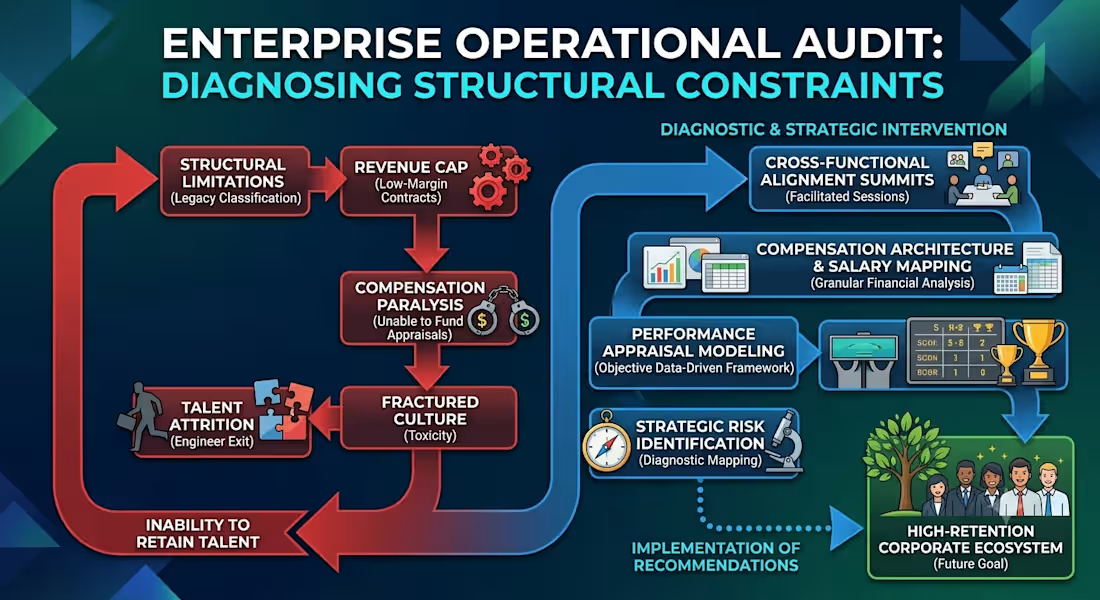
Many mid-sized organizations face severe operational and cultural stagnation not because of employee underperformance, but due to macro-level structural limitations imposed by executive leadership. When a firm operates within low-tier subcontractor classifications and refuses to strategically pursue higher-value market tiers, it creates an artificial ceiling on revenue. This revenue constraint directly paralyzes the organization's capacity to fund competitive compensation structures, leading to acute talent attrition, operational friction, and an inevitably fractured corporate culture.
II. THE DIAGNOSTIC & STRATEGIC INTERVENTION
Serving as an internal operational strategist across multi-regional divisions, I conducted a comprehensive operational audit and designed foundational frameworks to break this cycle of stagnation:
Cross-Functional Alignment Initiatives: Conceptualized, structured, and facilitated strategic alignment summits bridging Operations, Sales, Finance, and Human Resources to break down communication silos and harvest localized business improvement intelligence.
Compensation Architecture & Salary Mapping: Executed a granular financial analysis of existing salary metrics to deliver real-time data insights into payroll efficiency and market competitiveness.
Performance Appraisal Modeling: Engineered an objective, data-driven performance appraisal framework designed to transition the company away from subjective evaluation structures.
Strategic Risk Identification: Formulated a definitive diagnostic mapping the direct link between the company's stagnant subcontractor status, its inability to retain high-performing engineering talent long-term, and the resulting cultural toxicity.
III. STRATEGIC CONSULTING VALUE
While organizational inertia may prevent legacy management from executing recommended changes, this diagnostic blueprint demonstrates high-level mastery in corporate auditing, operational design, and strategic change management. It serves as an exhaustive, battle-tested framework for identifying systemic profitability bottlenecks and mapping out the precise operational structures required to build a high-retention corporate ecosystem.
1
7
Enterprise Change Management: Macro-Operational Restructuring & Digital HR Transformation
Description
I. THE OPERATIONAL STAGNATION (THE CHALLENGE)
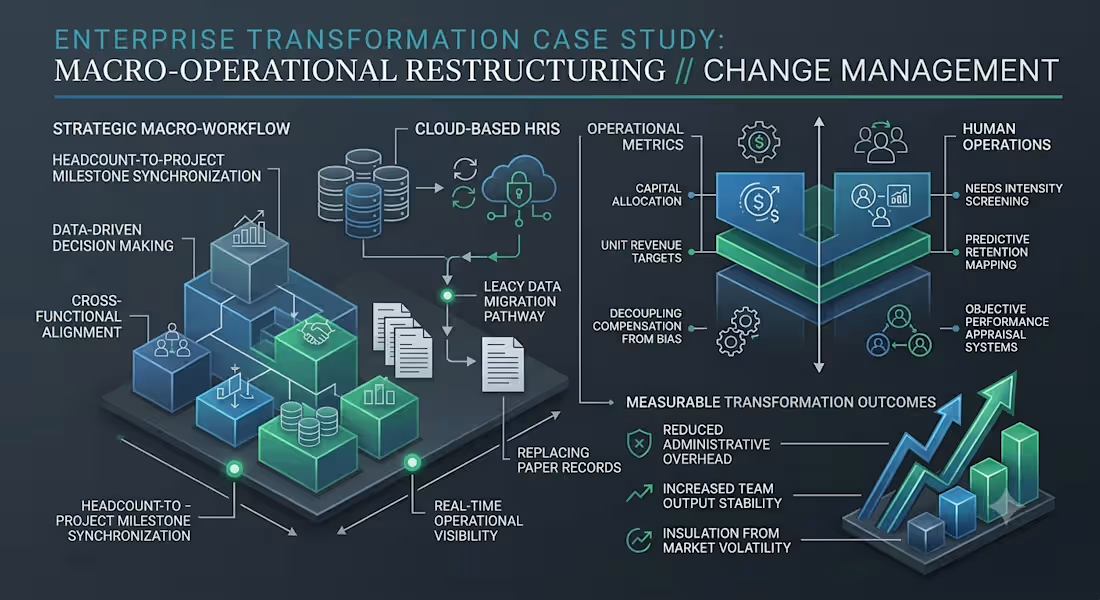
Large-scale organizations frequently face severe operational friction due to siloed departmental data, paper-heavy legacy workflows, and uncoordinated resource deployment across multiple regional offices. When an enterprise scales without a centralized tracking system, the absence of real-time visibility leads to massive administrative waste, misaligned human capital, and severe communication bottlenecks that slow down executive decision-making.
II. THE STRATEGIC MODERNIZATION BLUEPRINT
To eliminate these systemic corporate inefficiencies, I formulated and executed a macro-level operational blueprint designed to optimize business logistics and modernize core data infrastructure simultaneously:
Cross-Functional Workflow Engineering: Designed and mapped out standard operating procedures (SOPs) to coordinate labor deployment and project alignment across multi-tiered regional business units.
Digital HR Architecture Transformation: Spearheaded the strategic migration of legacy paper records and siloed spreadsheets into a centralized, secure, cloud-based Human Resource Information System (HRIS).
Accountability & Protocol Mapping: Established transparent governance frameworks to ensure absolute operational alignment among cross-functional leadership teams during organizational transition periods.
III. STRATEGIC VALUE DELIVERED
This macro blueprint provides executive leadership with an unshakeable roadmap for complex corporate restructuring. By replacing outdated administrative bottlenecks with agile, transparent digital workflows, the framework minimizes project friction, ensures optimal capital utilization, and provides absolute visibility across the entire enterprise asset lifecycle.
0
10
Strategic Capital & Human Operations Matrix: Aligning Financial Runways with Organizational Architecture
Description
I. THE STRUCTURAL MOTIVATION GAP (THE BOTTLENECK)
In fast-scaling and highly volatile market ecosystems—such as corporate hubs in the Gulf region—growth-stage organizations frequently encounter severe financial friction due to a fundamental misalignment between macroeconomic capital forecasting and micro-level human asset acquisition.
When organizations treat headcount as a static volume metric based solely on "skills" and "budget," traditional recruitment rapidly becomes a massive cash drain. Standard HR models routinely overlook a candidate's localized psychological runway and urgent needs intensity. Hiring out of acute systemic desperation results in premature talent attrition, elevated operational errors, and critical culture fragmentation that compresses organizational runways.
II. THE STRATEGIC EXECUTIVE INTERVENTION
Utilizing a dual framework anchored by an MBA in Finance and deep organizational psychology methodologies, I engineered a proprietary, data-driven alignment matrix to transform human resources from an administrative cost center into a strategic lever of profitability:
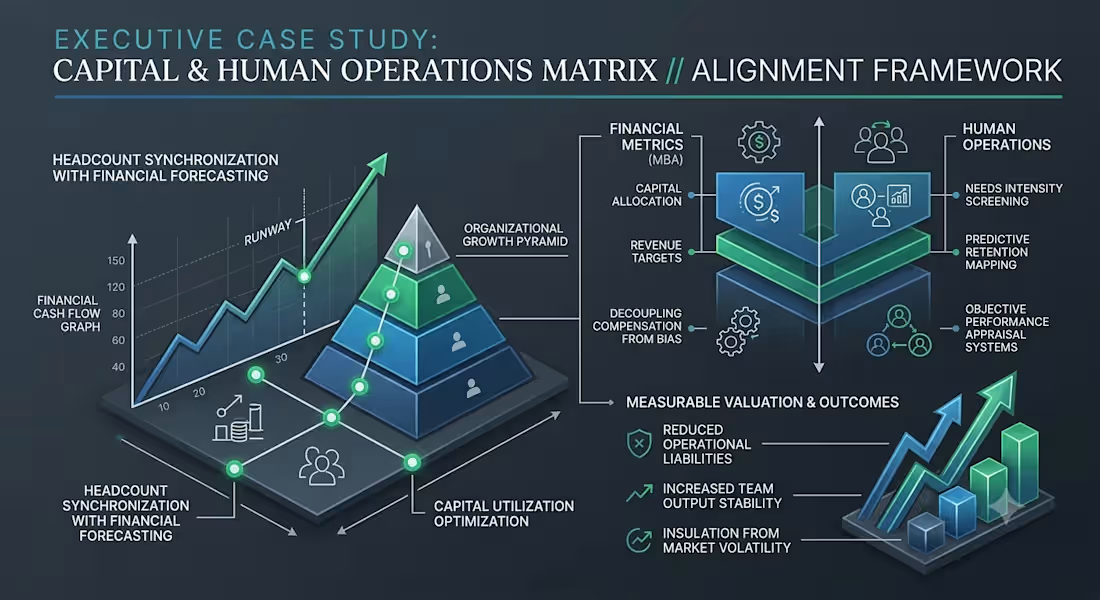
Headcount-to-Runway Synchronization: Integrated talent pipeline velocity directly with corporate financial forecasting models, ensuring every personnel asset maps cleanly to specific, capital-backed project milestones.
Objective Performance Appraisals: Built and deployed robust performance appraisal systems that eliminated subjective bias, tying departmental rewards directly to localized business unit revenue targets and margin thresholds.
Predictive Retention Architecture: Designed proactive risk-mapping structures to identify high-risk flight profiles and competitive talent poaching points before attrition could disrupt operational continuity.
III. LONG-TERM MEASURABLE VALUATION
The implementation of this synchronized framework provided the executive leadership team with complete financial clarity and an unshakeable operational blueprint. By filtering out critical operational liabilities prior to the contract offer stage, the matrix structurally insulated the enterprise against market volatility, stabilized team output, and optimized capital utilization across high-stakes project lifecycles.
0
14
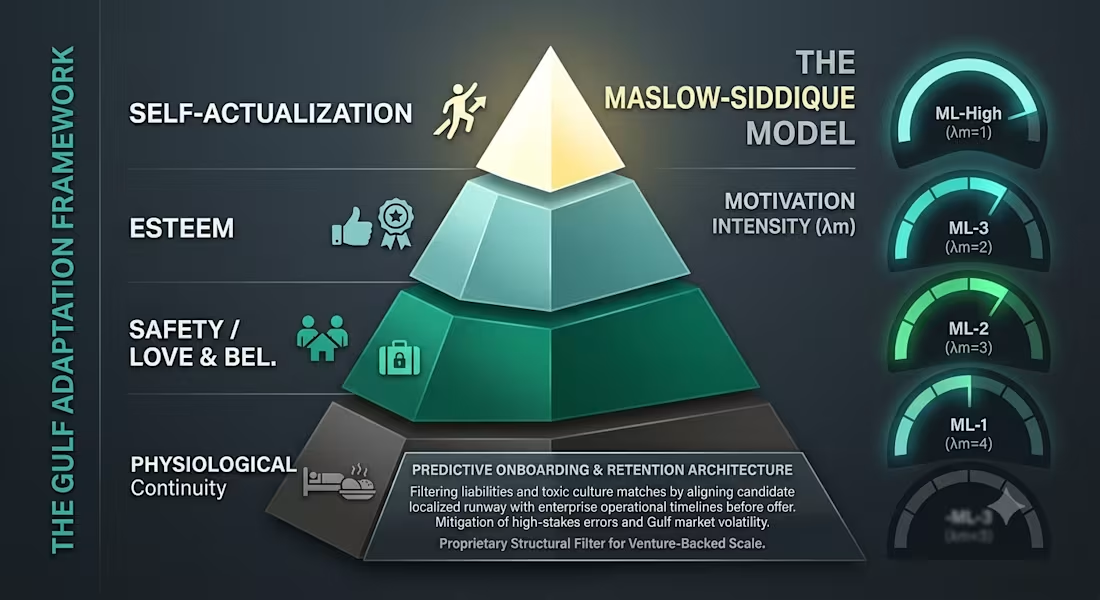
Why Your Startup’s Scaling Strategy is a Financial Time Bomb 💣
Most venture-backed founders think recruitment is a matching game of "skills" and "budget."
It isn’t. In high-growth phases, traditional recruitment is a massive cash drain. You review a clean CV, match the candidate's technical skills, onboard them, and then watch them suddenly exit or completely paralyze your team’s culture six months later.
Why? Because you are screening for current capacity while completely ignoring their localized psychological runway.
When scaling an enterprise into hyper-competitive hubs—especially volatile talent markets like the Gulf—failed onboarding happens because a candidate's actual Needs Intensity is fundamentally misaligned with your operational timeline. If you hire someone out of high systemic desperation, you aren't hiring a long-term asset; you are hiring a flight risk who will jump ship or commit high-stakes operational errors the moment an immediate financial patch is cleared.
To protect my clients' profit margins, I don't use standard HR questionnaires. I built and deploy a proprietary structural framework—the Maslow-Siddique Hierarchy Adaptation—to mathematically isolate a candidate's motivational trajectory before they ever sign an offer letter.
We filter out the legacy liabilities and toxic culture matches before they drain your bank account.
Stop treating recruitment like a lottery. If you are ready to engineer an unshakeable organizational architecture, let’s sync. #humanresources #operationsmanagement #businessstrategy #consulting
0
19