
Satyajit Baidya
Content Writer | Helping Founders Build Strong Positioning


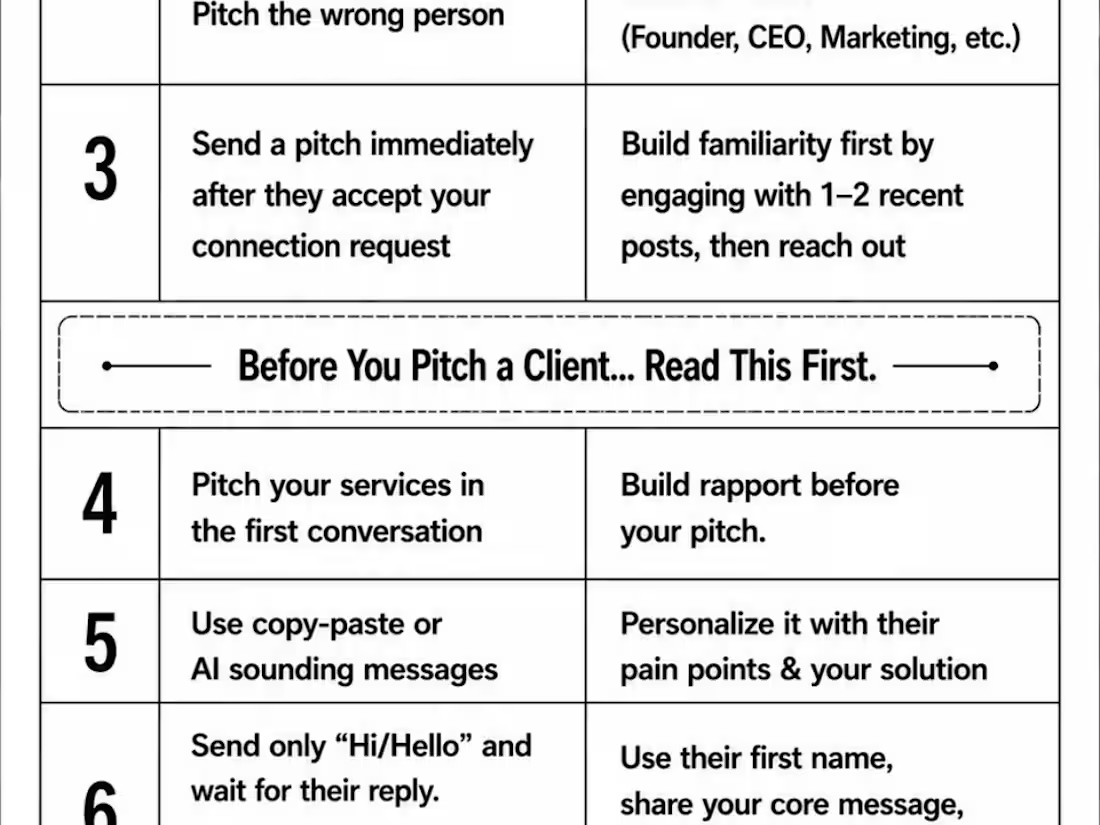
I can. I will. I improve. I don't stop.
That's the mindset clients trust.
Clients don't care what services you offer. They care about what problems you can solve and what results you can improve.
Many freelancers think sounding overly polite by calling every client "Sir" or "Madam" increases their chances of getting hired.
In reality, excessive deference often signals a lack of confidence, not professionalism.
"Never begin a chess match from a losing position"
Clients are looking for outcomes, not unnecessary formality.
Respect is good. Desperation isn't.
Don't position yourself as someone asking for work.
Position yourself as someone who can solve a business problem.
And if you're a fresher, don't use that as an excuse.
"Every expert was once a __________"
(If you know the missing word, write it in the comments.)
.
.
The difference is confidence, positioning, and consistent improvement.
That's exactly why I created this checklist.
The right mindset shapes the right message.
The right message creates the right opportunities.
I can. I will. I improve. I don't stop.
#Freelancing
#Freelancer
#ProposalWriting
#ClientAcquisition
#PersonalBranding
#FreelanceLife
#B2BMarketing
#CareerGrowth
#ProfessionalDevelopment
1
160
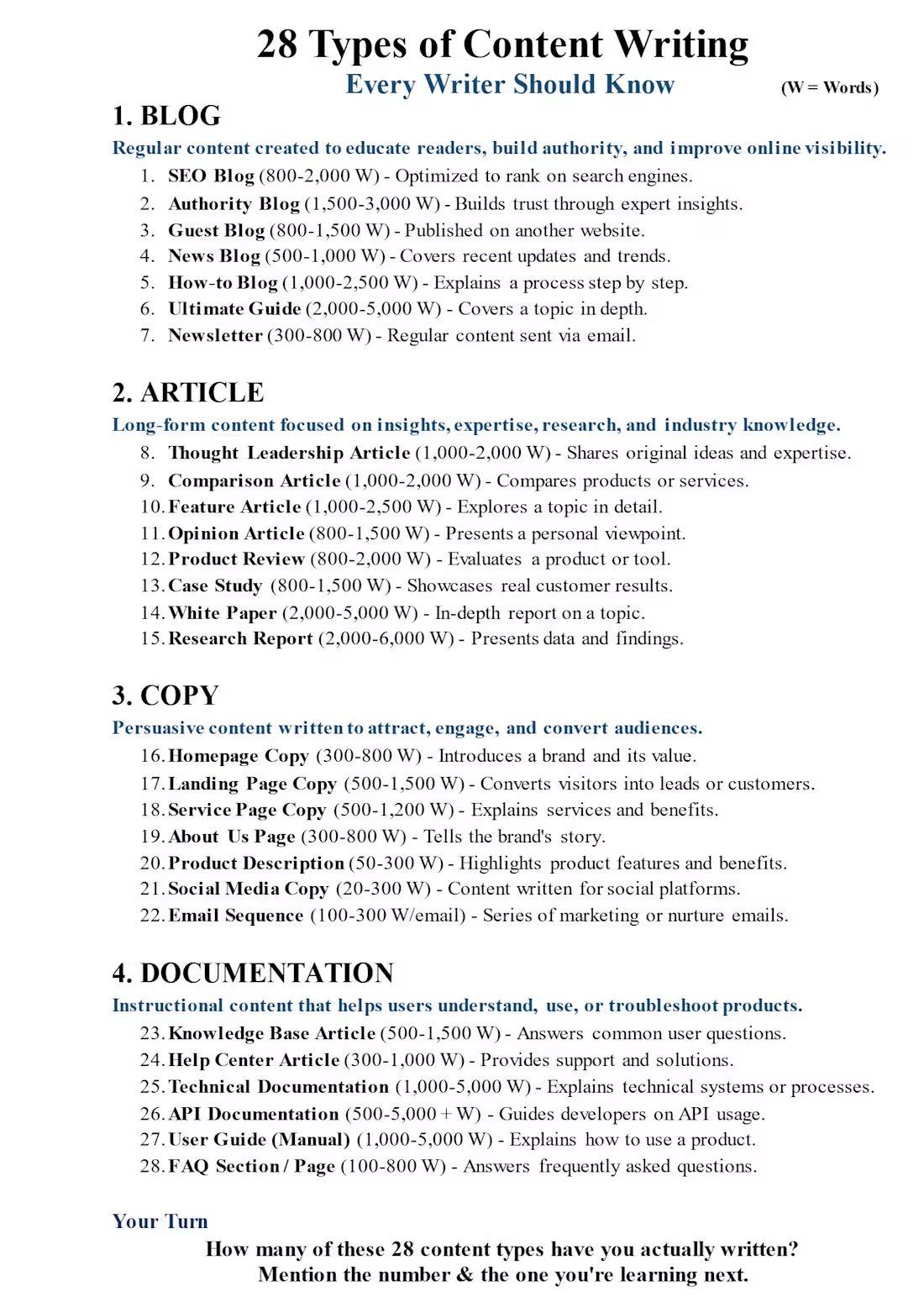
28 Types of Content Writing
Every Writer Should Know
(1) BLOG
Regular content created to educate readers, build authority, and improve online visibility.
SEO Blog (800-2,000 W) - Optimized to rank on search engines.
Authority Blog (1,500-3,000 W) - Builds trust through expert insights.
Guest Blog (800-1,500 W) - Published on another website.
News Blog (500-1,000 W) - Covers recent updates and trends.
How-to Blog (1,000-2,500 W) - Explains a process step by step.
Ultimate Guide (2,000-5,000 W) - Covers a topic in depth.
Newsletter (300-800 W) - Regular content sent via email.
(2) ARTICLE
Long-form content focused on insights, expertise, research, and industry knowledge.
Thought Leadership Article (1,000-2,000 W) - Shares original ideas and expertise.
Comparison Article (1,000-2,000 W) - Compares products or services.
Feature Article (1,000-2,500 W) - Explores a topic in detail.
Opinion Article (800-1,500 W) - Presents a personal viewpoint.
Product Review (800-2,000 W) - Evaluates a product or tool.
Case Study (800-1,500 W) - Showcases real customer results.
White Paper (2,000-5,000 W) - In-depth report on a topic.
Research Report (2,000-6,000 W) - Presents data and findings.
(3). COPY
Persuasive content written to attract, engage, and convert audiences.
Homepage Copy (300-800 W) - Introduces a brand and its value.
Landing Page Copy (500-1,500 W) - Converts visitors into leads or customers.
Service Page Copy (500-1,200 W) - Explains services and benefits.
About Us Page (300-800 W) - Tells the brand's story.
Product Description (50-300 W) - Highlights product features and benefits.
Social Media Copy (20-300 W) - Content written for social platforms.
Email Sequence (100-300 W/email) - Series of marketing or nurture emails.
(4). DOCUMENTATION
Instructional content that helps users understand, use, or troubleshoot products.
Knowledge Base Article (500-1,500 W) - Answers common user questions.
Help Center Article (300-1,000 W) - Provides support and solutions.
Technical Documentation (1,000-5,000 W) - Explains technical systems or processes.
API Documentation (500-5,000+ W) - Guides developers on API usage.
User Guide (Manual) (1,000-5,000 W) - Explains how to use a product.
FAQ Section / Page (100-800 W) - Answers frequently asked questions.
Your Turn 👇
How many of these 28 content types have you actually written?
Mention the number & the one you're learning next.
(Note: W = Word)
#ContentWriting #WritingTips #ContentMarketing #Copywriting #TechnicalWriting #Freelancing #WritersCommunity
1
142

"Where do I get my clients from?"
Time to reveal the truth.
I've been asked this question so many times that I thought it deserved a post.
Most people expect me to reveal a secret platform where clients hang like ripe mangoes-
just create an account, pick a few, & start working. 😄
I wish freelancing worked that way.
Around 3/4 of clients didn't come from pitching. They came through referrals, repeat clients, or people who had already seen work.
Clients follow trust.
One of the biggest mistakes I see freelancers make is sending generic msgs like:
"Hi, do you need a content writer?"
"Can I offer my SEO services?"
"Are you looking for a video editor?"
By the time your message reaches a client's inbox, you're probably the 11th person saying the exact same thing.
So why should they reply to you?
.
.
.
Before pitching, understand their business.
Read their profile.
Visit their website.
Find one genuine opportunity where you can add value.
Then send a message that couldn't be copied & pasted to anyone else.
.
.
Most freelancers think,
"If I pitch 10 people, I'll probably get 1 client."
I prefer a different mindset.
Treat every pitch as if it's the one that should win the client.
.
.
But that's only half the battle.
Cold outreach is a great way to start.
It just shouldn't be your only strategy.
Build enough credibility that clients start reaching out to you.
Start posting about your profession.
Whether you're a content writer, designer, video editor, developer, or SEO expert, let people see what you're working on and what you're learning.
And this is where many beginners hold themselves back.
"I'm new."
"I don't have enough experience."
"What if nobody likes/comments my post?"
Remember this:
Every expert was once a beginner.
People aren't looking for perfection-
They're looking for consistency, curiosity, and proof that you're improving.
Consistency builds familiarity.
Familiarity builds trust.
And trust brings clients.
If one of my posts gets little or no engagement, I don't get disappointed.
I get curious.
I ask why it didn't resonate, learn from it, and make the next post better.
Every low-performing post becomes research.
One last thing...
Freelance platforms can definitely help, especially if you're just starting.
But don't expect instant results.
Upwork can be tough for beginners because of the investment & competition.
Fiverr usually takes time to gain traction.
Freelancer can work, but don't be surprised if you send 100 personalized proposals before landing your first project.
That's completely normal.
The goal isn't to send more DMs.
It's to become so visible and trustworthy that when someone asks,
"Do you know someone who can help us with this?"
...your name comes up before you even send a pitch.
0
31

𝟳.𝟱 𝗪𝗿𝗶𝘁𝗲𝗿𝘀 𝗪𝗵𝗼 𝗟𝗲𝗳𝘁 𝗕𝗲𝗵𝗶𝗻𝗱 𝗦𝗼𝗺𝗲 𝗚𝗼𝗹𝗱𝗲𝗻 𝗪𝗿𝗶𝘁𝗶𝗻𝗴 𝗔𝗱𝘃𝗶𝗰𝗲 - Especially now, when everyone is looking for shortcuts....
Some founders with a few hundred followers write remarkably well and occasionally go viral.
At the same time, I've seen CEOs, founders, and industry leaders publish fairly average posts and still get solid engagement.
Not because the writing is exceptional.
Because the positioning is.
Well positioned people can get away with average writing.
Unknown people usually can't.
Maybe that's an unfair observation.
Maybe not.
The more people talk about AI writing, the more I find myself revisiting old writing advice.
Different era.
Same problem.
Most content doesn't fail because of grammar.
It fails because it sounds like everyone else.
A few lessons I keep coming back to:
[1] Ernest Hemingway - USA
Write one true sentence.
[2] Kurt Vonnegut - USA
Respect the reader's time.
Give readers someone to care about.
[3] Elmore Leonard - USA
If it sounds like writing, rewrite it.
Leave out the parts readers skip.
[4] George Orwell - UK
Never use a long word where a short one will do.
[5] Stephen King - USA
Kill your darlings. (Remove your favorite line if it weakens the writing.)
[6] Ursula K. Le Guin - USA
The story is not in the plot but in the telling.
[7] Margaret Atwood - Canada
A word after a word after a word is power.
[7.5] Satyajit - India
Stop trying to keep everyone happy.
Add something slightly controversial or incorrect. (Renowned ❌ Notorious ✅)
Then sit back and watch the engagement arrive on its own.
😄
.
.
.
.
.
None of these writers cared about AI scores, engagement rates, or content frameworks.
Yet people are still reading them decades later.
Technology keeps changing.
Design tools change.
Video editing tools change.
AI tools change.
But many writing lessons from decades ago still feel relevant.
Because tools can help you write.
They can't do your thinking
and
and
They can't do your observation...
#Writing #Storytelling #PersonalBranding #ContentMarketing
0
34