
AI Workflow Risk Scan — One Workflow, Written FindingsBrandin Gudmundson
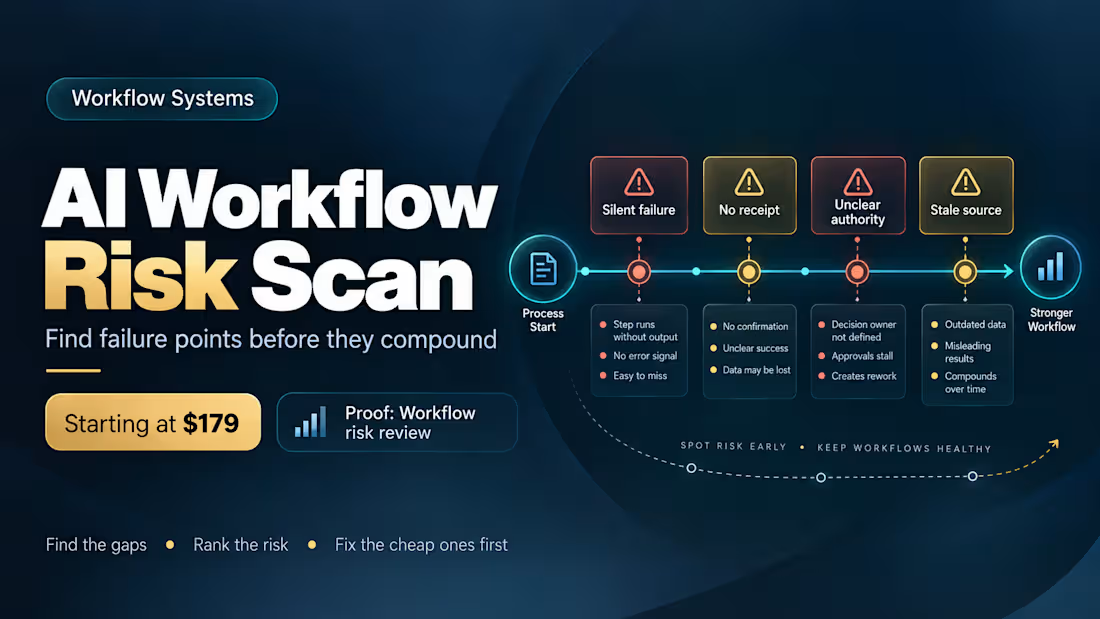
For teams already using AI who aren't sure what it's touching.
You pick one workflow where AI is being used — or where you're thinking about using it. I review it and send back written findings. No meeting required, no discovery call, no scoping deck.
This is deliberately small. It's the fastest way to find out whether the way I think is useful to you before anyone commits to a larger engagement.
Who this is for
Small teams, nonprofits, clinics, and service organizations where staff have started using AI tools informally and nobody has written down what's allowed. If your people are already pasting things into a chatbot and your policy is "we should probably look at that," this is for you.
What I actually look at
Where client, patient, or personal information could enter an unmanaged tool
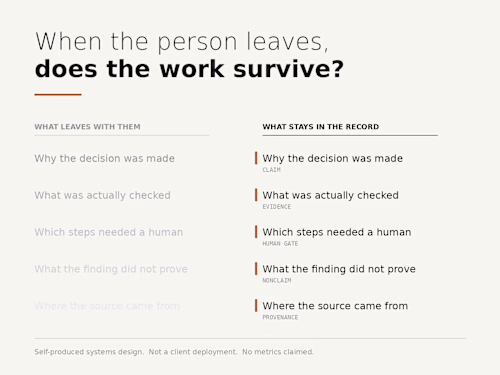
Which steps produce a record you could show someone later, and which produce nothing
Where a confident-sounding output could pass through unreviewed
What a staff member would do at the point they aren't sure whether something is allowed
The one change that reduces the most risk for the least disruption
What you get back
A written document, in plain language, that a manager can read without a technical background and act on the same week. Not a maturity model. Not a 40-page framework.
Tool-agnostic
I don't care which platform you're on and I'm not selling you one. This works the same whether your staff are using ChatGPT, Claude, Copilot, Gemini, something self-hosted, or three of those at once without telling anyone.
Where this comes from
Fourteen years frontline in mental health, addictions, and crisis response, then building AI-assisted workflows inside a community services organization — including deploying working setups onto colleagues' machines and writing the governance around it. I'm reviewing your workflow as someone who has had to make this safe in a real building with real consequences, not as an auditor with a checklist.
FAQs
Example work
Starting at$179
Duration5 days
Tags
AI Governance
Risk Management
Workflow Design
Operations Lead
Process Improvement
Healthcare
Nonprofit
Service provided by
Brandin Gudmundson Surrey, Canada
- 3
- Followers
AI Workflow Risk Scan — One Workflow, Written FindingsBrandin Gudmundson
Starting at$179
Duration5 days
Tags
AI Governance
Risk Management
Workflow Design
Operations Lead
Process Improvement
Healthcare
Nonprofit
For teams already using AI who aren't sure what it's touching.
You pick one workflow where AI is being used — or where you're thinking about using it. I review it and send back written findings. No meeting required, no discovery call, no scoping deck.
This is deliberately small. It's the fastest way to find out whether the way I think is useful to you before anyone commits to a larger engagement.
Who this is for
Small teams, nonprofits, clinics, and service organizations where staff have started using AI tools informally and nobody has written down what's allowed. If your people are already pasting things into a chatbot and your policy is "we should probably look at that," this is for you.
What I actually look at
Where client, patient, or personal information could enter an unmanaged tool
Which steps produce a record you could show someone later, and which produce nothing
Where a confident-sounding output could pass through unreviewed
What a staff member would do at the point they aren't sure whether something is allowed
The one change that reduces the most risk for the least disruption
What you get back
A written document, in plain language, that a manager can read without a technical background and act on the same week. Not a maturity model. Not a 40-page framework.
Tool-agnostic
I don't care which platform you're on and I'm not selling you one. This works the same whether your staff are using ChatGPT, Claude, Copilot, Gemini, something self-hosted, or three of those at once without telling anyone.
Where this comes from
Fourteen years frontline in mental health, addictions, and crisis response, then building AI-assisted workflows inside a community services organization — including deploying working setups onto colleagues' machines and writing the governance around it. I'm reviewing your workflow as someone who has had to make this safe in a real building with real consequences, not as an auditor with a checklist.
FAQs
Example work
$179