
Grant Portfolio Build — five funder-fit narratives, stackedBrandin Gudmundson
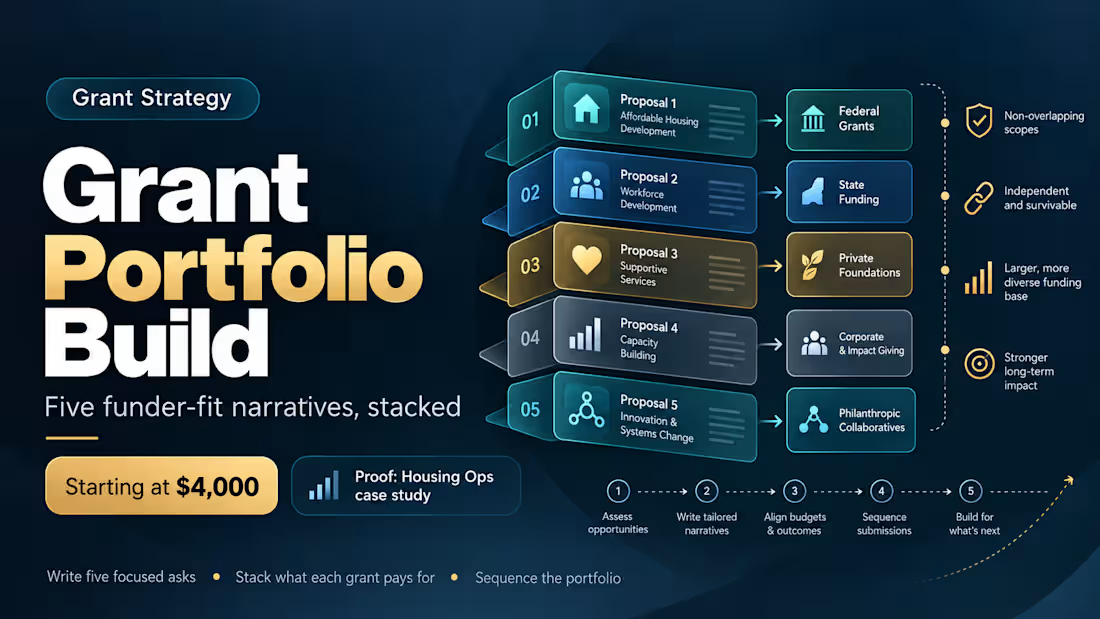
Five focused proposals, each asking one funder for the thing that funder exists to fund, will outperform one proposal asking everyone for everything.
Two of five landing funds the core. One of one failing funds nothing.
This is the full build. Your operational reality is decomposed into separately fundable components, each mapped to the stream it already qualifies for, and each written in that funder's frame — same facts, different emphasis. A cybersecurity funder and a housing funder need different sentences about the same year.
Then it's stacked: what each grant pays for, so nothing overlaps and no proposal is stretched. And sequenced: what goes first, ordered by approval speed and case strength, so early wins build credibility for the prestige asks rather than the other way round.
Why stacking works
No proposal is stretched — each asks a funder for something squarely inside its mandate
Failure is survivable — a rejection costs you one stream, not the plan
The narratives reinforce each other — an awarded infrastructure grant is evidence of seriousness in the programme application
Effort compounds instead of repeating — the operational intake is done once and feeds all five
This is how large nonprofits fund expansion. Smaller organizations usually don't, because nobody has shown them the shape.
Nothing is invented. Every eligibility claim points to something that already occurred. Grant narratives that inflate get funded once and audited later.
Budget numbers stay with your finance lead — the portfolio arrives ready for them to be added.
Flat fee. Never a percentage of your award — contingency pricing is prohibited by the Grant Professionals Association and can put your funding at risk.
FAQs
Example work
Starting at$4,000
Duration3 weeks
Tags
Grant Writing
Program Design
Operations Lead
Nonprofit
Fundraising Strategy
Service provided by
Brandin Gudmundson Surrey, Canada
- 3
- Followers
Grant Portfolio Build — five funder-fit narratives, stackedBrandin Gudmundson
Starting at$4,000
Duration3 weeks
Tags
Grant Writing
Program Design
Operations Lead
Nonprofit
Fundraising Strategy
Five focused proposals, each asking one funder for the thing that funder exists to fund, will outperform one proposal asking everyone for everything.
Two of five landing funds the core. One of one failing funds nothing.
This is the full build. Your operational reality is decomposed into separately fundable components, each mapped to the stream it already qualifies for, and each written in that funder's frame — same facts, different emphasis. A cybersecurity funder and a housing funder need different sentences about the same year.
Then it's stacked: what each grant pays for, so nothing overlaps and no proposal is stretched. And sequenced: what goes first, ordered by approval speed and case strength, so early wins build credibility for the prestige asks rather than the other way round.
Why stacking works
No proposal is stretched — each asks a funder for something squarely inside its mandate
Failure is survivable — a rejection costs you one stream, not the plan
The narratives reinforce each other — an awarded infrastructure grant is evidence of seriousness in the programme application
Effort compounds instead of repeating — the operational intake is done once and feeds all five
This is how large nonprofits fund expansion. Smaller organizations usually don't, because nobody has shown them the shape.
Nothing is invented. Every eligibility claim points to something that already occurred. Grant narratives that inflate get funded once and audited later.
Budget numbers stay with your finance lead — the portfolio arrives ready for them to be added.
Flat fee. Never a percentage of your award — contingency pricing is prohibited by the Grant Professionals Association and can put your funding at risk.
FAQs
Example work
$4,000