
MVP website: designed, built and launched in 4 weeksBoluwatife Taiwo
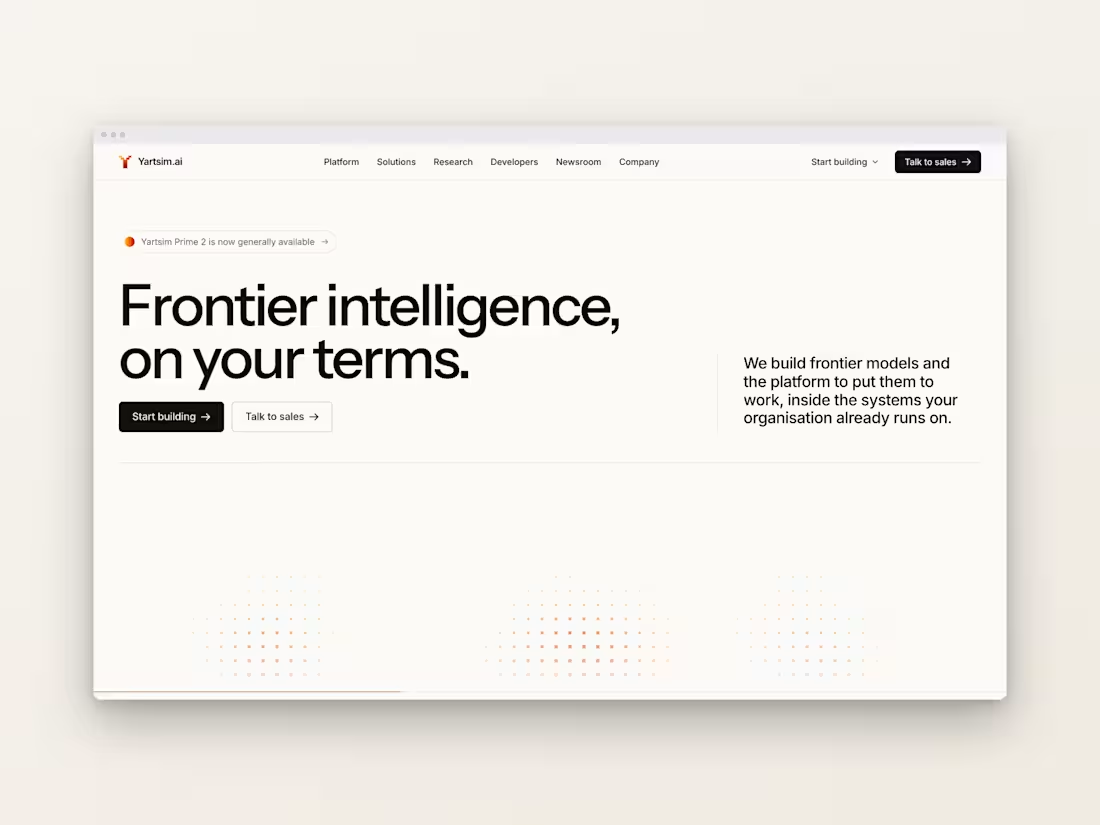
From idea to a product people can sign up for in four weeks
You have an idea and you need something real: a working product a user can sign up for, log into, and pay for. Not a prototype, not a Figma file. Something live that can get you your first users, your first revenue, or your next conversation with an investor.
What "MVP" means here
It means the smallest version that proves your idea works. My job is partly to talk you out of things every feature you cut is a week you get back and a week sooner you find out whether people want it.
A typical build:
A marketing page that explains the product and converts visitors into signups
Email and Google sign-in
The core screen where your product actually does its thing
Subscription payments via Stripe
A basic admin view so you can see what's happening
How it works
Week 1: Scoping call, then a written feature list with anything out of scope named explicitly. Design direction on the core screens.
Week 2: Design finished. Database and auth built.
Week 3: Core product built. You get a staging link and can use it yourself.
Week 4: Payments, polish, testing, launch.
Built to be handed over
Clean, typed, commented code in your repo, on a stack any developer can pick up: Next.js, TypeScript, Supabase, Stripe, Vercel. When you hire your first engineer, they inherit something sane not something they want to throw away.
Payment: 50% to start, 50% on launch.
What's included
Scoping document: A written feature list agreed before I build anything, including what's explicitly out of scope. This is what keeps the four weeks real.
Product and marketing design: Core screens plus the landing page, designed in Figma and approved before code.
Authentication: Email and Google sign-in, password reset, session handling.
Database and backend: Supabase, with sensible schema and row-level security so users only see their own data.
Core product build: The main screens where your product does its thing, in Next.js and TypeScript.
Stripe payments: Subscription checkout, billing portal, webhook handling for upgrades and cancellations.
Deployment and environments: Staging and production on Vercel, with your domain and environment variables configured.
Analytics: Product analytics installed so you can see signups, activation and drop-off from day one.
Handover: A 45-minute recorded walkthrough of the codebase and how to run, deploy and change it.
What's not included
Named up front so the price and timeline mean something:
Native mobile apps. The build is responsive web, which works on phones. An App Store app is a separate project.
Features outside the agreed scope doc. New ideas mid-build are quoted separately and scheduled after launch. This isn't rigidity it's the only way a 4-week timeline holds.
Complex integrations with your existing internal systems, unless discussed and quoted at scoping.
AI/ML features beyond a straightforward API call to an existing provider.
Copywriting, logo, or brand identity.
Ongoing maintenance and new features after launch. see the retainer below.
SOC 2, HIPAA or similar compliance work.
FAQs
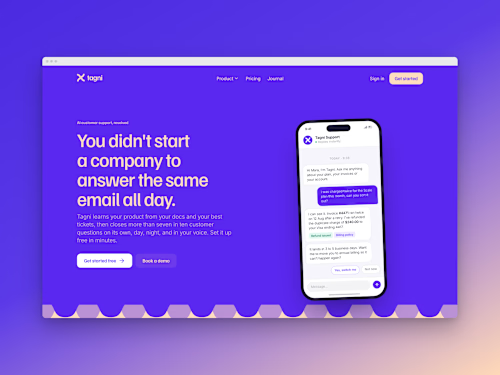
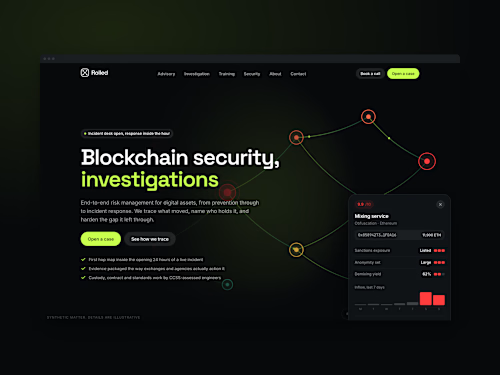
Example work
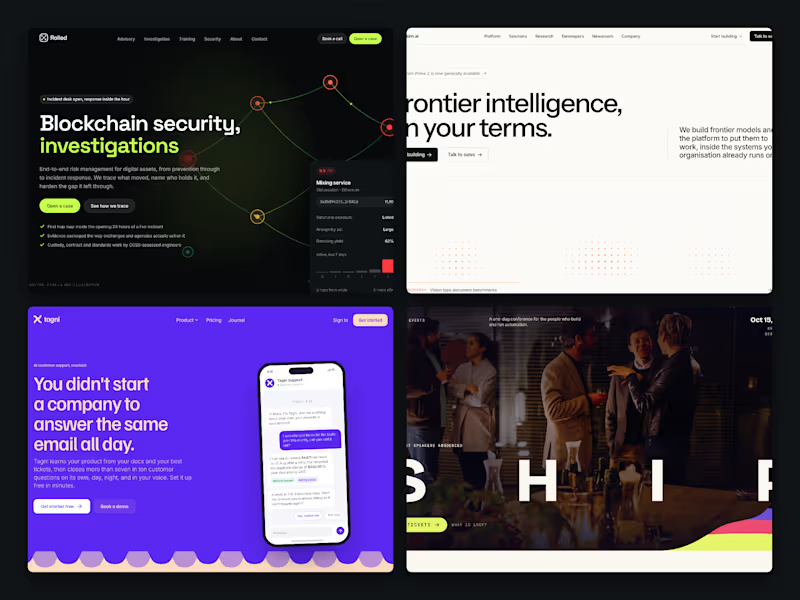
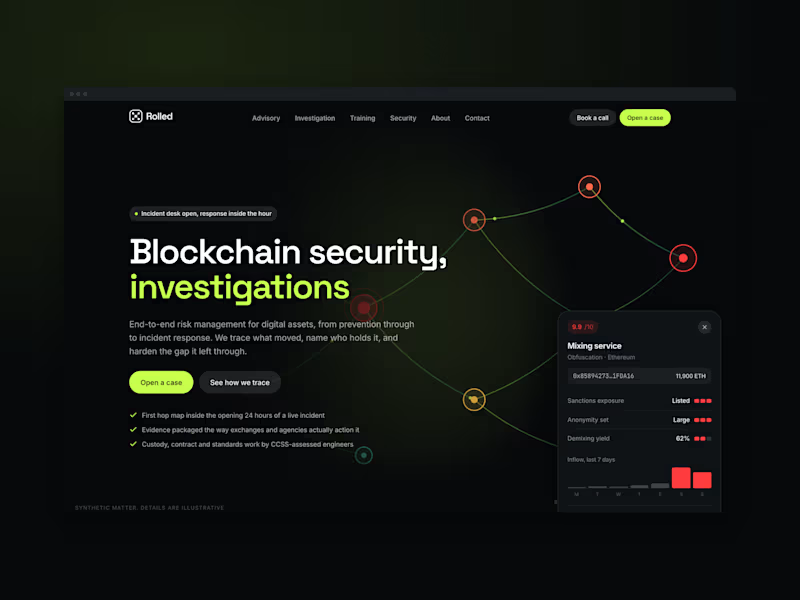
Starting at$7,500
Duration4 weeks
Tags
Figma

Next.js

React

Supabase

Tailwind CSS

TypeScript

Frontend Engineer
Responsive Design
Web Designer
Service provided by
Boluwatife Taiwo Lagos, Nigeria
- 8
- Followers
MVP website: designed, built and launched in 4 weeksBoluwatife Taiwo
Starting at$7,500
Duration4 weeks
Tags
Figma
Next.js
React
Supabase
Tailwind CSS
TypeScript
Frontend Engineer
Responsive Design
Web Designer
From idea to a product people can sign up for in four weeks
You have an idea and you need something real: a working product a user can sign up for, log into, and pay for. Not a prototype, not a Figma file. Something live that can get you your first users, your first revenue, or your next conversation with an investor.
What "MVP" means here
It means the smallest version that proves your idea works. My job is partly to talk you out of things every feature you cut is a week you get back and a week sooner you find out whether people want it.
A typical build:
A marketing page that explains the product and converts visitors into signups
Email and Google sign-in
The core screen where your product actually does its thing
Subscription payments via Stripe
A basic admin view so you can see what's happening
How it works
Week 1: Scoping call, then a written feature list with anything out of scope named explicitly. Design direction on the core screens.
Week 2: Design finished. Database and auth built.
Week 3: Core product built. You get a staging link and can use it yourself.
Week 4: Payments, polish, testing, launch.
Built to be handed over
Clean, typed, commented code in your repo, on a stack any developer can pick up: Next.js, TypeScript, Supabase, Stripe, Vercel. When you hire your first engineer, they inherit something sane not something they want to throw away.
Payment: 50% to start, 50% on launch.
What's included
Scoping document: A written feature list agreed before I build anything, including what's explicitly out of scope. This is what keeps the four weeks real.
Product and marketing design: Core screens plus the landing page, designed in Figma and approved before code.
Authentication: Email and Google sign-in, password reset, session handling.
Database and backend: Supabase, with sensible schema and row-level security so users only see their own data.
Core product build: The main screens where your product does its thing, in Next.js and TypeScript.
Stripe payments: Subscription checkout, billing portal, webhook handling for upgrades and cancellations.
Deployment and environments: Staging and production on Vercel, with your domain and environment variables configured.
Analytics: Product analytics installed so you can see signups, activation and drop-off from day one.
Handover: A 45-minute recorded walkthrough of the codebase and how to run, deploy and change it.
What's not included
Named up front so the price and timeline mean something:
Native mobile apps. The build is responsive web, which works on phones. An App Store app is a separate project.
Features outside the agreed scope doc. New ideas mid-build are quoted separately and scheduled after launch. This isn't rigidity it's the only way a 4-week timeline holds.
Complex integrations with your existing internal systems, unless discussed and quoted at scoping.
AI/ML features beyond a straightforward API call to an existing provider.
Copywriting, logo, or brand identity.
Ongoing maintenance and new features after launch. see the retainer below.
SOC 2, HIPAA or similar compliance work.
FAQs
Example work
$7,500