
Next.js Technical SEO: Rendering, Routes and Indexing FixesNiko Minadze

Overview
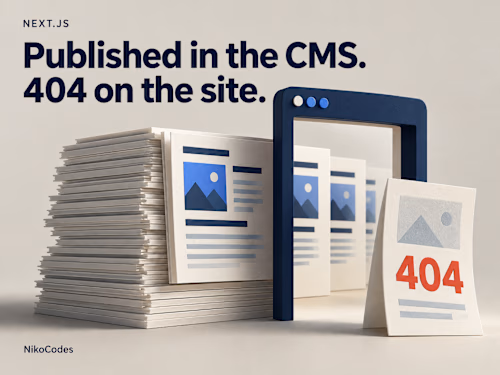
Your Next.js site looks complete in a browser, but important pages return errors, disappear after a rebuild, or expose inconsistent content and metadata to search engines. The problem may sit between the CMS, route generation, server response and deployment.
I investigate that path and implement the agreed corrections in your existing application. The work can cover missing generated routes, incorrect status codes, canonical and metadata output, discovery links, or content that is absent from the initial response and appears only after browser execution.
I compare what the server returns with what the browser displays, then trace the discrepancy into the application. An indexing symptom is the starting point for investigation; I do not assume every excluded page has a rendering problem.
Starting scope and timing
A typical first engagement covers one Next.js application, one related failure pattern and up to three representative page types. We agree the affected route sample, changes and acceptance checks before I quote. A template-level correction can improve many routes, but the verification coverage is stated explicitly.
Allow 5–10 business days once repository access, setup instructions, CMS access where needed and a usable preview environment are available. Wider content cleanup, framework upgrades or a replacement architecture need separate scope.
What you receive
A concise diagnosis connecting observed responses and affected URLs to the application behavior.
Implemented corrections in the agreed repository, with reviewable changes and checks for the relevant success and failure paths.
A verification record covering the agreed routes: response status, visible content, relevant metadata and links, plus any remaining exceptions.
Release and rollback notes, followed by checks of the approved deployment when production release is included.
Relevant experience
On a headless Next.js/WordPress site, I traced published-page failures to incomplete build-time pagination. I worked through the correction with its developer and independently checked the deployed routes. I also investigated missing-page interfaces that returned HTTP 200 and verified the corrected responses. My role in that case was diagnosis, coordination and release verification.
How the work runs
Reproduce: Compare affected and working URLs, server responses, browser output and available Search Console evidence.
Trace: Follow the relevant route generation, data fetching, metadata or deployment behavior into the code.
Correct: Implement the agreed changes and verify them in the preview environment.
Release: Review the changes with you, check the approved deployment and deliver the handoff.
What I need from you
The site URL, examples of the problem, repository and environment instructions, the hosting setup, relevant CMS access, and Search Console access or exports if available. I also need a named reviewer and confirmation of who can approve deployment.
FAQs
Example work




Contact for pricing
Duration1 week
Tags
Google Search Console

JavaScript

Next.js

React

TypeScript

WordPress

SEO Audit
Technical SEO
Web Developer
Service provided by
Niko Minadze proBangkok, Thailand
- 6
- Followers
Next.js Technical SEO: Rendering, Routes and Indexing FixesNiko Minadze
Contact for pricing
Duration1 week
Tags
Google Search Console
JavaScript
Next.js
React
TypeScript
WordPress
SEO Audit
Technical SEO
Web Developer
Overview
Your Next.js site looks complete in a browser, but important pages return errors, disappear after a rebuild, or expose inconsistent content and metadata to search engines. The problem may sit between the CMS, route generation, server response and deployment.
I investigate that path and implement the agreed corrections in your existing application. The work can cover missing generated routes, incorrect status codes, canonical and metadata output, discovery links, or content that is absent from the initial response and appears only after browser execution.
I compare what the server returns with what the browser displays, then trace the discrepancy into the application. An indexing symptom is the starting point for investigation; I do not assume every excluded page has a rendering problem.
Starting scope and timing
A typical first engagement covers one Next.js application, one related failure pattern and up to three representative page types. We agree the affected route sample, changes and acceptance checks before I quote. A template-level correction can improve many routes, but the verification coverage is stated explicitly.
Allow 5–10 business days once repository access, setup instructions, CMS access where needed and a usable preview environment are available. Wider content cleanup, framework upgrades or a replacement architecture need separate scope.
What you receive
A concise diagnosis connecting observed responses and affected URLs to the application behavior.
Implemented corrections in the agreed repository, with reviewable changes and checks for the relevant success and failure paths.
A verification record covering the agreed routes: response status, visible content, relevant metadata and links, plus any remaining exceptions.
Release and rollback notes, followed by checks of the approved deployment when production release is included.
Relevant experience
On a headless Next.js/WordPress site, I traced published-page failures to incomplete build-time pagination. I worked through the correction with its developer and independently checked the deployed routes. I also investigated missing-page interfaces that returned HTTP 200 and verified the corrected responses. My role in that case was diagnosis, coordination and release verification.
How the work runs
Reproduce: Compare affected and working URLs, server responses, browser output and available Search Console evidence.
Trace: Follow the relevant route generation, data fetching, metadata or deployment behavior into the code.
Correct: Implement the agreed changes and verify them in the preview environment.
Release: Review the changes with you, check the approved deployment and deliver the handoff.
What I need from you
The site URL, examples of the problem, repository and environment instructions, the hosting setup, relevant CMS access, and Search Console access or exports if available. I also need a named reviewer and confirmation of who can approve deployment.
FAQs
Example work
Contact for pricing