

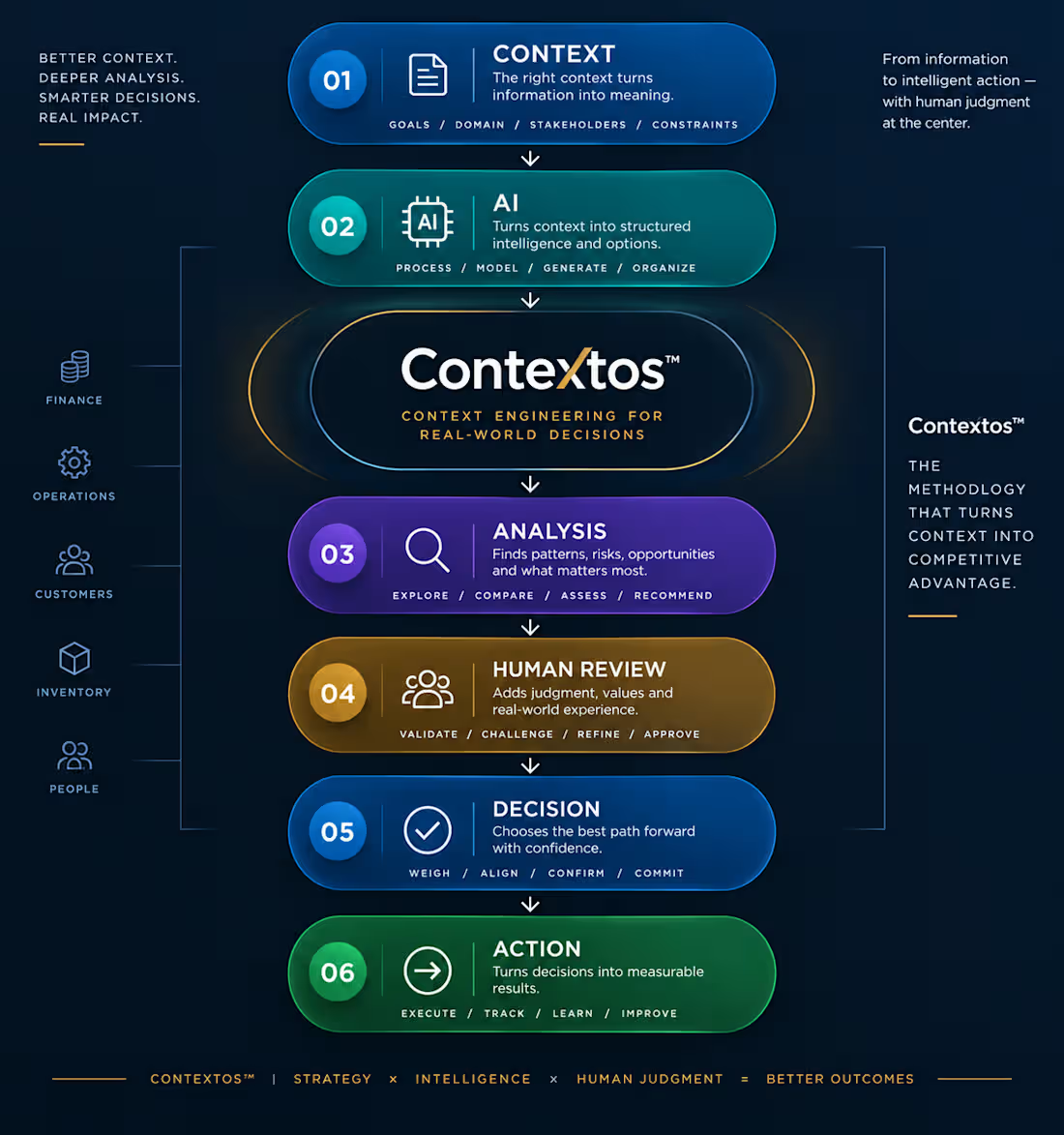
Context Is the New Interface Between Humans and AI.
Contextos™ is a Context Engineering framework developed around a simple observation:
Better AI outcomes do not come only from better prompts.
They come from providing AI with better context.
The Problem
Traditional prompting often focuses on:
“What should I ask AI?”
Context Engineering asks a deeper question:
“What does AI need to understand before it can produce a useful result?”
That includes:
objective
role
background
data
constraints
audience
workflow
desired outcome
evaluation criteria
human responsibilities
The Contextos Architecture
A Contextos workflow can be structured around:
Objective → Context → Data → Constraints → Instructions → AI Processing → Human Review → Output → Action
This transforms AI interaction from isolated prompting into a repeatable operating process.
Why It Matters
The same AI model can produce dramatically different results depending on the quality of the context surrounding the task.
Context Engineering therefore becomes an important layer between:
Human Knowledge
and
Artificial Intelligence.
Applications
Contextos™ can support:
business analysis
research
financial intelligence
management reporting
content systems
customer operations
AI workflows
SOP creation
decision support
AI Operating Systems
The PRAXIS Philosophy
Prompts initiate conversations.
Contextos structure intelligence.
AI accelerates processing.
Humans provide judgment and accountability.
This project represents the methodological foundation behind the wider PRAXIS AI Operating Systems ecosystem.
1
27
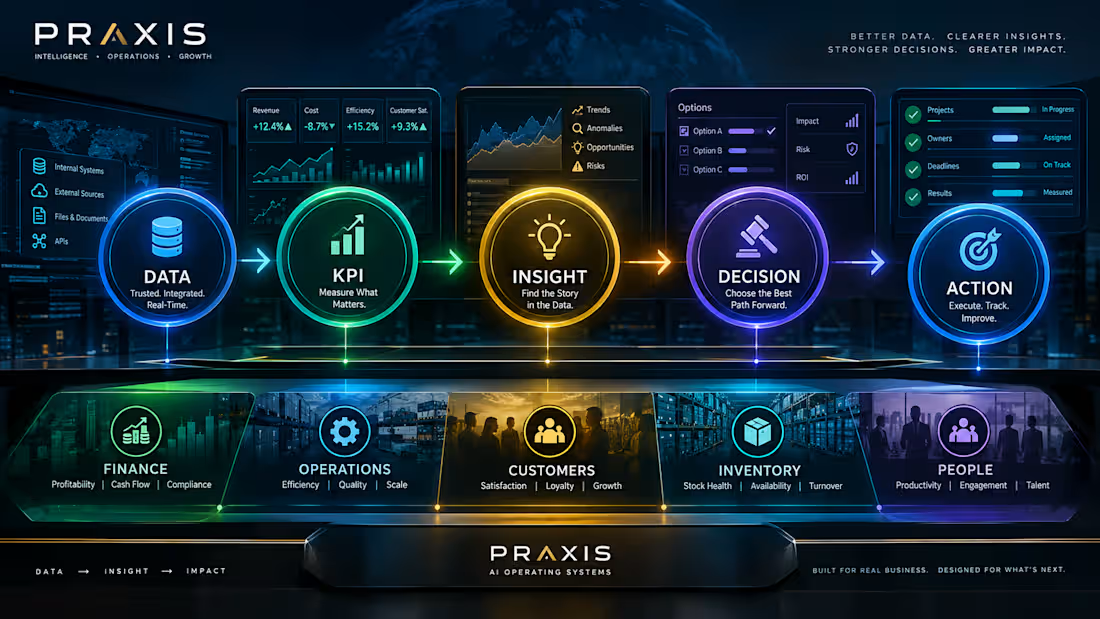
From Business Information to Management Intelligence
Managers don't need more information.
They need better information at the right time, in the right context, presented in a form that supports decisions.
The PRAXIS Management Intelligence AI OS™ is designed around that principle.
The Challenge
Business information is frequently scattered across:
spreadsheets
accounting systems
inventory records
operational reports
customer information
documents
meetings
emails
This fragmentation makes it difficult for management to see the complete picture.
The PRAXIS Architecture
The system connects:
Business Data → Context → AI Analysis → Human Review → Management Intelligence → Decision → Action
Potential Intelligence Areas
The framework can support:
KPI monitoring
operational reporting
financial analysis
inventory intelligence
customer intelligence
process analysis
management reporting
decision preparation
action tracking
Why Human Supervision Matters
PRAXIS does not position AI as the manager.
AI assists with:
organizing information
identifying patterns
summarizing complexity
generating analytical perspectives
preparing decision-support material
Human leaders retain responsibility for judgment and action.
Business Outcome
The goal is to help management move from:
“What is happening?”
to:
“Why is it happening?”
and ultimately:
“What should we do about it?”
This project demonstrates how my background in business operations, accounting, inventory, reporting and AI can be combined into a practical management intelligence architecture.
1
22
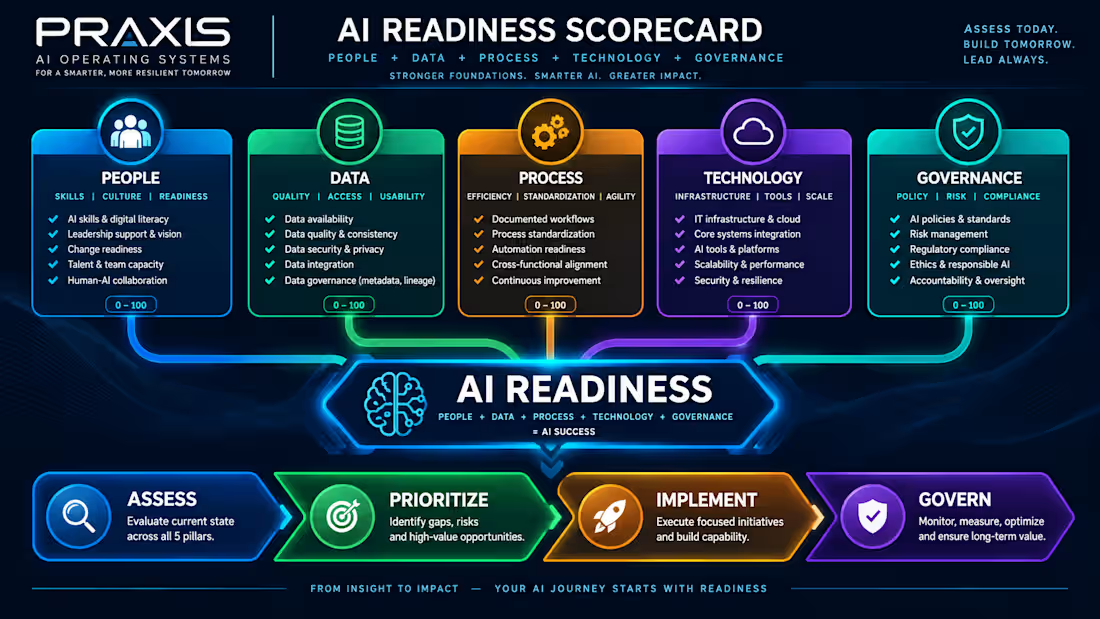
Before Organizations Implement AI, They Need to Know Whether They Are Ready.
The PRAXIS AI Readiness Audit™ is a strategic framework designed to help organizations understand their current AI readiness before investing heavily in AI tools, automation or transformation programs.
The Problem
Organizations often begin AI adoption by asking:
“Which AI tool should we buy?”
A better question is:
“Are we ready to use AI effectively, safely and sustainably?”
The PRAXIS Assessment
The framework examines multiple dimensions of organizational readiness:
Business strategy
Data readiness
Process maturity
Technology readiness
Workforce capability
AI use cases
Governance
Risk
Human oversight
Implementation capacity
The Method
The assessment moves through:
Discover → Assess → Score → Prioritize → Recommend → Implement → Review
The result is a practical picture of where an organization is today and where it should go next.
Deliverables
A PRAXIS AI Readiness engagement can produce:
AI readiness assessment
Opportunity map
AI use-case inventory
Risk assessment
Governance recommendations
Priority matrix
Implementation roadmap
30/60/90-day action plan
Human-Supervised AI
A core principle of the framework is:
AI → Analysis → Human Review → Human Decision → Action → Human Accountability
AI can accelerate intelligence.
Humans remain responsible for consequential decisions.
Business Value
The objective is to prevent organizations from adopting AI simply because it is fashionable.
PRAXIS helps organizations identify where AI can create measurable value, where risks exist, and what should happen next.
1
27
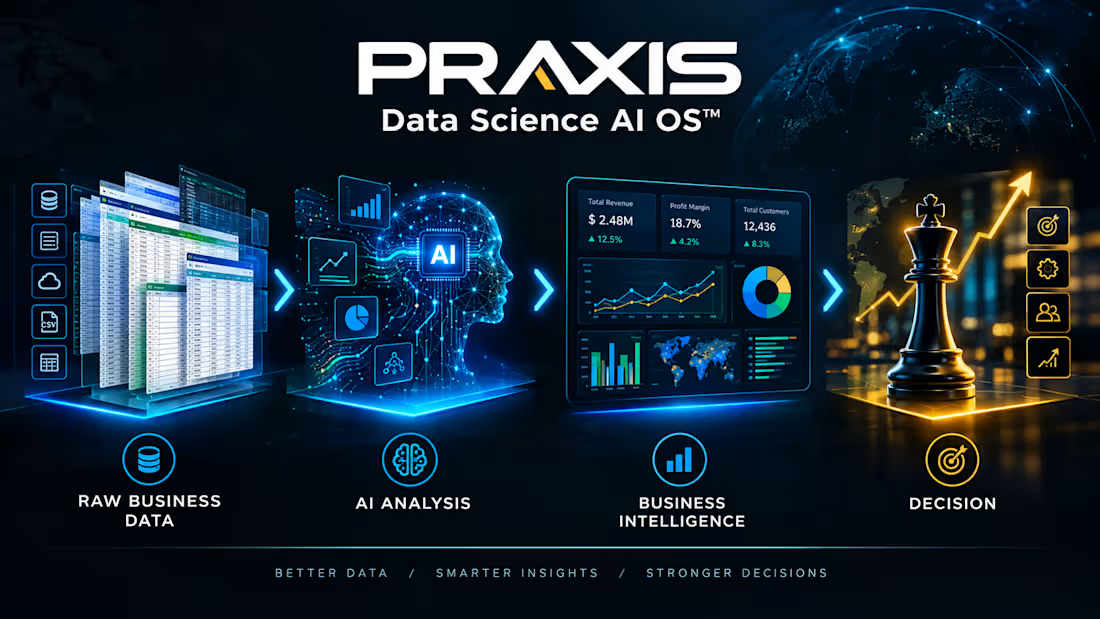
Turning Business Data Into Decision Intelligence
Most organizations have data. The challenge is turning that data into information management can actually use.
I developed the PRAXIS Data Science AI Operating System™ as a structured framework for transforming business data into actionable intelligence through AI-assisted analysis and human review.
The Challenge
Businesses often have valuable information trapped inside spreadsheets, accounting systems, inventory records and operational reports.
The problem isn't simply collecting more data.
The problem is discovering:
What is happening?
Why is it happening?
What patterns are emerging?
Where are the anomalies?
What should management do next?
The PRAXIS Approach
The system follows a structured intelligence pipeline:
Data → Data Audit → Context → AI-Assisted Analysis → Human Validation → Business Intelligence → Management Decision
I developed synthetic demonstration datasets covering Retail, Mining and Banking environments to demonstrate how the framework can operate without exposing confidential client information.
What the System Produces
Data-quality assessment
KPI analysis
Trend identification
Anomaly detection
Operational insights
Financial insights
Management reports
Decision-support recommendations
Business Value
The objective is not simply to produce charts or AI-generated commentary.
The objective is to help organizations move from:
Data → Information → Intelligence → Decision → Action
This project demonstrates my approach to combining business knowledge, data analysis, AI and human judgment into practical intelligence systems.
0
26