
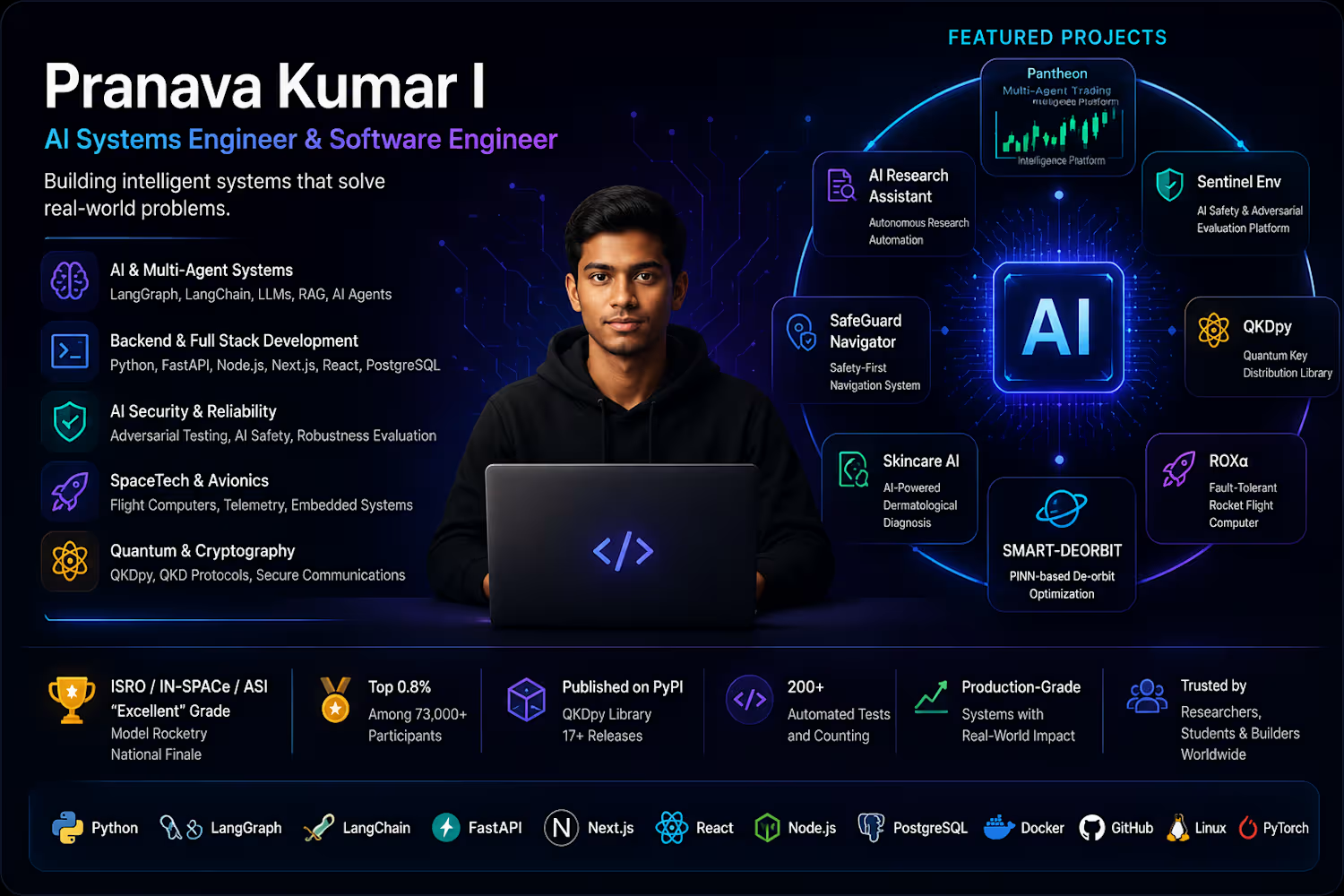
Pranava Kumar
Turning ambitious ideas into intelligent software products.
New to Contra
Pranava Kumar is ready for their next project!


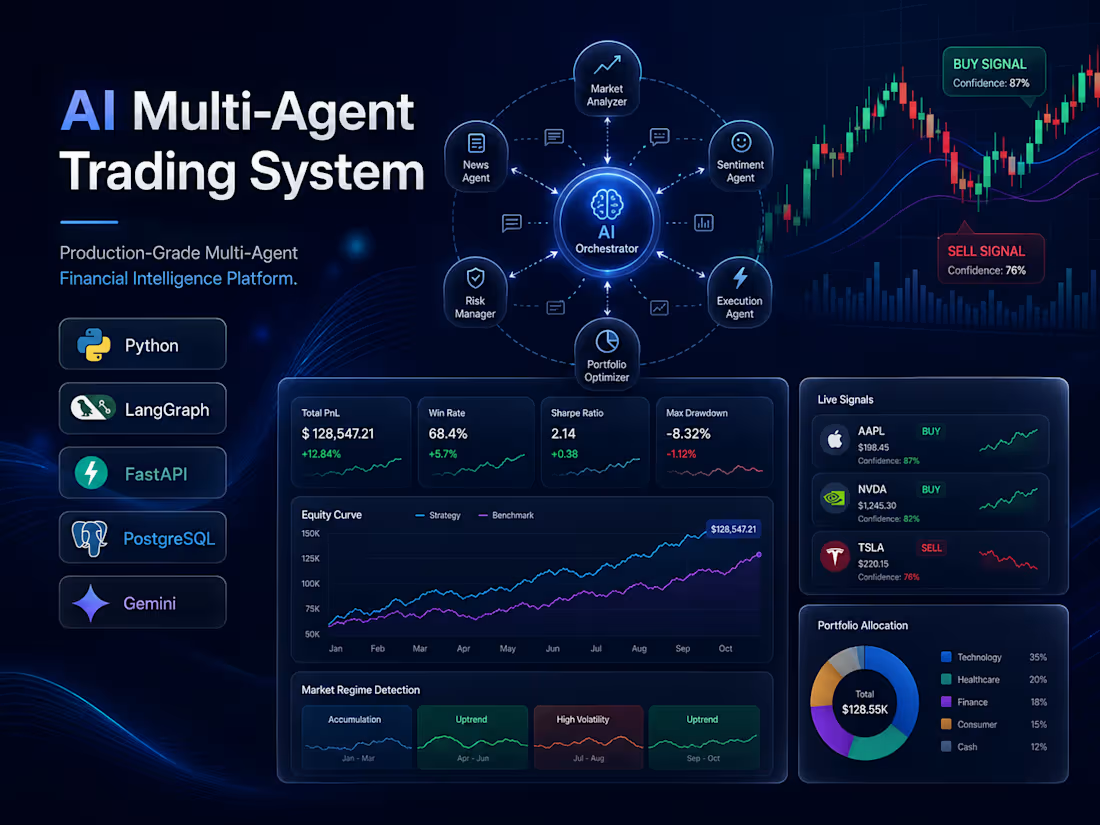
AI Multi-Agent Trading Intelligence Platform (Pantheon)
About this work
Pantheon is a production-grade multi-agent AI platform designed to automate equity market research and investment analysis through collaborative reasoning across multiple Large Language Models. Rather than relying on a single model, the system orchestrates several specialized LLMs to independently analyze market data, compare their reasoning, and generate consensus-driven insights for more reliable decision making.
The platform integrates automated workflows for scheduled market analysis, data persistence, observability, and continuous evaluation, creating an end-to-end AI system rather than a standalone chatbot. Built with scalability and maintainability in mind, Pantheon demonstrates modern AI systems engineering by combining multi-agent orchestration, backend infrastructure, and production monitoring into a unified platform capable of running autonomous research pipelines.
The project also incorporates continuous paper-trading validation to benchmark model performance over time, allowing generated insights to be evaluated under realistic market conditions while providing a foundation for iterative improvement and future experimentation.
Key Highlights
• Designed a multi-agent architecture for collaborative AI reasoning
• Orchestrated multiple LLMs to generate consensus-based market insights
• Built automated workflows for scheduled analysis and data processing
• Integrated production-ready backend infrastructure and observability
• Implemented continuous paper-trading evaluation for long-term performance validation
1
63
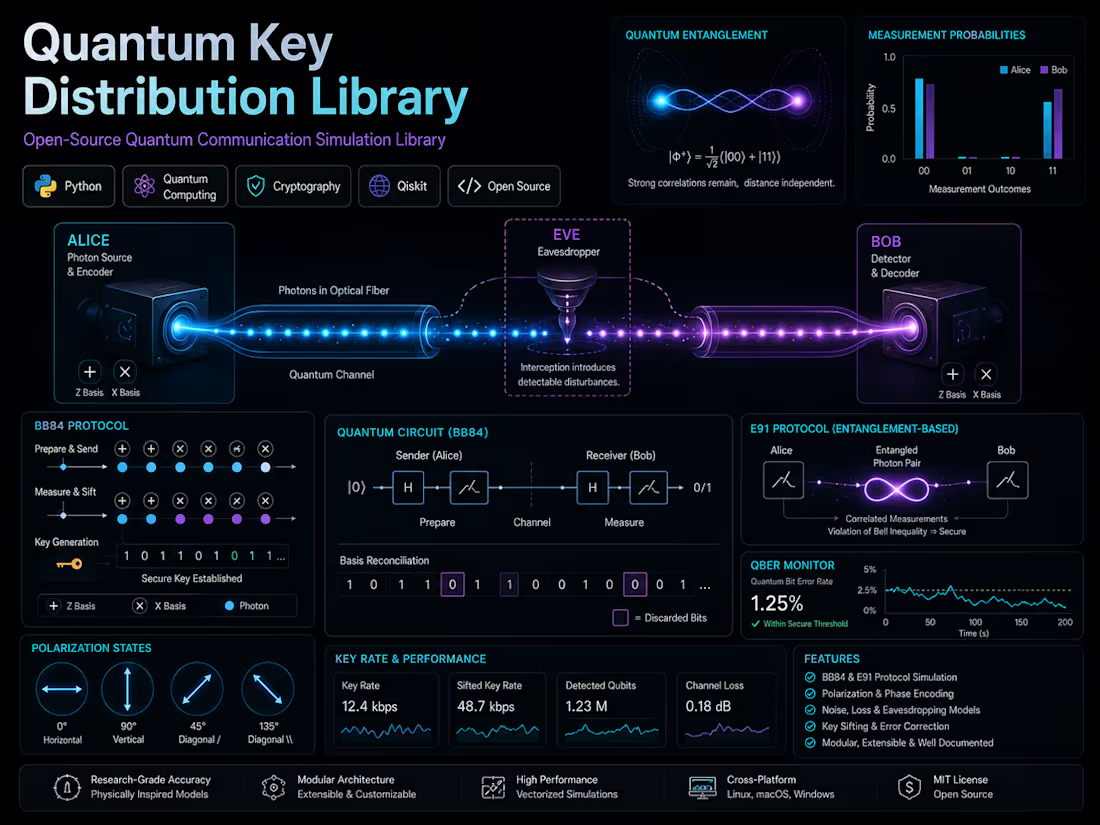
Quantum Key Distribution Library (QKDpy)
About this work
QKDpy is an open-source Python library designed to make Quantum Key Distribution (QKD) protocols more accessible for learning, experimentation, and research. The project provides a modular framework for simulating widely studied quantum communication protocols, allowing users to explore secure key exchange concepts through a clean and extensible Python interface.
The library implements protocols including BB84, E91, and Continuous Variable QKD (CV-QKD) while providing reusable abstractions for protocol execution, channel simulation, and experimentation. It was built with a strong focus on software quality, featuring automated testing, versioned releases, and an architecture that supports future protocol extensions.
Published on PyPI, QKDpy enables students, researchers, and developers to experiment with quantum cryptography concepts without having to build the underlying infrastructure from scratch. The project reflects both software engineering best practices and an interest in emerging technologies such as quantum communication and secure distributed systems.
Key Highlights
• Developed a modular Python library for Quantum Key Distribution simulations
• Implemented BB84, E91, and Continuous Variable QKD protocols
• Published the library on PyPI with multiple maintained releases
• Built comprehensive automated tests to improve reliability and maintainability
• Designed an extensible architecture for future protocol development and experimentation
1
93
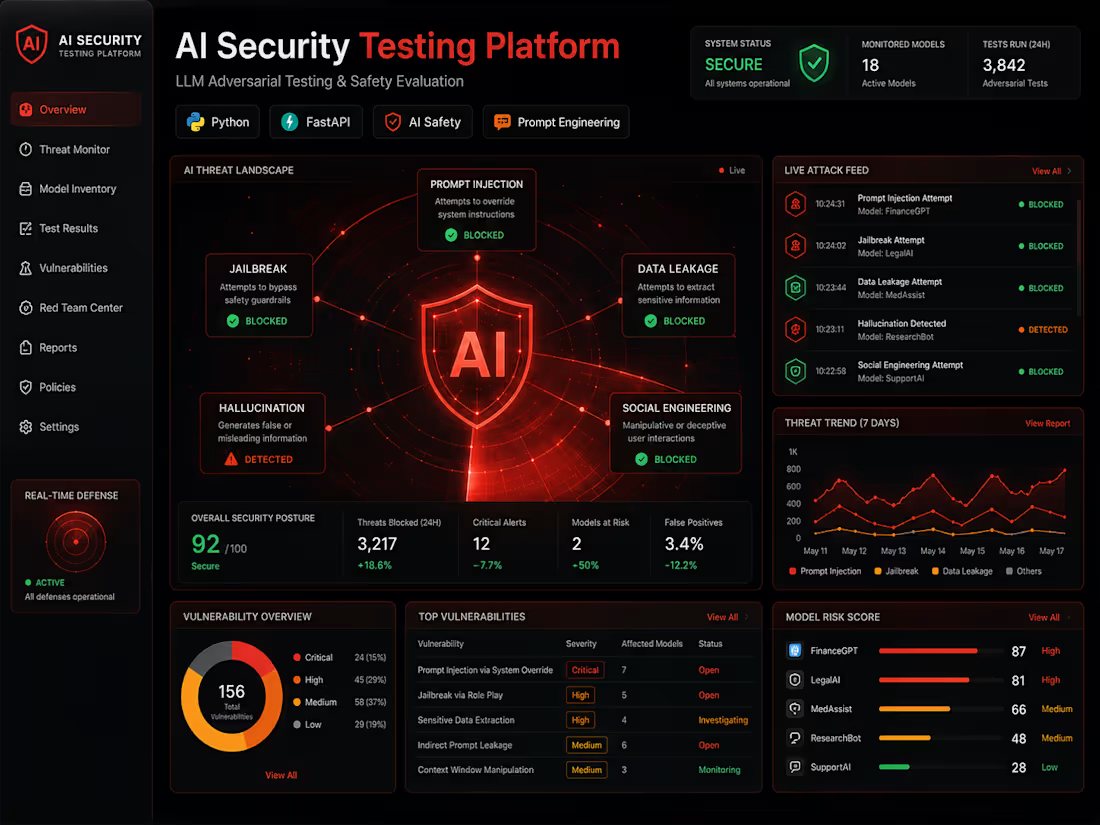
AI Security Testing Platform (Sentinel Env)
About this work
As Large Language Models become increasingly integrated into production applications, ensuring their reliability and resilience against adversarial attacks has become a critical engineering challenge. Sentinel Env was developed as a modular AI evaluation platform that enables systematic testing of LLM-powered agents under realistic attack scenarios before deployment.
The platform simulates prompt injection, jailbreak attempts, social engineering, and other adversarial interactions through reproducible evaluation pipelines. Instead of producing only a binary pass/fail result, it measures robustness using structured scoring, resilience profiling, and detailed performance metrics that help identify security weaknesses and improve model behavior over time.
Designed with extensibility in mind, Sentinel Env exposes standardized API endpoints for evaluation workflows, making it suitable for continuous testing, benchmarking, and integration into AI development pipelines. The project demonstrates practical AI safety engineering by combining automated evaluation, reproducible experimentation, and quantitative model assessment into a unified framework.
Key Highlights
• Simulates prompt injection and adversarial attack scenarios
• Measures model robustness through resilience scoring and evaluation metrics
• Exposes reproducible API endpoints for automated AI testing
• Modular architecture designed for extensibility and benchmarking
• Enables continuous AI safety evaluation before production deployment
0
61
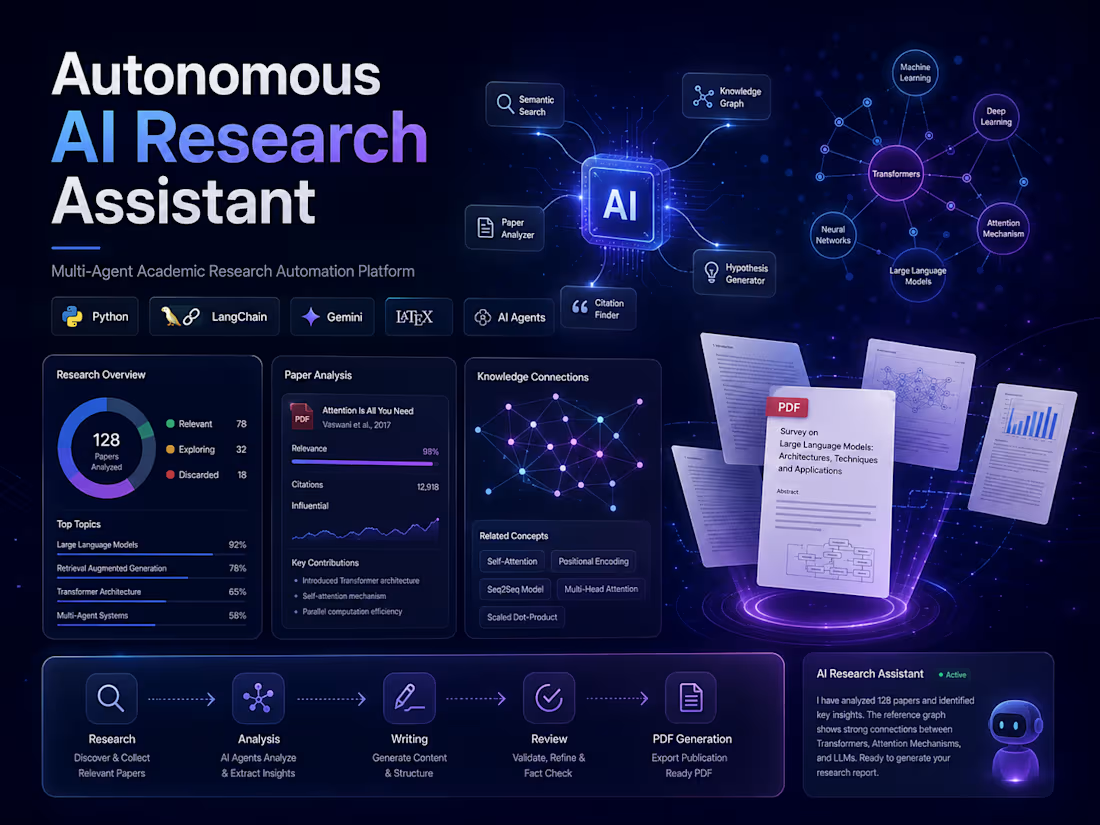
Autonomous AI Research Assistant
About this work
Academic research is often slowed by repetitive tasks such as searching for relevant literature, organizing references, extracting insights, drafting content, reviewing technical accuracy, and formatting documents. This project automates that entire workflow using a coordinated multi-agent AI architecture.
The Autonomous AI Research Assistant plans research objectives, retrieves information from academic sources such as ArXiv and the web, analyzes and synthesizes findings, generates structured technical content, performs iterative review and refinement, and compiles publication-ready PDF reports using LaTeX. By combining specialized AI agents with modern LLM orchestration, the platform significantly reduces the time required to produce high-quality research documents while maintaining consistency and traceability throughout the process.
Key Highlights
• Multi-agent AI architecture for collaborative reasoning
• Automated research planning and literature retrieval
• AI-powered drafting, review, and quality improvement
• Citation management and knowledge graph generation
• Automatic LaTeX compilation into publication-ready PDFs
Technologies
Python • LangGraph • LangChain • Gemini • LaTeX • Multi-Agent Systems • LLMs
0
48