
Prajin Sudhakar
Creative product designer using 3D printing and software
- 2
- Followers



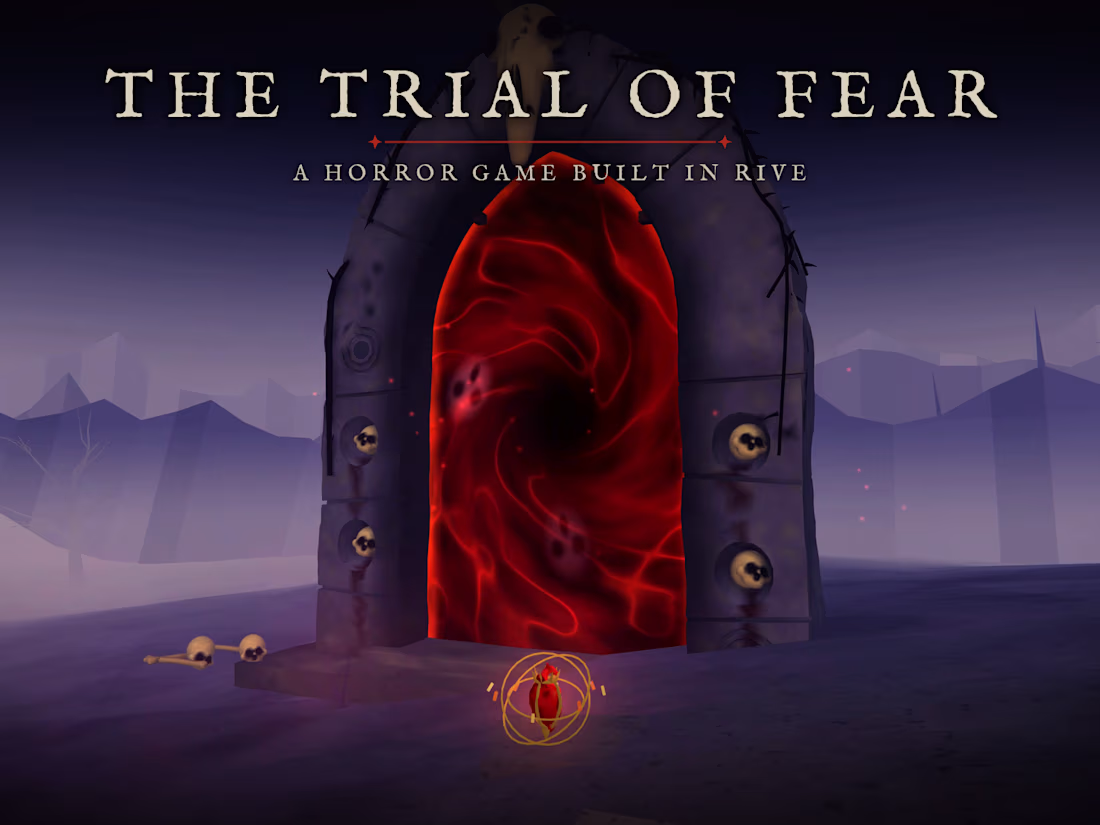
The Trial of Fear is a short first-person horror game I made in Rive for the Halloween challenge.
I wanted to build a game that creates and builds genuine fear within the player, adding twists and turns throughout the game to make it feel exciting but horrifying.
How I built it:
I came up with the ideas and used Claude Code with the Rive CLI to build it. The scene is written in RML and the game runs on Luau scripts. All the 3D stuff (the fog, candlelight, moonlight, the portal and the creatures) is custom WGSL shaders on the GPU Canvas. Data binding and state machines handle the fear and oil meters, the captions and the title. After that I went into the Rive Editor and did some parts by hand. I changed how the lantern glow flickers, made the line under the title draw itself, and added the stars under it.
I'm going to keep working on it after the challenge, with more polish, fixes and hopefully more trials, so there are updates coming.
The narrator voice is from ElevenLabs and many of the character models were made using Blender and Fusion 360 as well as from Tripo and TRELLIS.
0
148
Collet: Revision Control for Hardware Development
0
1
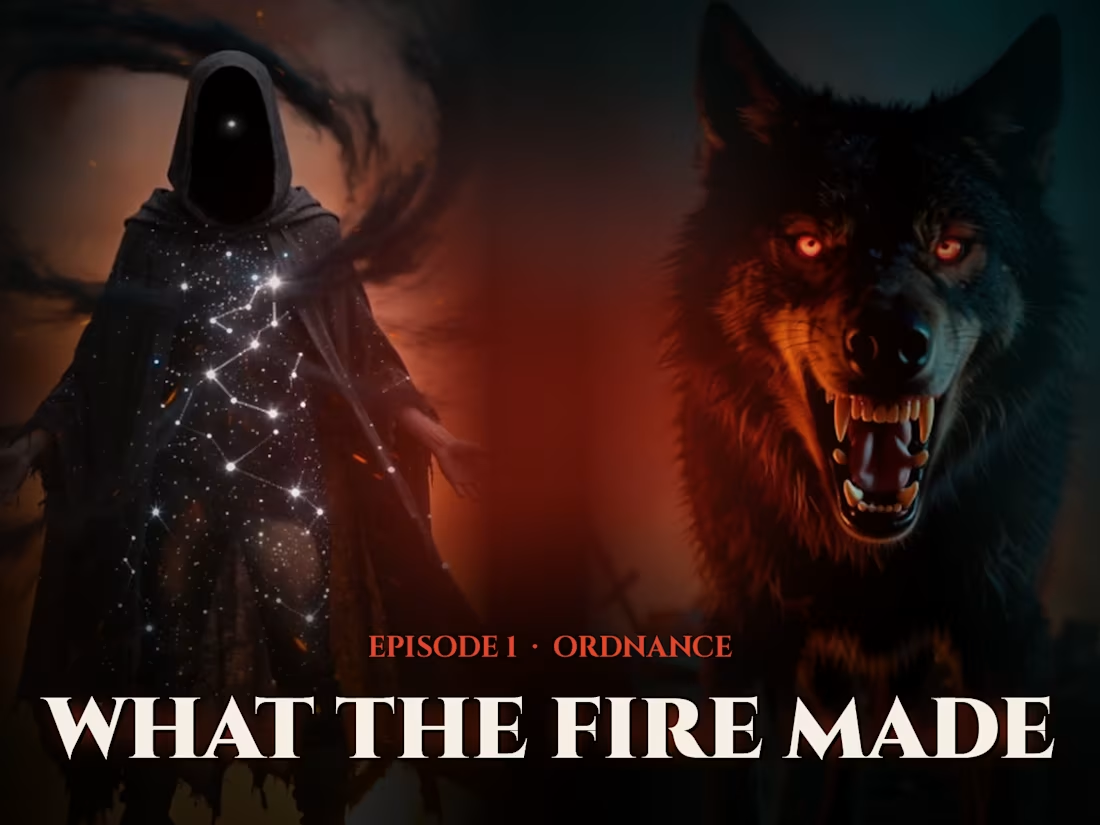
What the Fire Made
Pilot: Ordnance
Main Character: Vael
Supporting Characters: Lupus, The Bunker Commander
Vael is a faceless cosmic phantom who keeps peace across the galaxy by absorbing every weapon fired at him and reshaping it into creatures of light. On a war-torn Earth, he survives a nuclear strike, but the blast gives birth to Lupus, a colossal wolf of living darkness that defies him.
Both want peace. Vael's peace is control. Lupus's peace is putting out every light on Earth.
Why I built it: I wanted a hero whose greatest power creates his greatest enemy. Weakened for the first time, Vael must stop the monster he made, while humanity's attempts to fight it only make it stronger. The pilot ends on the first time Lupus speaks, in Vael's own voice, setting up a series about responsibility, control, and what peace really costs.
1
214
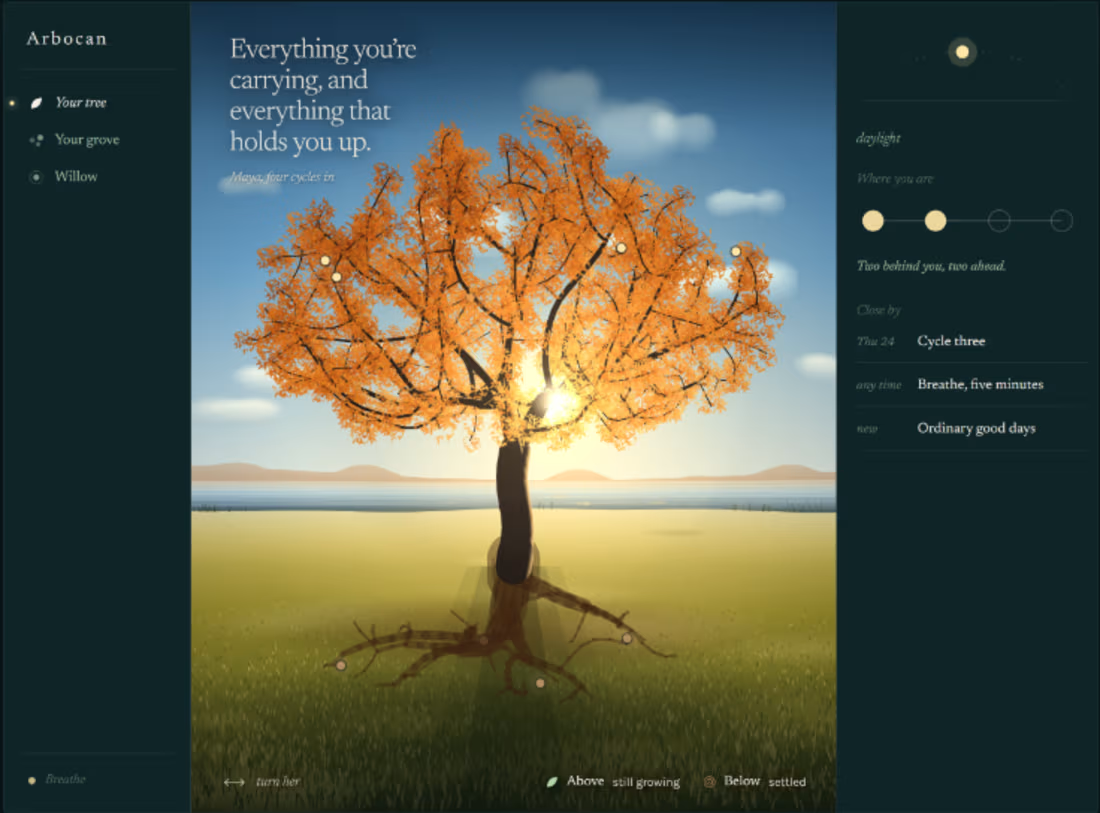
I wanted to design a webapp that brings cancer patients together that helps them understand what they are going through as well as build a community to alleviate their struggles.
Arbocan is a concept for a cancer care portal built around one central image, a Life-Tree that maps each patient's journey. Its branches are the active things they're learning and facing such as their cancer type, how treatment works, wellbeing tools, prevention, while its roots are what's stable and resolved, like completed surgery or steady habits, giving grounding and reassurance. The tree grows and changes as the patient does.
Around that sit two more pieces. Willow, an AI companion offering both emotional support and clear biological explanation such as comfort in hard moments, and plain-language answers about treatment. And the grove, where patients connect: your tree reaches out to others whose journeys share its shape, matched by stage and coping style rather than raw diagnosis, so community forms through similarity, safely and gently.
The whole thing is designed to feel calm and human rather than clinical, and to be useful before, during, and after cancer such as for prevention, treatment, and recovery alike. There's a working interactive prototype demonstrating all three pillars; the eventual vision adds real NHS data integration, which is the ambitious, heavily-regulated part still ahead.
0
239