Cnd Krsn
Creating custom LoRA models and intuitive Applications
New to Contra
Cnd is ready for their next project!
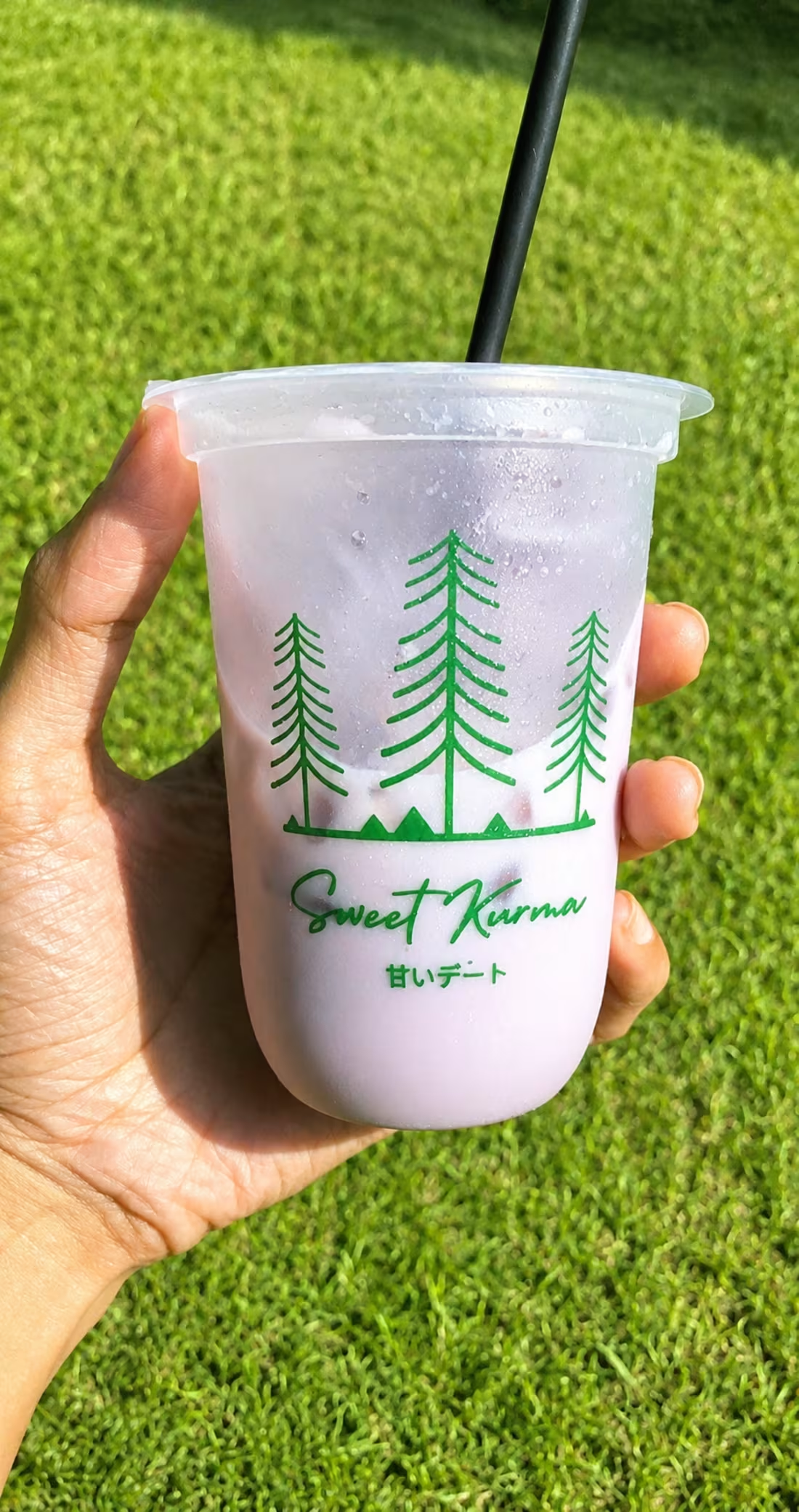
I helped my friend bring their local beverage business online by building a website with Base44. Before this, customers could only see the menu from a physical banner or ask for it through WhatsApp, so the owner had to repeatedly send the menu and manage pre-orders manually.
To make things easier, I created a responsive website that works seamlessly on both mobile and desktop, allowing customers to browse the full menu anytime and place pre-orders for pickup.
Every order is automatically saved in the owner's dashboard with the initial status New. From there, the owner can manage each order through a simple workflow: New → Processing → Ready for Pickup → Completed. The website is also integrated with WhatsApp, making it easy to confirm orders and communicate with customers.
I also added an AI chat assistant to answer common customer questions. If the AI service is unavailable, customers are automatically redirected to WhatsApp so they can still contact the business without interruption.
This project transforms a manual ordering process into a simple digital experience. Customers can now browse the menu, place pre-orders, and get information more easily, while the owner can manage every order from a single dashboard with a clear order status workflow.
Live : https://sweetkurma.base44.app
2
66
Full project: https://app.wonder.so/playmaker-code/files/019f36f6-c437-79d0-b1c3-20c9e86a9de9
Live: https://pixel-notes-wall.vercel.app/
Pixel Notes Wall is an interactive website where strangers can leave anonymous sticky notes that become part of a permanent, ever-growing wall of kindness. The experience was designed in Wonder, with MCP helping bridge the design into a functional web application.
3
6
220
THE LAST FREQUENCY
https://omma.build/p/master-build-instruction-last-frequency-o4kasl
An interactive horror experience about an old radio in an empty room.
You tune the dial, dig through the static, and try to find four hidden signals scattered across the band. As you go, the sound and the room slowly shift around you.
The whole thing leans into a retro-analog mood — warm radio glow, film grain, scanlines, and a bit of flicker to make it feel like an old broadcast. It opens with a short line of text, then drops you straight into the room. No menus, just the radio.
Built in Omma Canvas, with the sound generated directly in Omma.
1
4
167
Full Project https://www.recraft.ai/project/063e8768-a11c-44f6-ae98-89f44e133a7b
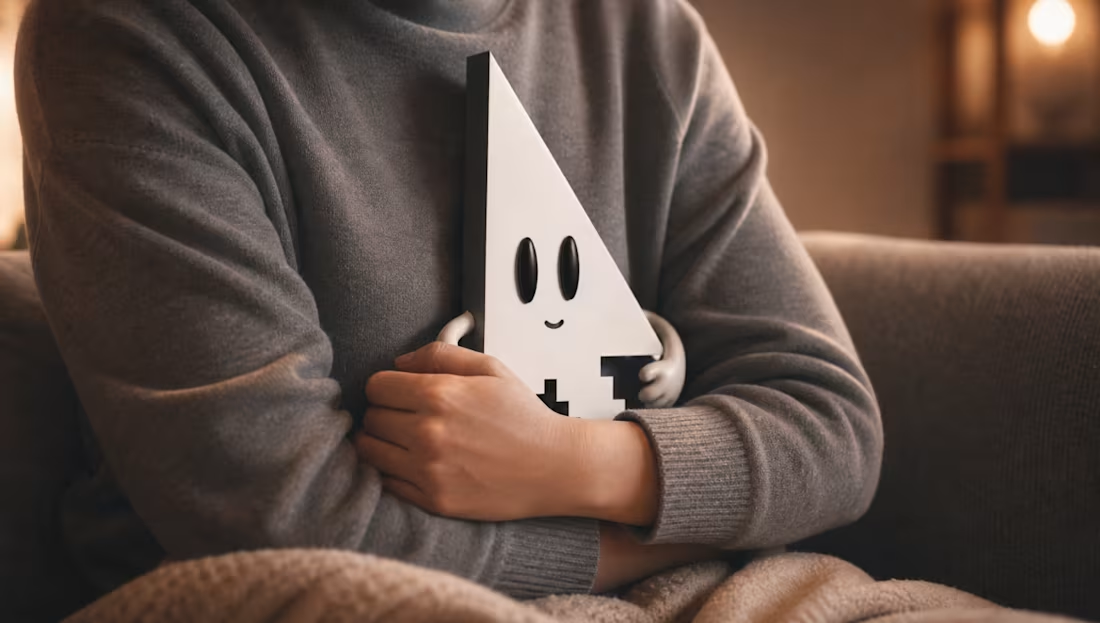
DOT is a mascot inspired by the computer cursor. Living inside the Interface Department, DOT helps people navigate the digital world through clicks, selections, and decisions. DOT is hardworking, reliable, and slightly anxious because every click matters. By turning a familiar interface element into a character, DOT explores the personality behind one of our most recognizable digital tools.
DOT — The Cursor Behind Every Decision
4
182
Work Title: CapCut Barbershop
Direction: A — CapCut as a Different Industry
Tagline: "We don't edit footage. We edit you."
Live Demo: capcutbarbershop.netlify.app
(http://capcutbarbershop.netlify.app)What if CapCut was never a video editor?
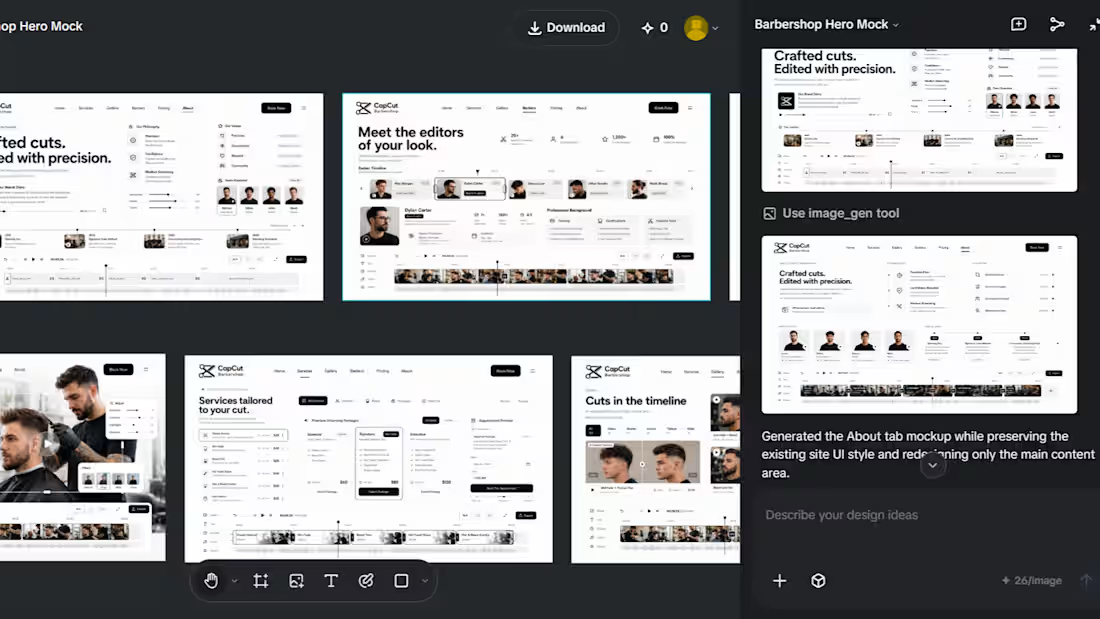
CapCut Barbershop translates CapCut's editing vocabulary into a barbershop brand. Cut. Trim. Timeline. Filters. Export. Same words — different canvas.
The website mirrors CapCut's editor UI across every page. Services are timeline clips. Pricing is a sequence. The final look is the export.
The spirit stays. Only the industry changed.
Project Information
Creator : cndkrsn
Contact : https://x.com/decodexai
4
11
1.1K
Autonomous Detective Storytelling Engine Submission for the #Melius Challenge. The idea was to build an automated storytelling engine natively inside Melius Canvas that orchestrates narrative generation and multi-model media pipelines in one connected system. How it works: Narrative Orchestration: Gemini dynamically structures a 3-scene mystery — defining the suspects, plot twists, and clues. Different story every run. Multi-Model Pipeline: The master script automatically feeds data downstream into specialized image (GPT) and video (LTX Video) nodes. Synced Narration & Visuals: ElevenLabs generates the voiceover first, which then becomes the timing reference for the visual pipeline. Fully modular — swap the LLM or video model anytime, and the pipeline adapts automatically.
Overall the first experience using Melius was fairly smooth, especially for building multi-node pipelines like this. The canvas is intuitive and the node connections are easy to understand.
https://x.com/decodexai/status/2056985544048148842?s=20
1
2
280
PixelWave is a browser-based audio visualizer that turns
any MP3 or WAV into real-time pixel animations. It includes
4 visualization modes, 4 color themes, a curated tape
library, and a beat-sync game where the audio waveform
becomes playable terrain. Built with vanilla HTML/CSS/JS
and the Web Audio API. No server, no uploads — everything
runs locally in the browser.
How I Used Stitch
I brought my concept into Stitch using
"Start from existing design." Stitch streamed the
generation of all screens directly to the canvas
as separate editable frames. I used in-place AI edits
to refine screens where the canvas reset mid-generation.
Those screens defined the visual direction and component
structure of the full build, deployed to Netlify.
The "Start from existing design" feature was the most
useful part — importing my HTML file and getting 5
separate editable frames immediately saved a lot of time.
The main friction I encountered was with undo/redo:
when I tried to undo a change on one frame, it reverted
all frames back to an earlier state, not just the
specific edit. This made iterating carefully on
individual screens less predictable.
Overall Stitch significantly sped up going from
concept to structured screens.
Live Demo
https://pixelwave-demo.netlify.app/
2
3
324