
Peter Wang
Bilingual Travel Writer & Photographer Telling Human Stories


Children of Nakba Day
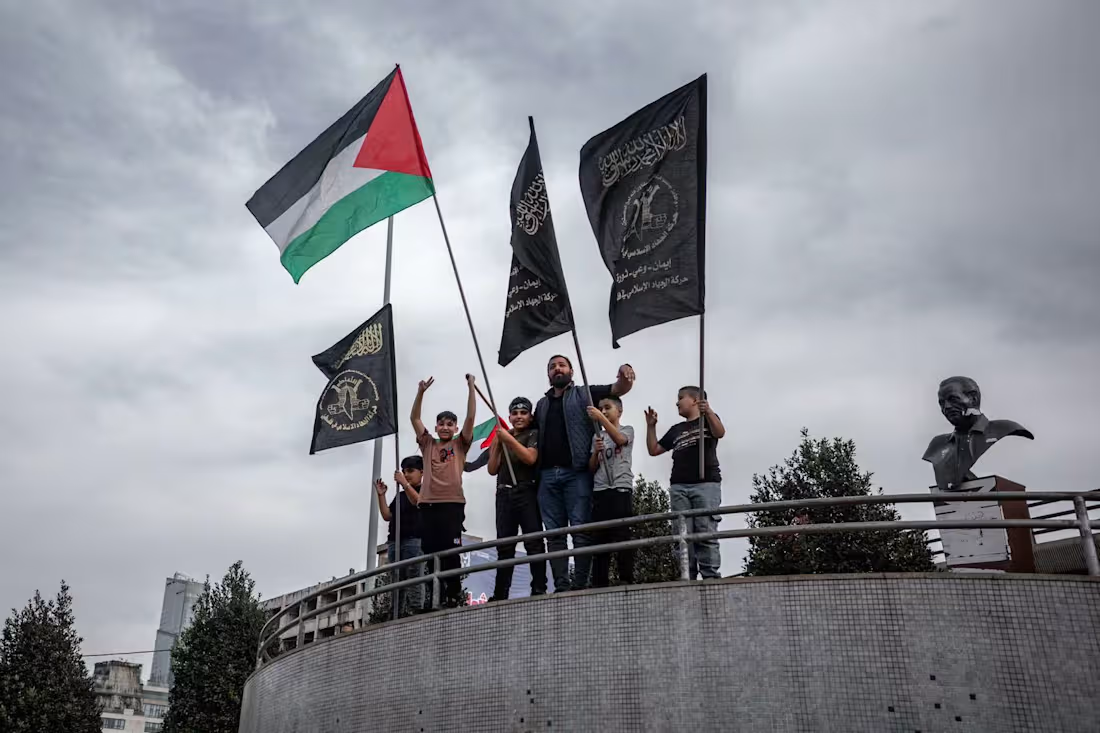
These photographs were taken on May 15, 2025, during a Nakba Day gathering in Beirut, Lebanon.
Below the hill, Palestinian activists, refugees, and Hezbollah supporters stood shoulder to shoulder, delivering speeches filled with grief, defiance, and memories of a conflict that has shaped generations. Flags waved above the crowd as speakers vowed solidarity and resistance.
Yet a short walk away, the atmosphere felt entirely different.
There, I met children.
Their clothes were worn. Some carried the visible marks of hardship. Many had grown up surrounded by stories of displacement, war, and loss. Yet what stayed with me was not anger, but curiosity. They gathered around me, asking where I came from. Using a translation app, we struggled through fragments of conversation, laughing at misunderstandings and finding small ways to connect.
They waved Palestinian flags just like the adults below. But unlike the speeches echoing through the crowd, their faces still carried something unmistakably childlike: wonder, playfulness, and hope.
As a writer and documentary photographer, I am often drawn to places defined by conflict. What interests me, however, is not only the conflict itself, but the ordinary human moments that continue to exist within it. These children reminded me that even in communities shaped by historical trauma, life does not pause. Childhood persists.
For a brief moment, above the chants and politics, they were simply children smiling at a stranger with a camera.
0
36
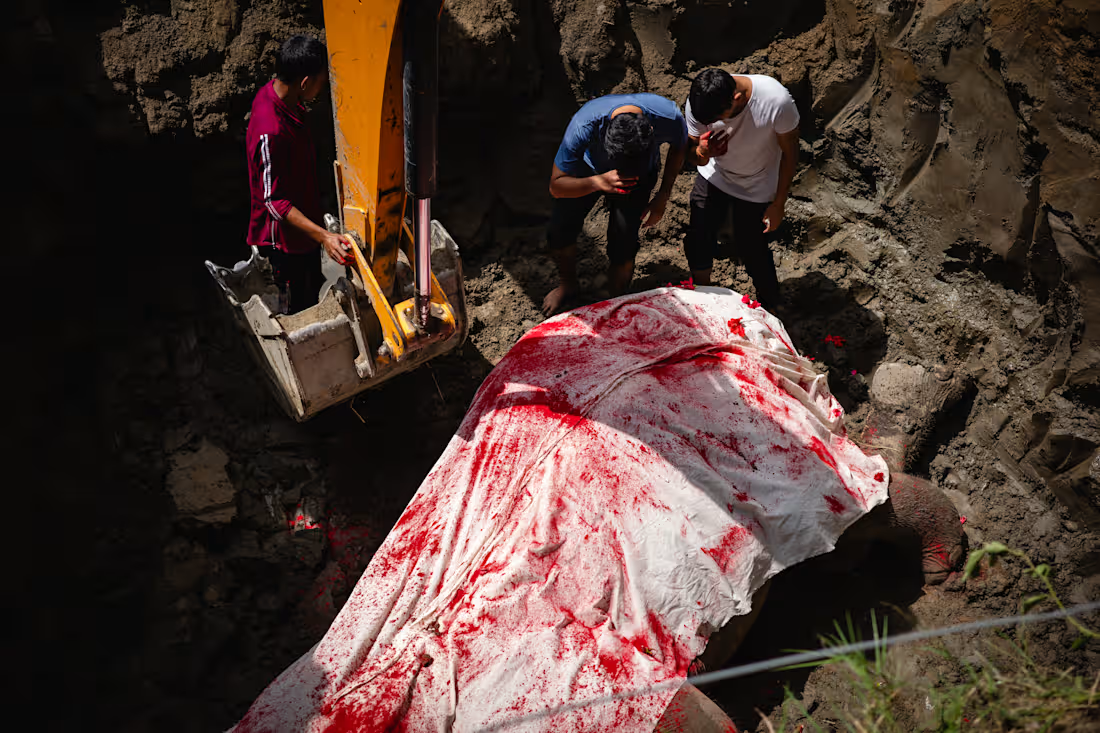
From the ruins of Beirut to the elephant villages of Nepal, my work is driven by the same question: how do ordinary people live with forces larger than themselves? In Chitwan, those forces happened to weigh five tons and carry a trunk.
In 2024, I joined an international volunteer program in Chitwan, Nepal, where I spent weeks living alongside rescued elephants and the families who care for them. What began as a wildlife experience soon became a human story.
Through documentary photography and field reporting, I explored the complex relationship between elephants and the people whose lives are inseparable from them—mahouts who have dedicated decades to a single animal, young caretakers navigating economic hardship, and local communities caught between conservation, tradition, and survival.
My work documented moments of tenderness and loss alike: the quiet bond between a mahout and his elephant, the daily routines behind sanctuary life, and the funeral ceremony of an elephant whose death drew an entire community into mourning.
Rather than portraying wildlife in isolation, this project examines the emotional, cultural, and ethical realities that exist where humans and animals share the same world. The resulting photographs and written narratives form part of my ongoing documentary work focused on people living at the intersection of history, conflict, environment, and social change.
1
49
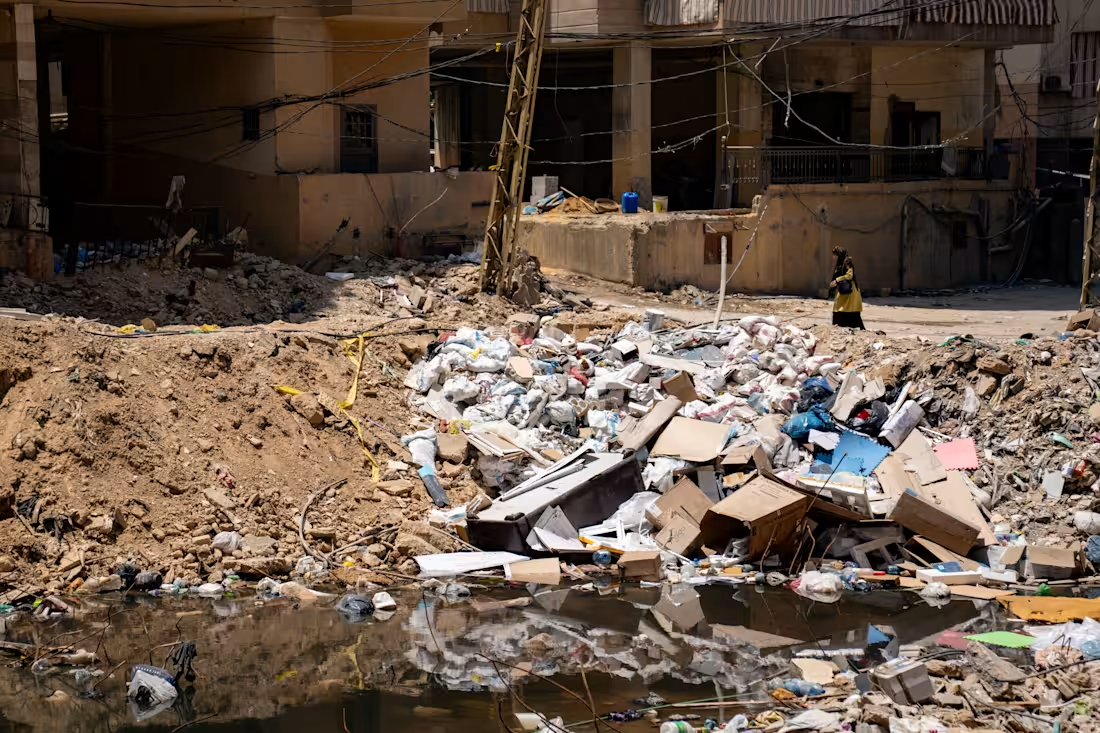
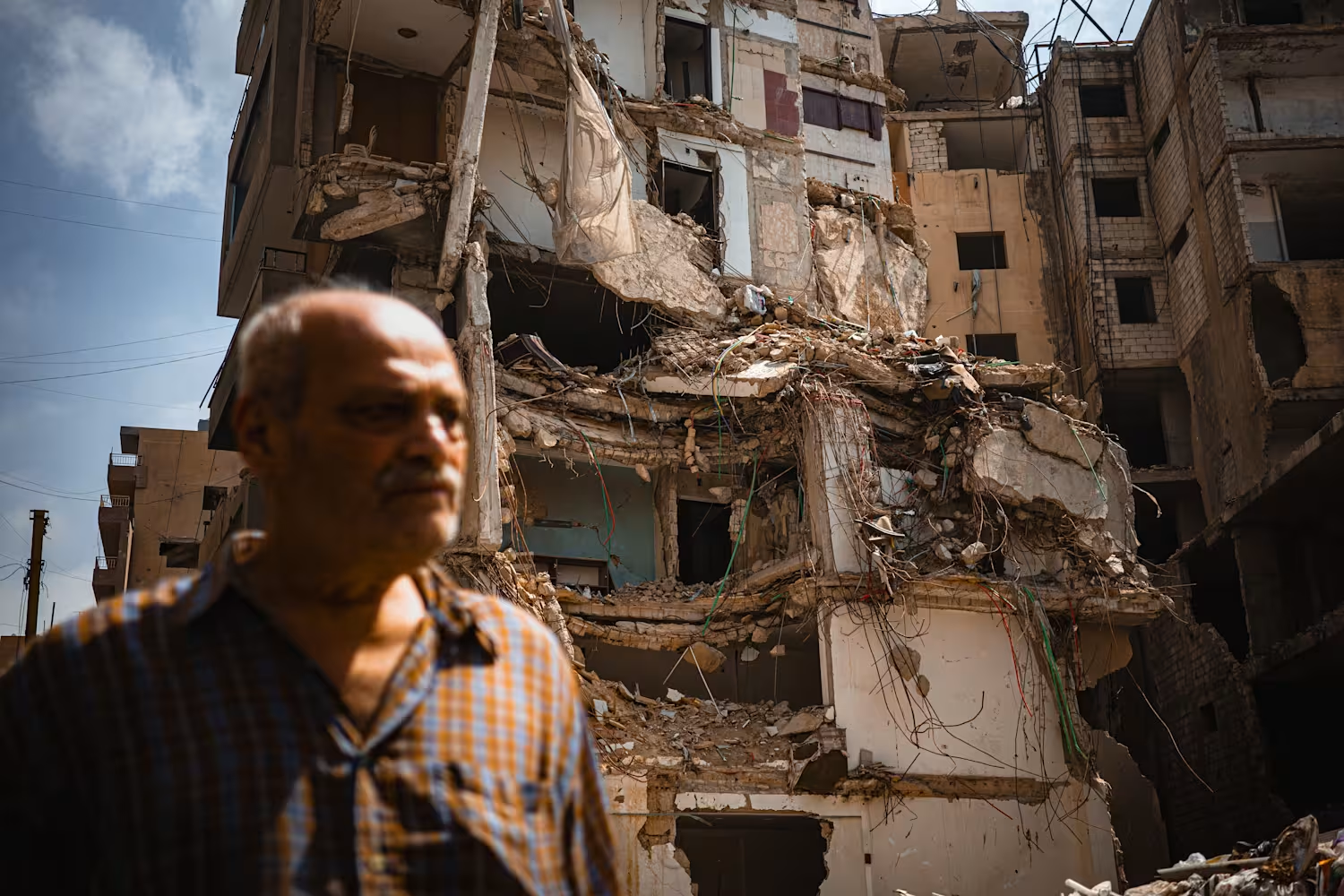
In May 2025, I was granted official access to Beirut's Dahiyeh district through local journalistic networks and formal authorization channels.
Months after the ceasefire, Israeli airstrikes continued to strike areas of southern Beirut, leaving behind shattered buildings, displaced families, and neighborhoods suspended between destruction and routine life.
What drew me there was not the battlefield itself, but the people living in its aftermath.
A young girl sat on the back of her father's motorbike, gazing upward at the ruins of a building brought down by an airstrike. Men gathered quietly inside a small shop that few customers visited anymore, surrounded by streets and structures scarred by war. Elsewhere, residents walked past collapsed apartment blocks and piles of debris that had become part of the landscape of daily life.
These photographs are not primarily about military conflict or political factions. They are about memory, loss, endurance, and the quiet persistence of ordinary people after the world's attention has moved on.
The Dahiyeh project forms only one chapter of a larger reporting journey across Lebanon. Alongside the photographs, I am currently writing a long-form narrative feature based on months of field reporting, interviews, and firsthand observations throughout the country. From survivors of the Beirut port explosion to families living through economic collapse and recurring conflict, the work explores how individuals navigate uncertainty while holding onto dignity, hope, and a sense of home.
My practice sits at the intersection of journalism and documentary photography, focusing on human stories in places often reduced to headlines.
1
176
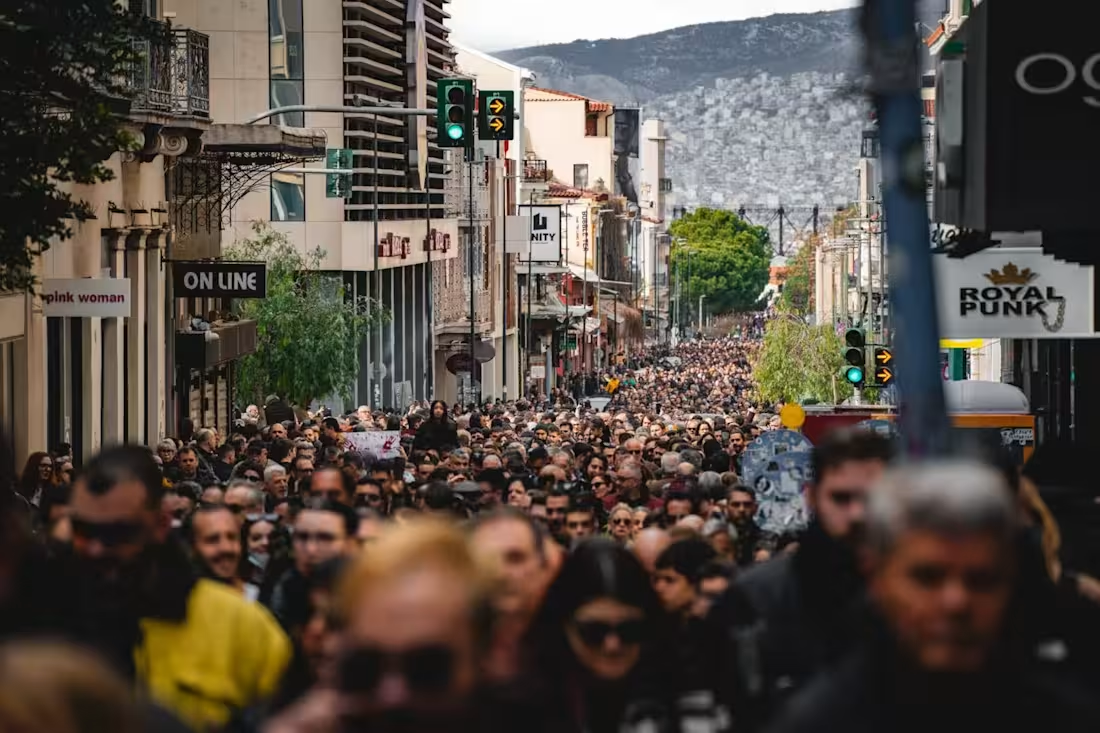
On February 28, 2025, I documented the largest public demonstration in modern Greek history, marking the second anniversary of the Tempe train disaster. Hundreds of thousands of people gathered across Athens and other cities, demanding accountability, transparency, and justice for the victims.
Rather than focusing solely on the scale of the protest, I was drawn to the human stories within it: grieving families, young people carrying portraits of the deceased, and ordinary citizens who felt that the tragedy reflected deeper failures of public institutions. These images are part of my ongoing interest in documenting how communities respond to loss, memory, and demands for justice.
2
151