
Paul Asalu
Backend Developer | Technical Writer
Profile in progress
Paul is building their profile!
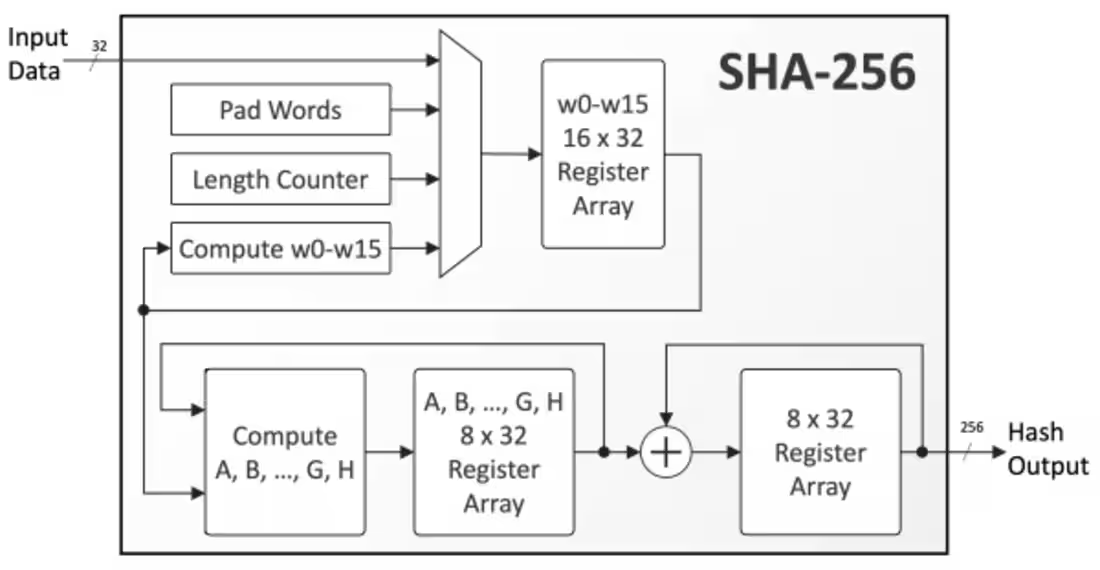
Spent a couple of weeks earlier in the year, learning about the inner workings of the SHA-256 hashing algorithm and how entire files are hashed. Now today, I'm happy to say I've been able to complete a simplified implementation of sha-256 hashing algorithm. If you've seen my previous posts about ROTR, and binary operations, it may now begin to make sense why I've been yapping all the while😅.
Learned a lot on this mini journey, from learning about splitting and padding file chunks, to the Merkle-Damgard compression step, and prime number sieves, it was a pretty fun exercise!!
I made a GitHub gist of my implementation (in python). Feel free to leave a star⭐ https://gist.github.com/Curiouspaul1/92394cc3d58dd2a97ab8389ae8f9915d
[Image source: https://www.cast-inc.com/security/encryption-primitives/sha-256 ]
0
2

Handees is a "service-hailing" marketplace (think Uber for artisans) that connects users with verified professionals on-demand. The core technical challenge was latency. Unlike a standard directory, Handees required:
Instantaneous communication between users and providers.
Live location tracking and status updates.
Scalable infrastructure that could handle traffic spikes without incurring massive idle server costs.
🛠 The Build (My Solution)
I architected the entire backend from the ground up, focusing on a serverless, event-driven approach.
Real-Time Engine: I bypassed standard polling by implementing a bidirectional communication layer using SocketIO backed by Redis Pub/Sub. This allowed chat messages and order updates to be delivered in milliseconds.
Serverless Runtime using GCP cloud run.
Join us: waitlist.handees.com.ng
0
3