
Patrick Arikpo
AI Automation Specialist and AI Engineer
New to Contra
Patrick is building their profile!
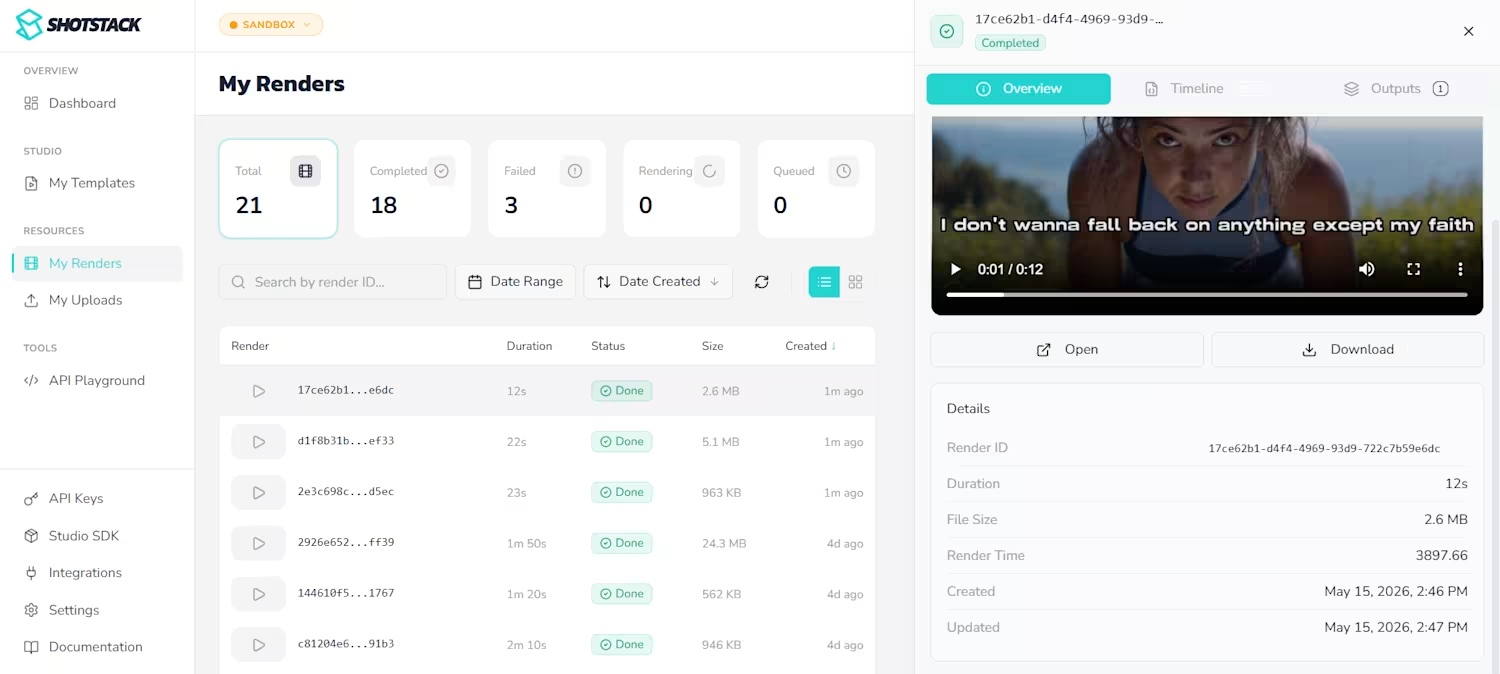
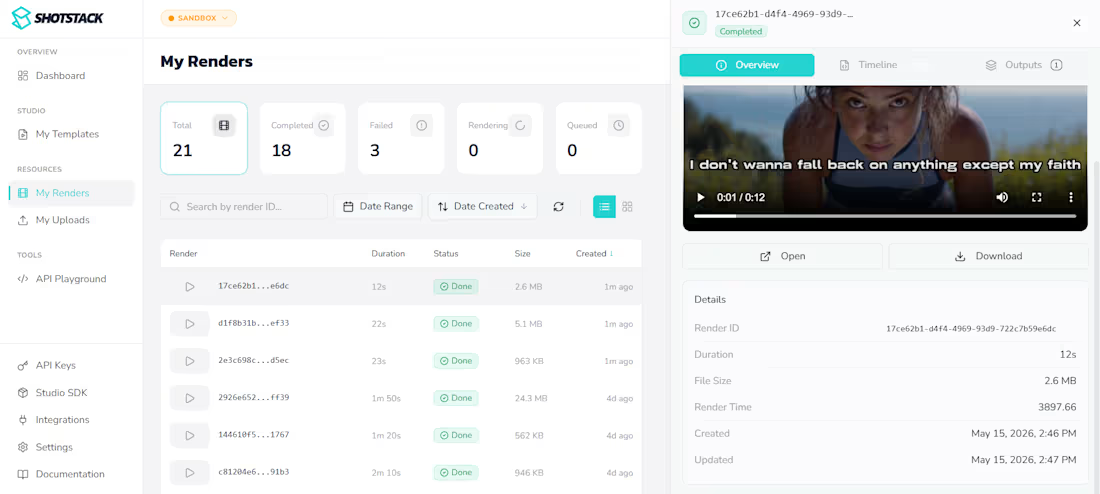
Automated Video Clipping Pipeline
0
4
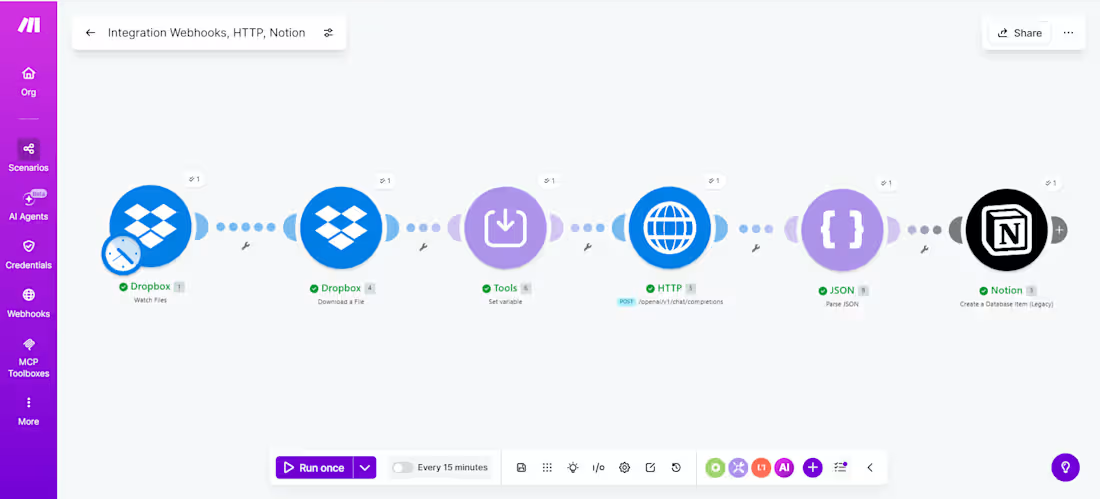
Built a fully automated content processing pipeline for a podcast production workflow using Make.com (http://Make.com), Groq AI, and Notion.
The system watches a Dropbox folder for new transcript files, downloads them automatically, sanitizes the text, and sends to Groq's LLaMA 3.3 70B model for AI analysis, extracts structured content, and populates a Notion database with the episode name, title, date, and all three AI-generated fields: summary, discussion points, and notable guest quotes—all without any manual intervention.
Tools used:
Make.com
(http://Make.com)Groq API (LLaMA 3.3 70B Versatile)
Notion API
Dropbox API
1
10
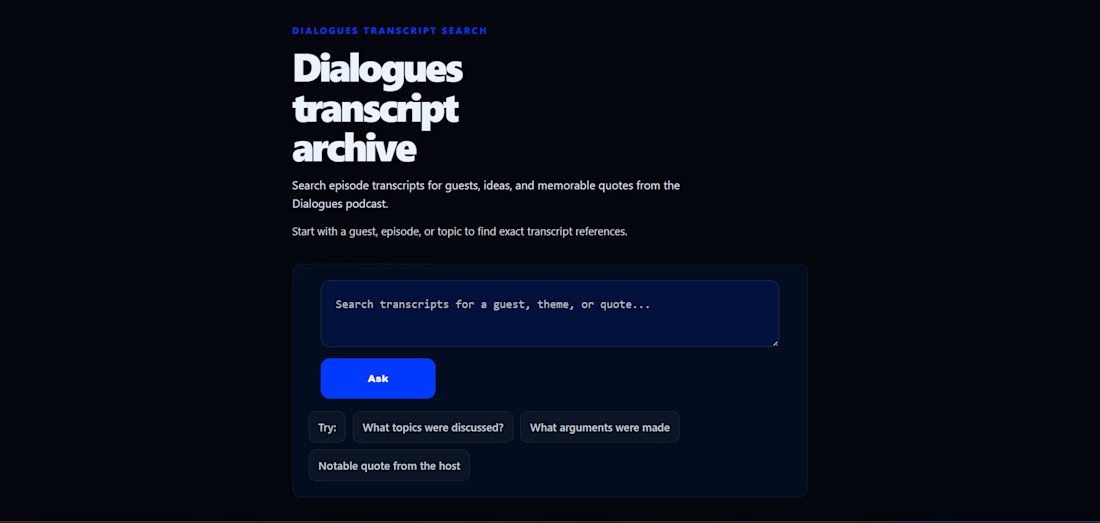
Built a RAG-powered chatbot that lets users query podcast transcript archives. The goal was to make episode content searchable and retrievable without manual browsing. I designed the full pipeline—transcript ingestion, vector embedding via Nomic, semantic search with Supabase pgvector, and LLM response generation via Groq—and deployed it as a live web app. Users can now ask questions across multiple episodes and get answers grounded in actual transcript content with episode citations.
Tech Stack:
Node.js, Express.js, Supabase (pgvector), Nomic Embed v1.5, Groq LLM, Vanilla HTML/CSS/JS
1
12
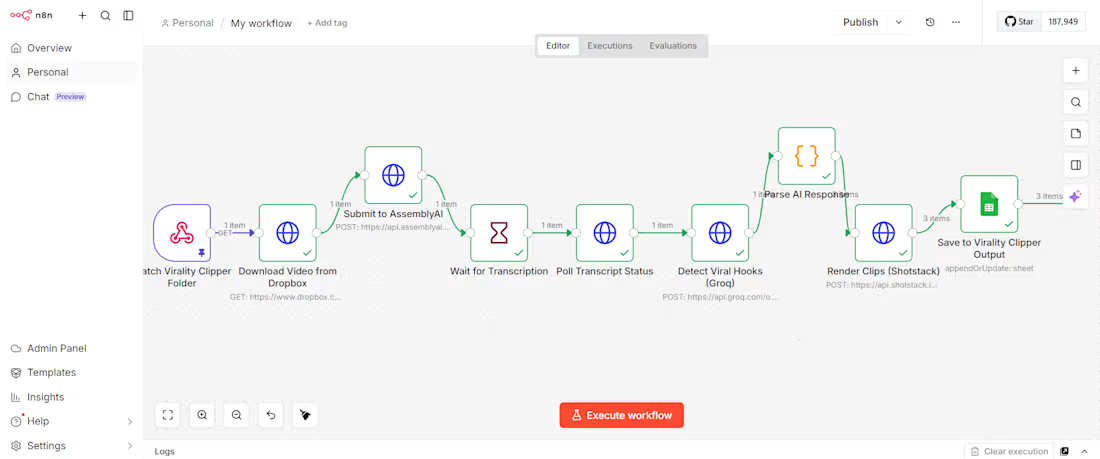
Built a fully automated video clipping pipeline that takes a long-form video and automatically identifies and renders the most viral-worthy moments — zero manual intervention required.
The system transcribes the video using AssemblyAI, sends the transcript to Groq (LLaMA 3.3 70B) to identify the 3 most compelling moments with timestamps and reasoning, renders each clip as a standalone MP4 via Shotstack's video API, and logs all output to Google Sheets for review.
Tools & APIs used:
n8n
AssemblyAI
Groq / LLaMA 3.3 70B
Shotstack
Google Sheets
Dropbox (media hosting)
1
8