Exploring the Lunar South Pole: Unveiling the Quest for Water a…

Hengky Melkior Sopaheluwakan
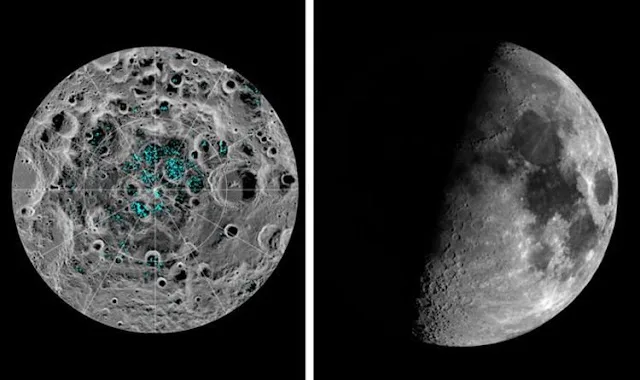
Photo: www.express.co.uk
In the pursuit of lunar exploration, the race to the moon's south pole has captured the attention of space agencies worldwide. India, in particular, is gearing up to achieve a significant milestone with its upcoming Chandrayaan-3 mission, scheduled for launch on July 14, 2023. This daring endeavor not only symbolizes India's expanding space ambitions but also holds the promise of unraveling the mysteries of lunar water ice - a resource that could play a pivotal role in shaping the future of space exploration.
As early as the 1960s, even before the historic Apollo landings, scientists had theorized about the potential existence of water on the moon. However, the initial analyses of lunar samples from the late 1960s and early 1970s seemed to suggest a dry lunar surface. It wasn't until recent years that breakthroughs in technology allowed researchers to revisit these samples and make groundbreaking discoveries.
In 2008, a team of researchers from Brown University utilized advanced technology to identify hydrogen within minute beads of volcanic glass found within the lunar samples. The Indian Space Research Organisation's Chandrayaan-1 probe, equipped with a NASA instrument, detected water on the moon's surface in 2009. Subsequently, another NASA probe uncovered the presence of water ice beneath the moon's south pole, hidden beneath its surface. The shadows of the craters in the south pole were revealed to contain the highest concentrations of water ice, as indicated by the 1998 Lunar Prospector mission.
The significance of water on the moon cannot be overstated. These pockets of ancient water ice could offer valuable insights into lunar volcanoes, the material transported to Earth by comets and asteroids, and the origins of Earth's oceans. Beyond its scientific importance, water ice could serve as a precious resource for future lunar exploration. It holds the potential to provide drinking water for astronauts, assist in equipment cooling, and even be converted into hydrogen for fuel and oxygen for breathing - essential elements for sustained missions to Mars or lunar mining operations.
Baca Juga
Despite the ambitious pursuit of lunar resources, the principles of space exploration remain bound by international agreements. The United Nations Outer Space Treaty of 1967 forbids any nation from claiming sovereignty over the moon, while commercial operations in space remain unregulated. Efforts like the Artemis Accords, led by the United States, aim to establish guidelines for moon exploration and resource utilization, but not all nations have joined this initiative.
Navigating the challenges of landing at the moon's south pole presents a unique set of obstacles. With a history of failed landings, including Russia's recent Luna-25 craft, which tragically crashed on approach, the inhospitable terrain of the south pole demands careful consideration. Contrasted with the relatively smoother equatorial regions targeted by previous missions, the south pole boasts a rugged landscape dotted with craters and deep trenches.
As India's Chandrayaan-3 mission remains on track for a hopeful landing, it signifies the nation's persistence in mastering the complexities of lunar exploration. With both the United States and China also eyeing missions to the south pole, the lunar frontier promises a wealth of opportunities for scientific discovery and innovative space exploration.
Lokasi:
Like this project
Posted Sep 4, 2023
In the pursuit of lunar exploration, the race to the moon's south pole has captured the attention of space agencies worldwide. India, in particular, i
Likes
0
Views
0
Tags