Steevy Indie: A Solo Founder's Journey in Creative Coding & AI

Stephen Indie Thong Nguyen


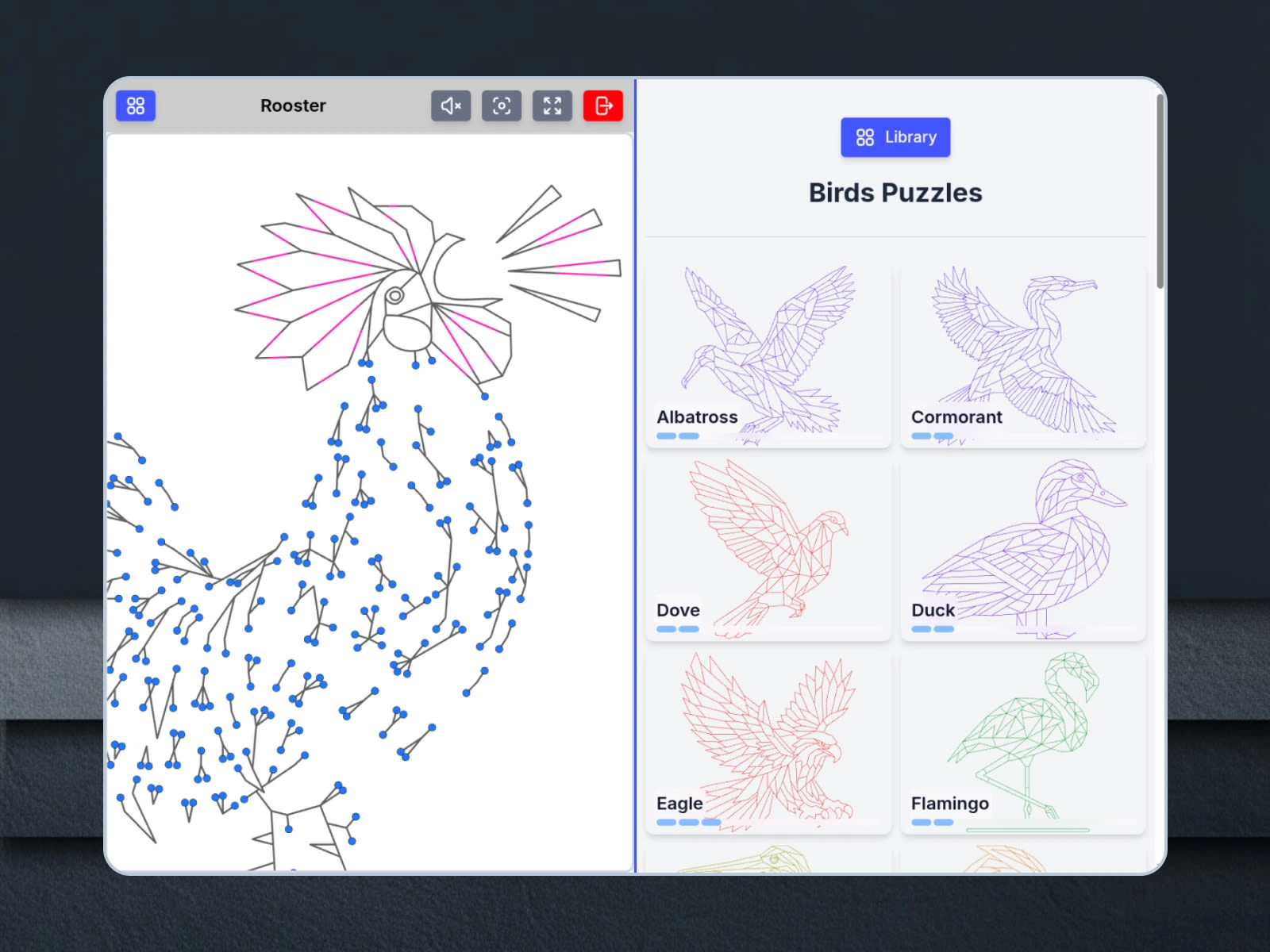
After five years of dedicated company work since graduation, I took a leap of faith. Instead of seeking a new job, I embarked on a solo founder's journey. Fueled by the rise of AI and a desire to build something I could truly cherish, I decided to create Steevy Indie.
A Quest for Calm in a World of Chaos
I saw the internet flooded with low-value, AI-generated viral content. My vision was the opposite: to create a digital sanctuary. I wanted to build a product that offered a moment of peace and mindfulness. This led to the idea of a dot-to-dot puzzle game, reimagined with a focus on visual recognition and a deeply relaxing user experience.
The Art of Human-AI Collaboration
This project was an experiment in "vibe coding"—a deep, collaborative partnership with AI from start to finish. However, it also became a case study in knowing when human expertise must take the lead.
1. Building the Puzzle Creation Engine
My first step was creating a custom React-based tool to process geometric art (assisted by AI) into playable SVG puzzles. This tool wasn't just a simple converter; it allowed me to:
Analyze line lengths and angles to ensure puzzle solvability.
Programmatically straighten imperfect lines.
Most importantly, it processed the SVGs to leave only the endpoints, forming the core puzzle mechanic.
2. Engineering a Polished, High-Performance Experience
Bringing the puzzles to life in the main application presented significant performance challenges that AI alone couldn't solve.
The Graphics Engine: I implemented zooming, panning, and a fluid drawing animation system. When AI struggled with precise coordinate calculations under combined zoom/pan states, I had to manually debug and architect the state management logic for a pixel-perfect, buttery-smooth interaction. I integrated Framer Motion for professional-grade animations that AI's initial code couldn't replicate effectively.
The Audio Experience: I used AI to generate a library of relaxing ambient music, but that was just the start. I carefully curated and post-produced the tracks for consistent volume and small file sizes. While AI helped me quickly grasp the Browser's Audio Context API, its solutions for performance were inadequate. I personally re-engineered the audio-loading strategy, implementing pre-fetching and decoupling it from the main rendering loop to ensure sound never impacted the app's performance.
From MVP to a Complete Product Ecosystem
I successfully managed the entire product lifecycle, turning an idea into a live application featuring:
A library of over 90 handcrafted puzzles.
Features like downloading completed artwork.
Continuous UI/UX improvements based on user feedback.
Full integration with Google Analytics and Cloudflare for data-driven decisions.
My work didn't stop at deployment. I built a marketing automation tool that takes an SVG, auto-animates the drawing process, and screen-records it to create promotional content for social media, alongside implementing a full SEO strategy.
My Key Takeaways & The Road Ahead
Steevy Indie was an intensive boot camp where I refined my skills in React, Next.js, and Tailwind CSS. More importantly, I learned how to work with AI effectively—leveraging it for ideation, rapid prototyping, and coding assistance, while recognizing its limits and knowing when my own deep expertise was required to solve complex systemic problems.
While currently an MVP, the project has a long roadmap, including backend integration for leaderboards and user progress, content security, and new puzzle modes. It stands as a testament to my ability to single-handedly drive a product from concept to market.
Like this project
Posted Jul 4, 2025
My solo journey building a relaxing puzzle game. Used AI for creation, but relied on manual optimization to achieve a polished, high-performance experience.