The “Dangerous Foreigner” Myth

Noa Yohane



Introduction:
They say foreigners are making Japan more dangerous.
You’ve probably heard that line before—maybe in a comment section, maybe from a relative, or maybe, like I did, in a recent viral YouTube video where a Japanese woman confidently explains how foreign visitors are destroying the peace of her country.
No data. No nuance. Just certainty.
Thanks for reading! Subscribe for free to receive new posts and support my work.
In a society where uniformity is worshipped and outsiders are subtly (and sometimes not so subtly) discouraged, it's not surprising that “the dangerous foreigner” becomes a convenient scapegoat. But the question is—is it true?
Spoiler: it's not.
In this piece, we’ll look at what the actual statistics say, how these myths spread, and why Japan, despite its low crime rates, continues to nurse this paranoia. This is not just about prejudice. It’s about a media ecosystem that thrives on fear and clicks, and a culture that often chooses comfort over truth.
The Data Doesn’t Lie
If Japan were truly becoming more dangerous because of foreigners, the numbers would show it.
But here’s what the numbers actually say.
According to the 2023 White Paper on Crime by Japan’s Ministry of Justice, the number of penal code offenses committed by foreigners peaked in 2005 at over 43,000 cases. Since then? A steady decline. By 2022, that number dropped to just under 13,000 cases.
Let’s put that into perspective.
Japan has over 3 million foreign residents. And yet, foreigners accounted for only about 5% of all penal code offenses. Even when the number of foreign workers sharply increased over the last decade, crime did not.
In fact, the overall crime rate in Japan—including both Japanese and foreign offenders—has been steadily falling for the past two decades. That’s right. Japan is statistically safer now than it was 20 years ago.
So where’s this fear coming from?
Why This Narrative Persists
If the data tells one story, but the public believes another, something else is at play.
The myth of the “dangerous foreigner” survives not because it’s true, but because it’s convenient.
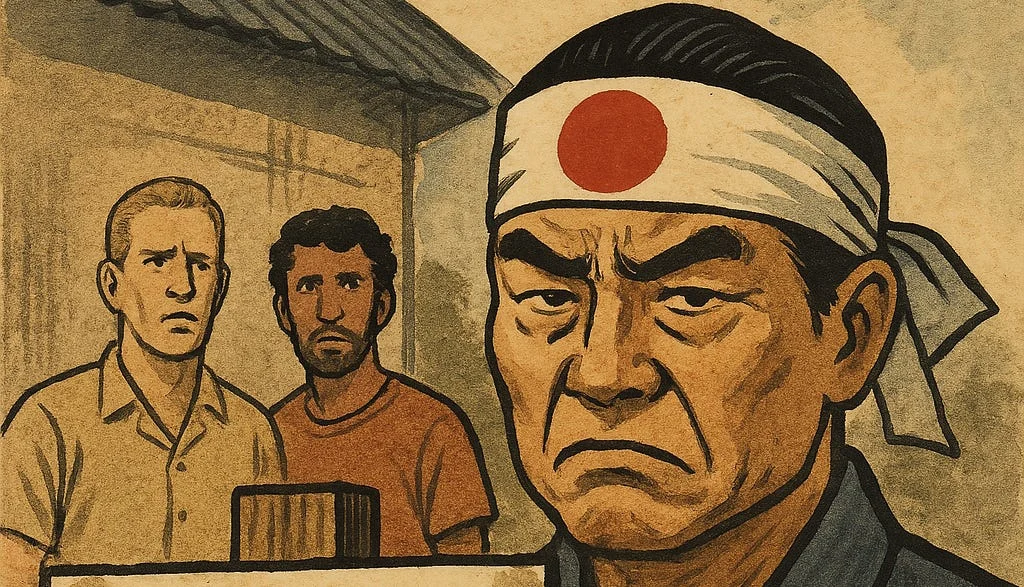
In a country where social harmony is prized above all else, “outsiders”—whether foreign residents, tourists, or even just people who speak differently—become easy targets when something feels off. When a minor disturbance happens, it's rarely seen as an isolated incident. It’s framed as a threat to the entire system. And when that outsider has a different face, name, or behavior? Even easier to blame.
But this fear isn’t born in the streets.
It’s manufactured—in TV studios, YouTube thumbnails, and TikTok ragebait. Street interviews get edited, uploaded, and algorithmically boosted. Out-of-context clips turn into viral “proof.” No deeper context. No comparative data. Just one emotional quote and a flood of angry comments.
And for an aging society with shrinking local communities and growing uncertainty, that fear becomes addictive. It provides clarity. An enemy. A feeling of control.
What it doesn’t provide is truth.
The Danger of Lazy Scapegoating
Blaming foreigners for Japan’s social unease is not just wrong—it’s dangerous.
It distracts from the real issues: structural inequality, isolation, media manipulation, and a cultural reluctance to face internal problems.
It allows people to feel morally superior while avoiding uncomfortable truths—like the fact that Japan's aging population, rigid hierarchies, and suffocating conformity are tearing its society apart from the inside.
And what happens when we build our worldview on fear?
We become passive. Suspicious. Easy to control.
We stop building trust, and start building walls.
This kind of lazy scapegoating doesn’t just hurt foreigners—it degrades the entire society. It creates a culture of suspicion where no one truly belongs, not even those born here. And for the next generation growing up in Japan—whether they are Japanese, half, or foreign—it sends a clear message:
“You will never be one of us.”
But here’s the truth:
A safe society isn’t one that excludes—it’s one that builds connection, even in difference.
That’s the real challenge. That’s the real courage. And that’s where the future is.
Conclusion: Rebuilding Trust, Not Fear
Japan doesn't need more suspicion.
It needs more spaces where people—regardless of origin—can move, speak, and grow with mutual trust.
Fear feels safe. It gives us enemies and excuses.
But fear also shrinks the soul of a society.
It breeds isolation, resentment, and decay.
We have a choice:
Keep chasing ghosts in the faces of strangers,
or face the real demons—within the system, and within ourselves.
The viral myth of the “Foreigner is dangerous ” is not about foreigners at all.
It’s about a society struggling with uncertainty and desperately looking for someone else to blame.
But there are people—foreigners and Japanese alike—who are choosing a different path.
One rooted not in uniformity, but in movement, trust, and openness.
If you’re reading this, maybe you’re one of them.
Let’s build something better.
Thanks for reading! Subscribe for free to receive new posts and support my work.
Like this project
Posted Apr 29, 2025
Exploring the roots of Japan’s “dangerous foreigner” myth — and how silent rules and conformity shape exclusion in modern society.
Likes
0
Views
0
Timeline
Apr 12, 2025 - Apr 12, 2025