AlphaFold 2: Revolutionizing Protein Folding Prediction

imthiyaz k


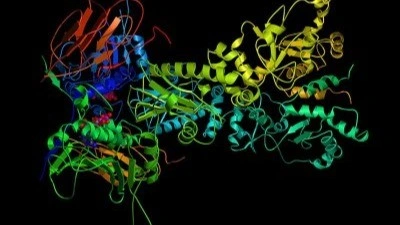
Imagine trying to solve a puzzle with a billion possible combinations, where only one is correct. Now, imagine that the puzzle changes shape as you work on it. This isn’t just any challenge—it’s the problem of protein folding, a question that has haunted biologists for over five decades. The way a protein folds determines its function, and any errors in this process can lead to devastating diseases like Alzheimer's and Parkinson's.
For years, scientists relied on methods like X-ray crystallography and cryo-electron microscopy. While accurate, these techniques were painstakingly slow and expensive. Computational approaches using physics-based simulations, such as Rosetta, showed promise but still required vast amounts of computing power.
Then came an unexpected player—Artificial Intelligence. And in 2020, it achieved something that was once considered impossible.
DeepMind’s Journey from Games to Biology
DeepMind had already shocked the world by mastering complex games. AlphaGo, powered by deep reinforcement learning, defeated world champions in Go—a game so complex it was once thought impossible for AI to conquer.
But DeepMind’s vision extended beyond games. If AI could decode the strategies of a board game, could it unravel the mysteries of biology? The team turned their focus to a grand challenge—protein folding.
In 2018, they introduced AlphaFold, an AI system that analyzed amino acid sequences and predicted protein structures with moderate success. But it was AlphaFold 2 in 2020 that shattered expectations, proving to be on par with experimental techniques.
How AlphaFold Cracked the Protein Folding Code
Proteins are long chains of amino acids that fold into intricate three-dimensional structures. This folding process is dictated by atomic forces, but predicting the final structure just from the sequence was considered computationally infeasible.
AlphaFold revolutionized this process through:
Multiple Sequence Alignments (MSA): It analyzed evolutionary relationships between proteins, extracting information from sequences across different organisms.
Attention-Based Neural Networks: Inspired by transformers used in NLP models, AlphaFold identified interdependencies between different amino acids in a sequence.
Graph Neural Networks: It modeled protein interactions more efficiently, refining structural predictions iteratively.
Template-Free Modeling: Unlike previous models that relied on known structures, AlphaFold predicted novel protein folds with high accuracy.
The breakthrough was evident in CASP14, where AlphaFold achieved a median Global Distance Test (GDT) score of 92.4, a level of accuracy that rivaled experimental techniques.
Impact on Science and Medicine
AlphaFold’s breakthrough has had a ripple effect across multiple disciplines:
Recommended by LinkedIn
1. Drug Discovery Revolutionized
Pharmaceutical companies spend billions designing drugs that fit into specific protein structures, like a key into a lock. With AlphaFold, they can now find these structures instantly, drastically reducing research timelines and costs.
2. Understanding Diseases Better
Misfolded proteins are responsible for many diseases. With AlphaFold, scientists can now study these misfolded structures in detail, opening doors to new treatments for neurodegenerative disorders, cancer, and more.
3. Synthetic Biology and Protein Engineering
Imagine designing new proteins from scratch to clean up plastic waste, fight infections, or create sustainable biofuels. AlphaFold has made this a reality, pushing synthetic biology into new frontiers.
4. Saving Decades of Research Time
Before AlphaFold, predicting one protein’s structure could take a PhD student their entire research career. Now, scientists have access to an open database containing over 200 million predicted protein structures, freely available to the world.
The Next Chapter: AlphaFold 3 and Beyond
DeepMind didn't stop at AlphaFold 2. In 2024, they unveiled AlphaFold 3, capable of predicting not just individual protein structures but also protein interactions with DNA, RNA, and even small molecules. This is a giant leap for personalized medicine, helping scientists develop tailored treatments for complex diseases.
The future is even more exciting. What if AI could predict protein folding for entire cells? What if it could design proteins from scratch that cure diseases we currently have no answers for? These are not just dreams—they are possibilities that are now within reach.
The AI Revolution in Biology
AlphaFold’s success is more than just an achievement in artificial intelligence; it’s a testament to how AI can push the boundaries of what humanity thought was possible. It solved a problem that was once considered unsolvable, and in doing so, has opened the door to medical breakthroughs that will save countless lives.
We often think of AI in terms of automation, chatbots, or self-driving cars. But this? This is the most useful thing AI has ever done.
Citations:
DeepMind. "AlphaFold: The making of a scientific breakthrough." YouTube, 2023. Link
Jumper, John, et al. "Highly accurate protein structure prediction with AlphaFold." Nature, 2021. DOI: 10.1038/s41586-021-03819-2
Like this project
Posted May 23, 2025
DeepMind's AlphaFold 2 revolutionized protein folding prediction, achieving high accuracy and impacting science and medicine.
Likes
0
Views
12
Timeline
Jan 1, 2018 - Dec 31, 2020
Clients
Google DeepMind