Understanding the Power of Story

Christopher Rosché



An old, tattered American flag. (AI derived)
9/11 Taught Me the Most Powerful Weapon in the World Isn't a Missile. It’s a story.
What a decade in intelligence taught me about how narratives turn ordinary people into weapons. That same technology is now in your pocket.
On the morning of September 11, 2001, I was in Arlington, Va., taking my four-year-old son to his first day of preschool. When the jets slammed into the Twin Towers in New York, my wife and I had just dropped him off and taken a few pictures. We drove over the 14th Street Bridge to the District of Columbia at the same time as the third hijacked plane hit the Pentagon less than a mile from our car. In my rearview mirror, smoke billowed into the sky from the command center of our nation’s military.
As the communications director for the Senate Judiciary Committee, I sped up Capitol Hill, breaking every speed limit and blowing through red lights. People ran in every direction. Patrolmen drew their shotguns, and snipers perched atop the office buildings that housed members of Congress and their staffs. I scrambled up the steps of the Senate Hart Building and reached my office just as the Capitol Police issued an evacuation order.
My boss, Sen. Orrin Hatch, Republican of Utah, refused to leave. As the recent former chairman of the Judiciary Committee, which held jurisdiction over terrorism, he was on the phone with CIA Director George Tenet. Two officers ran in and ordered everyone out, but Hatch wouldn’t move; no terrorist, he insisted, was going to scare him away from his duty. Under a protocol I learned only in that moment, two people were required to stay with the senator in an emergency, the chief of staff and me. Ten minutes later, four more officers scrambled in, stern-faced. “There are reports of another plane,” the officer in charge said with a firmness I will never forget. “The Pentagon thinks it’s headed to D.C. We have orders to carry you two and the Senator out if he refuses to leave on his own.”
The senator nodded, and we spilled out onto the grassy grounds. Everyone else had abandoned their offices twenty minutes earlier, scrambling into the nearby neighborhoods as far from the Capitol dome as their legs could carry them. “Reports of an explosion on the Mall, and another near the State Department!” a tense dispatcher squawked over the officers’ radios. The image of the smoke rising over the Potomac from the Pentagon returned to me as word came that a fourth plane was in the air and that the dome behind us might be where it was pointed.
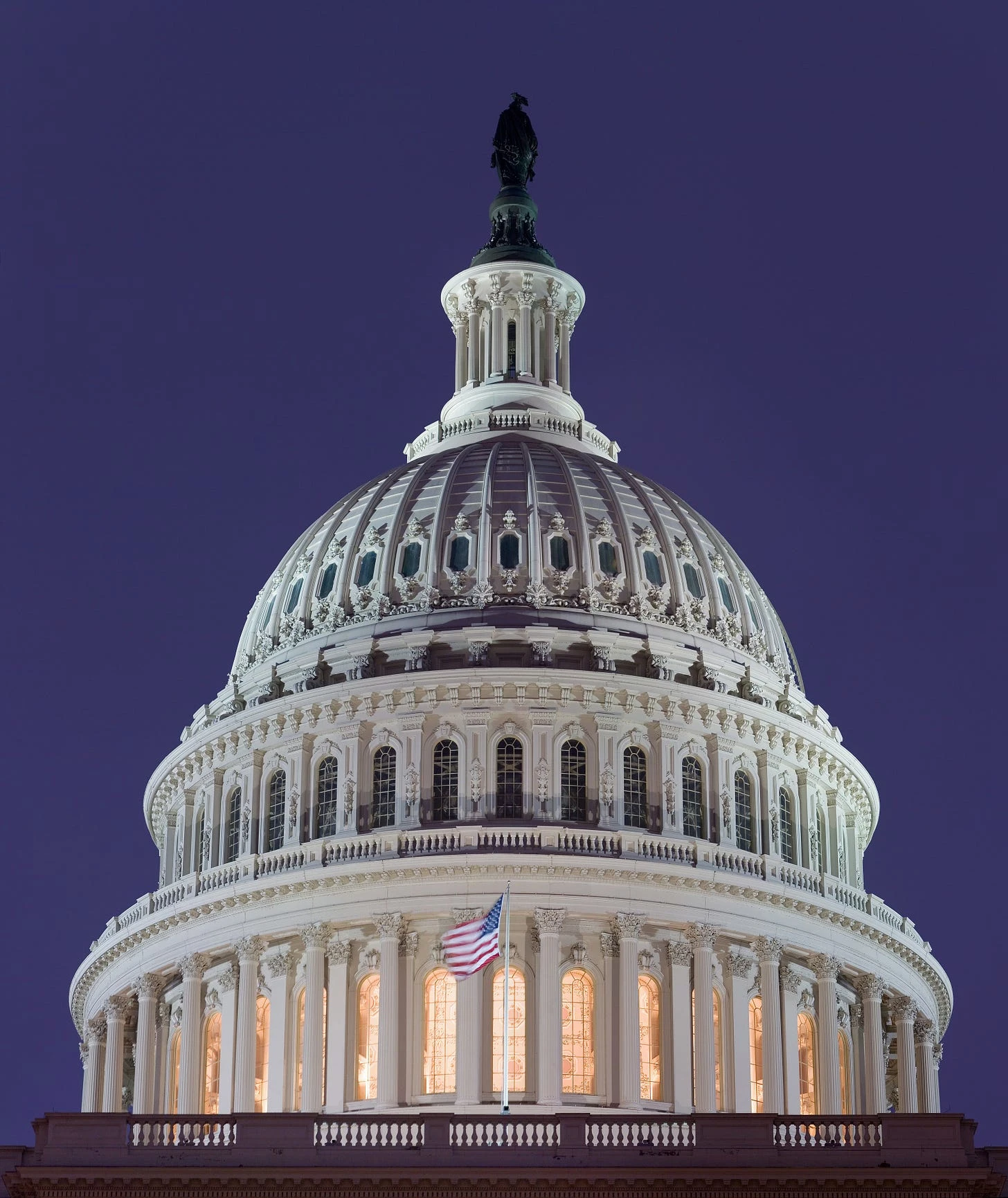
The U.S. Capitol Dome, newly renovated in 2016, sits in sky at dusk.
I had spent years around power by then. I’d covered it as a reporter and worked inside it on the Hill. But standing on that lawn, I wasn’t thinking about policy. I was thinking about the men who hijacked those planes.
How had a story become so powerful that it persuaded men—some highly educated, some from comfortable backgrounds—to fly airliners into the heart of American life and die doing it? Not so much what they believed, but how that hatred first formed. How had a narrative reached so deep that it overrode the most basic instinct we have: the will to live?
That question redirected the rest of my career.
I didn’t come up through intelligence. I started out humbly, in the cornfields of DeKalb County, Ill., a young newspaperman chasing local stories, certain the truth was something you could dig up if you only reported hard enough. That work carried me to the nation’s capital, where I covered Congress, the Pentagon, and the White House. In real time, I saw up close how a well-told story could move the country faster than any fact.
After 9/11, I went looking for the deeper psychology underneath those stories. I couldn’t let it go. For more than a decade I worked inside counterintelligence, intelligence analysis, and on red teams studying how extremist movements turn ordinary people into recruits, martyrs, and killers. My job, in plain terms, was to take their narratives apart and see how they moved people to get mad, and later, to action.
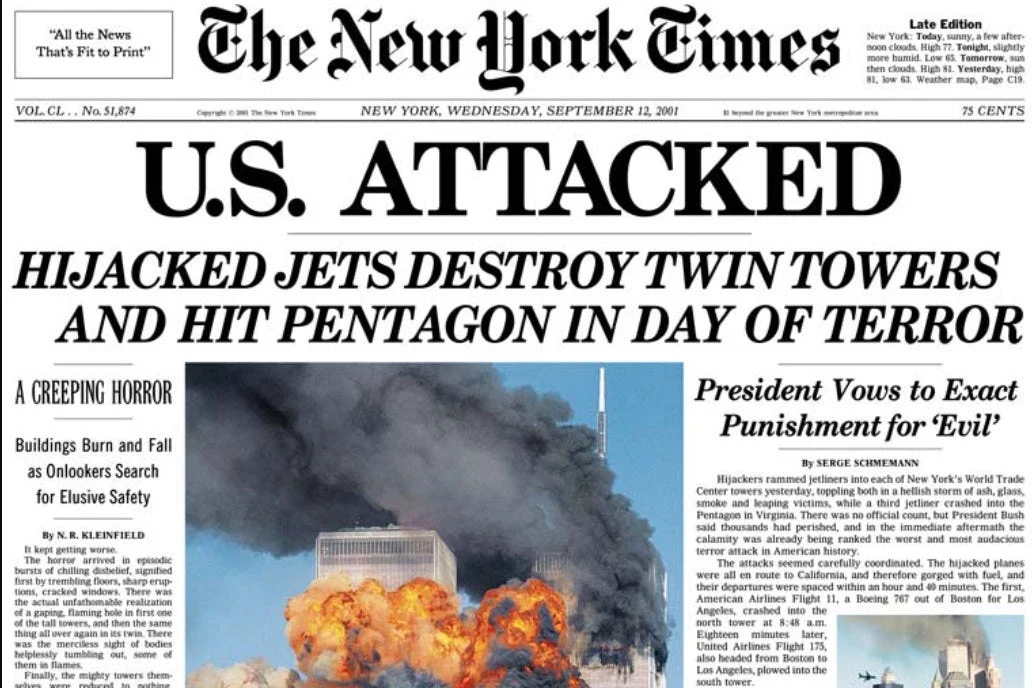
The Architecture of Influence
What I found has stayed with me. Terrorist recruiters often do not begin with doctrine alone. They begin searching for grievance and unfulfilled longing—a humiliation, an injustice, or a loss—and connect it to a larger story about belonging, purpose, and blame. People want their lives to be important, to be part of the great cosmic battle, as we called it.
The pathways varied, but we discovered a recurring sequence: identify or intensify a grievance, offer the person belonging and purpose, name an enemy responsible for the pain, and gradually introduce a belief system that explains and exploits it. The ideas take root only after an emotional hook is set. The story comes first. By the time anyone is debating doctrine or policy, the grievance and the shame have already done their work.
And here is what I couldn’t stop turning over: the levers a recruiter pulls in the mountains of Afghanistan aren’t exotic. Advertisers, campaigns, online platforms, and extremist recruiters are not morally equivalent. But each can exploit a basic human need to belong, explain our pain, and identify who is responsible for it. Most of the time the stakes are small and the harm is minor. The dictators of the last century did not rise through narrative alone; economic crisis, institutional weakness, coercion, and violence all mattered. Hitler, Mussolini, and Stalin each understood how propaganda could convert grievance into identity, identity into loyalty, and loyalty into permission for violence. The power of narrative underlies all of it. What changes is the intent of the person pulling the levers and the scope at which they pull them.
And if you think that architecture requires a foreign language, a different religion, or a distant century to work, look at your own news feed tonight.
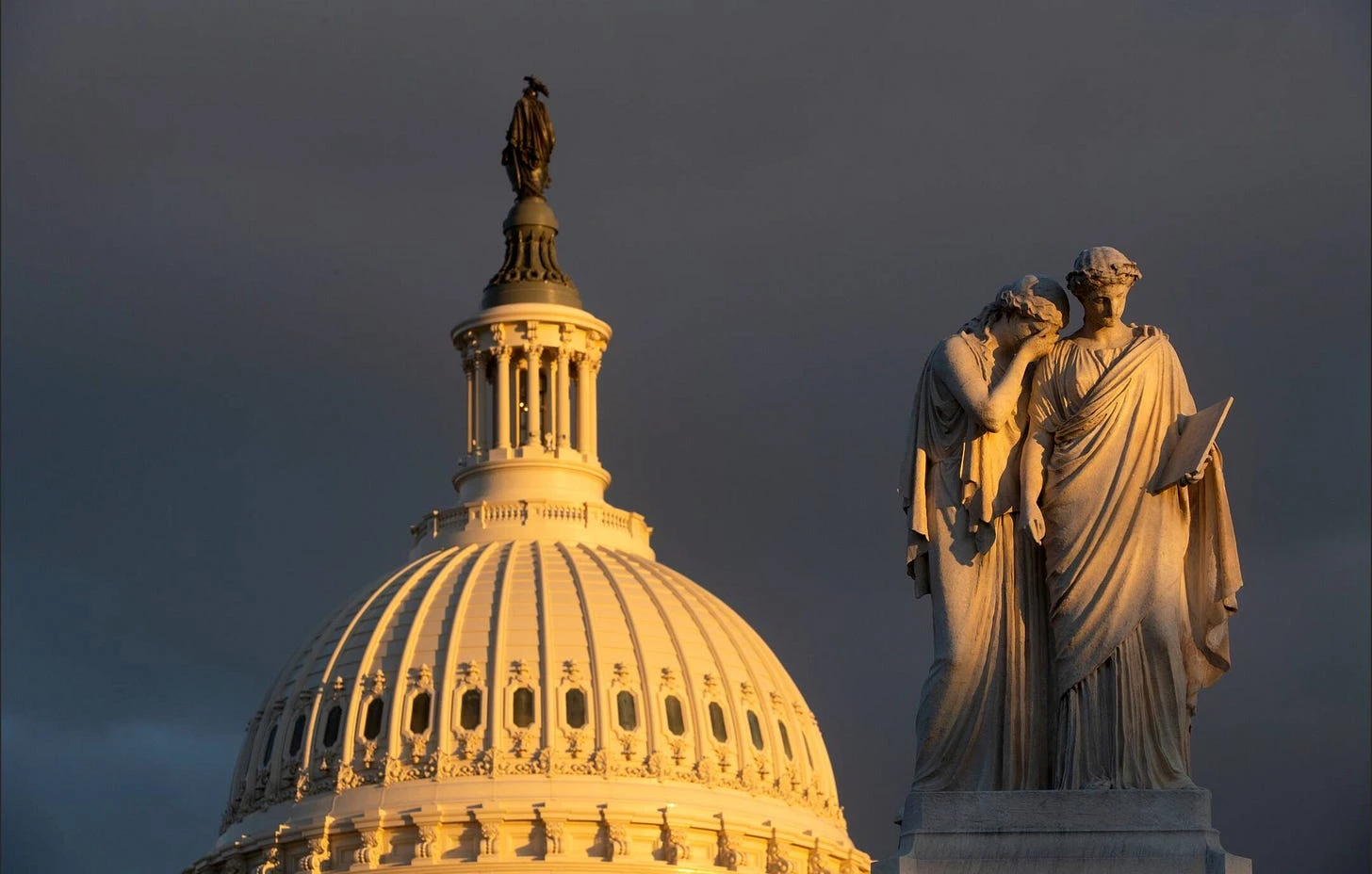
The statue Grief crying on the shoulder of a female personification of History, sits close on the west side of the U.S. Capitol Dome. The physical attack on the Capitol on January 6, 2021 began at the statute, which is part of the Peace Circle Monument.
The Most Dangerous Time to Be Uninformed
The deeper I dug, the more I saw that technology migrating out of the world of extremism and into everyday life. Eventually, it ended up on the phones we hold in our hands. Persuasion that once required a printing press, a broadcast tower, or a political organization can now be produced and targeted from a hand-held phone.
On social media, emotionally charged falsehoods can travel farther and faster than careful corrections, and they can be produced and distributed for almost nothing. Generative AI can create a realistic voice, an altered image, a fabricated video, or a seemingly firsthand account in seconds. Some of the dynamics I studied in extremist movements now appear, in less extreme forms, throughout everyday media: the cultivation of grievance, the promise of belonging, the identification of enemies, and the relentless reinforcement of an us-versus-them identity.
Many people in the country sense something has changed. They feel themselves being pulled toward anger, certainty, and immediate judgment even when they cannot identify who is applying the pressure, or why. They know they’re being worked on; they just can’t always see how, or whom to believe. We are at a dangerous and fragile inflection point, where being able to tell truth from covert manipulation matters more than ever.
The same tools I once used to identify threats and anticipate behavior, such as source evaluation, motive analysis, pattern recognition, competing-hypothesis analysis, and red-cell analysis methods are what I’ll put to work here to prepare you for not only what’s coming, but what’s already here.
What You’ll Learn to See
I’m not here to tell you what to think. I’m here to reveal the inner wiring, so you can think more clearly for yourself. Read along and I’ll work to help you:
Look for and recognize the handful of manipulation techniques that turn up again and again before they land on you.
Understand why the people you love share what they share on socials.
Look at a news segment, a campaign ad, or a viral Facebook post, and recognize the structure beneath the argument.
Tell the difference between a story that uses emotion to illuminate the facts and one that uses emotion to conceal missing evidence, suppress doubt, or bypass your judgment.
Sometimes I’ll work through real cases, some unclassified versions drawn from my years in intelligence, some pulled straight from the week’s headlines. Then I’ll help edducate you on the tools you can use the next time your feed lights up.

In this photo taken by my daughter, my oldest granddaughter reads to her younger sister, learning the family’s greatest joy: reading stories.
Why subscribe?
I have two children and three grandchildren. Two different generations growing up in a world where rumor and fact appear on the same screen, indistinguishable in appearance, moving at the same ultra-fast speed but in different directions. My fear is they will spend their lives trying to discern which of those will heal, educate, and move them forward, and which one will bring contention and harm.
I want them—and all of us—to possess the tools to tell the difference. Words can deceive, frighten, and divide us. They can also give us courage, enlarge our understanding, and help repair what is broken.
Words and stories are powerful.
I’ll say it again: Words are powerful. I’ve spent a lifetime studying how words are used to deceive people, frighten them, and turn them against one another. I’ve also watched words inspire people to be their best—to find courage, to sacrifice, to heal something broken. Both powers are real. And both are available to anyone willing to understand and learn the technique.
We don’t want to become immune to stories, they bring so much joy and learning in our lives. Our brains are biologically wired for story; it’s the way we learn.
But we must recognize what a story is doing to us before we decide what to do with it.
If that is a skill you want to develop, subscribe. We’ll learn to see the machinery together.
Narrative Power is a reader-supported publication. To receive new posts and support my work, consider becoming a subscriber. It’s free!
Like this project
Posted Sep 16, 2026
Project discusses the power and impact of storytelling and narratives on society and extremism.