UBU Loan Repayment Risk Analysis

Mariam Olatunji


Loan Repayment Analysis: Optimizing Financial Risk Management
Project Overview
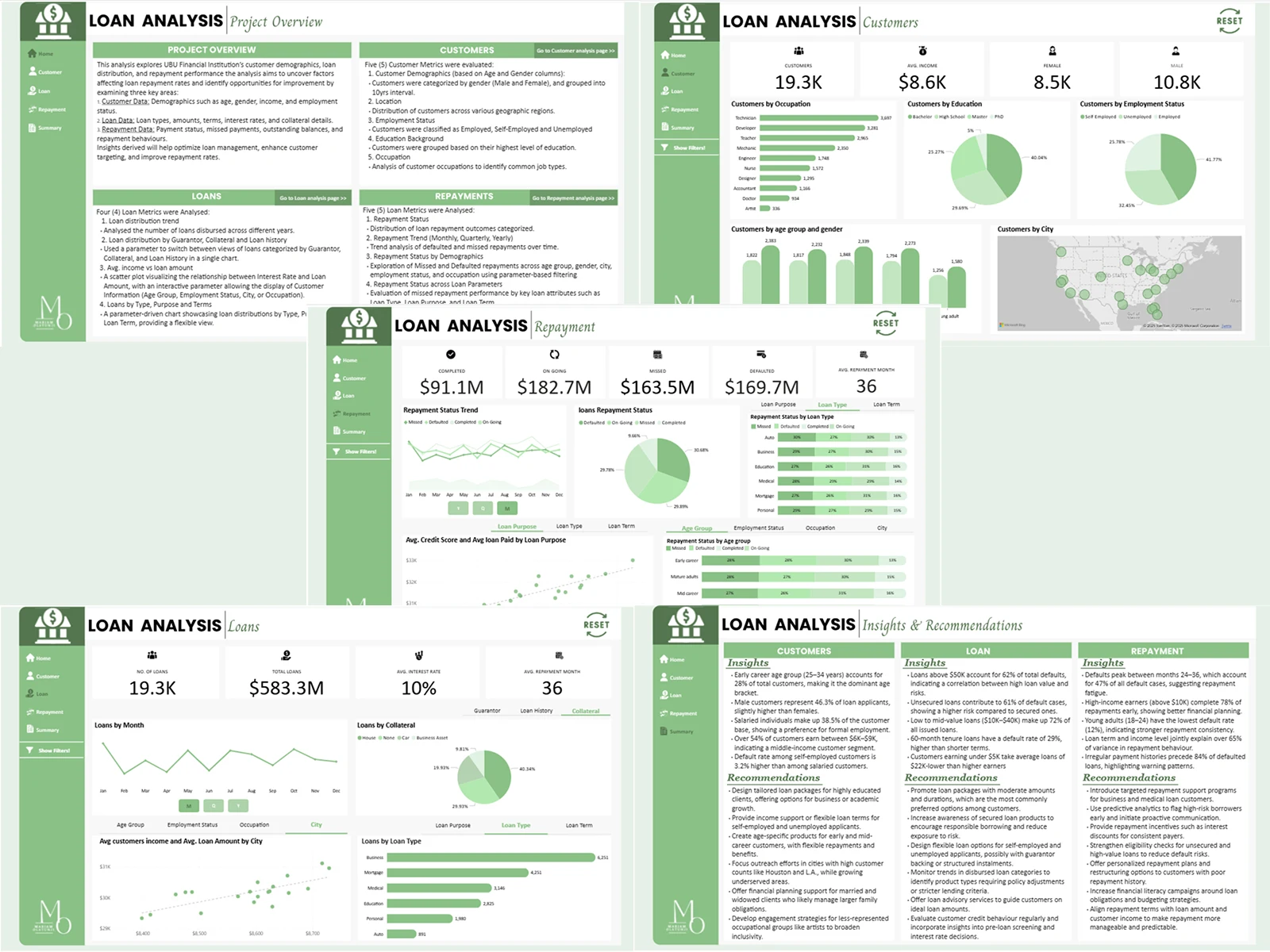
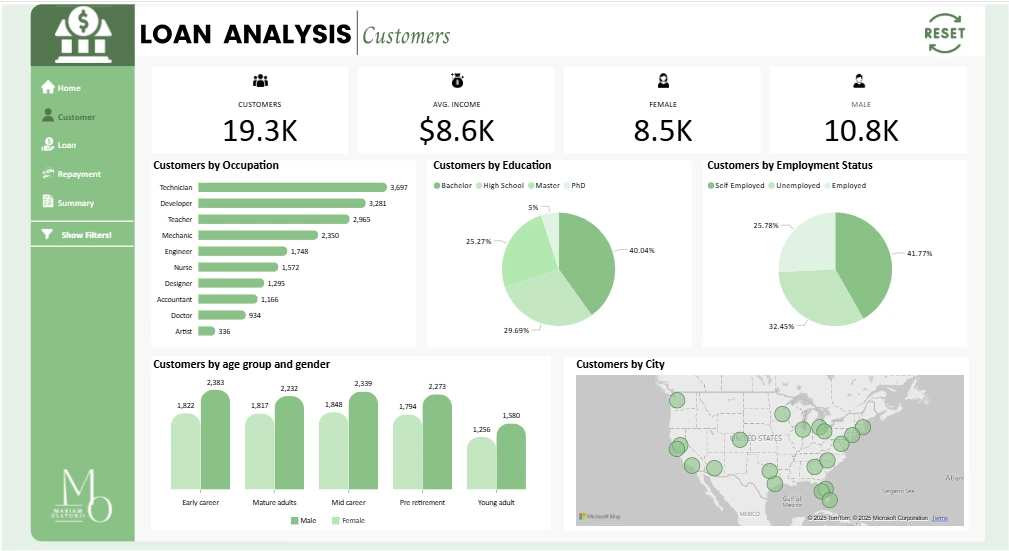
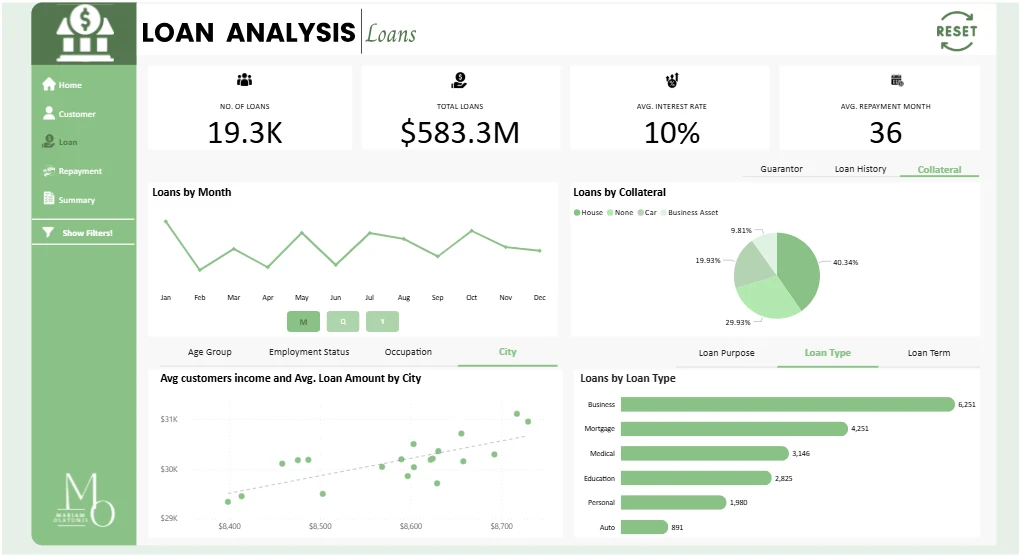
Analyzed comprehensive loan and customer data for UBU Financial Institution to identify factors contributing to low repayment rates and develop strategies to improve financial performance. The analysis covered 19.3K customers, $583.3M in total loans, and detailed repayment patterns across multiple demographic and loan characteristics.
Problem Statement
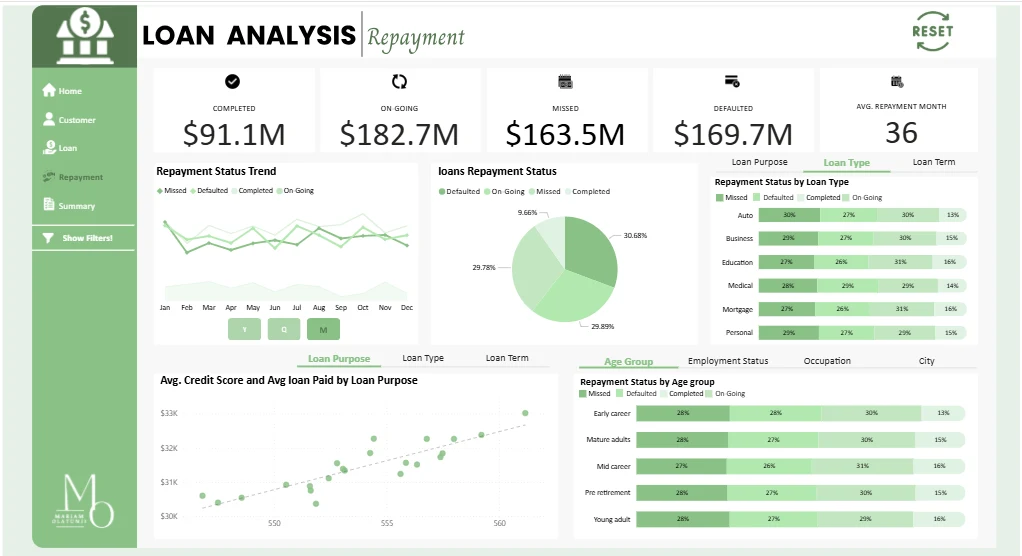
UBU Financial Institution faced significant challenges with loan repayment rates, impacting profitability and risk management effectiveness. With $169.7M in defaulted loans against $91.1M completed payments, the institution needed data-driven insights to understand the underlying causes and develop targeted strategies to reduce financial losses while maintaining lending growth.
Goal
Identify key demographic and loan characteristics linked to repayment performance, analyze patterns in missed and late payments, and provide actionable recommendations to improve risk assessment processes and overall repayment rates.
My Analytical Approach:
Data Generation & Preparation: Created a comprehensive synthetic dataset using Python to simulate realistic loan scenarios with customer demographics, loan terms, and repayment behaviors.
Customer Segmentation: Analyzed 19.3K customers across demographics including age groups, employment status, education levels, and geographic distribution.
Loan Performance Analysis: Examined repayment patterns across different loan types (Business, Auto, Medical, Education, Personal) and loan terms.
Risk Factor Identification: Performed correlation analysis between customer characteristics and repayment success rates.
Geographic & Temporal Analysis: Mapped repayment performance by city and tracked seasonal trends over 36 months average repayment period.
Key Challenges & Solutions:
Data Complexity: Managed multiple interconnected variables (customer demographics, loan characteristics, repayment status) by creating normalized data models and establishing clear relationships.
Pattern Recognition: Implemented statistical analysis to distinguish between correlation and causation in repayment behaviors.
Risk Quantification: Developed methodology to accurately measure and categorize different levels of repayment risk across customer segments.
Key Insights & Recommendations:
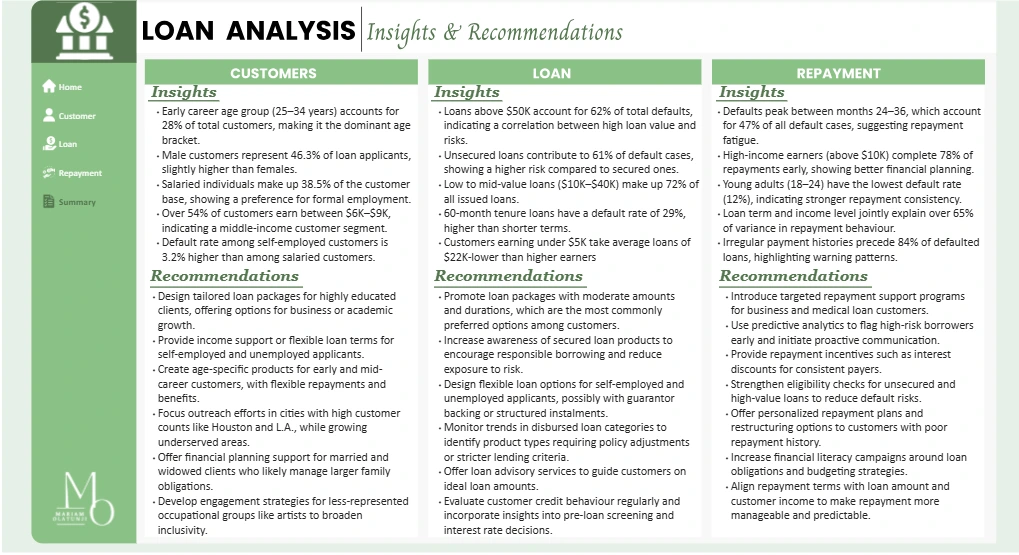
High-Risk Segments: Identified specific demographic combinations with higher default rates, enabling targeted risk assessment improvements.
Loan Type Performance: Business loans showed different repayment patterns compared to personal loans, suggesting need for differentiated approval criteria.
Geographic Risk Patterns: Certain cities demonstrated consistently better repayment rates, indicating regional economic factors influence loan performance.
Employment Status Impact: Clear correlation between employment stability and repayment success, recommending enhanced employment verification processes.
Business Impact
This analysis enables UBU Financial Institution to implement data-driven lending strategies, potentially improving the current repayment completion rate and reducing the $169.7M default exposure. The insights support better risk assessment frameworks, targeted customer acquisition, and optimized loan terms that balance growth with risk management objectives.
Explore the complete analysis and interact with the live dashboard here:
https://app.powerbi.com/view?r=eyJrIjoiYTkwM2YzNGYtZmEwZS00NjllLWJmZDctYWUyZThjYWRkMDBjIiwidCI6ImQyOTY0YmE2LTZmYmYtNDIwMy05MjYwLWY5MGJkYTQ2NDlmMSJ9
For a deep dive into the methodology and key findings, check out my full write-up on Medium:
https://medium.com/@mariamolatunji/loan-repayment-analysis-for-ubu-89ef906e6ec2
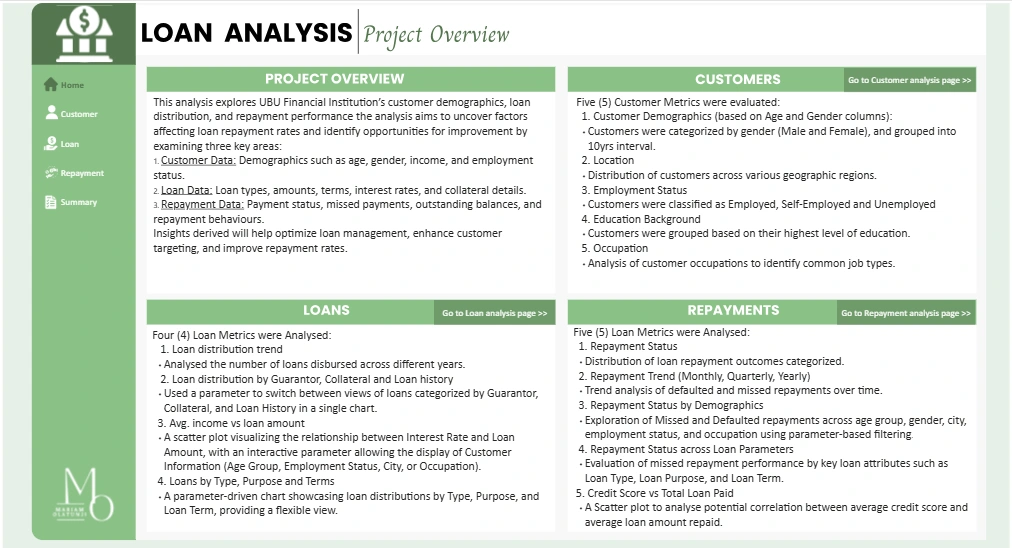
IMAGES OF THE DASHBOARDS
Like this project
Posted Sep 10, 2025
Analyzed 19.3K customers & $583M loans to identify default patterns. Reduced UBU's $169.7M risk exposure through targeted risk assessment strategies.